← All women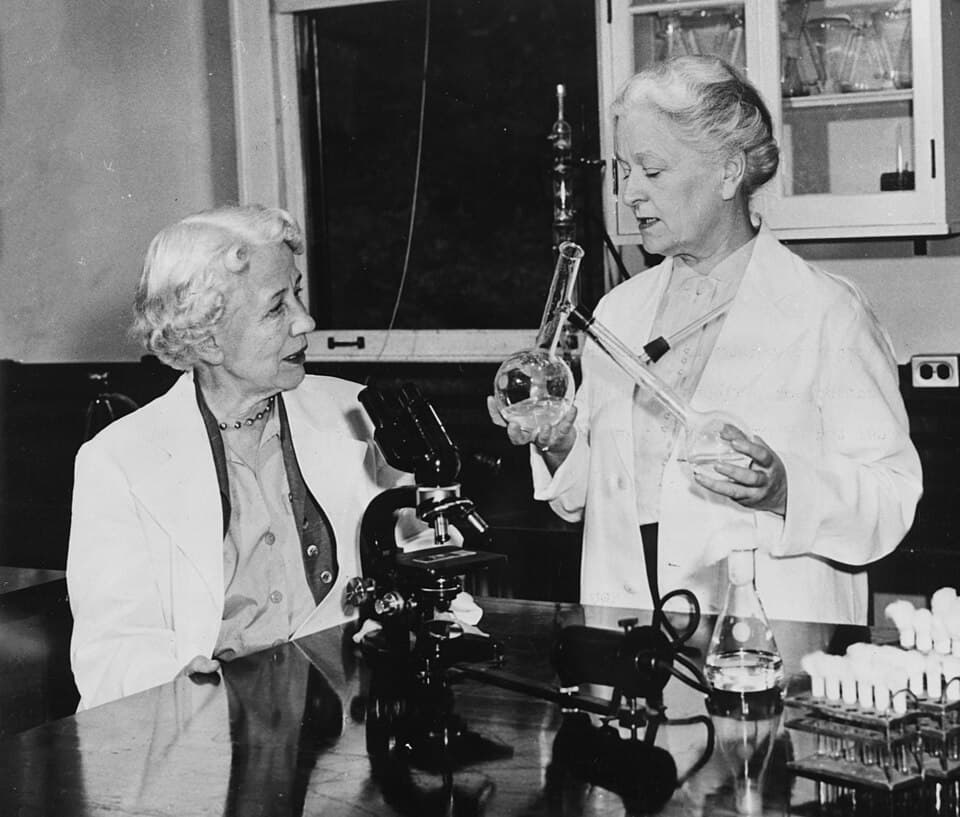
American · Science · Medicine
Rachel Fuller Brown
November 23, 1898 – January 14, 1980
Early Life and Family Background
Rachel Fuller Brown was born on November 23, 1898, in Springfield, Massachusetts, United States.[1][2][4][6] She was the daughter of George Hamilton Brown, a real estate and insurance agent, and Annie (Fuller) Brown
Brown attended public elementary school in St. Louis, Missouri, and later central high school in Springfield, Massachusetts.[4][6] These public‑school experiences, combined with her mother’s emphasis on education and religious instruction, fostered both intellectual curiosity and a sense of social responsibility. Growing up at a time when higher education for women was still relatively uncommon, Brown’s academic ambitions were shaped by the emerging women’s college movement and by role models who demonstrated that girls could excel in scientific disciplines.[4][6] In 1916, Brown entered Mount Holyoke College, one of the leading women’s colleges in the United States, known for its strong science programs and encouragement of women’s intellectual development.[4][6] She enrolled in a combined course of study in chemistry and history, reflecting both scientific and humanistic interests. Brown graduated with an A.B. degree from Mount Holyoke in 1920
Brown continued her education at the University of Chicago, a major research university that accepted women into its graduate science programs. In 1921, she received an M.S. degree in organic chemistry from the University of Chicago.[4][6] Over the next several years, Brown taught at the Frances Shimer School in Chicago, Illinois, an institution that later became Shimer College, while maintaining her connection to research.[4] She then returned to the University of Chicago to pursue doctoral work, focusing her studies on organic chemistry and bacteriology. Brown completed her doctoral research in 1926, but the formal degree was conferred later; she ultimately received her Ph.D. in organic chemistry and bacteriology in 1933 from the University of Chicago.[4] This combination of chemistry and microbiology would prove crucial to her later work on antibiotic compounds derived from microorganisms. Earning a Ph.D. as a woman in the early 1930s placed Brown among a relatively small cohort of female chemists with advanced degrees, positioning her for a research career at a time when few laboratories hired women scientists. In 1926, after completing her doctorate research, Brown joined the Division of Laboratories and Research of the New York State Department of Health in Albany, New York.[1][4][6] She started as a research chemist in the bacteriology division, where her early work focused on the bacterial causes of pneumonia, a leading cause of morbidity and mortality at the time.[8] Brown contributed to developing methods for identifying different types of pneumonia bacteria and helped in the creation and standardization of a pneumonia vaccine.[6][8] Between 1926 and 1948, Brown’s research at the Division of Laboratories and Research included developing simple tests for standardizing antisera used in the treatment of pneumonia, improving methods for vaccine production, and working on the purification of antigens.[4][6] She also helped improve precipitation tests for the diagnosis of syphilis, a major public health challenge in early twentieth‑century America.[4][6][8] These diagnostic and therapeutic tools, though less widely known than her later work on nystatin, were critical to the public health function of the New York State laboratory and demonstrated her capacity to translate laboratory chemistry into practical medical applications. By 1931, Brown had taken charge of the bacterial diagnosis laboratory at the Division of Laboratories and Research.[4] This appointment placed her in a leadership position within a state public health laboratory, an uncommon role for a woman scientist at the time. She supervised work on diagnostic bacteriology, guiding the development and use of tests that informed patient care and epidemiological surveillance. Her responsibilities and authority within the department grew steadily, establishing her reputation as a skilled chemist and bacteriologist. In the late 1940s, Brown’s career took a decisive turn toward antifungal chemotherapy. In 1948, she was paired with Elizabeth Lee Hazen, a microbiologist based in New York City, under the auspices of the New York State Department of Health.[4][6] The department tasked them with a systematic search for agents effective against fungal infections, which were increasingly recognized as a serious problem, especially among patients treated with broad‑spectrum antibiotics. Hazen’s role centered on screening soil samples and other materials for microorganisms that produced substances inhibiting the growth of pathogenic fungi.[6] When Hazen detected a promising antifungal activity in a culture, she would send samples of the active broth to Brown in Albany. Brown, drawing on her training in organic chemistry, took responsibility for isolating, purifying, and characterizing the active compounds.[1][4][6] This collaboration was conducted largely long‑distance, with samples, data, and letters traveling back and forth by mail—an arrangement often highlighted in historical accounts as a remarkable example of effective remote scientific teamwork.[1][7] Through this partnership, Brown and Hazen screened numerous soil organisms for antifungal activity. In 1950, they announced the discovery of a new antifungal agent, later named nystatin, at a meeting of the National Academy of Sciences.[8] The compound’s name honored the New York State laboratory where they worked and reflected the institutional context that supported their research.[1][4][8] Nystatin proved to be the first highly active antifungal agent found to be both safe and effective for human use, a milestone in antimicrobial therapy.[1][2][6] The significance of nystatin lay in its ability to treat a range of fungal infections, particularly those caused by Candida species, which could affect the mouth, gastrointestinal tract, and other mucous membranes.[2][6] Prior to nystatin, treatments for fungal disease were limited and often toxic, leaving clinicians with few options for managing infections that frequently complicated antibiotic therapy. Nystatin’s selective toxicity toward fungi and relative safety in humans made it a revolutionary addition to the pharmacological arsenal. Brown’s role in the development of nystatin involved painstaking chemical work: she purified the antifungal substance into small white crystals, determined its properties, and helped formulate it into doses and preparations suitable for clinical use.[1][4][8] Her chemical expertise complemented Hazen’s microbiological skills, and together they bridged the gap between laboratory discovery and therapeutic application. By 1954, nystatin had been introduced into clinical practice and quickly proved invaluable for treating fungal infections, particularly secondary infections that arose from the use of broad‑spectrum antibacterial antibiotics.[2] Beyond human medicine, nystatin found uses in protecting artworks and archival materials from mold, highlighting its broader cultural impact.[2] The drug’s widespread adoption across medicine and preservation underscored the practical importance of Brown and Hazen’s work and the value of state‑supported research laboratories in developing new therapeutic agents. Following the success of nystatin, Brown and Hazen continued their research on bioactive compounds from microorganisms. In 1953, they discovered an antibacterial agent known as phalamycin (sometimes spelled "falamycin"), adding to the repertoire of antibiotics identified from soil‑derived microbes.[4][6][8] In 1959, they discovered another antifungal agent, capacidin (also appearing as "capacidin" in some sources).[4][6][8] Although these later compounds did not achieve the same level of clinical prominence as nystatin, they demonstrated the continued productivity of Brown and Hazen’s collaboration and their contribution to the broader field of antimicrobial research. The development of nystatin culminated in the granting of U.S. Patent No. 2,797,183 on June 25, 1957, to Rachel Fuller Brown and Elizabeth Lee Hazen.[1][6][8] What set their patent apart was not only its scientific importance but also the decision to handle royalties in an unusually altruistic manner. Brown and Hazen assigned the patent to the nonprofit Research Corporation, a foundation specializing in managing and distributing funds derived from scientific patents.[8] In 1951, prior to the patent’s issuance, Brown and Hazen had already agreed that the rights and revenues from nystatin would be used to create the Brown–Hazen Fund, dedicated to "research and experimentation in biology and allied fields."[1][4][6] Through this fund, royalties from nystatin were channeled into grants and support for scientific work, particularly in areas aligned with their own interests in microbiology and chemistry. The fund supported laboratories, equipment purchases, and training opportunities, extending the impact of nystatin beyond clinical treatment to the advancement of basic science. This philanthropic approach reflected Brown’s belief in science as a public good and her awareness of the barriers facing younger researchers, including women, in accessing funding. By directing royalties into a research fund rather than personal income, Brown and Hazen contributed to a culture of reinvestment in scientific discovery, a legacy that continues to be cited in discussions of ethics and equity in science funding.[1][6] Brown remained at the Division of Laboratories and Research of the New York State Department of Health until her retirement in 1968.[4] Over four decades, she helped shape the department’s capabilities in diagnostic bacteriology and antibiotic research. Her work earned her numerous awards and honors. She received the Squibb Award in Chemotherapy, recognizing major contributions to therapeutic chemistry, and the Chemical Pioneer Award, acknowledging her role in advancing chemical science.[4][9] She was also granted honorary degrees from institutions such as Mount Holyoke College and Hobart and William Smith Colleges, reflecting the academic world’s recognition of her achievements.[4] Brown’s contributions were further recognized posthumously. In 1994, she was inducted into the National Inventors Hall of Fame for co‑developing nystatin, cited as the first useful antifungal antibiotic safe for human use.[1][7] This honor placed her alongside other notable inventors and underscored the lasting technological and medical significance of her work. International encyclopedic entries in Spanish, Ukrainian, and Korean also document her life and contributions, reinforcing her global recognition as a pioneering woman in science.[2][3][7] Throughout her life, Brown’s personal circumstances often reflected the challenges and choices facing women scientists of her generation. According to biographical accounts, she never married and had no children.[4][6] She lived for many years with Dorothy Wakerley, a close friend, and maintained strong ties to the communities and institutions that shaped her career.[4][6] Her decision to focus on scientific work and public service rather than family life was characteristic of many women professionals in the early and mid‑twentieth century, who faced societal expectations that often conflicted with research careers. Brown’s friendships and professional networks, especially her long‑distance collaboration with Elizabeth Lee Hazen, formed the core of her social world. The partnership with Hazen was built on mutual respect and complementary skills, and it provided a model of cooperative scientific practice that transcended traditional hierarchies and gendered divisions of labor. Brown’s home life in Albany, shared with Wakerley, offered stability as she pursued demanding laboratory work and navigated the evolving landscape of public health research. Rachel Fuller Brown’s legacy rests principally on her co‑development of nystatin, the first successful antifungal antibiotic safe for human use.[1][2][6] Nystatin transformed the treatment of fungal infections, making it possible to manage opportunistic diseases that commonly occurred in patients receiving antibiotics or suffering from immune compromise. As broad‑spectrum antibiotics became standard in mid‑twentieth‑century medicine, nystatin’s ability to target fungal overgrowth without undue toxicity was crucial in preventing and treating complications. Brown’s work also demonstrated the power of collaboration between chemistry and microbiology. Her partnership with Elizabeth Lee Hazen showed how interdisciplinary cooperation, supported by state health laboratories, could yield breakthroughs with direct clinical and public health implications. Their long‑distance exchange of samples and data is frequently cited in scientific histories as an example of productive remote collaboration well before the digital age.[1][6] The Brown–Hazen Fund represents another major element of her legacy. By directing patent royalties into research support, Brown helped create a financial mechanism that extended the impact of nystatin far beyond the original discovery. Grants from the fund enabled subsequent generations of scientists to pursue investigations in biology and allied fields, contributing to a wider culture of scientific philanthropy.[1][6] From the perspective of women’s history, Brown stands as an important figure among twentieth‑century women chemists. She navigated a professional world in which women often faced limited opportunities for advancement, yet she attained leadership roles within a state laboratory, earned a Ph.D., and secured major scientific awards. Her inclusion in reference works, museum biographies, and international encyclopedias reflects a growing recognition of her contributions to both science and the history of women in STEM.[1][2][3][5][6] After retiring in 1968, Brown remained in Albany and continued to be associated with the scientific community through the Brown–Hazen Fund and her relationships with colleagues and institutions such as Mount Holyoke College.[4] Although no longer active in the laboratory, she lived to see nystatin firmly established as a standard antifungal therapy and to witness ongoing research increasingly focused on microbial diseases and antibiotic resistance. On January 14, 1980, Brown died at St. Peter’s Hospital in Albany, New York, at the age of eighty‑one.[2][4][6] Her death closed a life that had spanned the emergence of modern bacteriology and chemotherapy, from early work on pneumonia and syphilis diagnostics to the era of antifungal antibiotics. Obituaries and biographical notices highlighted her scientific achievements and her commitment to using the proceeds of her discoveries to support further research. In the years following her death, renewed interest in the history of antibiotics and in women’s contributions to science brought Brown’s story to wider audiences. The National Inventors Hall of Fame induction in 1994, along with biographical essays by the Lemelson‑MIT Program and the Science History Institute, has ensured that Rachel Fuller Brown is remembered not only as a chemist who helped create an essential drug but also as a pioneer whose life exemplified the possibilities—and constraints—facing women in twentieth‑century science.[1][5][6][7]Education and Scientific Training
Career Beginnings at the New York State Department of Health
Collaboration with Elizabeth Lee Hazen and the Search for Antifungal Agents
The Discovery of Nystatin and Subsequent Research
Patent, the Brown–Hazen Fund, and Philanthropy
Later Career, Retirement, and Awards
Personal Life
Legacy and Historical Impact
Later Life and Death
Dated achievements
3 indexed.
- Nov231898Science
Birth of Rachel Fuller Brown in Springfield, Massachusetts
Rachel Fuller Brown was born in Springfield, Massachusetts.
View details Rachel Fuller Brown - National Inventors Hall of Fame - Jun251957Medicine
U.S. Patent 2,797,183 granted for nystatin
Patent granted for nystatin, the first successful antifungal antibiotic for humans.