← All women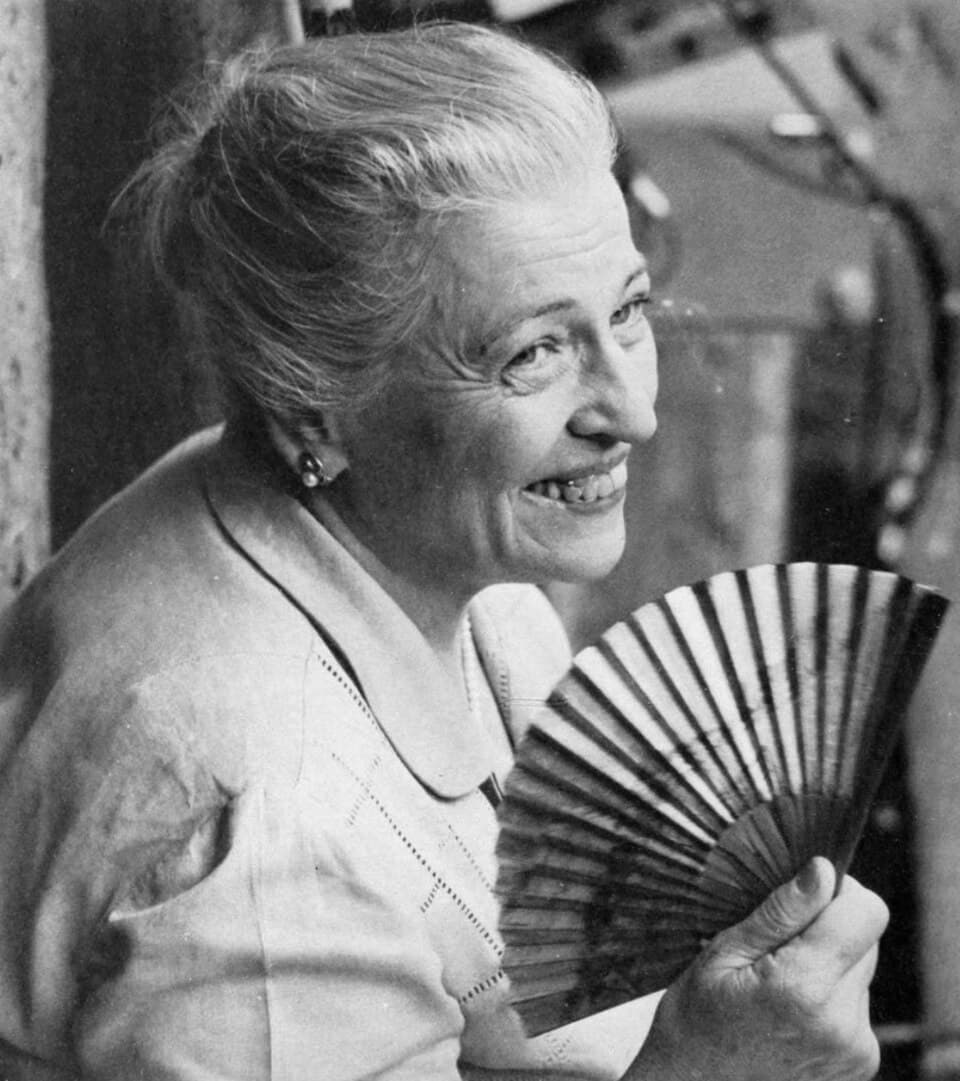
American · Literature · Activism · Arts
Pearl S. Buck
June 26, 1892 – March 6, 1973
Early Life and Background
Pearl Comfort Sydenstricker Buck was born on June 26, 1892, in Hillsboro, West Virginia, in the home of her maternal grandparents.[11][1] She was the daughter of Absalom Sydenstricker and Carie (Stulting) Sydenstricker, Presbyterian missionaries who were on furlough from their post in China at the time of her birth.[11] When Pearl was about three months old, the family returned to China, where she would spend most of the first forty years of her life.[12][1]
Growing up in late Qing and early Republican China, Buck was immersed in both American and Chinese cultures. She learned English from her parents and Chinese from the people around her, gaining fluency in the language and familiarity with rural village life, Confucian customs, and Chinese storytelling traditions.[1][12] This bicultural upbringing profoundly shaped her worldview and later writing, giving her an insider’s understanding of Chinese society combined with an outsider’s ability to interpret it to Western readers.
Buck’s childhood was marked by hardship as well as intellectual stimulation. The family experienced poverty and frequent moves due to missionary assignments, and Buck witnessed political unrest, natural disasters, and the Boxer Rebellion’s aftermath.[1][11] She later described these experiences and her complex relationship to the missionary enterprise in autobiographical works such as The Exile (1936) and The Fighting Angel (1936), which explored her parents’ lives and their religious convictions.[1][12]
Despite the challenges, Buck’s mother insisted that her daughter receive a strong education. After early schooling in China and missionary-run institutions, Pearl returned to the United States to attend Randolph-Macon Woman’s College in Lynchburg, Virginia, from which she graduated in 1914.[12][4] Her time at Randolph-Macon exposed her to American academic life, literary study, and feminist currents that would later inform her views on women’s roles in society.
Career Beginnings and Development
Following her graduation, Buck returned to China, where she married agricultural economist John Lossing Buck in 1917.[1][4] The couple lived in rural areas of Anhui Province and elsewhere, where John conducted agricultural surveys and Pearl taught and wrote. Their life among peasant communities deepened her understanding of the daily rhythms, economic struggles, and family structures of rural China, material that later became the foundation for her most famous fiction.[12][11]
Buck’s early professional work included teaching English literature at institutions such as Nanjing University, and writing essays and reviews for mission and literary magazines.[1][11] She began to experiment with fiction in the 1920s, drawing on her bilingual upbringing and her experiences as a foreign woman living among Chinese families.
Her first published novel, East Wind, West Wind, appeared in 1930.[12] It introduced themes that would recur throughout her work: the tensions between traditional Chinese customs and modern Western influences, the position of women within patriarchal structures, and the possibility of cross-cultural understanding. The book established Buck as a serious novelist, but it was her second novel that catapulted her to global fame.
Major Works and Accomplishments
In 1931, Buck published The Good Earth, a novel depicting the life of a poor farmer, Wang Lung, and his family in pre-revolutionary rural China.[1][11] Written in simple, direct prose and based on Buck’s intimate knowledge of village life, the book resonated powerfully with American and European audiences. It became the best-selling novel in the United States in both 1931 and 1932.[1][7]
The Good Earth introduced many Western readers to Chinese peasants as complex, sympathetic individuals rather than as stereotypes, and helped humanize Chinese society at a time when American knowledge of Asia was limited and often shaped by prejudice.[11][7] The novel’s commercial success led to a 1937 film adaptation and cemented Buck’s reputation as a major author.
In 1932, Buck received the Pulitzer Prize for the Novel (now Fiction) for The Good Earth, formal recognition of the book’s literary merit and social impact.[11][8] She followed it with two related novels, Sons (1932) and A House Divided (1935), which together with The Good Earth formed a trilogy tracing the fortunes of the Wang family across generations and political upheavals.[12]
Throughout the 1930s, Buck was extraordinarily productive. She published collections such as The First Wife and Other Stories (1933), the translation All Men Are Brothers (her rendering of the classic Chinese novel Shui Hu Zhuan, published in 1933), and novels including The Mother (1934) and This Proud Heart (1938).[12] Her fiction often centered on women and families navigating rapidly changing social conditions, both in China and in the United States.
In 1938, Buck’s literary achievements were recognized at the highest international level when she was awarded the Nobel Prize in Literature, "for her rich and truly epic descriptions of peasant life in China" and for her biographical masterpieces about her parents.[12][1] She was the first American woman to receive the prize, and one of very few women Nobel laureates in literature at the time.[1][8]
Over her lifetime, Buck published more than seventy books, spanning novels, short stories, biographies, autobiographies, children’s books, and essays.[12][2] She also wrote under the pseudonym John Sedges for some works, particularly those focusing on American settings, in part to separate her different literary identities.[1][14]
Awards, Honors, and Recognition
Buck’s major formal honors included the Pulitzer Prize in 1932 for The Good Earth and the Nobel Prize in Literature in 1938.[1][4] The Nobel citation emphasized both her fiction about Chinese peasants and her biographical writing on her parents, recognizing her as a bridge figure between cultures.
Her Nobel win made history: according to Nobel records and subsequent scholarship, Buck was the first American woman to win the literature prize, and she is often noted as the first American woman to win both the Pulitzer and the Nobel in literature.[8][9] This twin recognition challenged prevailing assumptions about women’s literary capacities and about the subjects suitable for "serious" literature.
Beyond these marquee awards, Buck received numerous other honors, including the William Dean Howells Medal from the American Academy of Arts and Letters for The Good Earth, and later commendations for her humanitarian work.[12][11] She was frequently invited to lecture and to write opinion pieces on Asian affairs, race relations, and women’s issues, and she served on advisory boards for various cultural and philanthropic organizations.
Humanitarian and Activist Work
As her literary fame grew, Buck increasingly used her public platform to advocate for social causes. She became outspoken on issues of race, gender, and international understanding, arguing that literature could foster empathy across cultural divides.[11][8]
During the Second World War, Buck emerged as a prominent critic of racist immigration policies, particularly the Chinese Exclusion Act of 1882. In 1943, she testified before the U.S. House of Representatives and worked through the Citizens Committee to Repeal Chinese Exclusion to press for repeal.[8] She emphasized the incompatibility of exclusion with democratic ideals and highlighted the contradiction of barring Chinese immigration while China was a vital ally against Japan.
Her advocacy contributed to the passage of the Magnuson Act, which repealed Chinese exclusion on December 17, 1943, marking a major milestone in U.S. civil rights and immigration history.[8] Buck’s role illustrates how a woman writer could intervene in high-level policy debates at a time when women were rarely accorded such authority.
In the postwar years, Buck focused much of her energy on children, particularly those of mixed heritage in Asia whose status rendered them vulnerable to stigma and poverty. In 1949, she helped found Welcome House, widely recognized as the first international, interracial adoption agency in the United States.[12][2] The agency sought homes for children of Asian and mixed-race backgrounds who were often systematically excluded from adoption systems because of racist attitudes.
In 1964, Buck established the Pearl S. Buck Foundation in Philadelphia, designed to provide financial support, education, and social services to children in Asian countries, particularly those fathered by American servicemen and marginalized in their home societies.[7][11] Through these institutions, Buck attempted to transform the emotional and moral concerns expressed in her writing into practical, organized humanitarian action.
Her advocacy extended to disability rights as well. Buck’s experience raising her eldest daughter, Carol, who had developmental disabilities, led her to write The Child Who Never Grew (1950), a memoir that challenged stigma around intellectual disability and called for more compassionate care.[12][1] This work broadened public understanding of family life with a disabled child and helped normalize open discussion of disability.
Personal Life
Buck’s personal life was intertwined with the historical forces she wrote about. She married John Lossing Buck in 1917, and the couple’s life and work among Chinese peasants not only provided material for her fiction but also tested the limits of their partnership.[1][4] They had one biological daughter, Carol, who had a developmental disability and was later placed in a residential institution in the United States.[1][12]
The emotional strain of parenting a disabled child, combined with political upheaval in China and differences in temperament, contributed to the eventual breakdown of Pearl and John’s marriage. After moving permanently to the United States in the mid-1930s, Buck divorced John.[1][11]
In 1935, she married her publisher, Richard Walsh, head of the John Day Company.[1][4] This partnership was both personal and professional: Walsh helped shape Buck’s literary career, while Buck supported his publishing endeavors. Together they adopted several children and maintained a large, diverse household that reflected Buck’s commitment to interracial and international family life.[1][11]
Buck spent much of her later life based in Pennsylvania, particularly at the property known as Green Hills Farm, which served as her home and writing base for decades.[7][3] The farmhouse later became a museum dedicated to her life and work, symbolizing her roots in American soil despite her formative years in China.
Later Life and Death
After permanently resettling in the United States in the 1930s, Buck continued to write prolifically while also expanding her humanitarian commitments. The rise of the People’s Republic of China in 1949 and subsequent U.S.–China tensions complicated her relationship with the country of her childhood; for many years she was unable to return, and her writings offered one of the few empathetic portrayals of Chinese people available in American popular culture during the Cold War.[1][11]
Critically, Buck’s literary reputation began to wane in the postwar and postmodern eras. Some academics criticized her prose style as too straightforward or sentimental, and her works were less frequently taught in university courses, even as they remained popular among general readers.[11][2] Nonetheless, she continued to publish and to speak on global issues, arguing for understanding across racial and national lines.
On March 6, 1973, Buck died of lung cancer in Danby, Vermont, two months shy of her eighty-first birthday.[1][4][5] At the time of her death, she had produced a vast body of work and established several institutions dedicated to children’s welfare. Her passing prompted tributes that emphasized both her literary contributions and her humanitarian activism.
Legacy and Historical Impact
Pearl S. Buck’s legacy is multifaceted, spanning literature, cultural diplomacy, civil rights, and humanitarian work. As the author of The Good Earth and its related novels, she profoundly shaped Western perceptions of China for at least a generation.[7][11] By depicting Chinese peasants as fully realized human beings with recognizable emotions and moral struggles, she challenged exoticizing and racist portrayals common in early twentieth-century Western media.
Her status as the first American woman to win the Nobel Prize in Literature in 1938 marked an important milestone in women’s literary history.[1][4] It affirmed the global significance of a woman writing primarily about non-Western subjects and opened imaginative space for later women authors to engage in cross-cultural storytelling and political commentary.
In the realm of activism, Buck’s efforts to repeal the Chinese Exclusion Act and to assist marginalized children demonstrated how literary prestige could be mobilized for policy and social change.[8][11] Her work with Welcome House and the Pearl S. Buck Foundation pioneered interracial and international adoption practices and drew attention to the plight of children born across racial and national lines during wars and occupations.
Her candid writing about disability and her own daughter in The Child Who Never Grew contributed to evolving public discourse on intellectual disability, encouraging empathy and more open conversation.[12] Combined with her critiques of sexist expectations in both Chinese and American societies, Buck’s body of work helped lay groundwork for later feminist and disability-rights perspectives.
Although critical opinion on her fiction has fluctuated, historians and literary scholars continue to recognize Buck’s central role in twentieth-century cultural history. Institutions such as the Pearl S. Buck Birthplace in West Virginia and the Pearl S. Buck House in Pennsylvania preserve her homes and archives, offering educational programs on her life, writing, and humanitarian efforts.[3][7]
In women’s history, Buck stands as a figure who crossed boundaries of nation, race, genre, and gender expectations. She demonstrated that a woman writer could be at once a best-selling novelist, a Nobel laureate, a critic of state policy, and a founder of international humanitarian organizations. Her life and work remain a touchstone for understanding how narrative, empathy, and activism can reinforce one another in the pursuit of social change.
Dated achievements
4 indexed.
- Jun261892Literature
Birth of Pearl Comfort Sydenstricker Buck in Hillsboro, West Virginia
Pearl Comfort Sydenstricker Buck is born in Hillsboro, West Virginia, beginning a life that will bridge American and Chinese cultures.
View details Pearl S. Buck - Wikipedia - Nov101938Literature
First American woman awarded the Nobel Prize in Literature
Pearl S. Buck receives the Nobel Prize in Literature, becoming the first American woman laureate for her epic portrayals of Chinese peasant life.