← All women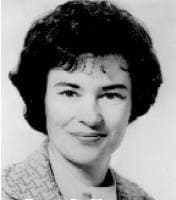
American · Science
Patsy O’Connell Sherman
September 15, 1930 – February 11, 2008
Early Life and Background
Patsy O’Connell Sherman was born on 15 September 1930 in Minneapolis, Minnesota, United States.[1][2][3] She grew up in a Midwestern environment shaped by the economic aftermath of the Great Depression and the rapid scientific and technological changes of the Second World War and early Cold War period. Biographical accounts note that she showed strong aptitude and interest in mathematics and science from a young age, at a time when girls were typically steered away from such fields.[4][5]
Sherman attended Minneapolis North High School, where her teachers recognized and supported her talent for the sciences.[5][8] Her success in high school prepared her for college study at a time when relatively few women went on to earn degrees in scientific disciplines.
After completing secondary school, she enrolled at Gustavus Adolphus College in St. Peter, Minnesota, a liberal arts institution affiliated with the Swedish Lutheran tradition.[1][10] There she pursued a demanding course of study in both chemistry and mathematics. She graduated in 1952 with a Bachelor of Science degree in these fields.[1][4][10] Several later sources describe her as the first woman at Gustavus Adolphus College to earn that particular combination of degrees, underscoring the rarity of women in advanced scientific study at the time.[4][7][8]
Career Beginnings at 3M
Following her graduation in 1952, Sherman joined the research staff of the 3M Company (Minnesota Mining and Manufacturing) as a research chemist.[1][9][10][11] Contemporary accounts emphasize that she was initially hired on a temporary basis because corporate policy and social assumptions often treated women scientists as short‑term employees who would eventually leave to marry and care for families.[7] In contrast, Sherman remained at 3M for her entire professional career.
At 3M she was assigned to work on fluorochemicals, specifically to develop a new type of rubber resistant to deterioration from jet aircraft fuel for use in fuel hoses and related components.[10][11] This project reflected broader postwar aerospace and industrial priorities: by the early 1950s, jet propulsion was rapidly expanding, creating demand for materials that could withstand aggressive fuel chemistries and operating conditions.
The Accidental Discovery Leading to Scotchgard
The pivotal moment in Sherman’s scientific career occurred in the early stages of her fluorochemical research. In 1952, a fluorochemical compound prepared for the jet‑fuel‑resistant rubber project was accidentally spilled onto a lab assistant’s white canvas tennis shoes.[4][9][10][11] Efforts to clean the shoes using solvents and detergents failed, yet the treated area showed remarkable resistance to water and oily substances. Rather than dismiss the incident, Sherman recognized that this unexpected behavior indicated a potentially valuable property: a material capable of repelling stains.
Intrigued by the spill, Sherman and fellow 3M chemist Samuel Smith began systematic research into the stain‑repellent characteristics of these fluorochemical polymers. By 1953, they were devoting focused collaborative work to designing polymers that would repel both oil and water from textiles, especially the wool and synthetic fabrics increasingly used in consumer products.[10][11]
Over roughly three years of development, they refined the fluorochemical structures and application methods. By around 1955, 3M had secured patent protection and was preparing to release the new technology to the market.[9][11] In 1956, 3M introduced the first Scotchgard products, marketed initially as a stain‑repellent treatment for wool fabrics.[9][10][11] The product quickly gained commercial traction and would soon be applied to clothing, household linens, upholstery, and carpeting.
Development and Patenting of Scotchgard Technology
As Scotchgard’s applications expanded, Sherman and Smith continued to refine the underlying chemistry. Their work culminated in the late 1960s in a fluorochemical polymer that not only repelled stains but also facilitated the removal of oily soils from synthetic textiles, including the then‑popular permanent‑press fabrics.[10][11] This dual property—repelling liquids while enabling cleaning—distinguished Scotchgard within the consumer and industrial markets.
The legal cornerstone of this technology was United States Patent 3,574,791, titled "Block and graft copolymers containing water‑solvatable polar groups and fluoroaliphatic groups." The patent was granted on 13 April 1971 to Patsy O’Connell Sherman and Samuel Smith as co‑inventors.[4][2] It documented the molecular architecture of the copolymers and secured 3M’s exclusive rights to exploit the technology in commercial products.
According to later accounts, Scotchgard became one of 3M’s most valuable product lines, eventually generating over $300 million annually and becoming one of the most widely used stain repellents and soil‑removal agents in North America.[10][11] Sherman and Smith jointly held 13 patents in the fields of fluorochemical polymers and polymerization processes, illustrating the breadth of their contribution to applied polymer chemistry.[10][11][6]
Other Scientific Contributions
Beyond Scotchgard, Sherman contributed to other innovations in applied chemistry. Several sources credit her with developing an early or first "optical brightener" for laundry detergents, a compound that made fabrics appear "whiter than white" by enhancing the reflection of blue light.[4][8][6] This type of innovation allowed detergent manufacturers to market improved visual brightness of washed clothes, further demonstrating Sherman’s impact on everyday consumer chemistry.
Over the course of her career at 3M, she advanced through research and managerial roles, eventually serving as Technical Development Manager before her retirement.[4][10][11] Her work bridged laboratory chemistry, product development, and strategic management within a major multinational corporation.
Awards, Honors, and Recognition
Sherman’s contributions to industrial chemistry and invention garnered significant recognition. She became a Distinguished Alumna of Gustavus Adolphus College, reflecting the institution’s pride in her achievements in science and innovation.[10]
She was elected to the Minnesota Inventors Hall of Fame, an honor that recognized her role in developing Scotchgard and other fluorochemical technologies.[10][11] Secondary sources later described her as the first woman inducted into that Hall, highlighting her barrier‑breaking presence in a field historically dominated by male inventors.[7]
In 2001, Sherman was inducted into the National Inventors Hall of Fame in the United States, specifically for her co‑invention of Scotchgard.[10] The Hall of Fame emphasizes that Scotchgard became one of the most widely used and economically significant stain‑repellent products, and that Sherman’s patents and research played a central role in its success.
Her career also brought recognition within 3M. She was a member of the company’s elite Carlton Society, which honors top scientists and technical innovators in the corporation.[7] Later profiles note that she was the first woman to be inducted into this society, illustrating how her achievements opened institutional doors for later women scientists.
In 2002, Sherman was invited to speak at the United States Patent and Trademark Office’s 200th anniversary celebrations, appearing alongside inventors such as Steve Wozniak.[3][7] Her presence at this event underscored her status as a nationally recognized inventor and role model.
Personal Life
Biographical accounts note that Patsy O’Connell married Hubert Sherman and had children, while continuing her full‑time career at 3M.[4] Her decision to remain in industrial research after marriage and motherhood ran against prevailing expectations in the mid‑twentieth century United States, where married women—particularly mothers—were often pressured to leave professional employment.
Her husband, Hubert Sherman, died in 1996.[4] Patsy’s own life story thus includes not only scientific achievement but also the negotiation of family responsibilities and professional identity, illustrating the broader challenges faced by women in science seeking to sustain long-term careers.
Retirement and Later Life
Sherman retired from 3M in 1992, holding the title of Technical Development Manager.[4][10][11] By that point, she had spent four decades with the company, contributed to numerous patents, and helped oversee the evolution of Scotchgard and related fluorochemical products.
In retirement, she remained connected to the scientific and educational communities through honors, alumni activities, and public recognition of her work. Her induction into the National Inventors Hall of Fame in 2001 and her participation in the USPTO bicentennial celebrations in 2002 reflect her continued public profile in the realm of invention and science education.[10][3][7]
Patsy O’Connell Sherman died on 11 February 2008 in Minneapolis at the age of seventy‑seven.[1][2][3][4][5] Obituaries and retrospective articles emphasized her role as co‑inventor of Scotchgard and as a pioneering woman chemist in industrial research.
Legacy and Historical Impact
Sherman’s legacy operates on several levels. In the realm of industrial chemistry, she is best known for co‑inventing Scotchgard, a fluorochemical treatment that transformed the way consumers and industries protected fabrics from stains and moisture. The product’s success—economically, technically, and culturally—illustrates the powerful impact of applied polymer chemistry on everyday life.[10][11]
From the perspective of women’s history in science, Sherman’s career is significant because she pursued advanced study in chemistry and mathematics at a time when very few women did so, joined a major corporate research laboratory, and remained there throughout her working life. She progressed from a temporary hire to a senior technical manager, accumulated multiple patents, and gained honors that initially had gone primarily to male scientists and inventors.[4][7][10]
Her story is frequently cited in discussions of "accidental inventions"—innovations that arise from unplanned experimental outcomes. Scotchgard is often listed among the most notable accidental inventions, demonstrating how scientific curiosity and systematic follow‑up can convert serendipitous events into major technological advances.[5][7]
Moreover, Sherman’s work on optical brighteners and other consumer‑oriented chemical products highlights the central but often under‑acknowledged role of women chemists in shaping domestic technology. Her inventions changed how people cleaned, protected, and perceived everyday textiles, blending polymer science with social practices of housekeeping and garment care.
In later years, tributes and educational profiles—including features in women‑in‑science platforms and innovators’ histories—have presented Sherman as a role model who broke gender barriers and demonstrated that women could lead significant research and development in industrial settings.[7][8][9][11] Her induction into state and national inventors’ halls of fame ensures that her name remains part of the broader narrative of American ingenuity and innovation.
Assessment
For historians and educators, Patsy O’Connell Sherman embodies several key themes in twentieth‑century science and technology: the rise of corporate research laboratories, the importance of polymer chemistry in consumer products, the role of accident and serendipity in innovation, and the gradual—but still incomplete—opening of scientific careers to women. Her co‑invention of Scotchgard and related work stand as concrete achievements, while her career trajectory offers insight into the institutional structures and social expectations that women scientists navigated in the postwar United States.
Her life and work continue to be cited in discussions about encouraging girls and women to pursue chemistry and engineering, and about recognizing the contributions of women whose inventions have profoundly shaped everyday life.
Dated achievements
8 indexed.
- Sep151930Science
Birth of Patsy O'Connell Sherman
Born in Minneapolis, Minnesota, United States.
View details Wikipedia: Patsy O'Connell Sherman - Jun011952Science
First woman to graduate from Gustavus Adolphus with B.S. in chemistry and mathematics
Graduated from Gustavus Adolphus College with a B.S. in chemistry and mathematics, breaking a gender barrier.