← All women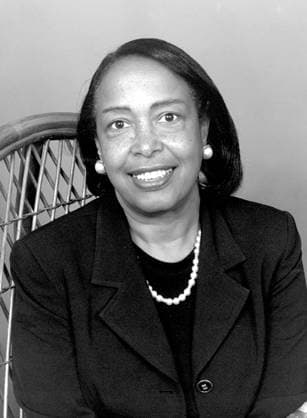
American · Medicine · Science
Patricia Bath
November 4, 1942 – May 30, 2019
Early Life and Education
Patricia Era Bath was born on November 4, 1942, in Harlem, New York City, to Rupert and Gladys Bath. Her father, an immigrant from Trinidad, worked variously as a merchant seaman, subway train motorman, and newspaper columnist, and instilled in his daughter a love of travel and cultural exploration. Her mother, whose ancestry included both enslaved African Americans and Cherokee people, worked as a domestic worker to help fund her children's education, and famously bought young Patricia a chemistry set — a rare and formative gift for a Black girl in 1950s Harlem that sparked a lifelong passion for science.
Bath attended New York City public schools, where her intellectual gifts were quickly recognized. While still in high school, she won a National Science Foundation scholarship to conduct cancer research, a highly unusual opportunity for a Black teenager in that era. Her research findings so impressed her mentor, Dr. Robert Bernard, that they were incorporated into a scientific paper presented at a conference, and Bath was honored by Mademoiselle magazine for her contribution to science.
She went on to earn a B.A. in chemistry from Hunter College in 1964. She then enrolled at Howard University College of Medicine, one of the historically Black institutions that provided crucial opportunities for Black medical students largely excluded from other American medical schools. At Howard, in 1965, she became the first woman president of the Student National Medical Association, an organization she helped found. She graduated with honors, earning her M.D. in 1968. That same year, amid the national upheaval following the assassination of Martin Luther King Jr., Bath organized medical students to volunteer in support of the Poor People's Campaign, reflecting her early and enduring commitment to using medicine in service of social justice.
Career Beginnings and the Discovery of 'Community Ophthalmology'
Following medical school, Bath completed an internship at Harlem Hospital and a fellowship in ophthalmology at Columbia University. During this period, she made an observation that would shape the rest of her career: at the eye clinic at Harlem Hospital, which did not even have an ophthalmology service until she helped establish one, she found that half of the patients were blind or visually impaired, a rate far higher than at the Columbia clinic, where she also worked. She conducted a retrospective epidemiological study demonstrating that blindness among Black patients was double that of white patients, and that this disparity was linked to lack of access to eye care rather than any biological difference.
This finding led her to develop the concept of 'community ophthalmology', a new discipline combining public health outreach, community medicine, and clinical ophthalmology to bring eye care and vision screening to underserved communities that lacked adequate access to specialists. In November 1969, working with a Columbia University ophthalmology team she helped organize, Bath performed her first eye surgery at Harlem Hospital, the culmination of her efforts to bring specialized ophthalmic services to a hospital that had previously lacked them.
In 1970, Bath became the first African-American to complete a residency in ophthalmology, training at New York University from 1970 to 1973 — a period during which she reportedly faced and overcame significant racial and gender discrimination, including being told she should apply to be a nurse rather than a physician when she first sought opportunities in the field.
Academic Career and Founding the American Institute for the Prevention of Blindness
In 1974, Bath joined the faculty of both the University of California, Los Angeles (UCLA) and Charles R. Drew University of Medicine and Science, and was appointed assistant chief of the King-Drew-UCLA Ophthalmology Residency Program. According to the National Library of Medicine, in 1975 she became the first woman faculty member in the Department of Ophthalmology at UCLA's Jules Stein Eye Institute (Wikipedia dates this to 1974). In either case, this appointment marked a historic breakthrough for women in academic ophthalmology at one of the nation's most prestigious eye institutes.
In 1976, Bath co-founded the American Institute for the Prevention of Blindness (AIPB), an organization built on the principle that 'eyesight is a basic human right.' Through the AIPB, Bath championed global outreach efforts to prevent and treat blindness, particularly in underserved communities in the United States and developing nations, cementing community ophthalmology as a recognized area of practice and advocacy.
In 1983, Bath achieved another historic milestone, becoming the first woman in the United States to chair an ophthalmology residency training program, at King-Drew-UCLA. This position placed her in charge of training the next generation of ophthalmologists at a time when women, and especially Black women, remained a small minority in leadership positions throughout academic medicine.
The Laserphaco Probe: A Landmark Invention
Bath's most enduring legacy stems from her invention of the Laserphaco Probe, a device that revolutionized cataract surgery. Cataracts — clouding of the eye's natural lens — were, and remain, one of the leading causes of blindness worldwide, particularly in developing countries with limited access to modern surgical techniques. Traditional cataract removal relied on mechanical grinding instruments that were invasive, imprecise, and prone to complications.
In 1981, Bath conceived of a laser-based alternative that could more precisely ablate (vaporize) the cataract while simultaneously irrigating and cleaning the eye, allowing for the easy insertion of a replacement intraocular lens. Frustrated by limited access to the laser technology and research support she needed in the United States, she spent a sabbatical in 1986 at laser research centers in Paris and Berlin, where she completed development and testing of her invention.
On May 17, 1988, Bath was granted US Patent 4,744,360 for the Laserphaco Probe, making her the first African-American woman physician to receive a patent for a medical purpose. This landmark achievement was followed by four additional patents over the next fifteen years: a refined Laserphaco method patent on December 1, 1998 (US 5,843,071); a laser apparatus patent on July 6, 1999 (US 5,919,186); a pulsed-ultrasound cataract removal patent on July 4, 2000 (US 6,083,192); and a combined ultrasound-and-laser method patent on April 8, 2003 (US 6,544,254). Collectively, these five patents represent one of the most significant and sustained bodies of medical invention by any American physician of her generation, and her technology has been credited with restoring sight to patients around the world, including those who had been blind for decades.
Awards, Honors, and Recognition
Bath's contributions were recognized with numerous honors throughout her career and after her death. She was inducted into the American Medical Women's Association Hall of Fame in 2001. In 2017, she was named in Time magazine's list of 'Firsts: Women Who Are Changing the World.' Her most prominent posthumous honor came on May 5, 2022, when she and fellow inventor Marian Croak were inducted into the National Inventors Hall of Fame, becoming the first Black women ever inducted in the Hall's history. In 2024, she was further honored with induction into the National Women's Hall of Fame.
In one of her final public acts, on April 3, 2019, Bath testified before the US Senate Judiciary Committee at a hearing titled 'Trailblazers and Lost Einsteins: Women Inventors and the Future of American Innovation,' advocating for policies to support women and minority inventors, drawing on her own trailblazing career as an example of both the barriers and the possibilities facing underrepresented innovators.
Personal Life
Bath married and had a daughter, Eraka Bath, who became a physician herself, specializing in child and adolescent psychiatry. Bath's personal commitment to family was matched by her professional dedication to mentorship, and she was known throughout her career for encouraging young women and minority students to pursue careers in science and medicine, often citing her own mother's chemistry set as an example of how early encouragement could change a life's trajectory.
Later Life, Death, and Legacy
Bath retired from her position at UCLA in 1993, becoming the first woman elected to UCLA Medical Center's honorary staff. Even after retirement, she remained active in advocacy, mentorship, and continued innovation, filing additional patents into the early 2000s. She also pursued telemedicine initiatives aimed at bringing ophthalmic expertise to remote and underserved areas through digital technology, extending her community ophthalmology philosophy into the digital age.
Patricia Bath died on May 30, 2019, in San Francisco, California, at the age of 76, from complications related to cancer. Her death came just weeks after her Senate testimony, a fitting final chapter to a life spent breaking barriers and advocating for equity in science and medicine.
Bath's legacy endures across multiple dimensions: as a clinician who transformed access to eye care for underserved communities through community ophthalmology; as an inventor whose Laserphaco technology has restored sight to countless patients worldwide; and as a trailblazer who broke through racial and gender barriers at nearly every stage of her career, from her Howard University leadership role to her residency, faculty appointments, and patents. Her posthumous inductions into the National Inventors Hall of Fame and National Women's Hall of Fame have cemented her place in American history as one of the most significant medical inventors and physicians of the twentieth century, and her story continues to inspire new generations of women and people of color pursuing careers in STEM fields.
Dated achievements
9 indexed.
- Nov041942Science
Born in Harlem, New York
Patricia Era Bath born in Harlem, New York City, to a father who was a train conductor and merchant seaman and a mother descended from enslaved Africans and Cherokee ancestry.
View details Patricia Bath - Wikipedia - May171988Science
First African-American woman physician to receive a medical patent
Granted US Patent 4,744,360 for the Laserphaco Probe, a laser device to remove cataracts, making Bath the first African-American woman physician to hold a medical patent.