← All women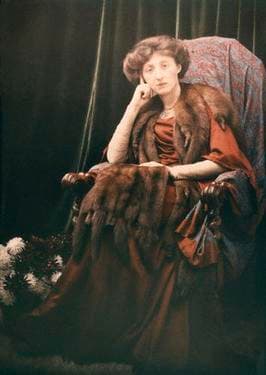
British · Arts
Olive Edis
September 3, 1876 – December 28, 1955
Early Life and Background
Olive Edis was born on September 3, 1876, in London, England, into a family with artistic tendencies. Her father, Arthur Wellesley Edis, was a surgeon, and her mother, Mary Amanda Edis, encouraged creativity. Raised in a supportive environment, Olive showed an early interest in the visual arts, likely influenced by her cousin, the painter Sir William Edis.
Career Beginnings and Development
Olive's career in photography began in 1900 when she purchased her first camera. By 1905, she had opened a studio in Sheringham, Norfolk. Her early works focused on capturing local fishermen and community figures. Her photography style was characterized by natural light and an ability to encapsulate the personality of her subjects.
In 1914, she became one of the first female photographers inducted into the Royal Photographic Society, marking the start of broader recognition for her work
Major Works, Discoveries, or Accomplishments
During World War I, Olive Edis was commissioned by the Imperial War Museum as Britain's first official female war photographer. Her assignment took her to the Western Front in 1919, where she documented the aftermath of the war, capturing both the destruction and the human spirit. Her images from this period are significant historical artifacts today.
Edis was also known for her portraits of notable figures, including Prime Minister David Lloyd George, the suffragette Emmeline Pankhurst, and writer Thomas Hardy. Her portraits are distinguished by their ability to convey the essence of her sitters and remain influential in the field of portrait photography.
Awards, Honors, and Recognition
Throughout her career, Olive Edis received numerous accolades. Her work was featured in several prestigious exhibitions, and she maintained a successful commercial studio, which was unusual for women at the time. Her photographs have been preserved in noteworthy collections such as those of the National Portrait Gallery in London.
Personal Life
Olive Edis married Edwin Henry Galsworthy, a distant relative of author John Galsworthy, in 1928. They had no children. Her marriage to Edwin brought her into contact with literary circles, which she sometimes tapped for her portrait subjects.
Legacy and Historical Impact
Olive Edis' legacy is profound in the realms of female empowerment and documentary photography. She broke barriers in a male-dominated field, providing a template for future generations of female photographers. Her work is a testament to the evolving role of women in professional spaces during the early 20th century.
Later Life and Death
Edis continued to work until her health declined. She died on December 28, 1955, in her studio in Sheringham. Her body of work remains influential, studied for its artistic and historical significance.
Dated achievements
2 indexed.
- Sep031876Science
Born in Chelsea, London
Olive Edis was born on 3 September 1876 in Chelsea, London, to a family that encouraged her early interest in photography.
View details Olive Edis - Wikipedia - Mar281955Science
Died in Sheringham, Norfolk
Olive Edis died on 28 March 1955 in Sheringham, Norfolk, the town where she had built her celebrated photography studio.