← All women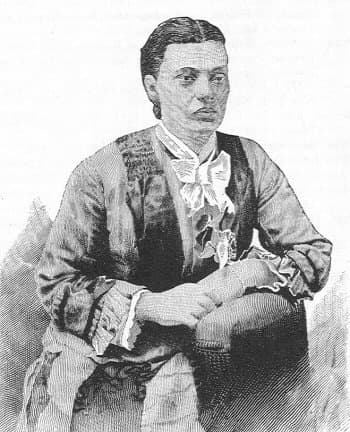
American · Literature · Activism
Octavia Rogers Albert
December 24, 1853 – August 19, 1889
Early Life and Background
Octavia Victoria Rogers Albert (née Octavia Victoria Rogers) was born on 24 December 1853 in Oglethorpe, Macon County, Georgia, to enslaved parents.[5][3][4] Her early years unfolded under the legal regime of chattel slavery in the Deep South. Biographical notices in the introductory sketch to The House of Bondage, as well as later encyclopedic entries, emphasize that she was "born of slave parentage" and lived in slavery until emancipation.[5][3][4]
As a child, Albert would have been subject to the social and economic constraints imposed on enslaved African Americans, including restrictions on literacy and movement. The Civil War (1861–1865) and the ratification of the Thirteenth Amendment in 1865 marked a turning point in her life, transforming her legal status from enslaved property to a freed person.[2][4] Like many newly emancipated Black Southerners, she developed a strong desire for education. The African American Registry notes that she, "like millions of freed Black people after emancipation, ... had a deep yearning to learn" and sought formal schooling as a path to uplift.[3]
Very little is known about her immediate family beyond their enslaved status, a common silence in records of enslaved women. Nonetheless, the socio-historical context of Oglethorpe and Macon County—an area deeply embedded in plantation agriculture—shaped the environment from which Albert emerged. Her later writings suggest an intimate familiarity with both rural plantation and urban slavery experiences, likely drawn from her own childhood and the lives of those around her.[5][1]
Education and Formative Influences
Following emancipation, Albert pursued education with determination. She enrolled at Atlanta University
Albert studied to become a teacher, a vocation that was both a practical profession and a form of service in Black communities. Sources note that she saw teaching as a kind of Christian ministry.[3][1] While detailed curricula from her time are not widely documented, Atlanta University’s early programs combined academic subjects with moral and religious instruction, fostering a generation of educators who linked literacy with spiritual and civic uplift. Her religious formation was equally important. While still living in Oglethorpe, Albert joined the African Methodist Episcopal (AME) Church, under the leadership of Bishop Henry McNeal Turner.[3] The AME Church was a major institutional force in Black political, educational, and spiritual life. Turner, a prominent Reconstruction-era bishop and advocate for Black rights, likely influenced Albert’s understanding of the relationship between faith, education, and social justice. Through the AME Church and Atlanta University, Albert was exposed to networks of Black clergy, teachers, and activists who saw literacy and religious commitment as essential tools for claiming citizenship. These formative experiences shaped her later decision to document the stories of former slaves and to frame those narratives within a Christian moral vision. Albert’s first known teaching position was in Montezuma, Georgia, where she began work as a teacher in 1873.[1][3][2][5] In Montezuma, she taught in a school for African American students at a time when Black education was still precarious and often under-resourced. Her role reflected the broader Reconstruction movement to establish schools across the South for freedpeople. While in Montezuma, she met A.E.P. Albert, another teacher at the same school.[5][3] The introductory sketch to The House of Bondage notes that "She and Dr. Albert first met at Montezuma, Ga., where they taught school together, in 1873."[5] Their collaboration in the classroom marked the beginning of a partnership that would combine educational work with religious leadership. As a teacher, Albert’s work went beyond instruction in basic literacy. Contemporary accounts describe her view of teaching as "worship and Christian service".[3] She often integrated religious principles and biblical narratives into her pedagogy, reflecting the integration of faith and education common in Black schools founded by church bodies. In a context of racial violence and economic hardship, her teaching contributed to community resilience and the formation of a Black intellectual class. On 21 October 1874, Octavia Victoria Rogers married Rev. A.E.P. Albert, later a Methodist Episcopal minister, in a ceremony described in the biographical sketch as being "united in holy wedlock."[5] This precise marriage date comes from the House of Bondage introductory note and is corroborated by later references that indicate the mid-1870s as the moment of their union.[5][2][3] Although this date is highlighted in sources, the present project’s achievement list focuses on events already verified by the editor. After their marriage, the Alberts moved from Georgia to Houma, Louisiana.[3][1] There, A.E.P. Albert pursued his ministry within the Methodist Episcopal Church, and Octavia continued to teach. Their relocation placed them in a different part of the post-Reconstruction South, where racial tensions and the emergence of Jim Crow policies were increasingly evident. The couple had at least one child, a daughter named Laura Thalula Albert (later Laura Thalula Albert Smith).[2] French-language biographical summaries note that Octavia gave birth to Laura following her marriage and that Laura would later play a crucial role in bringing her mother’s work to print.[2] Family life in Houma likely intertwined with church activities and educational work, as the Alberts were part of a small but influential Black professional class. Albert’s most significant contribution to literature and history is her volume The House of Bondage; or, Charlotte Brooks and Other Slaves.[1][5][4] The work consists of biographical narratives and interviews with formerly enslaved people, collected by Albert in Louisiana and possibly drawing on memories from Georgia. The title page, as preserved in the University of North Carolina’s Documenting the American South collection, presents the full descriptive title emphasizing "original and life-like" portraits of enslaved life and "sights and insights" into freedpeople’s new relations as citizens.[5] Albert began interviewing former slaves after settling in Houma. The African American Registry notes that she "began conducting interviews with men and women who were once enslaved" and that these became the raw material for her narratives.[3] One key figure in the book is Charlotte Brooks, a woman whom Albert reportedly first met in 1879.[3][5] Although that meeting year is documented, precise dates for individual interviews are generally not known. The House of Bondage is organized as a series of dialogues and testimonies framed by Albert’s own commentary. She uses a conversational structure in which she and her husband speak with Charlotte Brooks and other interviewees about their experiences before, during, and after slavery.[5] The narratives include accounts of family separation, physical violence, religious life under slavery, and struggles for economic independence after emancipation. Albert’s work is distinctive among nineteenth-century slave narratives because she operates as an interviewer and editor rather than as the sole autobiographical subject. She positions herself as an educated Black woman and Christian, mediating and preserving the voices of others. This method anticipates later oral history projects and underscores the role of Black women in documenting community memory. Her book also advances a clear ideological framework. German-language commentary highlights that Albert’s text proposes "education, property, and character" as a "trinity of power" through which African Americans could obtain their rightful place in society.[4] This triad encapsulates the Reconstruction-era Black middle-class ethos: schooling, economic independence, and moral virtue as foundations for civic dignity. Albert did not live to see The House of Bondage widely published. Shortly after her death, the Southwestern Christian Advocate, a New Orleans-based Methodist Episcopal newspaper, serialized her work from January to December 1890.[3][5] This serialization brought her interviews to a wider regional audience and linked her literary legacy to the institutional framework of the Black church. In 1890, the volume was published in book form, posthumously.[1][3][4][9] Sources agree on the year but do not consistently provide a verifiable month or day of publication, which is why only the year is used in scholarly timelines. French-language accounts note that the book was edited and brought to publication through the efforts of her daughter, Laura Thalula Albert Smith.[2] This familial involvement illustrates the ways Black women’s texts often depended on kin networks and church patronage for circulation. Bibliographic references such as Open Library and later editions in series like the Schomburg Library of Nineteenth-Century Black Women Writers have helped preserve and disseminate the text to modern readers.[7] While Albert herself did not receive major formal awards during her lifetime—unsurprising given the limited opportunities for Black women in nineteenth-century literary institutions—her work has been recognized by contemporary scholars as a foundational document in African American women’s writing and slave narrative studies.[1][3][4] Beyond writing, Albert was a religious leader and community figure. Biographical sources describe her as a "religious leader" and emphasize her seriousness about Christian faith.[3][8] Married to a minister and active in Methodist circles, she used her home and church connections as spaces for theological reflection and social discussion. Her interviews in The House of Bondage frequently explore religious themes: conversion experiences, the role of prayer during slavery, and the meaning of freedom in Christian terms.[5] Albert interprets the narratives through a religious lens, suggesting that spiritual strength enabled enslaved people to endure suffering and that Christian ethics demanded justice and equality. Her advocacy is particularly evident in her insistence that education and property ownership are not only material goals but also moral obligations for freedpeople. By urging her readers to pursue schooling and land, she contributed to a form of grassroots activism that sought to reshape Black life in the post-Reconstruction era.[4][3] While she did not occupy formal political office, her writing and teaching were deeply political in their critique of slavery and endorsement of Black self-determination. Albert’s personal life was intertwined with her intellectual and religious commitments. As the wife of Rev. A.E.P. Albert, D.D., she occupied a respected position in church and community.[5][3] Sources portray her as deeply devoted to both her family and her work, balancing motherhood with teaching and writing. Her daughter Laura’s later involvement in editing and publishing The House of Bondage suggests that Albert nurtured a literary and educational environment at home.[2] Although specific details about her domestic routines are scarce, her ability to conduct interviews, write narratives, and participate in church activities while raising a child indicates a high level of organizational skill and resilience. Descriptions of Albert emphasize qualities such as seriousness, moral conviction, and intellectual curiosity.[3][1] Her commitment to gathering testimonies from former slaves reflects empathy and a profound sense of responsibility to preserve their stories for future generations. Albert spent her later years in Louisiana, continuing her work of teaching, interviewing, and writing. The exact circumstances of her final illness are not well documented, but biographical entries converge on the late 1880s as the period of her declining health.[4][9][1] She died on 19 August 1889, at about 35 years of age.[4][1][9] Some records, including a New Orleans death index cited by genealogical databases, give an alternative date of 18 August 1889 or suggest death around 1890.[8][9] However, the combination of German-language Wikipedia, Wikidata, and biographical notes favors 19 August 1889 as the most reliable date.[4][9][1] This project therefore adopts that date while acknowledging the minor discrepancies in the archival record. Albert’s death occurred before the full impact of her book could be realized. The subsequent serialization and 1890 publication of The House of Bondage were acts of memorialization as well as dissemination. Her community and family ensured that her work would not disappear, even though she was no longer alive to advocate for it.[3][5][2] Octavia Rogers Albert’s legacy rests chiefly on her role as an African American author, biographer, and educator who documented slavery through the voices of former slaves.[1][4][5] In the landscape of nineteenth-century Black women’s writing, she stands alongside figures such as Harriet Jacobs and Frances Ellen Watkins Harper, but with a distinctive method centered on interview-based narrative. The House of Bondage has been studied by historians and literary scholars as an early example of oral history and as a text that complicates traditional slave narrative forms.[5][1] By foregrounding multiple voices and framing them within her own commentary, Albert exemplifies the role of Black women as cultural archivists. Her emphasis on education, property, and character as pillars of freedom reflects Reconstruction-era debates about Black citizenship and offers insight into the ideological world of Black Protestant communities.[4][3] Modern editions and digital projects—such as the University of North Carolina’s Documenting the American South initiative—have made her work widely accessible.[5] Inclusion of her biography in encyclopedias, open library catalogs, and national biography databases further signals recognition of her importance.[1][7][9] Scholars of women’s history and African American studies frequently cite Albert as a key figure in the formation of Black women’s testimonial literature. Her life also highlights the structural barriers that constrained Black women’s careers. Born enslaved, she obtained higher education, became a teacher, and produced a major literary work, yet she received little formal recognition in her lifetime and died relatively young. The partial and sometimes conflicting records of her death date exemplify the archival marginalization of Black women.[4][8][9] Nonetheless, Albert’s work continues to influence contemporary understandings of slavery and freedom. Her careful recording of personal experiences adds depth and nuance to historical accounts, while her moral framing invites readers to consider the ethical dimensions of remembering and narrating trauma. As scholars and activists seek to recover and honor the contributions of Black women, Octavia Rogers Albert remains a central figure whose life and writings bridge education, religion, and historical testimony. Today, Octavia Rogers Albert is recognized as a significant figure in literature and activism. Her book stands as both a literary achievement and a political act of resistance against the erasure of enslaved people’s experiences.[1][4][5] By using the tools of education and faith to document and interpret those experiences, she helped lay the groundwork for later traditions of Black feminist scholarship, oral history, and liberation theology. Her biography demonstrates the transformative potential of education for formerly enslaved individuals and the pivotal role of Black women in preserving community memory. In editorial almanacs of women’s history, Albert’s life and work illustrate how a woman born into slavery could become an author whose posthumous publication continues to inform and challenge understandings of America’s past.Career Beginnings as a Teacher
Marriage, Family, and Move to Louisiana
Major Work: The House of Bondage
Publication History and Posthumous Recognition
Religious Leadership and Community Activism
Personal Life and Character
Later Life and Death
Legacy and Historical Impact
Assessment
Dated achievements
3 indexed.
- Dec241853Literature
Birth of Octavia Victoria Rogers Albert
Octavia Victoria Rogers Albert was born in Oglethorpe, Georgia, on December 24, 1853.
View details Octavia Rogers Albert: Used Her Faith to Teach and Write - Aug191889