← All women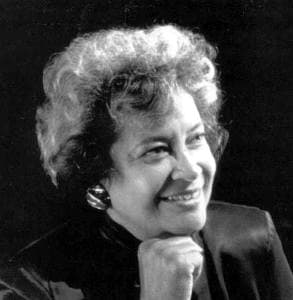
American · Arts
Norma Merrick Sklarek
April 15, 1928 – February 6, 2012
Early Life and Education
Norma Merrick Sklarek was born Norma Merrick on April 15, 1928, in Harlem, New York City. Her parents, Walter Ernest Merrick, a physician, and Amy Willoughby, had emigrated from Trinidad to the United States. Growing up in a household that emphasized education and professional achievement, Norma displayed early academic promise, particularly in mathematics and drawing, talents that would later serve her well in the technical and creative demands of architecture.
She attended Hunter College and briefly Barnard College before being accepted into the School of Architecture at Columbia University. At the time, architecture was one of the most exclusive professions in the United States, with women comprising a tiny fraction of practitioners and African Americans an even smaller minority. Nevertheless, Sklarek excelled academically and graduated with a Bachelor of Architecture degree from Columbia in 1950, one of only two women and the only Black student in her class.
Early Career and Barriers
Despite her Columbia degree, Sklarek faced immediate and severe obstacles entering the architecture profession. She later recounted applying to nineteen architecture firms after graduation and being rejected by every single one, attributing the rejections to the intersecting biases of racism and sexism prevalent in the field at the time. Unable to secure a position at a private firm, she instead took a job with the New York City Department of Public Works, where she gained valuable technical experience while continuing to seek broader opportunities.
In 1954, Sklarek passed the licensing examination for architects in New York on her first attempt—a remarkable achievement given the exam's notoriously low pass rates—and became the first African American woman to be licensed as an architect in New York State. This achievement opened doors, and she soon secured a position with the prominent firm Skidmore, Owings & Merrill (SOM), one of the most respected architecture firms in the country, where she worked for several years honing her skills on large-scale commercial and institutional projects.
Move to California and Rise at Gruen Associates
In the early 1960s, Sklarek relocated to Los Angeles and joined Gruen Associates, a firm renowned for its innovative work in shopping mall and commercial design under the leadership of Victor Gruen. In 1966, she became the first African American woman licensed as an architect in California, once again breaking new ground in a profession that remained deeply resistant to diversity.
At Gruen Associates, Sklarek's talents and leadership abilities were quickly recognized. She rose through the ranks to become director of architecture, making her the first Black woman to hold such a senior leadership position at a major American architecture firm. In this role, she oversaw and contributed to numerous significant projects, most notably serving as project director for Terminal One at Los Angeles International Airport (LAX), built for the 1984 Summer Olympics, and the U.S. Embassy in Tokyo, Japan. Her work on the Tokyo embassy was particularly notable because she directed the project extensively via long-distance coordination without ever traveling to Japan during a significant phase of design, showcasing her exceptional organizational and technical command of complex international projects.
She also contributed to the design of the Pacific Design Center in West Hollywood, an iconic blue-glass building that remains one of the most recognizable structures in Los Angeles. Her portfolio during this period reflected both technical mastery and an ability to manage large, logistically complex commissions—skills that distinguished her among her peers regardless of gender or race.
Leadership, Advocacy, and Mentorship
Throughout her career, Sklarek was outspoken about the need to open the architecture profession to women and people of color. She frequently mentored younger architects, particularly women and minorities, recognizing the isolation and obstacles she herself had faced as one of the few Black women in the field for much of her career. She served in leadership roles within professional organizations and used her visibility to advocate for structural change within architectural education and hiring practices.
In 1980, in recognition of her contributions to the field, Sklarek was elected a Fellow of the American Institute of Architects (FAIA), becoming the first African American woman to receive this honor. The AIA Fellowship is among the highest distinctions an architect can receive in the United States, awarded to those who have made significant contributions to the profession, and Sklarek's induction was widely recognized as a milestone for diversity within the institution.
Siegel, Sklarek, Diamond and Later Career
In 1980, Sklarek left Gruen Associates to become vice president at Welton Becket Associates, where she continued to lead major projects, including the design of Terminal One at LAX for the 1984 Olympics and the American Embassy in Tokyo. In 1985, she took an even bolder step, co-founding her own firm, Siegel, Sklarek, Diamond, together with architects Margot Siegel and Katherine Diamond. At the time, this firm was recognized as the largest architecture firm in the United States owned and operated entirely by women, a historic achievement that demonstrated the viability and success of women-led practices in a field long dominated by men.
The firm undertook a range of commercial, institutional, and public commissions, and its prominence helped to further validate the presence of women, and particularly women of color, in leadership roles within the architecture industry. Sklarek's decision to co-found the firm reflected her broader career-long philosophy: that creating new institutional structures was as important as breaking into existing ones.
Awards and Recognition
Over the course of her career, Sklarek received numerous honors reflecting her pioneering status. In addition to her AIA Fellowship in 1980, she was honored by the National Organization of Minority Architects (NOMA) and received a Lifetime Achievement Award from that organization. She was also recognized by the American Institute of Architects' Los Angeles chapter and various academic institutions for her contributions to the profession and her mentorship of underrepresented architects. Her career has been the subject of academic papers, museum exhibitions, and educational curricula focused on diversity in architecture and design.
The Smithsonian's National Museum of African American History and Culture holds archival materials related to her career, and organizations such as the Beverly Willis Architecture Foundation have profiled her extensively as part of efforts to document the history of women in architecture. Scholarships and awards have been established in her name to support architecture students from underrepresented backgrounds.
Personal Life
Norma Merrick was married three times. Her first marriage, to Bernard Sklarek, an engineer, is the source of the surname by which she became widely known professionally; the couple had two children together. After her first husband's death, she remarried twice more, including to fellow architect Rolf Sklarek. Little was publicized about her personal life relative to her professional accomplishments, as she maintained a career-focused public profile, though colleagues and family members described her as warm, disciplined, and deeply committed to mentoring young architects, particularly women and people of color entering the field.
Legacy and Death
Norma Merrick Sklarek died on February 6, 2012, in Pacific Palisades, California, at the age of 83. Her death prompted an outpouring of tributes from the architecture community, with obituaries in major publications including the Los Angeles Times emphasizing her role as a trailblazer who dismantled racial and gender barriers throughout her five-decade career.
Sklarek's legacy endures as a touchstone in discussions of diversity and inclusion within architecture. She is frequently cited alongside pioneers such as Julia Morgan and Beverly Loraine Greene as a foundational figure who expanded access to the profession for women and people of color. Her achievements as the first African American woman licensed in both New York and California, the first Black woman elected an AIA Fellow, and co-founder of one of the country's first major women-owned architecture firms remain benchmark milestones referenced in efforts to diversify architectural education and practice today. Numerous scholarships, lecture series, and mentorship programs bear her name, ensuring that her pioneering spirit continues to inspire new generations of architects.
Dated achievements
7 indexed.
- Apr151928Science
Born in New York City
Norma Merrick was born on April 15, 1928, in Harlem, New York City, to Trinidadian immigrant parents.
View details Norma Merrick Sklarek - Wikipedia - Jun011950Science
Graduated from Columbia University's School of Architecture
Sklarek earned her Bachelor of Architecture degree from Columbia University in 1950, one of very few Black women in her program.