← All women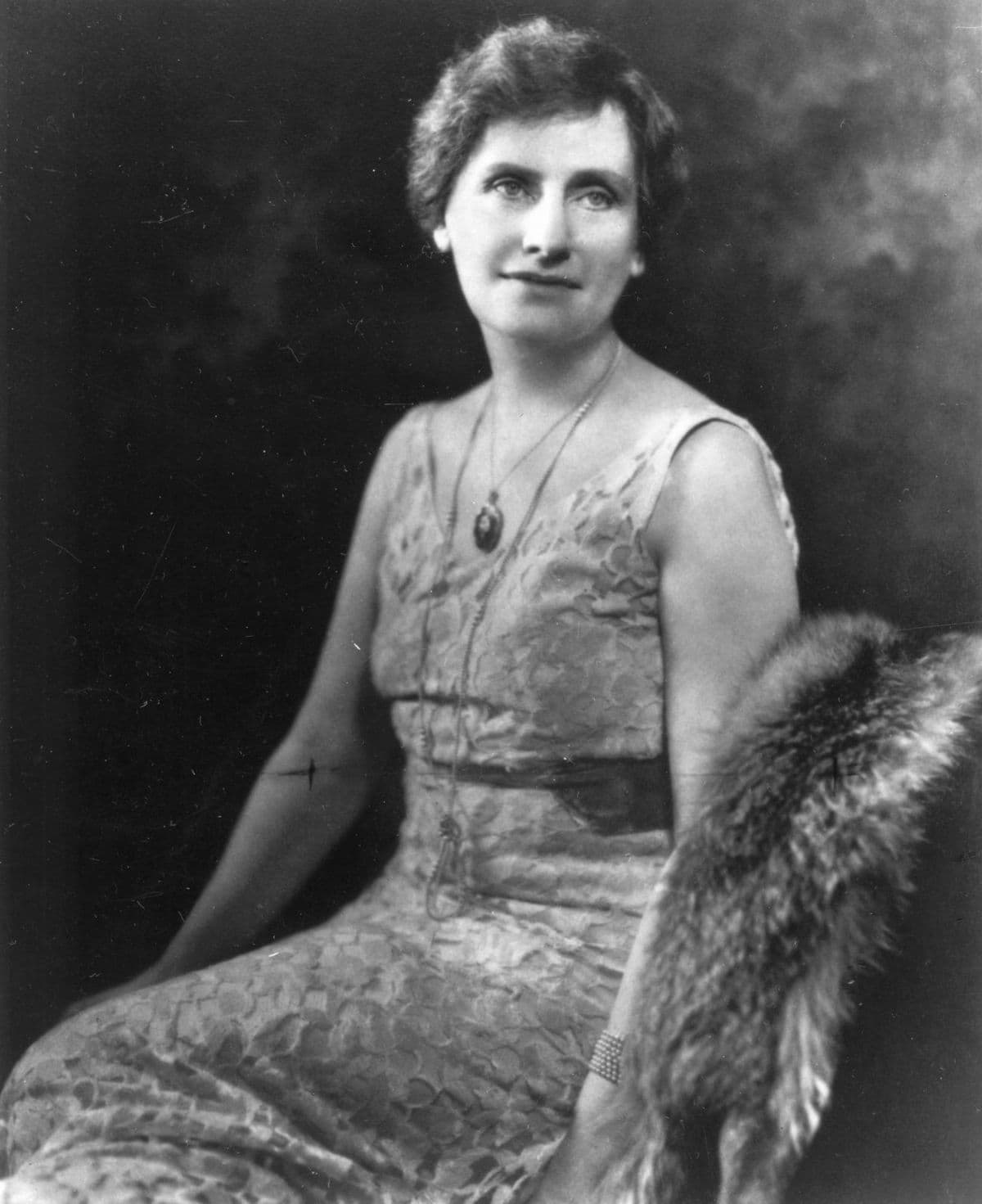
American · Politics · Activism
Nellie Tayloe Ross
November 29, 1876 – December 20, 1977
Early life and background
Nellie Davis Tayloe, later known as Nellie Tayloe Ross, was born on November 29, 1876, near St. Joseph, Missouri, into a family of modest prosperity and strong educational aspirations. Her birth in a border-state community in the post–Civil War era placed her at the intersection of rural life, Reconstruction politics, and changing expectations for women. Her parents, James Wynns (or Wynns) Tayloe, a merchant and farmer, and Elizabeth Blair Green Tayloe, valued learning and provided private tutoring when chronic ill health kept their daughter from consistent attendance in local schools.
Ross spent her childhood in Missouri and Kansas, where the Tayloe family moved in search of better opportunities. The region’s small towns offered limited formal schooling, especially for a girl whose health was fragile. According to later biographical accounts, she attended public school when able and otherwise studied at home under tutors engaged by her parents. This combination of irregular schooling and self-directed study fostered the disciplined reading habits and quiet resilience that would characterize her adult life.
As a young woman, Ross undertook professional training at a time when middle-class women’s work options were tightly constrained. She completed a two-year kindergarten teaching program in Omaha, Nebraska, preparing for a career in early childhood education. She then worked as a kindergarten teacher in Omaha until poor health forced her to resign. Teaching nevertheless provided her with experience in organization, public speaking to parents and civic groups, and leadership in a female-dominated profession—skills that would later translate unexpectedly to politics.
The household culture in which Ross was raised was shaped by Protestant values, a belief in public service, and a cautious but genuine openness to women’s education. While there is no evidence that her parents anticipated a political career for their daughter, they encouraged intellectual growth and community engagement. These formative influences, combined with her own experience of illness and economic uncertainty, later informed her sympathy for social reform and her instinct for pragmatic, fiscally cautious policy making.
Marriage, family, and move to Wyoming
In 1902, Nellie Tayloe’s life took a decisive turn from the Midwest to the American West. On September 11, 1902, she married William Bradford Ross, a lawyer and committed Democrat who would later become governor of Wyoming. The marriage joined a woman with quietly progressive views and strong organizational skills to a man deeply invested in public life and party politics.
Shortly after their marriage, the couple moved to Cheyenne, Wyoming, where William Ross established a law practice. Nellie adapted to her new environment by immersing herself in local civic and religious activities rather than formal employment. She became active in the Cheyenne Woman’s Club, the Boy Scouts, and the Episcopal Church, helping to build the community networks that would later sustain her political career. These roles were typical for middle-class women of her era but offered opportunities to develop leadership and public speaking skills.
The Rosses had twin sons, George and Ambrose, born in the early years of their marriage. Nellie’s primary public identity for two decades was that of a lawyer’s and later a governor’s wife and a mother. Yet within that role, she proved to be an able political partner. She assisted William Ross with campaign events, hosted gatherings, and participated in the informal persuasion that undergirded party politics in the early 20th century. Her home became a site of political discussion in a state that prided itself on its early support for women’s suffrage.
In 1922, William Bradford Ross was elected governor of Wyoming as a progressive Democrat. His victory brought Nellie into the governor’s mansion and further deepened her involvement in public affairs. Although she held no official position, she supported his efforts at tax reform, corporate regulation, and governmental transparency. Observers later recalled that she was an attentive listener, politically astute, and fully conversant with her husband’s policy agenda—qualities that would matter greatly after his sudden death.
Entry into politics and the 1924 gubernatorial campaign
Ross’s direct entry into partisan politics followed the broader transformation of women’s political status in the United States. After the Nineteenth Amendment granted women the right to vote nationwide in 1920, she became more active in the Democratic Party. She engaged in organizing and outreach, particularly to women voters whose support parties were eager to secure. This activity prepared her, largely without her realizing it, for a more public political role.
The turning point came in 1924. That year, her husband died unexpectedly while serving as governor. He was buried on October 4, 1924, in Cheyenne, with Nellie Tayloe Ross in attendance as his coffin was lowered into the ground. His death created a vacancy that would be filled through a special election. In the weeks that followed, Wyoming Democratic leaders urged Nellie to run to complete his term, arguing that she understood his program better than anyone and could carry it forward.
Initially reluctant, Ross reportedly declined the nomination more than once. She was grieving, attentive to her sons, and aware that no woman had ever served as governor of a U.S. state. Moreover, she would face a Republican opponent in a year when the national political climate favored Republicans. Yet party pressure and her own sense of duty to her husband’s unfinished agenda gradually changed her mind. She accepted the Democratic nomination later in 1924.
Ross conducted a relatively restrained campaign, consistent with the gender norms of the era. She did not undertake extensive whistle-stop tours but spoke through carefully arranged appearances, newspapers, and surrogates, emphasizing continuity with William Ross’s progressive platform: tax relief for farmers, honest and efficient government, and support for social reforms. Her candidacy was widely covered by the national press, which alternated between fascination and skepticism at the idea of a woman governor.
First woman elected governor of a U.S. state
On November 4, 1924, Wyoming voters went to the polls in the special gubernatorial election. Despite the Republican advantages that year, Ross defeated her Republican opponent and was elected governor, becoming the first woman in U.S. history elected as a state governor. Her victory drew national attention and was often contrasted with the contemporaneous campaign of Miriam "Ma" Ferguson in Texas, who would be elected later in November.
Ross’s election signaled both continuity and change. On the one hand, it reflected the still-common practice of "widow’s succession," in which parties turned to widows of male officeholders to capitalize on name recognition and sympathy. On the other hand, her election only four years after national woman suffrage suggested that voters were willing—at least under particular circumstances—to accept women in high executive office. Wyoming’s self-image as the "Equality State," the first U.S. territory to grant women the vote in 1869, provided a symbolic backdrop for the milestone.
Newspapers across the country published her photograph and speculated about how "Madam Governor" would govern. Commentaries alternated between praise for her poise and doubts about whether a woman could handle contentious issues such as taxation, banking regulation, and labor disputes. Ross, however, approached the office with serious intent, emphasizing that she was more than a figurehead for her late husband’s program.
Governor of Wyoming, 1925–1927
On January 5, 1925, Nellie Tayloe Ross took the oath of office as governor of Wyoming, becoming the first woman to serve as governor of a U.S. state. Her inauguration preceded that of Miriam Ferguson in Texas by fifteen days, cementing Ross’s precedence in the historical record. She would serve until January 3, 1927, when her term ended.
As governor, Ross pursued a progressive Democratic agenda in a state legislature dominated by Republicans, a political reality that limited what she could accomplish. Nonetheless, her policy priorities were clear. She emphasized:
- Tax relief for farmers, who were suffering from falling prices in the post–World War I agricultural recession.
- Stricter regulation of state banks, including opposition to proposals that would have given the state bankers’ association more power over examining officials; she favored making bank examiners responsible to the governor to reduce the risk of failures.
- Transparent budgeting, urging counties, school boards, and the state government to prepare and publish budget statements before levying taxes.
- Mine safety and labor protections, including support for stronger safeguards in Wyoming’s important mining sector.
- Child labor restrictions and expanded educational opportunity, consistent with broader Progressive Era reforms.
Ross also supported Prohibition, aligning with the temperance movement that had contributed to the Eighteenth Amendment. This position, while popular among some reformers, was controversial in other circles and may have contributed to political opposition.
Her administration faced resistance from legislators who disagreed with her policies and, at times, questioned her authority in ways that reflected gender bias. Some opponents attempted to curtail her influence by challenging appointments and resisting her reform proposals. Despite these obstacles, Ross earned a reputation as a conscientious and diligent executive, carefully studying issues and communicating clearly with constituents.
Ross ran for reelection in 1926 but was defeated in a close race. Factors in her defeat included the state’s Republican tilt, national political trends, economic frustrations, and lingering prejudice about women’s leadership. Her loss ended her brief gubernatorial career, but her tenure left a lasting mark as a demonstration that a woman could effectively hold the state’s highest office.
Rise in national Democratic politics
After leaving office on January 3, 1927, Ross moved increasingly onto the national political stage. Drawing on the visibility and experience gained in Wyoming, she became a sought-after lecturer and party leader. She toured the country on the Chautauqua circuit, giving speeches that combined personal narrative with advocacy for good government, women’s civic engagement, and Democratic principles. These appearances enhanced her profile and allowed her to connect with audiences far from Wyoming.
Within the Democratic National Committee (DNC), Ross emerged as a key figure in mobilizing women voters and donors. In the late 1920s and early 1930s, she served as vice chair of the DNC and director of the DNC Women’s Division. In these roles, she helped to expand women’s participation in party activities, encourage female candidates for local office, and integrate women’s perspectives into Democratic messaging. Her work reflected the broader effort of the major parties to adapt to the political reality of women’s suffrage.
Ross’s national party service also brought her into closer contact with rising Democratic leaders, including Franklin D. Roosevelt. She supported Roosevelt’s presidential campaigns and was among those women whose loyalty and competence made them candidates for federal appointments once the Democrats regained control of the White House in 1933.
Director of the U.S. Mint, 1933–1953
In 1933, shortly after Franklin D. Roosevelt took office, he named Nellie Tayloe Ross Director of the United States Mint, making her the first woman to hold that position and one of the earliest women to head a major federal agency. She assumed office in early March 1933, during the emergency phase of the New Deal, when the administration was confronting bank failures, currency crises, and widespread unemployment.
The U.S. Mint, with facilities in Philadelphia, Denver, San Francisco, and other locations, was responsible for producing the nation’s coinage and handling bullion and precious-metal operations. As director, Ross oversaw all of these activities. Her tenure lasted until June 30, 1953, making her the longest-serving director in the Mint’s history. Over two decades, she managed the institution through several distinct eras:
- The Great Depression, when monetary policy and public confidence in currency were central concerns.
- World War II, which brought metal shortages and led to innovations such as the 1943 steel cent, produced to conserve copper for the war effort.
- The postwar period, with rising demand for coinage and continued modernization of Mint facilities.
Under her oversight, the Mint implemented or administered coinage designs that became familiar to Americans, including the Jefferson nickel and, later in her tenure, the Roosevelt dime. She worked with Treasury officials, engravers, and legislators on issues ranging from commemorative coins to bullion policy. Although the technical details of design choices were often handled by specialists, Ross’s steady leadership provided continuity and public accountability.
Ross’s appointment and long service helped normalize the presence of women in senior federal positions. At a time when most agencies were headed by men, her success at the Mint demonstrated that a woman could manage a complex, technically specialized, and financially significant bureau. She was reappointed to the directorship multiple times, reflecting confidence in her competence across different administrations.
Ross retired from the Mint in 1953. By then she had served under four presidents—Franklin D. Roosevelt, Harry S. Truman, and briefly Dwight D. Eisenhower—and had guided the Mint through a period of profound economic and political change.
Personal life, character, and beliefs
Throughout her public career, Nellie Tayloe Ross maintained a largely conventional personal life and demeanor, which may have helped ease public acceptance of her unconventional roles. Widowed in 1924, she never remarried, devoting herself to her sons, her extended family, and her work. She continued to identify strongly with her Episcopal faith and participated in church life when possible.
Ross was known for her quiet, reserved manner rather than for flamboyant oratory. Contemporaries described her as dignified, careful with words, and meticulously prepared. These traits contrasted with popular stereotypes of political leaders as bombastic or domineering, and some critics initially interpreted her calm demeanor as a lack of forcefulness. Over time, however, her reliability and diligence earned respect among colleagues and subordinates.
Politically, Ross remained a Democrat with a progressive orientation on economic and social issues. She supported Prohibition during the 1920s, consistent with the temperance and reform movements that had appealed to many women activists. She also favored increased spending on education, improved labor protections, and regulation of financial institutions, while advocating prudent budgeting and transparent taxation. Her views on women’s rights were moderate but supportive; she encouraged women’s political participation and served as a visible example of female leadership, even if she did not always frame her positions in explicitly feminist language.
Awards, honors, and public recognition
Given the era in which she lived, formal awards for women in public service were limited, but Ross received significant recognition during and after her career. She was widely honored in Democratic Party circles for her work at the DNC and at the Mint, and she was frequently invited to speak at national conventions, women’s organizations, and civic events.
Wyoming, in particular, came to embrace her as a symbol of the state’s "Equality State" identity. Over time, historical markers, museum exhibits, and educational programs highlighted her achievements as the first woman governor. In later years, biographies and scholarly articles—most notably Teva J. Scheer’s study Governor Lady: The Life and Times of Nellie Tayloe Ross—brought renewed attention to her contributions. Media outlets and historical organizations continue to commemorate anniversaries of her election and inauguration, emphasizing her role as a pioneer in both state and federal governance.
Legacy and historical impact
Nellie Tayloe Ross’s legacy rests on three interconnected pillars: her role as the first woman elected and to serve as governor of a U.S. state, her long tenure as director of the U.S. Mint, and her behind-the-scenes work building women’s influence in the Democratic Party.
Her governorship demonstrated that women could win statewide executive office and discharge its responsibilities effectively. Although her term was brief and constrained by partisan opposition, it undermined claims that women were unsuited to the pressures of high office. The symbolic power of a woman governor in the 1920s, particularly in a state that had championed women’s suffrage, resonated far beyond Wyoming and encouraged future generations of women to seek executive positions.
At the Mint, Ross provided a model of competent, low-drama bureaucratic leadership. Her twenty-year directorship during a period of economic crisis and global conflict showed that a woman could manage a complex, technically specialized agency with financial and industrial responsibilities. By the time she left office, the novelty of a woman at the Mint’s helm had diminished, replaced by a recognition of her solid administrative record.
As a party leader, Ross helped institutionalize women’s roles within the Democratic Party. Through her work as vice chair and head of the Women’s Division, she encouraged women to register, vote, organize, and run for office. Her efforts contributed to the gradual normalization of women’s political engagement after suffrage.
Historians of women’s political history often highlight Ross as part of a broader pattern of early women officeholders who entered politics via widowhood yet carved out independent careers. Her story illustrates both the constraints and opportunities of that pattern. She began as a governor’s widow stepping into his unexpired term, but she remained in politics and government for decades on her own merits.
Later life and death
After retiring from the U.S. Mint in 1953, Ross continued to live in Washington, D.C., remaining engaged with political and civic affairs, though no longer in an official capacity. She followed national politics closely, maintained contact with Democratic Party colleagues, and occasionally granted interviews or attended events that commemorated her earlier service.
Remarkably, Ross lived to be more than 100 years old. Her long life allowed her to witness enormous changes in the political status of women—from the years before national suffrage, through the election of the first women to Congress in significant numbers, to the emergence of the modern women’s rights movement in the 1960s and 1970s. She observed, often with quiet satisfaction, developments that her own career had helped make possible.
Nellie Tayloe Ross died in Washington, D.C., on December 20, 1977, at the age of 101. She was mourned as a pioneer who had bridged the worlds of frontier politics and modern federal administration. Her life story continues to serve as a touchstone for scholars and advocates interested in the history of women’s political leadership, the evolution of the Democratic Party, and the transformation of American governance in the 20th century.
Dated achievements
8 indexed.
- Nov291876Politics
Birth of Nellie Tayloe Ross
Nellie Davis Tayloe (later Nellie Tayloe Ross) was born in St. Joseph, Missouri, United States.
View details Wikipedia: Nellie Tayloe Ross - Nov041924Politics
First woman elected governor of a U.S. state
Wyoming voters elected Nellie Tayloe Ross governor in a special election, making her the first woman elected governor in the United States.