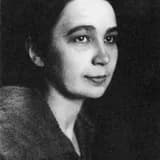
Natalia Goncharova died on October 17, 1962, in Paris, France, where she had lived and worked since 1921.
Natalia Goncharova died on October 17, 1962, in Paris, at the age of 81. By the time of her death, she had lived in France for over four decades, having emigrated permanently from Russia in 1921 following the upheavals of the Russian Revolution and the changing political climate that made her avant-garde work increasingly untenable at home.
In her later years, Goncharova continued to paint and design, though she suffered from arthritis that limited her productivity. She remained closely tied to her lifelong companion and fellow artist Mikhail Larionov, whom she had finally married in 1955 after decades of partnership. Together they had been central figures of the Russian avant-garde and had significantly shaped the visual language of the Ballets Russes.
Her death marked the end of an era for the first generation of Russian avant-garde artists who had bridged Russian folk traditions with European modernism. Goncharova left behind an enormous body of work—including paintings, stage designs, costume designs, book illustrations, and textile designs—now held in major museum collections including Tate, the Pompidou Centre, the State Tretyakov Gallery, and the Museum of Modern Art. Her legacy as a pioneering woman artist who commanded international attention and high prices for her work during her lifetime continues to influence scholarship on modernism and women's contributions to twentieth-century art.