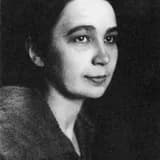
Natalia Sergeevna Goncharova was born in the village of Nagaevo, Tula Province, Russian Empire, into an aristocratic family.
Natalia Sergeevna Goncharova was born on June 21, 1881 (June 4 by the old Julian calendar) in the village of Nagaevo, Tula Province, in the Russian Empire. She came from a family of the landed gentry with distinguished cultural connections; her father, Sergei Goncharov, was an architect, and the family was distantly related to Natalia Pushkina, wife of the poet Alexander Pushkin.
Her early childhood was spent partly in the countryside, an experience that later informed her lifelong fascination with Russian peasant life, folk art, and rural traditions, themes that would become central to her Neo-Primitivist paintings. This rural upbringing contrasted with the urban avant-garde circles she would later inhabit in Moscow and Paris.
Goncharova would go on to become one of the most important and prolific female artists of the early twentieth century, pioneering Russian avant-garde movements including Neo-Primitivism, Cubo-Futurism, and Rayonism, and later achieving international fame as a designer for Sergei Diaghilev's Ballets Russes. Her birth into a family with artistic and literary heritage, combined with her formal training as a sculptor and painter, set the stage for a career that broke numerous barriers for women artists in Russia and Europe.