← All women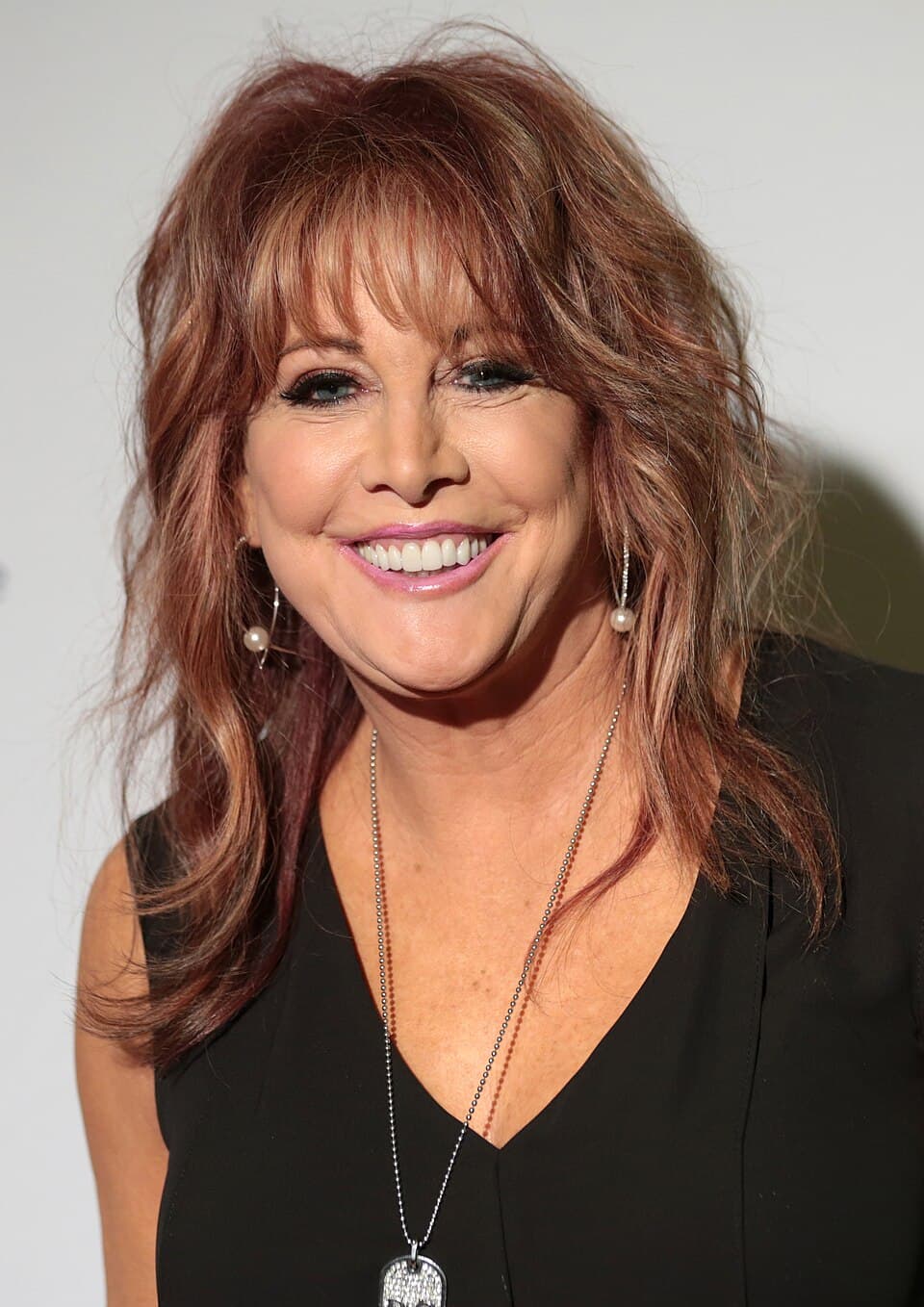
American · Sports
Nancy Lieberman
July 1, 1958 – present
Early Life and Background
Nancy Ilizabeth Lieberman, nicknamed “Lady Magic”, was born on July 1, 1958, in Brooklyn, New York, to Renee and Jerome Lieberman.[2][6][11] She grew up in a Jewish family and spent her early childhood in Brooklyn before her parents divorced, after which she moved with her mother and older brother to the Far Rockaway section of Queens.[11][14] Her upbringing was financially modest and emotionally challenging, marked by family instability that she has later described as fueling her drive to succeed.
In Queens, Lieberman gravitated to the local playgrounds, where she often played basketball with boys, developing a reputation as a fearless competitor.[11][14] This informal environment became her first training ground, teaching her ball-handling, toughness, and court intelligence. At a time when organized sports opportunities for girls were limited—prior to the full implementation of Title IX—her participation in boys’ games was itself a quiet challenge to prevailing gender norms.
Lieberman attended Far Rockaway High School, where her talent quickly drew regional and national attention.[11] By her senior year she was widely recognized as one of the best female basketball players in the United States, earning prep All-America honors and invitations to elite competition.[4][7][11] Her play in high school and on youth national teams set the stage for an unprecedented leap: competing in the Olympic Games while still a teenager.
Emergence as a Young Star and Olympic Career
Lieberman’s rapid ascent culminated when she was selected for the United States women’s national basketball team in her late teens.[7][12][14] Women’s basketball was added to the Olympic program for the first time at the 1976 Montreal Games, an historic expansion of opportunities for women athletes. Lieberman, still in high school, earned a place on the roster and served as a key contributor at the guard position.[3][7][12]
On July 26, 1976, the U.S. team completed its Olympic run by winning the silver medal, and Lieberman—at age 18—became the youngest basketball player in Olympic history to win a medal.[7][12][14] This record highlighted not only her precocious skill but also the new visibility of women’s basketball on the world stage. The Montreal tournament introduced millions of viewers to organized women’s international competition, and Lieberman’s poise against seasoned opponents demonstrated that high school-aged women could excel under Olympic pressure.
Beyond the medal, her Olympic experience solidified her reputation as an emerging star and opened doors to elite collegiate programs. Coming just four years after the passage of Title IX in 1972, her participation in the inaugural women’s Olympic basketball competition symbolized the rapid progress that could be achieved when institutional barriers began to recede.
College Career at Old Dominion University
After the Olympics, Lieberman enrolled at Old Dominion University (ODU) in Norfolk, Virginia, attending from 1976 to 1980.[6][11][12] She played under coach Marianne Stanley and quickly became the centerpiece of a program that would dominate the Association for Intercollegiate Athletics for Women (AIAW)
At ODU, Lieberman played both as a point guard and as a versatile all-around threat. Over four seasons, she compiled 2,430 points, 1,167 rebounds, and 961 assists, extraordinary totals that reflected her comprehensive influence on the game.[12] She was named a Kodak All-American in 1978, 1979, and 1980, affirming her status as one of the nation’s top players in each of her last three collegiate seasons.[12] Lieberman led Old Dominion to back-to-back AIAW national championships. On March 25, 1979, ODU captured the 1979 title, and on March 23, 1980, the team repeated as national champion.[6][12] These victories, part of an overall 72–2 record during that period, established ODU as one of the premier programs in women’s basketball and showcased Lieberman’s leadership and clutch performance on the biggest collegiate stage.[6][12] Her individual honors matched the team’s success. Lieberman became the only two-time winner of the Wade Trophy, awarded to the national women’s collegiate player of the year.[6][11][12] She also twice received the Broderick Cup, presented to the nation’s top female college athlete across all sports.[6][12] These awards positioned her not merely as a basketball star but as one of the leading figures in women’s collegiate athletics at the end of the 1970s. Upon completing her college career in 1980, Lieberman moved into the nascent world of women’s professional basketball. That year she was selected as the number one draft choice of the Dallas Diamonds in the Women’s Professional Basketball League (WBL).[12] The WBL, founded in 1978, was among the first attempts to create a sustained professional league for women in the United States. With the Diamonds, Lieberman quickly became one of the league’s marquee attractions. She earned Most Valuable Player honors in 1981, highlighting her ability to translate collegiate dominance into professional success.[6] After the WBL’s demise, she continued to play in other women’s leagues, including the Women’s American Basketball Association (WABA), where she led the Diamonds to the 1984 championship.[6] During the 1980s, Lieberman also competed internationally and with the United States national team, winning a gold medal at the 1979 World Championship in Seoul and participating in major tournaments that helped solidify the United States as a global power in women’s basketball.[3][11] Her professional and international play kept her in the public eye, even as women’s leagues struggled with financial instability. Lieberman’s most widely recognized breakthroughs came when she crossed traditional gender boundaries in professional basketball. On June 23, 1986, she signed with the Springfield Fame of the United States Basketball League (USBL), becoming the first woman to play in a men’s professional basketball league.[7][12] The USBL was a men’s summer league featuring current and former NBA players and top collegiate talent, making her entry deeply symbolic. Sports Illustrated and other outlets covered her signing and subsequent games, noting both her competitive performance and the social significance of her presence on the court alongside male professionals.[7] Lieberman’s involvement challenged long-held assumptions that women could not physically or competitively match men in professional basketball settings, demonstrating instead that elite female athletes could belong in those spaces. In 1987–1988, she extended her pioneering path by joining the Washington Generals on a world tour with the Harlem Globetrotters.[12][2] She thereby became the first woman to participate in a Globetrotters world tour, playing the Generals’ role as the competitive foil in the Globetrotters’ blend of showmanship and basketball skill.[2][12] This tour brought her to audiences around the globe, further normalizing the image of a woman excelling within highly visible, traditionally male basketball culture. The founding of the Women’s National Basketball Association (WNBA) in 1997 provided a new professional home for women players. Lieberman, already a veteran by then, joined the Phoenix Mercury and played in the league’s inaugural season, becoming at age 38 its oldest player.[1][7][12] Her participation lent instant credibility to the fledgling league, connecting its present to the pioneering generations who had worked to create professional opportunities. After initially retiring from playing, Lieberman transitioned to coaching, broadcasting, and executive roles. She later made a highly publicized return to the court in 2004, signing a seven-day contract with the Detroit Shock at age 50 and briefly becoming the oldest player in WNBA history.[4][5] This short comeback underscored her enduring fitness and competitive spirit and attracted media attention to both her legacy and the league. Lieberman’s post-playing career has been multifaceted. She served as head coach and general manager of the Detroit Shock in the WNBA, guiding the team and shaping roster construction.[5][12] Her experience as a player made her a respected figure in the locker room and front office. In broadcasting, Lieberman worked as an analyst and commentator for major networks including ABC, NBC, ESPN, and Fox Sports Southwest, offering insight on both men’s and women’s basketball.[5][16] Her commentary helped bring women’s perspectives into mainstream coverage of the sport, broadening the range of voices heard in televised basketball analysis. Her most significant coaching breakthrough in men’s basketball came on November 4, 2009, when she was named head coach of the Texas Legends, the NBA Development League affiliate of the Dallas Mavericks.[14] This appointment made her the first woman to coach a professional men’s basketball team.[14] During the Legends’ inaugural season, she managed player development and game strategy in direct partnership with an NBA organization, reinforcing the idea that coaching expertise transcends gender. Later, she joined the Sacramento Kings as an assistant coach, becoming one of the very few women to serve in an on-bench coaching role in the NBA.[4] Her presence on an NBA coaching staff continued the trajectory she had begun in the USBL and the D-League, demonstrating sustained acceptance of women’s leadership in men’s professional basketball. In the late 2010s, Lieberman took on a new challenge as head coach in the BIG3, a professional three-on-three men’s league founded by entertainer Ice Cube and featuring many former NBA players. She became head coach of Team Power, and in 2018 she led the team to the BIG3 championship, becoming the first female head coach to win a men’s professional league title.[8][16] Her success in the BIG3 showcased her adaptability to new formats of the game and her ability to manage veteran male players, many with substantial NBA résumés. It also provided a high-profile, televised example of a woman leading men to a championship, reinforcing the case for women’s inclusion in elite coaching positions across professional sports. As of the mid-2020s, Lieberman continues to remain active in basketball as a coach, broadcaster, and ambassador. She has also worked with corporate partners such as BSN SPORTS as a brand ambassador, leveraging her experience to promote sports participation and leadership development.[16] Lieberman’s achievements have been recognized with numerous honors. She was inducted into the Naismith Memorial Basketball Hall of Fame in 1996, an acknowledgment reserved for the sport’s most influential figures.[1][2][6] In 1999, she entered the Women’s Basketball Hall of Fame, further cementing her status as a foundational figure in the women’s game.[12][3] Her collegiate achievements include multiple Kodak All-American selections (1978–1980), two Wade Trophies as national player of the year, and two Broderick Cups as the top female college athlete.[6][11][12] At the international level, she is remembered for her 1976 Olympic silver medal and her contribution to the 1979 World Championship gold for the United States.[3][7] Various encyclopedias and biographical dictionaries, including Encyclopedia.com, Britannica, and the Jewish Women’s Archive, emphasize her multiple “firsts”: youngest Olympic medalist in basketball, first woman to play in a men’s professional league, and first woman to coach a men’s professional team.[2][7][11][14] These references situate her not only as an outstanding athlete but also as a key agent of historical change. Lieberman’s personal life has intersected with her professional career in meaningful ways. On May 18, 1988, she married Tim Cline, a basketball player who had been her teammate on the Washington Generals during the Harlem Globetrotters tour.[11] The couple had one son, Timothy Joseph Cline.[11] Their marriage eventually ended in divorce, but Lieberman has often spoken about the importance of family and motherhood alongside her athletic and coaching responsibilities. Her Jewish identity has been noted in several profiles, including by the Jewish Women’s Archive and other Jewish cultural organizations, which highlight her as a role model for Jewish women in sports.[4][14] Lieberman has participated in community and youth initiatives, using her platform to advocate for girls’ participation in athletics and for broader access to sports as a tool of empowerment. Nancy Lieberman is widely regarded as one of the greatest figures in American women’s basketball and a pioneering presence across both women’s and men’s professional leagues.[1][2][7] Her legacy encompasses several dimensions: Historically, Lieberman’s career traces the evolution of women’s basketball from a marginal pursuit to a fully recognized component of the global sports landscape. She entered the game when scholarships and organized competitions for women were few and helped push it toward the era of national television coverage, professional leagues, and cross-gender coaching opportunities. Her story illustrates the impact of Title IX and the importance of individual pioneers in transforming institutional norms. In her later life, Lieberman has remained deeply engaged with the sport. She has worked with youth programs, charitable initiatives, and corporate partners to promote participation, teamwork, and leadership through basketball.[5][16] As a coach in the BIG3 and a broadcaster for NBA coverage, she continues to shape public understanding of the game. Her official social media presence, including a verified Instagram account (@nancylieberman), allows her to interact directly with fans, share insights, and highlight community work.[17] Through these channels she reinforces her role as mentor and advocate for the next generation of athletes and coaches. As of the mid-2020s, Nancy Lieberman is still living and active, her career spanning nearly five decades from playground prodigy to Hall of Famer, barrier-breaker, and championship-winning coach. Her enduring visibility underscores the lasting influence of her contributions and ensures her place in any serious account of women’s sports history.[1][2][14]Transition to Professional Basketball
Breaking Barriers in Men’s Professional Basketball
WNBA Career and Return to Playing
Coaching, Broadcasting, and Executive Roles
BIG3 Championship and Continued Influence
Awards, Honors, and Hall of Fame Recognition
Personal Life
Legacy and Historical Impact
Later Life and Continuing Contributions
Dated achievements
12 indexed.
- Jul011958Sports
Birth of Nancy Lieberman
Born in Brooklyn, New York, a future Hall of Famer and trailblazer in women’s and men’s professional basketball.
View details Encyclopedia.com – Lieberman-Cline, Nancy (1958–) - Jul261976Sports
Youngest basketball player to win an Olympic medal at Montreal 1976
Helps U.S. win silver in Montreal, becoming the youngest basketball player ever to win an Olympic medal.