← All women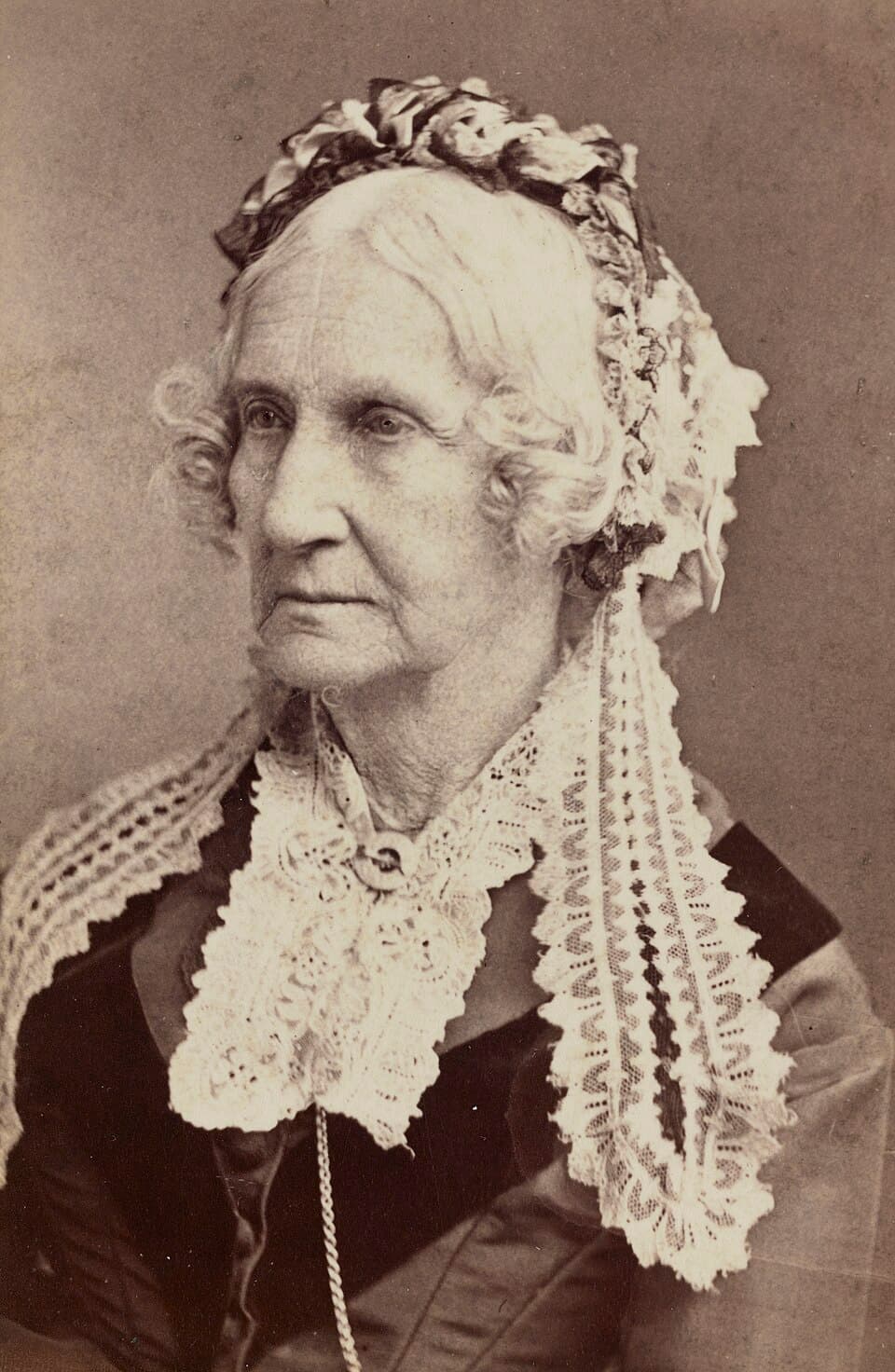
American · Science
Nancy Johnson
December 28, 1794 – April 22, 1890
Early Life and Background
Nancy Maria Donaldson Johnson (often cited as Nancy M. Johnson) was born on December 28, 1794, in New York, United States.[3][8] The surviving record of her life is fragmentary, and major reference works note that biographical details such as her parents’ names, early education, and childhood circumstances are largely undocumented.[3] What can be established is that she grew up in the early years of the American republic, in a society where formal scientific and technical training for women was rare and where cultural expectations confined most women’s work to the household.
Despite this limited documentation, Johnson’s later invention suggests familiarity with domestic food preparation and with the practical challenges of freezing and churning cream in an era before mechanical refrigeration. Historians of technology and food culture frequently situate her within the tradition of women whose domestic experience informed significant technical innovations, particularly in the design of household equipment.[3][5][8] Her birth at the close of the eighteenth century meant that she came of age as the United States was expanding, urbanizing, and gradually integrating new technologies of production and preservation, including forms of ice storage and early mechanical aids in the kitchen.
Modern accounts in patent‑office publications and museum essays emphasize that Johnson’s life story is representative of many women inventors whose individual circumstances are poorly recorded but whose technical contributions are nonetheless well documented through patent records.[5] In Johnson’s case, the primary historical anchor is the patent she obtained in 1843, which allows researchers to place her in Philadelphia at that time and to analyze her design with precision, even as details of her youth remain unknown.[3][8]
Context: Ice Cream Before Johnson
Before Johnson’s invention, ice cream was a labor‑intensive luxury. In the late eighteenth and early nineteenth centuries, it was typically made in elite households, royal kitchens, or specialized urban parlors that had access to ice houses, skilled cooks, and large quantities of natural ice.[4][5] The process involved pouring a flavored cream mixture into a mold or container surrounded by ice and salt, then stirring it intermittently or agitating the container to promote freezing. This method demanded both physical effort and time, often producing a coarse texture with ice crystals.
Historians of food technology note that the limited availability of ice, the complexity of the process, and the labor required kept ice cream relatively expensive and restricted its consumption.[4][5] Ice houses were costly to build and maintain, and ice had to be harvested in winter from rivers and lakes, stored under insulating materials, and transported to cities. Consequently, ice cream was associated with wealth and status, and recipes circulated among elites as signs of refinement.
By the 1830s and early 1840s, some incremental improvements in freezing techniques had appeared, but there was still no widely accessible, efficient, small‑scale device that combined continuous mixing with controlled freezing for domestic use. It was into this context that Nancy Johnson introduced her innovation.
Career Beginnings and the Path to Invention
Johnson’s career as an inventor is documented primarily through the patent she filed for her ice cream freezer. Sources indicate that she resided in Philadelphia when she applied for the patent, suggesting that she was living in one of the most commercially and scientifically active cities of the nineteenth‑century United States.[3][8] Philadelphia’s culture of experimentation and its network of artisans, merchants, and household consumers provided fertile ground for practical innovations.
Modern commentators infer that Johnson’s work emerged from domestic practice: she likely experienced first‑hand the difficulties of making ice cream by traditional methods and sought a technical solution to improve both efficiency and quality.[4][5] Patent documentation indicates that she conceived a device that would simultaneously freeze and stir the mixture, ensuring even consistency and reducing manual labor.[3] Although the patent record does not describe a broader commercial enterprise operated by Johnson herself, it demonstrates that she possessed the knowledge and determination to navigate the legal process of obtaining a patent at a time when relatively few women did so under their own names.
Women’s historians note that in the mid‑nineteenth century, married women in many jurisdictions faced legal restrictions that limited their control over property and contractual rights.[4][5] That Johnson’s patent was granted in her name is therefore significant: it implies that she asserted her rights as an inventor despite structural barriers. Some accounts suggest that she later sold or licensed her patent to others, including manufacturers who developed commercial versions of her freezer.[3][5] These arrangements were common among inventors without the capital or infrastructure needed to produce and distribute equipment at scale.
The "Artificial Freezer": Design and Patent of 1843
Johnson’s central accomplishment was the design and patenting of a hand‑cranked ice cream freezer she referred to as the "Artificial Freezer." On September 9, 1843, she was granted U.S. Patent No. 3,254 (often cited as US3254A) for this device, which is widely considered the first hand‑cranked ice cream freezer.[3][4][8]
The freezer consisted of an inner cylinder or canister holding the ice cream mixture, placed inside a larger tub filled with a mixture of ice and salt. A dasher or paddle inside the cylinder was connected to a crank mechanism, allowing continuous rotation and scraping of the frozen mixture from the cylinder walls.[3][4][5] As the crank was turned, the dasher broke up ice crystals and incorporated air, producing a smoother, creamier texture while ensuring that the entire volume froze evenly.
This design solved multiple problems at once: it reduced the manual effort required to make ice cream, sped up the freezing process by maximizing contact between the cold surfaces and the mixture, and produced a consistently fine texture. Because the device relied on natural ice and salt rather than mechanical refrigeration, it was immediately usable in households that had seasonal access to ice or could purchase it from urban ice vendors.[5][8]
Technical historians point out that Johnson’s freezer is an early example of what would later be described as disruptive kitchen technology, radically simplifying a process and opening it to a wider public.[8] The patent text and subsequent commentary by museums and patent offices emphasize that the "Artificial Freezer" improved both efficiency and quality, laying the groundwork for further refinements in ice cream manufacturing.[3][5][8]
Impact on Ice Cream Production and Popular Culture
Johnson’s invention had far‑reaching effects on ice cream production and consumption. By enabling efficient, small‑scale preparation of ice cream in domestic kitchens, the hand‑cranked freezer reduced both labor and cost.[4][5] Families could now make ice cream at home without hiring specialized cooks or maintaining large ice houses, and small businesses could produce ice cream in modest quantities using the same principle.
Museum of Ice Cream commentary and the German Patent and Trade Mark Office both emphasize that Johnson’s design "revolutionized" ice cream by making it accessible beyond elite circles.[4][5] The dasher’s action produced a lighter, more aerated product with fewer ice crystals, which contemporary observers and modern historians describe as superior in texture to many earlier preparations.[5] The lower requirement for natural ice and salt also made the process more economical.
Over time, manufacturers adapted Johnson’s concept for commercial and industrial use, scaling up the basic mechanism while integrating advancing technologies such as mechanical refrigeration. Although these later machines differed in size and power source, they retained the core principles Johnson had embodied: simultaneous churning and freezing, continuous scraping of the frozen layer, and careful control of temperature and agitation to achieve desirable texture.[3][5]
As ice cream became cheaper and more widely available, it evolved from a status symbol into an everyday pleasure. Historians credit Johnson with playing a significant role in this transition, noting that her freezer helped make ice cream "for everyone" rather than just for the wealthy.[5] Her influence thus extends beyond engineering into the history of popular culture, leisure, and diet.
Women, Patents, and Barrier‑Breaking Innovation
Johnson’s 1843 patent is significant not only for its technical merits but also for its place in the history of women’s participation in science and technology. In the early and mid‑nineteenth century, women were rarely recognized as inventors, and those who did secure patents often faced skepticism, limited financing opportunities, and legal constraints on property ownership.
Modern analyses of Johnson’s work, including essays by the Museum of Ice Cream and the German Patent and Trade Mark Office, explicitly highlight that she filed the ice cream maker patent in her own name "at a time when women inventors faced significant legal and social barriers."[4][5] This underscores her role as a barrier‑breaker: she not only conceived a technically effective design but also navigated a male‑dominated patent system.
Her patent adds to the broader story of nineteenth‑century women inventors, such as those who developed improvements in household equipment, clothing, and agricultural tools. These inventors often drew on experience in domestic and informal settings to identify practical problems and design solutions. Johnson’s "Artificial Freezer" fits squarely within this tradition, translating domestic knowledge into a codified, legally recognized invention.[3][5][8]
Although there is no evidence that Johnson received major formal awards in her lifetime, contemporary institutions now recognize her as a pioneering figure. She appears in compilations of ingenious women produced by patent offices and in histories that foreground women’s overlooked contributions to technological change.[5] Her work is frequently cited in discussions about how everyday technologies can reshape food systems and social practices.
Personal Life
The historical record contains very limited information about Johnson’s personal life. Available sources do not clearly document her marital status, family relationships, or daily routines, and no extant diaries or personal correspondence are widely cited in scholarly literature.[3][8] References to her name as "Nancy Maria Johnson" and "Nancy Maria Donaldson Johnson" indicate that "Donaldson" was her maiden name, suggesting that she married and took the surname Johnson, but details of that marriage are not well established.[3][8]
Some accounts mention that she lived in Philadelphia by 1843, and later sources state that she died in Washington, D.C., implying that she relocated at least once during her life.[3][5][8] Without more detailed biographical evidence, historians are cautious about drawing conclusions regarding her household circumstances or economic status. Nevertheless, her ability to pursue and obtain a patent suggests she had sufficient social standing and resources to engage with legal professionals and the U.S. Patent Office.
In editorial practice, Johnson’s personal life is generally reconstructed through inference from the contexts of her residence and activity rather than from direct documentation. This scarcity of detail is itself a reminder of the broader pattern in which women’s technical achievements were recorded, but their personal stories were not preserved with equal care.
Later Life and Death
Following the granting of her patent in 1843, Johnson’s subsequent activities are only sporadically documented. Some later accounts suggest that she may have transferred rights to her invention or that manufacturers quickly adopted and adapted her design, but the specifics of these transactions are not detailed in widely available sources.[3][5]
What is clear is that Johnson lived a long life, reaching an age of approximately ninety‑five. She died on April 22, 1890, in Washington, D.C..[3][5][8] By that time, ice cream was far more common across the United States, and mechanical and industrial developments had built upon the principles embodied in her "Artificial Freezer." Her death closed a life that had quietly shaped one of the world’s most beloved desserts.
Modern institutional narratives, such as those produced by the German Patent and Trade Mark Office, frame Johnson’s later years within the broader success of her invention, emphasizing that by the end of the nineteenth century, ice cream had become significantly cheaper and more widely accessible because of innovations like hers.[5] Although direct evidence of her personal experiences in old age is lacking, the technological trajectory she helped set in motion was unmistakable.
Legacy and Historical Impact
Johnson’s legacy lies at the intersection of technology, food culture, and women’s history. The hand‑cranked ice cream freezer she patented in 1843 is recognized as a foundational innovation in the production of frozen desserts.[3][4][5][8] By providing a practical, efficient, and relatively affordable means of making smooth, aerated ice cream without electricity, her "Artificial Freezer" opened the dessert to wider consumption.
Historians and commentators highlight several dimensions of her impact:
- Technological innovation: Johnson’s design established core principles—continuous churning, scraping of frozen layers, and controlled freezing—that remain central to ice cream machines today.[3][5]
- Democratization of consumption: Her freezer reduced costs and labor, contributing to the transformation of ice cream from an elite luxury into a treat "for everyone."[4][5]
- Women’s inventive history: By securing a patent in her own name despite gendered barriers, Johnson exemplified the contributions of women to nineteenth‑century technology.[4][5][8]
- Cultural influence: The spread of affordable ice cream helped shape social rituals, leisure activities, and the evolution of dessert menus in the United States and beyond.[4][5]
Johnson’s story is now frequently cited in museum exhibitions, educational materials, and popular histories that seek to recover the role of women in innovation. For example, articles from institutions and food museums describe her as a "pivotal" woman in history whose invention changed the way ice cream is produced and enjoyed.[4][5] International versions of her biography, such as entries in Indonesian‑language encyclopedias, further attest to the global recognition of her contribution.[8]
Although she did not receive major formal awards during her lifetime, the posthumous attention she has garnered underscores how everyday technologies can profoundly influence social life. Johnson’s "Artificial Freezer" is now understood not merely as a kitchen tool but as a device that helped reshape culinary culture, economic access to treats, and the visibility of women in technical fields.
Assessment in Women’s History
In the broader field of women’s history, Nancy Maria Donaldson Johnson serves as an instructive case of how women’s technical achievements can be documented primarily through patent records and technical descriptions rather than through extensive biographical archives. Her visible legacy—an invention that changed the texture and accessibility of ice cream—is sharply defined, while her personal narrative remains muted.
Scholars and institutions that focus on women in science and technology highlight her as part of a continuum of inventors whose work originated in domestic or everyday problem‑solving but had lasting industrial and cultural consequences.[3][5][8] The recognition of her patent as a landmark of culinary engineering helps illuminate pathways by which women’s labor and ingenuity in the household translated into formal technological advances.
Johnson thus occupies a significant place in editorial almanacs and historical surveys that seek to foreground women’s contributions to innovation. Her life and work remind researchers that major shifts in everyday culture often begin with practical devices designed to make ordinary tasks easier—and that the inventors behind those devices have frequently been women whose stories are only now being fully acknowledged.
Dated achievements
3 indexed.
- Dec281794Science
Birth of Nancy Maria Donaldson Johnson
Nancy Maria Donaldson Johnson was born in New York, U.S., destined to become a pioneering inventor.
View details Nancy M. Johnson - Wikipedia - Sep091843Science
Patent for Artificial Freezer
Johnson received U.S. Patent No. 3,254 for her 'Artificial Freezer,' revolutionizing ice cream production.