← All women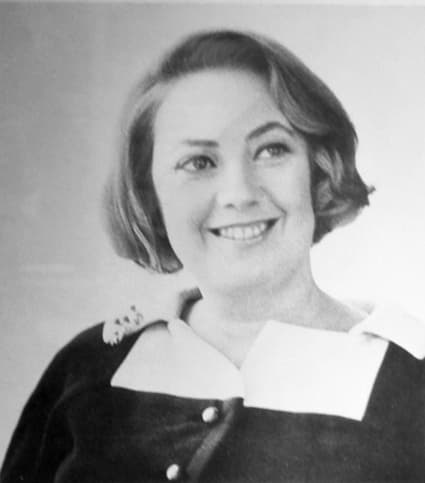
American · Politics
Muriel Siebert
September 12, 1928 – August 24, 2013
Early Life and Background
Muriel Faye "Mickie" Siebert was born on September 12, 1928, in Cleveland, Ohio, into a Jewish, middle‑class family.[1][2][4] Her father, Irwin J. Siebert, was a dentist, and her mother, Margaret Eunice (Roseman) Siebert, was a homemaker who managed the household and supported her daughter’s ambitions.[1][6] Growing up in Cleveland’s public schools, Siebert showed an early facility with numbers and a strong independent streak, characteristics that would later define her approach to Wall Street.
Siebert’s youth unfolded in the context of the Great Depression and World War II, eras that shaped attitudes toward risk, savings, and economic security. These formative years exposed her to economic uncertainty and the importance of financial stability, themes that would recur throughout her subsequent career in securities analysis and bank regulation. Despite social expectations that women pursue traditionally "feminine" occupations such as teaching or secretarial work, Siebert became fascinated by business and investing, gravitating toward fields where few women were present.[1][3]
In 1949, she enrolled at Western Reserve University (now Case Western Reserve University) in Cleveland.[1][3][5] She studied for several years, between 1949 and 1952, but did not complete a degree, leaving for financial and personal reasons.[3][5] Siebert later spoke frankly about the absence of a college diploma, noting that she had to "fight for everything" on Wall Street without the credential that often opened doors for her male peers.[1] Her success despite this gap would become part of her legend and a point of inspiration for others.
Move to New York and Career Beginnings
In 1954, at roughly age 25, Siebert made a pivotal decision: she moved to New York City with about $500 in savings to pursue a career in finance.[1][3][5][6] This relocation marked the beginning of her long engagement with Wall Street. According to later accounts, she arrived without a job lined up and faced immediate barriers, including firms that refused to hire women as analysts or traders.[1]
Despite these obstacles, Siebert secured work at several financial‑services companies. Over roughly the next six years she worked as an analyst at three firms, learning securities research, company valuation, and market dynamics.[3] She was sometimes described as a "glorified gofer" in her first role, but she quickly demonstrated her analytical skill and gained responsibilities beyond clerical tasks.[4] Her persistence and performance enabled her to move up to partnership roles in other brokerage houses, including Brimberg & Co., where she eventually became a partner.[5]
During this period, Siebert observed the stark gender imbalance on Wall Street. Women were largely confined to support roles, while men occupied positions as analysts, traders, partners, and exchange members. Siebert’s experience of having applications rejected once firms realized she was a woman reinforced her determination to break through the industry’s barriers.[1][6] She also began to develop a reputation for bluntness and courage—traits that would later define her public profile.
Breaking Barriers on the New York Stock Exchange
By the mid‑1960s, Siebert had become a respected securities analyst and partner in multiple firms. She set her sights on a goal no woman had yet achieved: owning a seat on the New York Stock Exchange (NYSE), the central marketplace of U.S. equities. Membership on the NYSE conferred prestige and direct access to trading and governance, but it required sponsorship by existing members and substantial capital.
In 1967, Siebert applied to purchase a seat. She confronted entrenched sexism: several potential sponsors reportedly withdrew their support when they realized that the applicant would be a woman, and she had difficulty obtaining the necessary financing because lenders doubted that a woman‑run business could succeed on the exchange.[1][2] After a determined campaign, she secured backers and arranged a loan contingent on her admission.
On December 28, 1967, Siebert bought a seat and was formally elected as the first woman member of the NYSE, joining 1,365 male members.[1][2][9] This ended 175 years of all‑male membership and transformed her into a national symbol of women’s advancement in business. At first, she was the only woman on the trading floor and would remain the sole female member for about a decade.[8] The press and colleagues began to refer to her as the "First Woman of Finance", a title that captured both her pioneering role and her prominence in public discussions of women on Wall Street.[1][6]
Siebert’s election was more than personal triumph. It provided a visible challenge to assumptions that women lacked the temperament or competence for high‑risk financial decision‑making. In subsequent decades, as more women entered business schools and investment firms, they frequently cited Siebert as an early inspiration.[1][4]
Founding Muriel Siebert & Co. and Pioneering Discount Brokerage
Shortly after joining the NYSE, Siebert took another entrepreneurial leap. In 1969, she founded her own firm, Muriel Siebert & Co., Inc., and became the first woman to own and operate an NYSE member brokerage firm.[2][3][6][11] At the outset, the firm focused on providing research and financial analysis to institutional investors, relying on her analytical expertise and industry relationships to attract clients.
Siebert’s firm evolved as regulatory change reshaped the brokerage industry. In 1975, the U.S. Securities and Exchange Commission abolished fixed minimum commissions, opening the door to discount brokerage. Siebert seized the opportunity and converted her firm to offer discounted commissions to individual investors, becoming one of the pioneers of discount brokerage for retail customers.[3][8][11] Previously, discounted rates had been largely reserved for large commercial clients, and ordinary investors paid standardized, often high fees.
By slashing commissions and marketing her services to everyday investors, Siebert sought to democratize access to the stock market. She believed that investing should not be the exclusive province of wealthy institutions or elite individuals. Her firm’s strategy helped catalyze a broader shift toward lower‑cost brokerage models, anticipating trends that would later be amplified by electronic trading and online platforms.[8][11]
Through the 1970s, Muriel Siebert & Co. established itself as a national discount brokerage, surviving competition and market volatility. The firm’s persistence, combined with Siebert’s public advocacy for financial literacy, made her a recognizable figure to retail investors as well as Wall Street professionals.[6][11]
Superintendent of Banks for New York State
Siebert’s expertise and candor drew the attention of policymakers. In 1977, New York Governor Hugh Carey appointed her Superintendent of Banking (Superintendent of Banks) for the State of New York, making her the first woman to hold the office.[1][3][6][8] On July 7, 1977, she signed her oath of office and formally assumed responsibility for supervising hundreds of banks and billions of dollars in assets.[4]
As Superintendent, Siebert oversaw state‑chartered banks, savings institutions, and foreign bank branches operating in New York. The late 1970s and early 1980s were challenging years for banking, marked by rising interest rates, recessionary pressures, and structural shifts that exposed weaknesses in many institutions. Siebert became known for her toughness in dealing with troubled banks: she insisted on strong capital positions and intervention when necessary to protect depositors and maintain system stability.[6]
Her tenure, which lasted until 1982, was credited with helping New York avoid some of the worst bank failures that afflicted other regions.[3][6] Siebert’s readiness to close or restructure failing institutions sometimes brought her into conflict with bankers and politicians, but it established her reputation as a regulator willing to put public interest above industry preferences. She also served as a director of entities such as the New York State Urban Development Corporation and Job Development Authority, contributing to broader economic and development policy.[11]
Siebert’s leadership as Superintendent of Banks expanded the understanding of where women could serve in government. At a time when relatively few women held senior regulatory posts, her visibility demonstrated that financial oversight roles were not inherently male domains.
Return to Business and Corporate Developments
After leaving the Superintendent’s office in 1982, Siebert briefly entered electoral politics, seeking the Republican nomination for the U.S. Senate seat held by Daniel Patrick Moynihan. She lost in the primary and returned her focus to business.[5][6] In 1983, she rejoined Muriel Siebert & Co. and worked to rebuild the firm after her five‑year absence.[8]
Throughout the 1980s and early 1990s, Siebert’s company consolidated its status as a leading discount brokerage firm, serving both individual and institutional clients. In 1996, she took the firm public through a reverse merger with J. Michaels, a defunct furniture company, creating Siebert Financial Corp.[4][11] This relatively early, high‑profile use of a reverse merger structure allowed the firm to obtain a public listing more quickly than a traditional initial public offering, and it drew attention as an example of entrepreneurial financial engineering.
Under Siebert’s leadership, Siebert Financial continued to build a national footprint. The firm emphasized its heritage as the longest‑running discount brokerage, a claim underscored in later institutional narratives and public materials.[11][12] Siebert remained closely associated with the firm’s identity, often appearing in media to discuss market conditions, investor education, and women’s roles in finance.
Awards, Honors, and Public Recognition
Siebert’s barrier‑breaking achievements brought numerous honors. She became widely known by the sobriquet "First Woman of Finance", a phrase adopted by institutions including the National Women’s History Museum.[1][13] In 1994, she was inducted into the National Women’s Hall of Fame, recognizing her contributions to women’s advancement in business and public service.[10]
Universities and business schools celebrated her example. Case Western Reserve University, which had evolved from the institution she once attended, highlighted her success and conferred honorary recognition, describing her as an honorary alumna in institutional communications.[1][5] Harvard Business School’s leadership project profiled her as a 20th‑century leader who transformed the landscape of finance and regulatory oversight.[8]
Media organizations also acknowledged her influence. Major newspapers and magazines ran profiles and obituaries emphasizing her role as the first woman on the NYSE and a pioneer of discount brokerage. The Week, for example, published an extended appreciation titled "Muriel Siebert, 1928–2013," summarizing her journey from Cleveland to Wall Street leadership.[9]
Her induction into the National Women’s Hall of Fame and continued recognition by women’s‑history organizations cemented her position as a key figure in the story of women in American business.
Philanthropy, Advocacy, and Financial Literacy
Beyond her professional roles, Siebert invested significant energy in philanthropy and advocacy. In 1990, she established the Siebert Entrepreneurial Philanthropic Plan, which pledged to donate half of her company's net profits from new securities underwriting to charity.[5] Over time, millions of dollars were contributed to various causes, reflecting her belief that financial success carried a responsibility to support community institutions.
Siebert was particularly committed to financial literacy. In 1999, she developed a personal‑finance education program aimed at children and teenagers, designed to improve their understanding of budgeting, credit, saving, and investing.[5] The program was adopted by New York City high schools and later taught in other school districts. Siebert worked to see the curriculum expanded nationally, arguing that basic financial knowledge was essential to citizenship and economic independence.
Her advocacy extended to efforts on behalf of women and minorities in finance. She mentored younger professionals, supported policy initiatives to broaden access to capital, and spoke publicly about the structural barriers that continued to limit diversity in leadership roles. Oral histories and institutional profiles describe her as a passionate champion for underrepresented groups entering Wall Street.[1][11]
Personal Life
Siebert’s personal life differed from traditional narratives of mid‑20th‑century women. She never married and did not have children, a fact noted in biographical summaries.[5] She devoted much of her time and energy to her business and public responsibilities, often working long hours and traveling frequently for professional engagements.
Accounts from colleagues and friends portray her as witty, direct, and loyal. She valued independence and self‑reliance, both personally and professionally. Although she did not build a conventional family, she maintained close relationships with friends, staff, and mentees, many of whom regarded her as a role model and informal patron.
Her identity as "Mickie"—a nickname used by friends and in some media—reflected a more informal side, contrasting with the sometimes forbidding image of a tough Wall Street executive and regulator. This duality contributed to her ability to connect with both ordinary investors and elite policymakers.
Legacy and Historical Impact
Muriel Siebert’s legacy is multifaceted. As the first woman to own a seat on the NYSE and the first woman to head one of its member firms, she altered the gender composition of one of the world’s most influential financial institutions.[2][3][6] Her presence on the trading floor demonstrated that women could operate at the heart of equity markets and occupy positions historically reserved for men.
Her pioneering role in discount brokerage helped push the industry toward lower‑cost, more accessible services. By offering discounted commissions to individual investors after deregulation in 1975, Siebert contributed to a broader democratization of investing, anticipating later developments in online and zero‑commission trading.[3][8][11] Many of today’s retail investors operate in a landscape shaped in part by decisions made by early discount brokerage leaders such as Siebert.
In the realm of financial regulation, her tenure as Superintendent of Banks for New York State from 1977 to 1982 illustrated that women could effectively supervise complex financial systems, make difficult decisions about failing institutions, and balance market dynamics with public protection.[3][6][8] She influenced later generations of regulators and policymakers, demonstrating that robust oversight could coexist with support for economic development.
Women’s‑history scholars emphasize Siebert’s role as an emblem of persistence. She advanced in finance without a college degree, confronted overt discrimination, and repeatedly took risks—moving to New York with limited funds, seeking an NYSE seat, founding her own firm, and accepting a high‑stakes regulatory role. Her story is frequently invoked in discussions of glass‑ceiling breakthroughs, along with figures such as Victoria Woodhull, who preceded her in owning a brokerage but not in exchange membership.[2]
Her legacy also lives on in educational and philanthropic initiatives. The personal‑finance curriculum she developed, and the charitable giving facilitated through her entrepreneurial philanthropic plan, have had lasting effects beyond Wall Street, strengthening financial knowledge and community institutions.[1][5]
Later Life and Death
In her later years, Siebert remained active in business and public discourse. She continued to lead Siebert Financial Corp., appear in media commentary on markets and regulation, and support educational and philanthropic projects. Even as younger generations of women entered finance in growing numbers, she retained her status as a symbolic pioneer, often cited by new leaders as an inspiration.[10]
On August 24, 2013, Muriel Siebert died in New York City from complications of cancer.[1][2][5] She was 84 years old. Obituaries from institutions such as the National Women’s History Museum and Case Western Reserve University emphasized her trailblazing achievements and her willingness to "kick down the door" so others could follow.[1][4] Her death prompted renewed reflection on the progress and remaining challenges for women in finance.
Siebert’s firm continued to operate after her passing, and her name endures in corporate histories, leadership case studies, and women’s‑history collections. She is remembered as a woman who, starting with modest means in Cleveland and without a college degree, changed the course of Wall Street and financial regulation through courage, skill, and an unwavering commitment to opening doors for others.
Dated achievements
5 indexed.
- Sep121928Politics
Birth of Muriel Faye Siebert
Muriel Faye Siebert was born in Cleveland, Ohio, marking the beginning of a life of pioneering achievements.
View details Muriel Siebert Biography - National Women's History Museum - Dec281967Politics
First woman member of the NYSE
Siebert becomes the first woman to own a seat on the NYSE, revolutionizing the finance industry.