← All women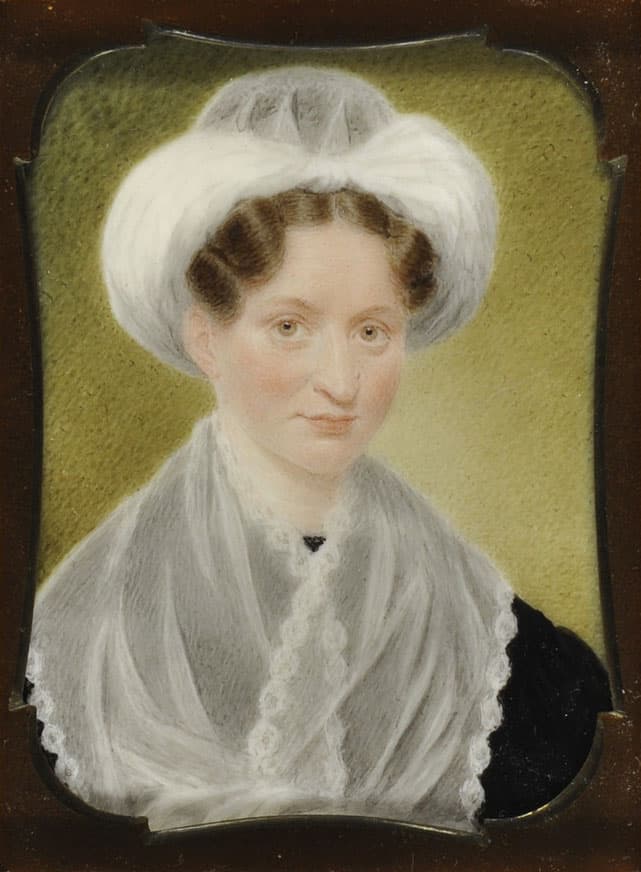
American · Activism · Literature
Mount Holyoke College
February 28, 1797 – March 5, 1849
Early life and background
Mary Mason Lyon was born on February 28, 1797, in Buckland, Massachusetts, in a rural New England family environment that shaped her habits of economy, discipline, and perseverance. She grew up in a period when most American women had access only to limited schooling, typically focused on basic literacy and domestic preparation. Lyon’s later commitment to women’s higher education emerged from this world of restricted expectations. Biographical sources identify her as an American pioneer in women’s education and note that she later became the founder of Mount Holyoke Female Seminary, the institution that became Mount Holyoke College.
Lyon’s formative years were marked by self-reliance and a hunger for learning. In the early nineteenth century, educational opportunities for girls remained narrow, but Lyon sought more serious intellectual training than was usually available to women of her background. That determination shaped her later career as a teacher and reformer. Before founding her own school, she taught and worked in a series of educational settings, building the experience that would allow her to challenge the prevailing assumptions of her day. Her early life was important not because it was sheltered or privileged, but because it gave her firsthand knowledge of the limitations under which women lived and studied.
Career beginnings and educational reform
Lyon’s career developed in the context of early nineteenth-century debates over the education of women. She served in school settings in Massachusetts and New Hampshire and helped to refine her educational philosophy while working in institutions such as Ipswich Female Seminary. Mount Holyoke’s history notes that she developed her ideas about women’s education while serving there as assistant principal. She came to believe that women should receive an academically serious education comparable in rigor to that of men, and that education should prepare women for meaningful public service, not only for domestic life.
By 1837, Lyon had raised support for a new institution in South Hadley, Massachusetts. Mount Holyoke Female Seminary opened on November 8, 1837, under her leadership. The opening represented the culmination of years of work during a difficult economic period. According to Mount Holyoke’s founding history, Lyon spent years traveling, fundraising, and persuading supporters while the nation was in depression. Her approach to financing was notable: rather than relying on a small number of wealthy donors, she sought broad public support, helping establish the school on a more durable foundation. This model later became part of the institution’s historical identity and helped distinguish it from many contemporaneous schools for women.
Founding Mount Holyoke Female Seminary
The seminary’s founding was one of the most consequential events in the history of American women’s education. It opened with an unusually demanding curriculum and with admissions standards that included examinations in grammar, math, history, and geography. Mount Holyoke’s own historical materials emphasize the school’s rigor and note that it was intended to provide an advanced education for women at a time when such a goal was still revolutionary. The college later described itself as one of the first institutions of higher education for women in the United States and as the first of the Seven Sisters, the group of elite women’s colleges in the Northeast.
Lyon’s educational philosophy combined academic seriousness with a social mission. She believed women should be prepared for more than homemaking and teaching, and she built an institution that reflected that belief. The school’s early success showed that there was substantial demand for a women’s education grounded in intellectual seriousness rather than ornamental accomplishment. Over time, Mount Holyoke became a model for similar institutions and an important site in the broader expansion of women’s higher education.
The seminary admitted its first class on November 8, 1841, a milestone in the school’s early development and the beginning of a tradition that Mount Holyoke continues to commemorate. That same date also marks the launch of the institution’s rigorous women’s college model, which set a standard for advanced women’s education in the United States. The seminary’s first students entered a school that had been designed to challenge prevailing assumptions about women’s intellectual abilities and to prove that women could thrive in a demanding academic environment.
Major accomplishments and institutional legacy
Among the earliest and most significant demonstrations of Mount Holyoke’s influence was the graduation of Lucy Stone on August 16, 1847. Stone later became a prominent abolitionist and women’s rights advocate, and her graduation from Mount Holyoke is remembered as the first documented case of a woman from Massachusetts earning a college degree. The event symbolized the practical success of Lyon’s educational model: the school was producing women who would go on to shape public debates and reform movements.
Mount Holyoke’s legacy continued long after Lyon’s death. The seminary changed form over time, becoming Mount Holyoke Seminary and College in 1888 and Mount Holyoke College in 1893. Those institutional changes reflected the durability of Lyon’s original vision. The school’s educational seriousness, its commitment to women’s access, and its insistence on broad support and strong standards all helped define what a women’s college could be. Later historical writing and institutional memory have treated Mount Holyoke as a foundational model for women’s higher education in the United States.
In the twentieth century, Mary Emma Woolley’s presidency, which began in 1901, extended Lyon’s work by strengthening Mount Holyoke’s resources and standing. Woolley’s 36-year leadership helped deepen the college’s reputation, and her tenure became one of the most important in the school’s history. Although the exact date is not documented in the conservative source set, the year itself marks a major institutional transition. Woolley’s service demonstrated that women could not only attend and graduate from such institutions, but also lead them at the highest level.
Mount Holyoke’s history continued to evolve in the twenty-first century. In 2022, the college announced Danielle Ren Holley as its twentieth president and described her as the first Black woman permanent president in the institution’s history. That appointment reflected both continuity with Lyon’s legacy of women’s leadership and the changing understanding of representation in academic life. It also showed that Mount Holyoke continues to interpret its founding mission in contemporary terms.
Recognition and historical importance
Lyon has been widely recognized as a central figure in the history of American women’s education. Reference works, historical institutions, and the college itself identify her as the founder of Mount Holyoke College and a pioneer who transformed women’s access to higher learning. Mount Holyoke has celebrated her as the founder of a worldwide model of higher education for women. Her work has also been honored in public memory through institutional pages, commemorations, and histories of women’s education.
The significance of her achievement lies not only in founding a school, but in establishing a model. Lyon showed that women could be admitted to a demanding academic environment, that such an institution could be financially stable through broad support, and that women’s education could be tied to public purpose. These principles influenced later women’s colleges and widened the possibilities available to generations of students. In an era of widespread cultural resistance, she built a durable institution that outlived her and remained central to the history of women’s higher education.
Personal life
Publicly available historical sources focus primarily on Lyon’s educational work rather than on marriage or children, and no major family life that shaped her public career is commonly emphasized in standard reference accounts. Her life was defined above all by teaching, institution-building, and reform. The scarcity of detailed personal material in many summaries reflects the way Lyon’s historical reputation has been constructed: as a founder and reformer whose significance lies chiefly in her work.
Later life and death
Lyon remained active in the years after Mount Holyoke opened, but her life was cut short relatively early. She died on March 5, 1849, in South Hadley, Massachusetts. By then, she had already secured her place in American educational history. Mount Holyoke Female Seminary had proved that rigorous education for women was possible, durable, and socially meaningful. Her death did not end her influence; instead, it underscored how much of her legacy had already been set in motion through the institution she created.
Although she did not live to see the later transformation of her school into Mount Holyoke College, Lyon’s vision endured in the college’s identity and in the broader women’s college movement. Her life stands as a landmark example of how a determined reformer could overcome the intellectual and cultural barriers of her era and leave behind an institution that continued to shape higher education long after her death.
Dated achievements
9 indexed.
- Feb281797Activism
Birth of Mary Lyon
Mary Lyon was born in Buckland, Massachusetts, later becoming a pioneering advocate for women’s higher education.
View details Wikipedia - Mary Lyon - Nov081837Activism
Founding of Mount Holyoke Female Seminary
Mount Holyoke Female Seminary opened, laying the groundwork for women’s colleges in the U.S.