← All women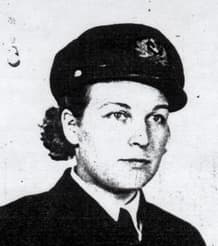
Canadian · Exploration
Molly Kool
February 23, 1916 – February 25, 2009
Early life and family background
Myrtle “Molly” Kool was born on February 23, 1916, in Alma, New Brunswick, a small coastal village on the Bay of Fundy. She came from a family deeply connected to the sea: her father, Paul Kool, was a Dutch sea captain, and her mother was Myrtle Anderson Kool. Sources describe her as one of several siblings in a household where maritime life was normal rather than exceptional. Growing up in Alma, she spent time on the water from an early age and learned seamanship in a practical, lived way that shaped her later career.
Kool’s childhood coincided with a period when most women had little access to maritime training or professional command. In coastal communities, women’s labor was often essential but rarely translated into formal credentials or leadership positions. Molly Kool’s upbringing was unusual because she was immersed in maritime culture yet still had to challenge the conventions that prevented women from entering the field professionally. Her family background gave her knowledge and confidence, but it did not remove the institutional barriers she would later confront.
Education and entry into maritime training
After high school, Kool sought formal nautical education in Saint John, New Brunswick. In 1937, she joined the Merchant Marine School, reportedly as the only woman ever admitted there. That same year, she earned her mate’s certificate, a significant credential that established her professional standing in marine service. These early achievements were crucial because they gave her recognized qualifications in a field where women were seldom permitted to train at all.
Her entry into maritime schooling was itself a barrier-breaking step. The maritime world of the 1930s was shaped by assumptions that command at sea required masculine authority and physical toughness, while women were expected to remain outside such occupations. By insisting on admission and completing her studies, Kool demonstrated both persistence and professional seriousness. The sources emphasize that she was the only woman to attend the school, a detail that highlights how exceptional her presence was within the institution.
Career beginnings at sea
Following her training, Kool began working on her father’s vessels and in coastal service. She became a mate on her father’s 70-foot scow, the Jean K., and sailed the challenging waters of the Bay of Fundy. These waters were known for strong tides, changing weather, and difficult navigation, making them a demanding setting for any mariner. Kool’s early work at sea therefore combined formal qualification with hands-on experience in an especially unforgiving maritime environment.
Sources consistently describe her as an accomplished sailor who had learned the sea through family life and then sharpened that knowledge through professional work. Her experience was important not only because she was doing the job, but because she was doing it in a sector that was actively resistant to women’s participation. Her career began in a world where women aboard commercial vessels were often treated as bad luck, a superstition that itself reinforced exclusion. Kool’s presence on the water challenged those customs through competence and repetition rather than rhetoric.
Historic certification and command
The defining milestone of Kool’s career came in 1939, when she obtained her coastal Master’s Certificate and became the first woman in North America to attain certification as a master of a cargo steamship in the home trade. Canadian sources also describe her as the first licensed female sea captain in North America, the first female ship captain in Canada, and the first female Master Mariner in North America. The best-documented exact date for this milestone is May 25, 1939, which the Albert County Museum identifies as the day she became the first licensed female Master Mariner or sea captain in North America.
This accomplishment was historically significant because a master’s certificate was the formal key to command. It recognized that a woman could hold the same professional authority as men in a sector central to trade and transport. Kool’s success also came at a time when the regulatory language governing seafaring was changing. Contemporary accounts note that the Canadian Shipping Act had to be revised to use gender-inclusive language, reflecting how exceptional her application was within the legal and administrative order of the day.
Her achievement was not simply symbolic. She had to satisfy the same practical and navigational requirements expected of any master mariner. Because only a handful of women in the world had achieved comparable status by that time, her certification placed her among a very small and pioneering group of female mariners internationally. For Canada and North America, however, she was the first, and that made her a landmark figure in maritime history.
Work as a captain and later career
After receiving her certificate, Kool commanded vessels on Atlantic routes, including the waters between Alma and Boston. Accounts describe her as sailing for about five years before leaving the sea. Her work took place in a profession defined by long hours, physical danger, and responsibility for both vessel and crew. The fact that she performed this work successfully reinforced the practical meaning of her historic first: she was not simply certified in name, but active in command.
Her later move to Maine marked a transition from professional seafaring to private life, though it did not diminish her status. Historical accounts note that she lived the rest of her life in Maine after marrying. Even after leaving active maritime employment, her reputation endured as a pioneer who had made a lasting change in the possibilities available to women in marine occupations.
Marriage and personal life
Sources indicate that Kool moved to Maine and married after her years at sea, though detailed public information about her spouse and family life is limited in the available historical record. This scarcity is itself revealing: many women who broke barriers in the early twentieth century were remembered primarily for their public achievements, while their private lives were documented less fully than those of comparable men. What is clear is that her marriage did not erase the importance of her maritime career or her reputation as a trailblazer.
Because Kool lived in an era when women’s work was often underreported or subordinated to domestic identity, the historical record focuses mainly on her professional accomplishments. That emphasis is appropriate in her case, because her significance lies overwhelmingly in the fact that she crossed into a profession from which women had been effectively excluded. Her personal life, insofar as it is documented, forms part of the broader story of a woman who balanced a nontraditional career with later family and residential life.
Recognition and honors
Kool received renewed recognition in later decades as Canada reassessed the contributions of women to national history. A French-language biographical source reports that in 2006 the Government of Canada officially recognized her as the first woman to hold a captain’s certificate. More broadly, museum exhibits, government heritage materials, and media profiles repeatedly cited her as the first female sea captain in North America. Such recognition confirmed that her career had become part of the national historical canon.
The fact that many commemorations came long after her active career speaks to a common pattern in women’s history: achievements that were once unusual or contested often receive fuller public appreciation only later. Kool’s story has been featured by the Canadian Coast Guard, the Albert County Museum, CBC, and other institutions. Her name was also used for the icebreaker CCGS Captain Molly Kool, a sign that her legacy had entered the symbolism of Canadian maritime identity.
Legacy and historical significance
Molly Kool’s enduring importance lies in the combination of her formal credential, her operational competence, and the era in which she succeeded. She became the first woman in North America to command and qualify at the highest level of cargo-ship service, in a professional world shaped by exclusionary norms. Her career demonstrated that maritime command was not inherently male, even if institutions had long treated it that way. In this sense, her achievement was both practical and cultural: she proved capability while also unsettling stereotypes.
Her legacy is especially meaningful in the history of women’s work in transportation and the marine trades. Unlike some pioneers whose recognition came through a single dramatic event, Kool’s significance rested on sustained labor, technical skill, and persistence through institutional resistance. That makes her a powerful example of a barrier-breaking woman whose firsts were earned through formal qualification and professional performance, not simply public symbolism.
Today, Molly Kool is remembered as a pioneer from rural New Brunswick who became a North American first in maritime history. Her life story continues to illustrate how women transformed restricted professions by entering them, mastering them, and forcing institutions to adapt. In that respect, her career remains a durable landmark in Canadian women’s history and in the broader history of gender equality at sea.
Later life and death
Kool lived for many decades after leaving the sea. She died on February 25, 2009, in Bangor, Maine, at age 93. Obituaries and retrospective profiles emphasized her historic status as North America’s first licensed female sea captain and the first woman in the region to earn such a credential. Her death prompted renewed attention to the path she opened for others and to the relative scarcity of women in maritime command during her era.
Her passing closed a life that had begun in a small New Brunswick seaport and extended into historical significance far beyond it. Although the record of her personal life is modest, the record of her public achievement is unmistakable. Molly Kool’s name remains attached to the history of women who entered and reshaped professions once considered off-limits to them, and her life continues to stand as evidence of what persistence could accomplish even within highly gendered institutions.
Dated achievements
3 indexed.
- Feb231916Exploration
Birth of Molly Kool
Molly Kool was born in Alma, New Brunswick.
View details Albert County Museum on Molly Kool's Birthday - May251939Exploration
First licensed female Master Mariner in North America
Molly Kool became the first licensed female Master Mariner in North America on May 25, 1939.