← All women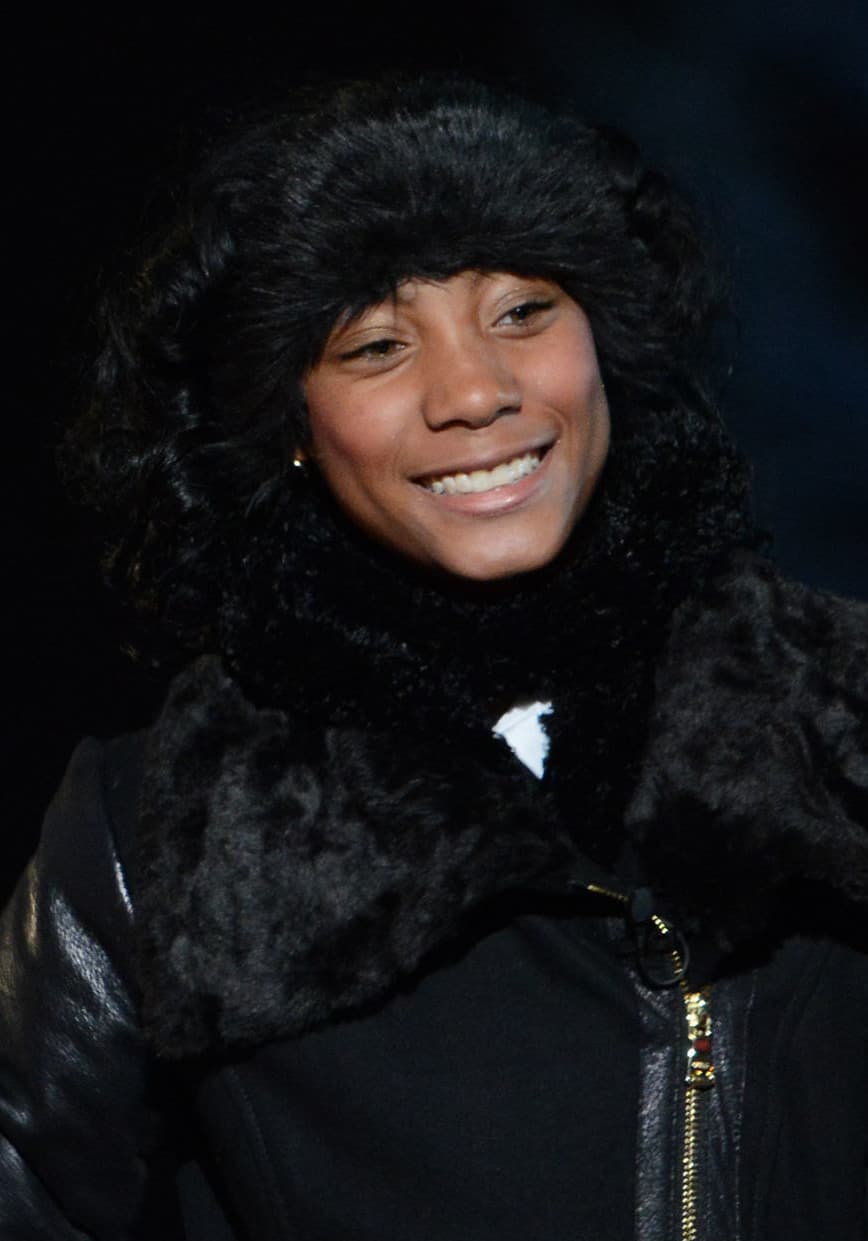
American · Sports
Mo'ne Davis
June 24, 2001 – present
Early life and background
Mo'ne Ikea Davis was born on June 24, 2001, in Philadelphia, Pennsylvania. She grew up in a family and city environment that would later become inseparable from her public identity as a barrier-breaking athlete. Biographical sources identify her parents as Lamar Davis and Lakeisha McLean, and note that she lived with her mother and stepfather, Mark Williams, from about age six. She has also been described in biographical profiles as one of multiple siblings in a working family whose circumstances did not foresee the national sports fame that would eventually follow her.
Davis’s athletic ability emerged early. Reports describe her as a standout in several sports during childhood, including football, basketball, softball, and soccer. By the time she was a preteen, coaches had begun to notice not only her skill but her composure and competitive seriousness. That early development mattered because it placed her on a trajectory unusual for a young girl in the youth baseball system: she was not being highlighted simply for novelty, but for elite ability in a sport where girls were still rarely given equal visibility.
She attended Spring Side Chestnut Hill Academy, where she played multiple sports and further established herself as a highly capable athlete. Her later college career would continue that multi-sport identity, but her childhood and early teen years were defined by an increasingly visible baseball talent that eventually placed her at the center of a national conversation about gender and race in sports.
Breakthrough in the Little League World Series
Davis became a national figure in August 2014 as a 13-year-old pitcher for the Taney Dragons of Philadelphia. In the Little League World Series, she threw a complete-game shutout against Nashville on August 15, 2014, striking out eight batters in a 4–0 victory. The performance made her the first girl to earn a win and pitch a shutout in Little League World Series history, the first African-American girl to play in the tournament, and the first female pitcher to win a game there.
The significance of that breakout cannot be overstated. The Little League World Series is one of the most visible youth sports events in the United States and has long served as a proving ground for baseball talent and childhood sports mythology. Davis’s performance was remarkable not only because it was excellent, but because it unfolded in a highly gendered and racialized public space. Her success challenged assumptions about who could dominate on a baseball field and turned a youth tournament into a national cultural event.
Her fastball was widely reported at 70 miles per hour, which became part of the public fascination surrounding her. Media coverage rapidly expanded beyond sports pages, and Davis was thrust into a celebrity environment that is rare for any child, much less for a preteen Black girl in baseball. In that moment, she became a symbol of possibility for girls who had rarely seen themselves represented in baseball’s most celebrated spaces.
Davis’s 2014 LLWS run also made her one of the few girls in the event’s history and one of the most visible examples of a girl succeeding on a boys’ national stage. She was later recognized by youth and mainstream sports media, and the performance remained the defining event around which the rest of her public life would be understood.
National celebrity and media recognition
In the weeks after the Little League World Series, Davis’s fame accelerated quickly. On August 25, 2014, she appeared on the cover of Sports Illustrated, becoming the first Little League baseball player ever to do so and the first Little Leaguer ever to appear on the magazine’s cover. The cover transformed her from a viral sports story into a national symbol of youth excellence and inclusion.
Her prominence extended beyond magazine coverage. On September 2, 2014, she delivered a ceremonial first pitch at Dodger Stadium, a gesture that reflected the way Major League Baseball had embraced her as a significant figure in the sport. On September 18, 2014, she donated the jersey from her LLWS shutout to the National Baseball Hall of Fame in Cooperstown, ensuring that the uniform from her historic game would be preserved as a baseball artifact.
Recognition continued into the following years. Davis received the Best Breakthrough Athlete ESPY on July 15, 2015, a major sports award that acknowledged both her historic performance and her broader influence on younger athletes. She was also included in TIME’s Firsts: Women Who Are Changing the World project on September 7, 2017, cementing her place in a wider story about women who have redefined public life.
These honors mattered because they showed that Davis’s fame was not fleeting novelty. Instead, her 2014 performance became part of the official memory of American sports, archived through awards, museum collections, and leading media institutions. For girls in particular, her visibility helped normalize the idea that baseball excellence was not confined to boys.
Education and college athletics
After her Little League fame, Davis continued to build an athletic career while also pursuing her education. She later attended Hampton University, a historically Black university in Virginia, where she played softball. Her collegiate softball debut came on February 7, 2020, according to NCAA reporting, marking her transition from youth baseball star to NCAA athlete.
Her move to Hampton was historically resonant. HBCUs have played a central role in the education and athletic development of Black students in the United States, and Davis’s presence there linked her early public breakthrough to a broader legacy of Black excellence in higher education. The transition also showed that her athletic identity extended beyond the 2014 LLWS story: she was still competing, still developing, and still committed to diamond sports.
Sources associated with Hampton describe her as majoring in communications and playing softball while continuing to mature as a public figure. Her college years were notable for the contrast between the intense national attention of her childhood and the quieter, more sustained work of student-athletics. That contrast is an important part of her legacy: Davis did not remain frozen in the role of child prodigy, but used education and college sports to build a longer career path.
Later career and professional baseball
In the mid-2020s, Davis re-emerged in baseball’s professional pipeline. On May 29, 2025, she was selected in the inaugural Women’s Professional Baseball League draft, an important development in the effort to create sustained professional opportunities for women in baseball. MLB reporting identified her among the players drafted as the league prepared for its first season.
This step was historically important because it connected Davis’s youth breakthrough to the emergence of a professional women’s baseball infrastructure. For decades, girls who played baseball at a high level often had to switch sports, most commonly to softball, because professional women’s baseball opportunities were limited. Davis’s selection in the inaugural draft symbolized a possible change in that pattern and placed her among the first players helping define a new league’s identity.
Her professional selection also highlighted the continuity of her public role. From the Little League mound to the college diamond and then into a nascent pro league, Davis’s career reflects the gradual expansion of women’s participation in baseball. She became not just a one-time phenomenon, but a sustained figure in the sport’s evolving history.
Public image, legacy, and historical impact
Davis’s legacy rests on more than statistics. She became one of the most visible young athletes in the United States because her 2014 performance carried multiple kinds of significance at once: athletic, racial, gender-based, and cultural. She was a Black girl pitching on a national boys’ stage, winning decisively, and doing so with a calmness that made her appear to many viewers as an athlete beyond her years.
Her story has frequently been invoked in discussions of girls in baseball, youth representation, and the importance of visible role models. The fact that her jersey entered the Baseball Hall of Fame and her image appeared on the cover of a major national sports magazine helped transform the memory of her shutout into a durable public symbol. She is now routinely cited as one of the defining figures in the modern history of girls in baseball.
At the same time, Davis’s later path through high school athletics, Hampton University, and professional women’s baseball shows that her life was not defined only by one extraordinary game. Her career illustrates how barrier-breaking moments can open broader trajectories, especially when institutions respond by creating more space for girls and women. In that sense, Davis’s history is both singular and representative: singular in the scale of her breakout, and representative of the wider struggle for equal access in baseball.
Personal life
Reliable public sources focus primarily on Davis’s athletic career, education, and public recognition. As of the available record, there is no well-documented public information about marriage or children. Her public identity has remained centered on sports, education, and occasional media appearances rather than on personal disclosure.
She has also been described in later coverage as continuing to work toward a future in baseball and sports media, including graduate study and professional ambitions. That continued development underscores a broader point about her life: Davis has moved from child prodigy to adult athlete with a carefully built post-viral career, preserving the depth of her public significance long after the original moment of fame.
Legacy
Mo'ne Davis occupies a central place in women’s sports history because she changed the public meaning of a Little League game. Her August 2014 shutout was not merely a win; it was a cultural event that forced a reevaluation of who is seen as a baseball player, who is imagined as elite, and whose accomplishments are preserved in the historical record.
Her life and career continue to matter because they connect youth sports, women’s baseball, Black history, and media representation. The institutions that honored her — the Hall of Fame, Sports Illustrated, the ESPYs, TIME, MLB, NCAA, and eventually a professional women’s baseball league — all helped confirm that her achievements were more than fleeting headlines. They were milestones in the long expansion of opportunity in American sport.
Dated achievements
13 indexed.
- Jun242001
- Aug152014Sports
First girl to earn a win and pitch a shutout in Little League World Series history
At 13, Mo'ne Davis became the first girl to earn a win and pitch a shutout in LLWS history.
View details