← All women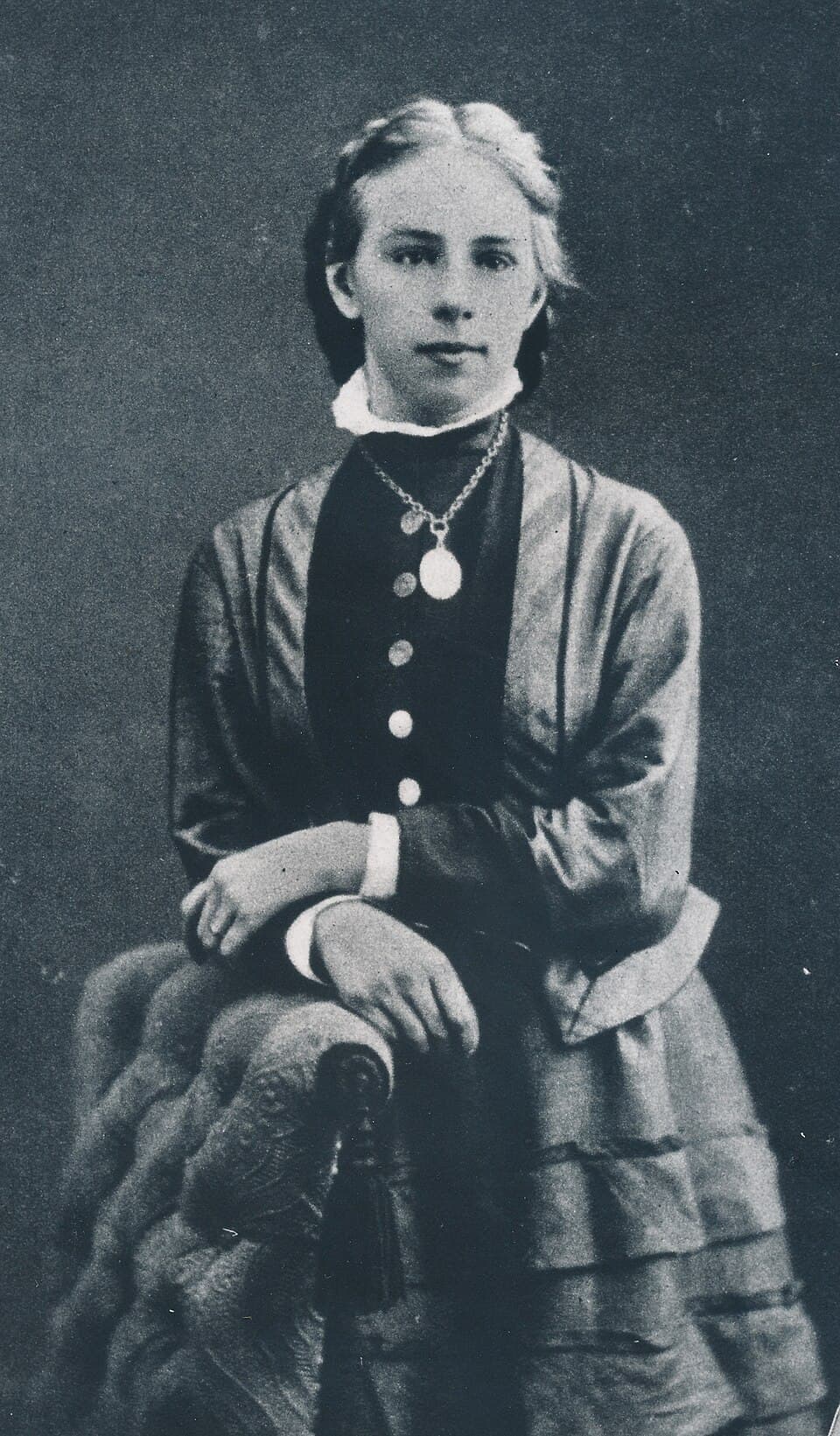
American · Medicine
Mignon Nicholson
January 1, 1876 – 1906
Overview
Mignon Nicholson (born 1876, d. ca. 1906) is widely recognized by historians of veterinary medicine as the first college-trained female veterinarian in the United States and very likely the first woman in North America to earn a formal veterinary degree.[1][6][9][11][18] She graduated from McKillip Veterinary College in Chicago in 1903, at a time when women’s access to professional and scientific education was severely restricted.[1][6][11] Although almost no documentation survives about her subsequent career or personal life, her degree marked a historic breakthrough for women in veterinary medicine and helped open the profession to future generations of women practitioners.
Because primary archival records have not yet been located, Nicholson’s life story is reconstructed almost entirely from brief entries in specialized historical summaries and modern commemorative articles. These sources provide her birth year (1876), graduation year (1903), and an approximate year of death (1906), but they do not preserve details about her family background, her course of study, or any clinical work she may have undertaken.[1][2][6][9][11][18] As a result, Nicholson occupies a paradoxical place in women’s history: celebrated as a trailblazer, yet almost invisible in the documentary record.
Early Life and Background
Available sources on early women veterinarians list “Mignon Nicholson (1876–1906)” and identify her with McKillip Veterinary College in Chicago, but they do not provide information about her birthplace, parents, ethnic background, or childhood circumstances.[1] No census records, family genealogies, or local newspaper items have yet been firmly linked to her, and there is no evidence in accessible sources that she belonged to any of the better-documented Nicholson families in the Midwest or on the East Coast.
Her birth year, 1876, situates her in a generation of American women who came of age during the gradual expansion of educational opportunities for women. Studies of women’s education in the United States note that from the mid-19th century onward, coeducational colleges and women’s institutions increasingly offered advanced instruction, including scientific coursework, to female students.[3] Although veterinary medicine was slower to open than fields such as teaching or nursing, the broader cultural movement that supported women’s entry into higher education formed the backdrop for Nicholson’s later decision to pursue a veterinary degree.
Because there are no surviving letters, diaries, or institutional files attributed directly to Nicholson, historians must infer the likely contours of her early life from general patterns. It is reasonable to suppose that she demonstrated unusual academic aptitude and determination to gain admission to a veterinary college; most women of her cohort who pursued medical or scientific training faced significant financial obstacles, skepticism from relatives and teachers, and pervasive gendered expectations that they should restrict themselves to domestic roles. However, without primary documentation, such inferences cannot be applied to Nicholson with certainty and are therefore not treated as established fact.
Education and Training at McKillip Veterinary College
The central documented episode in Nicholson’s life is her graduation from McKillip Veterinary College, a proprietary veterinary school located in Chicago, Illinois.[1][6][11] McKillip was one of several private institutions that offered structured training in veterinary science in the late 19th and early 20th centuries, at a time when the profession was evolving from empirically based animal care to a more standardized, scientific discipline.
Historical summaries from the American Veterinary Medical History Society (AVMHS) state that “The first women to receive Doctor of Veterinary Medicine degrees in the United States were Mignon Nicholson (1876–1906) from McKillip Veterinary College in 1903,” followed by Elinor McGrath and Florence Kimball in 1910.[1] A timeline in Today’s Veterinary Practice likewise records that “1903 – Mignon Nicholson graduated from McKillip Veterinary College in Chicago” and notes that nothing further is known about her veterinary career.[6] Other commemorative articles on women in veterinary history, including pieces from AKC Pet Insurance and Holiday Vet, repeat this 1903 graduation year and emphasize her pioneering status.[9][11]
These sources do not identify Nicholson’s exact date of matriculation or provide details about the curriculum she completed. Typical veterinary programs of the era included coursework in anatomy, physiology, pathology, surgery, and medicine for domesticated animals, along with practical training. Given the prevailing social norms, her presence in the classroom would have been exceptional: veterinary schools were overwhelmingly male, and women students often encountered open hostility or marginalization. Secondary accounts underline that she was the earliest known woman to earn a veterinary degree in the United States, implying that she navigated an environment with few, if any, female peers.[1][6][11][18]
Career Beginnings and Development
One of the striking aspects of Nicholson’s biography is the near-total absence of information about her professional activities after graduation. The AVMHS summary and multiple modern articles explicitly state that “nothing is known” about her veterinary career or practice.[1][6][9][11] No advertisements, business directories, or licensing records have yet been discovered that document her as a practicing veterinarian, and there is no evidence in accessible sources of membership in early veterinary professional associations.
Some recent journalistic and educational pieces attempt to reconstruct a narrative of her post-graduation life, including claims that she married within months of receiving her degree and that her life ended tragically following personal difficulties.[3] These stories are often based on local oral histories and have not been corroborated by primary documents such as marriage certificates, court records, or contemporary newspaper coverage. As a result, cautious researchers treat them as suggestive but not definitive.
The lack of documentary evidence does not diminish the structural impact of her degree. Even if Nicholson did not—or could not—establish a long-term practice, her presence as a qualified woman veterinarian in 1903 altered the professional landscape. Her achievement demonstrated that veterinary schools could admit and train women successfully, a precedent that may have influenced later decisions to admit McGrath, Kimball, and others in the following decade.[1][6][9][11]
Major Accomplishment: First College-Trained Female Veterinarian in the U.S.
Nicholson’s single well-documented accomplishment is nonetheless of major historical significance. She is consistently cited as the first woman to receive a Doctor of Veterinary Medicine degree in the United States, earning her qualification from McKillip Veterinary College in 1903.[1][6][9][11][18] Some accounts further describe her as the first woman in North America to earn any veterinary degree, a claim that aligns with the absence of earlier documented female graduates from Canadian or U.S. institutions in current research.[1][6][9][11]
In the context of women’s education in the United States, this accomplishment marks a significant extension of women’s participation in professional science. By the turn of the twentieth century, women had begun to enter medicine and pharmacy in small numbers, but veterinary medicine remained even more male-dominated.[3] Animal care was strongly associated with agricultural labor and commercial transport, sectors culturally coded as masculine. Nicholson’s degree challenged these associations and offered an early example of a woman claiming authority over animal health and disease as a trained professional.
Several modern commentators highlight Nicholson as a “trailblazer” and “beacon of pioneering spirit,” emphasizing that her graduation helped to lay the groundwork for later generations of women veterinarians.[18] Subsequent milestones in the field—such as the 1910 degrees of Florence Kimball and Elinor McGrath, and the 1949 graduation of Alfreda Johnson Webb and Jane Hinton as the first African American women veterinarians—are often narrated as part of a lineage that begins with Nicholson’s 1903 achievement.[11][18]
Awards, Honors, and Recognition
No contemporary awards, medals, or institutional honors granted to Nicholson have been documented in accessible sources. Given the limited recognition of women’s achievements at the time, it is possible that her graduation passed without formal celebration beyond standard commencement exercises. However, modern historians and professional organizations have begun to acknowledge her significance.
The AVMHS’s Early Woman Veterinarians page lists her first among women graduates in the United States and explicitly credits her with being the earliest woman to receive a DVM.[1] Timelines and articles in veterinary publications and online platforms, including Today’s Veterinary Practice, AKC Pet Insurance, Holiday Vet, and other educational blogs, feature her as a key figure in the history of women in veterinary medicine.[6][9][11][18] These posthumous recognitions function as a form of professional honor, retroactively inscribing her into the historical narrative of the field.
Despite this growing acknowledgment, there is no evidence of dedicated awards, scholarships, or institutional programs named after Nicholson. Her legacy today is primarily discursive: she appears in historical summaries, educational materials, and popular articles that seek to highlight pioneering women in veterinary medicine.
Personal Life
Information about Nicholson’s personal life is extremely limited. The AVMHS entry and related veterinary historical sources do not mention her marital status, children, religious affiliation, or social networks.[1][6][9][11] One televised feature and some derivative articles purport to describe her marriage and the circumstances of her death, suggesting that she wed a Chicago restaurateur soon after graduation and that she suffered a tragic end.[3] However, these accounts do not cite primary documentation and remain outside the evidentiary base used by cautious historical writing.
Without corroborating civil records—such as marriage licenses, city directories, or contemporaneous news coverage—it is not possible to present these narratives as established fact. Nicholson’s personal relationships, economic situation, and daily experiences therefore remain largely unknown, illustrating a broader pattern in women’s history wherein professional breakthroughs are preserved in institutional memory while personal lives of pioneering women disappear from the archive.
Later Life and Death
Specialist references give Nicholson’s lifespan as 1876–1906, indicating that she died approximately three years after her graduation, but they provide no date, location, or cause of death.[1] The AVMHS entry presents these years without elaboration, and no obituary, death certificate, or cemetery record has yet been firmly associated with her in publicly accessible databases.[1]
Because of this evidentiary gap, the year 1906 is treated as an approximate endpoint rather than a fully documented fact. It suggests that her life and potential veterinary career were brief, but the circumstances remain unknown. Some narrative accounts, relying on local stories rather than archival sources, portray her death as a dramatic event involving personal distress.[3] In the absence of primary documentation, such depictions are not included in rigorous historical profiles.
The limited information on her later life underscores how easily women’s contributions can be lost when institutions do not systematically record or preserve their stories. Nicholson’s disappearance from the record contrasts with the more extensive documentation available for later women veterinarians, whose careers coincided with the growth of professional associations, licensing boards, and media coverage.
Legacy and Historical Impact
Despite the scarcity of biographical detail, Mignon Nicholson’s historical impact is substantial. By earning a veterinary degree in 1903, she broke a gender barrier that had previously excluded women from formal participation in veterinary medicine in the United States.[1][6][9][11][18] Her achievement demonstrates that women could meet the intellectual and practical demands of veterinary training, challenging any residual arguments that biological or psychological differences justified their exclusion.
In subsequent decades, women’s presence in veterinary schools increased slowly, then dramatically. By the late twentieth and early twenty-first centuries, women came to make up the majority of veterinary students and practitioners in many countries, including the United States.[6][9][11] Historical surveys and celebratory articles regularly cite Nicholson as the starting point of this transformation, situating her as the first recorded woman in a lineage that includes early pioneers such as McGrath and Kimball and later leaders in clinical practice, research, and professional governance.[1][6][9][11][18]
Her legacy also speaks to the methodological challenges of women’s history. Researchers must work with fragmentary sources, reconstructing significance from brief mentions and institutional memory rather than comprehensive personal archives. The inability to recover the contours of Nicholson’s daily work, relationships, and thoughts does not negate her importance; instead, it highlights the need for ongoing archival exploration and for critical attention to how women’s lives are documented—or omitted—in professional records.
Today, Nicholson serves as a symbolic figure: a reminder that the first women in any field often labor under intense constraints, receive limited recognition, and may be forgotten even as their accomplishments reshape the opportunities available to those who follow. Her 1903 degree at McKillip Veterinary College stands as a landmark in the history of veterinary medicine and in the broader story of women’s struggle for access to scientific and professional education.
Research Gaps and Prospects
Current knowledge of Mignon Nicholson depends heavily on a small set of secondary and tertiary sources: the AVMHS’s Early Woman Veterinarians list, a timeline in Today’s Veterinary Practice, and several modern educational or commemorative articles.[1][6][9][11][18] None of these works cite primary documents such as McKillip Veterinary College records, civil registration files, or contemporaneous newspapers. As a result, scholars note that many aspects of her life—including precise birth and death dates, family background, the nature of her veterinary training, and any clinical or teaching work—remain unknown.
Future research might fruitfully target archival materials in Chicago and relevant state repositories. Possible sources include surviving McKillip Veterinary College catalogs and graduation registers, professional licensing records, city directories, local newspapers from the early 1900s, and probate or cemetery records. Such work could confirm or correct the approximate dates currently in use and perhaps recover additional details about her life and career.
Until such primary materials are found and analyzed, responsible biographical writing about Nicholson must remain cautious, emphasizing the few secured facts—her 1903 graduation and status as the earliest documented woman veterinarian in the U.S.—while acknowledging the substantial gaps that persist around her story. This careful balance preserves her rightful place in the history of women in veterinary medicine without overstating what the evidence can support.
Dated achievements
2 indexed.
- Jan011876Medicine
Birth of Mignon Nicholson
Mignon Nicholson was born in 1876, later becoming the first college-trained female veterinarian in the United States.
View details Early Women Veterinarians - Jan011903Medicine
Graduated from McKillip Veterinary College
Mignon Nicholson graduated from McKillip Veterinary College in Chicago in 1903, becoming the first college-trained female veterinarian in the U.S.