← All women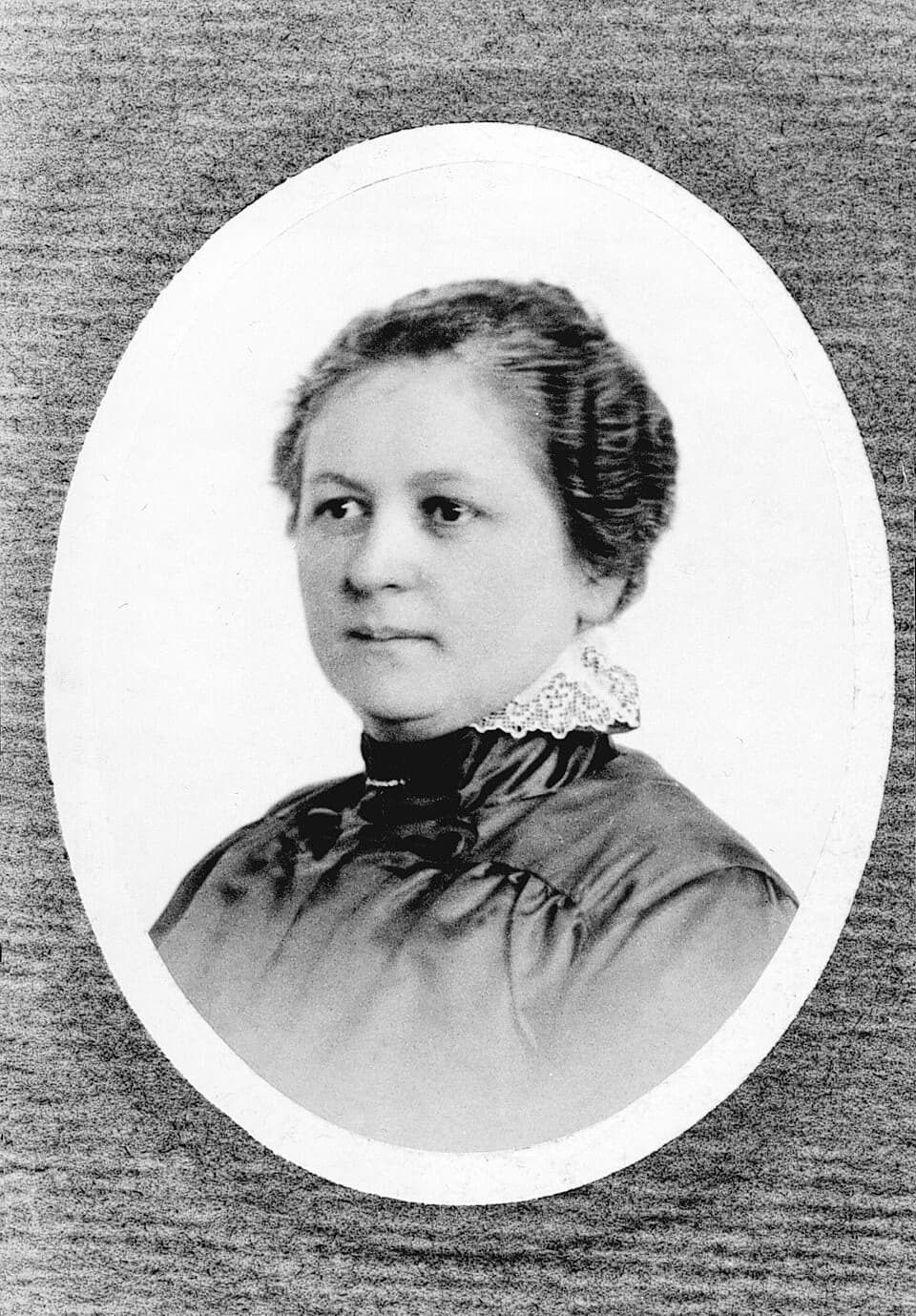
German · Science
Melitta Bentz
January 31, 1873 – June 29, 1950
Early Life and Background
Amalie Auguste Melitta Bentz, née Liebscher, was born on 31 January 1873 in Dresden, in the Kingdom of Saxony, then part of the German Empire.[2][4][5] Her family belonged to the urban middle class: her father is described in several accounts as a bookseller or book salesman, situating the household in the world of small commerce and printed culture.[4][7][12][14] Different sources name her parents as Karl and Brigitte (Reinhardt) Liebscher, reflecting the family’s German bourgeois background.[3][15][17]
Growing up in Dresden, a city known for its cultural life and industrial development, Melitta would have experienced the rapid modernisation of domestic life in the late 19th century. Although detailed records of her formal education are scarce, later biographical sketches emphasise her practical intelligence, commercial acumen, and attentiveness to everyday household problems.[4][7][12] These traits emerged within a context in which middle‑class women’s roles were largely confined to the home, yet domestic management itself demanded organisational skill and a keen sense of efficiency.
As a young woman, she was socialised into the gender norms of Wilhelmine Germany, where women’s participation in technical or business fields was discouraged and rarely documented. Nevertheless, the entrepreneurial milieu of her family—linked to the book trade and consumer goods—provided her with a familiarity with sales, customers, and small‑scale business operations. This background later proved crucial as she moved from being a housewife unhappy with her coffee to an inventor and founder of a family firm.
Marriage, Family, and Domestic Context
Melitta married Emil Hugo Bentz, a merchant, in Dresden.[4][7] The couple had at least two sons, Willy and Horst, who would later work in the family business.[4][7][12] Her married life initially conformed to expectations: she was a Hausfrau, responsible for managing the household, including cooking and serving coffee—a key component of social and family life in Germany at the time.
Coffee consumption had spread widely through German society by the turn of the 20th century, but domestic coffee preparation methods remained cumbersome. Housewives like Bentz typically brewed coffee using metal sieves, percolators, or linen cloths, which often failed to prevent grounds in the beverage and produced over‑extracted, bitter coffee.[1][7][16] Cleaning these implements added to daily labour. Bentz’s later recollections and subsequent biographical narratives stress her dissatisfaction with these methods, identifying domestic frustration as the spark for her inventive activity.[4][7][12][17]
This domestic setting is critical for understanding her career. Unlike many male inventors who emerged from formal engineering backgrounds, Bentz’s innovation originated directly from routine household work. Her case exemplifies how women’s unpaid domestic labour could generate technical insights while remaining largely invisible in conventional histories of technology.
Invention of the Coffee Filter
Around 1908, at age 35, Melitta Bentz began experimenting with ways to improve home coffee brewing.[2][6][18] She sought a method that would produce a clean, flavourful cup without sediment and without the need for strenuous cleaning of metal devices. The key moment, as recounted in multiple sources, involved her use of blotting paper from her son Willy’s school notebook.[6][17][19]
She took a small brass pot or insert and punctured its base with holes to create a kind of sieve. She then lined this perforated insert with a piece of blotting paper and placed ground coffee on top. When hot water was poured over the grounds, it flowed through the coffee and paper, leaving the grounds behind while allowing brewed coffee to drip into a vessel below.[1][6][7] The result was a clear, less bitter beverage and a device that could be cleaned simply by discarding the used paper.[6][16]
From this improvised experiment, Bentz developed a more systematic design: a round, prefabricated paper disk used with a filter holder whose base was curved and recessed, with inclined flow holes to guide the liquid.[1][4] This design addressed both the fluid dynamics of drip brewing and the practicalities of insertion and disposal. Her invention effectively created the principle of the pour‑over paper coffee filter, an approach that would become central to 20th‑century coffee culture.
Registration of the Utility Model (Gebrauchsmuster)
Recognising the commercial potential of her idea, Bentz took the unusual step—particularly for a woman of her time—of securing formal protection for her invention. On 20 June 1908, she registered a Gebrauchsmuster (utility model) at the Kaiserliches Patentamt (Imperial Patent Office) in Berlin.[1][4][20] The registration described a "coffee filter with a base that is curved and recessed on the underside and with inclined flow holes," an industrial property right that functioned as a faster, more streamlined form of technical protection than a full patent.
The German Patent and Trade Mark Office (DPMA) later highlighted this action as historically significant, noting that Bentz was among the earliest women in Germany to personally file and obtain protection for her own invention.[4] In the gendered landscape of early 20th‑century intellectual property, women’s names appeared only rarely as registrants; Bentz’s filing thus represented a quiet but notable breach of the male monopoly on recognised technical authorship.
On 8 July 1908, her utility model was granted and published in the Patent Gazette (Patentblatt), on page 1145.[1][18] This publication date is widely cited by later sources as the formal recognition of her coffee filter design and, in some narratives, as the effective patent date for her invention.[18] The appearance of "Melitta Bentz" in the official Gazette not only established her legal rights but also provided documentary proof of women’s participation in industrial innovation.
Emergence of the Commercial Paper Coffee Filter
Coinciding with the grant of the utility model, 1908 also saw the emergence of the first commercially recognised disposable paper coffee filter associated with Bentz’s invention.[2][18] Reference works on coffee technology identify 8 July 1908 as the date linked to her round filter paper disk, marking the beginning of disposable coffee filtration as a commercial product category.[2]
Initially, production took place on a modest scale. Bentz cut paper filters by hand and sold them, along with simple filter devices, to neighbours and local cafés.[1][4][7] The innovation quickly proved attractive: the filters produced clearer coffee, reduced bitterness, and eliminated the need to scrape grounds from metal sieves or wash stained cloths.[1][7] For housewives and café owners alike, the convenience and taste benefits were compelling.
The disposable filter aligned with broader trends in early 20th‑century consumer culture, including the rise of single‑use hygienic products and the commodification of domestic labour‑saving technologies. Bentz’s invention translated a domestic annoyance into a standardised artefact that could be mass‑produced and sold, illustrating how women’s household expertise could underpin modern consumer goods.
Founding and Development of the Melitta Company
In 1908, following the success of her filter papers, Bentz established a small business under her own name, commonly referred to in retrospective accounts as "M. Bentz".[7][12] She employed her husband and sons, turning the household project into a family enterprise. This arrangement inverted typical gender hierarchies: a woman’s invention became the basis for the family’s livelihood, and male relatives worked in a company rooted in her idea.
Over the next years, the company refined its products. In 1910, Bentz developed the device further so that coffee dripped directly into a jug or pot, making the brewing process more streamlined for users.[7] The firm began to supply filters and filter paper to a growing customer base, taking advantage of rising demand for quality coffee in cafés and homes.
Branding was central to the firm’s strategy. On 13 September 1911, the word mark "Melitta" was registered as a trademark for "Kaffeefilter" (coffee filters).[4] Then, on 27 March 1913, a second "Melitta" word mark was registered, extending protection to "Haus- und Küchengeräte, Filtrierpapier, Koch- und Heizapparate"—household and kitchen devices, filter paper, and cooking and heating apparatus.[4] These registrations legally anchored the enterprise’s identity in Bentz’s first name, an unusual choice in a period when brands were often generic or carried masculine surnames.
The company’s early evolution took place against the backdrop of intense industrialisation and the emergence of branded consumer markets in Germany. Melitta products benefited from both the practical merits of the filter and the growing cultural importance of coffee as an everyday pleasure. Over time, the firm diversified into coffee itself and a broader range of coffee‑related equipment, becoming a vertically integrated player in the coffee industry.[18]
Major Works, Discoveries, and Accomplishments
Core invention: disposable paper coffee filter. Bentz’s primary technical achievement was the invention of the disposable paper coffee filter and its associated drip brewing device.[1][2][6][18] Her design solved several longstanding problems in domestic coffee preparation: it prevented grounds from entering the cup, controlled extraction to reduce bitterness, and simplified post‑brew cleanup. The resulting methodology—placing ground coffee in a paper filter and pouring hot water over it—would become a global standard in pour‑over brewing.
Utility model and patents. The 1908 utility model (Gebrauchsmuster) registered on 20 June and granted/published on 8 July constituted formal recognition of her design within the German intellectual property system.[1][4][18] Some secondary sources refer to this protection as a patent, but the DPMA clarifies that the original filing was specifically a utility model.[4] Either way, this protection secured her rights during the formative years of the business.
Trademark strategy. The 1911 and 1913 registrations of the "Melitta" word mark for coffee filters and a range of domestic devices were crucial for the brand’s longevity.[4] They allowed the company to defend its identity against imitators and to associate Bentz’s name with notions of quality and innovation in household technology.
Corporate growth and product innovation. Over subsequent decades, the Melitta company introduced improvements to filter shapes, materials, and brewing devices. By the mid‑20th century, it was a significant player in the coffee industry, producing filter papers, manual drip devices, and later electric coffee makers and roasted coffee.[2][18] While many of these developments were guided by later generations, they unfolded within a corporate culture founded on Bentz’s original insight into drip filtration.
Recognition and Awards
During Bentz’s lifetime, formal public honours for women inventors were limited, and documentation of any awards she may have received is sparse. She is primarily remembered through the success of the company bearing her name and the widespread adoption of her invention. Later institutional recognitions have worked to restore her to historical visibility.
The German Patent and Trade Mark Office (DPMA) features Bentz in its "Ingenious Women" series and in its "Patentefrauen" project, highlighting her as an example of female inventive activity and entrepreneurship in the early 20th century.[4] The DPMA’s profiles underscore her role as one of the first women in Germany to personally secure industrial property protection for an invention, effectively treating this achievement as an honourable precedent.
In December 2018, The New York Times published an "Overlooked No More" obituary for Bentz, part of its initiative to commemorate notable figures—often women and people of colour—who were not adequately covered at the time of their deaths.[15] This article recognised her invention’s impact on global coffee culture and drew attention to the gendered dimensions of her story.
Encyclopaedic and media recognition. Encyclopaedias and reference sites, including various language editions of Wikipedia and Britannica, now describe her as a German inventor and entrepreneur, crediting her with revolutionising coffee brewing.[2][5][10][13] Coffee‑focused publications and food media have also celebrated her contribution, emphasising how her paper filter underlies contemporary pour‑over trends.[16]
On 8 July 2026, the DPMA and the Library of Congress Law Library jointly marked the 118th anniversary of her 1908 utility model grant and publication, using the occasion to highlight her pioneering role as a woman inventor and the enduring significance of her coffee filter.[1] This anniversary commemoration functions as a modern institutional honour.
Personal Life and Later Years
Within the family business, Bentz played both entrepreneurial and domestic roles. She remained deeply involved in the firm’s operations in its early stages, overseeing production and contributing to product development, while also managing household responsibilities.[4][7][12] As the company grew, her sons and husband assumed more prominent managerial positions, but her founding role remained acknowledged within the family.
Biographical essays emphasise her unternehmerischer Geist (entrepreneurial spirit) and economic understanding, portraying her as a woman who used her invention to emancipate herself economically and transform her status from an "ordinary housewife" to the founder of a global company.[12] Her life exemplified a negotiated balance between traditional domestic expectations and innovative business leadership.
The family maintained close ties to the region around Minden and Porta Westfalica, where parts of the company’s operations were located. Bentz spent her later years near this industrial base, witnessing the expansion of the business and the consolidation of the "Melitta" brand as a recognised symbol of coffee quality.[4][10][12]
Later Life and Death
By mid‑century, Bentz had largely withdrawn from daily management, though the company continued to build on her legacy. She died on 29 June 1950 in Holzhausen near Minden (Porta Westfalica), Germany.[2][4][5][8][10][15] Several sources note that she died four years after her husband, underscoring the family nature of the enterprise and the couple’s shared contribution to its development.[15]
At the time of her death, the Melitta company was firmly established as a leading producer of coffee filters and related products in Germany and, increasingly, beyond. The post‑war period saw further diversification into coffee roasting and electric brewing devices, continuing the trajectory initiated by her initial invention.[18] Her passing marked the end of an individual life but not of the technological and commercial system she had created.
Legacy and Historical Impact
Transformation of coffee culture. The disposable paper coffee filter fundamentally changed how coffee was brewed at home and in cafés. It enabled filtered coffee to be prepared quickly, cleanly, and consistently, contributing to the normalisation of drip coffee as a standard beverage in many countries.[1][2][18] Later pour‑over devices and specialty coffee practices directly build on Bentz’s principle of controlled, paper‑mediated extraction.
Global brand and name recognition. The Melitta company, named after her, grew into a major international brand in coffee and coffee‑related products. By associating the business with her first name rather than a gender‑neutral label, the enterprise ensured that a woman’s identity remained attached to a widely consumed technology.[18] This naming choice has allowed Bentz’s memory to persist in everyday consumer consciousness, even when users are unaware of the historical figure behind the brand.
Women in innovation and intellectual property. Historians and institutional projects now cite Bentz as an early example of a woman who successfully navigated the intellectual property system to protect her invention.[1][4] Her 1908 utility model registration demonstrates that women’s domestic insights could be codified as technical designs and legally recognised, challenging narratives that locate innovation solely in male‑dominated laboratories and workshops.
Domestic labour as a source of technology. Bentz’s story underscores the importance of domestic labour as a site of technological creativity. Her invention emerged from persistent annoyance with brewing coffee and cleaning kitchen equipment. By turning these frustrations into a novel device and a commercial product, she exemplified how unpaid, gendered work could generate innovations that reshape global consumer practice.
Historical recovery and commemoration. Recent decades have seen concerted efforts to bring Bentz into the historical spotlight. Multilingual encyclopaedia entries, institutional profiles, podcasts, and food history articles have all contributed to a more nuanced understanding of her life and impact.[1][2][4][15][16] The 2018 "Overlooked No More" obituary and the 2026 DPMA–Library of Congress anniversary commemoration are part of a broader movement to recognise women whose contributions were overshadowed or undervalued.
Through her invention of the paper coffee filter and her role in founding the Melitta company, Melitta Bentz left a legacy that extends far beyond her own lifetime. Every time a paper filter is placed in a drip device and hot water is poured over freshly ground coffee, her insight into domestic convenience and extraction control is reenacted, making her one of the most influential yet often under‑acknowledged figures in everyday technology and women’s entrepreneurial history.
Dated achievements
8 indexed.
- Jan311873Science
Birth of Melitta Bentz
Birth of Amalie Auguste Melitta Liebscher in Dresden, Germany.
View details Wikipedia: Melitta Bentz - Jun201908Science
Utility model registration for coffee filter
Melitta Bentz registered a utility model for her coffee filter.
View details