← All women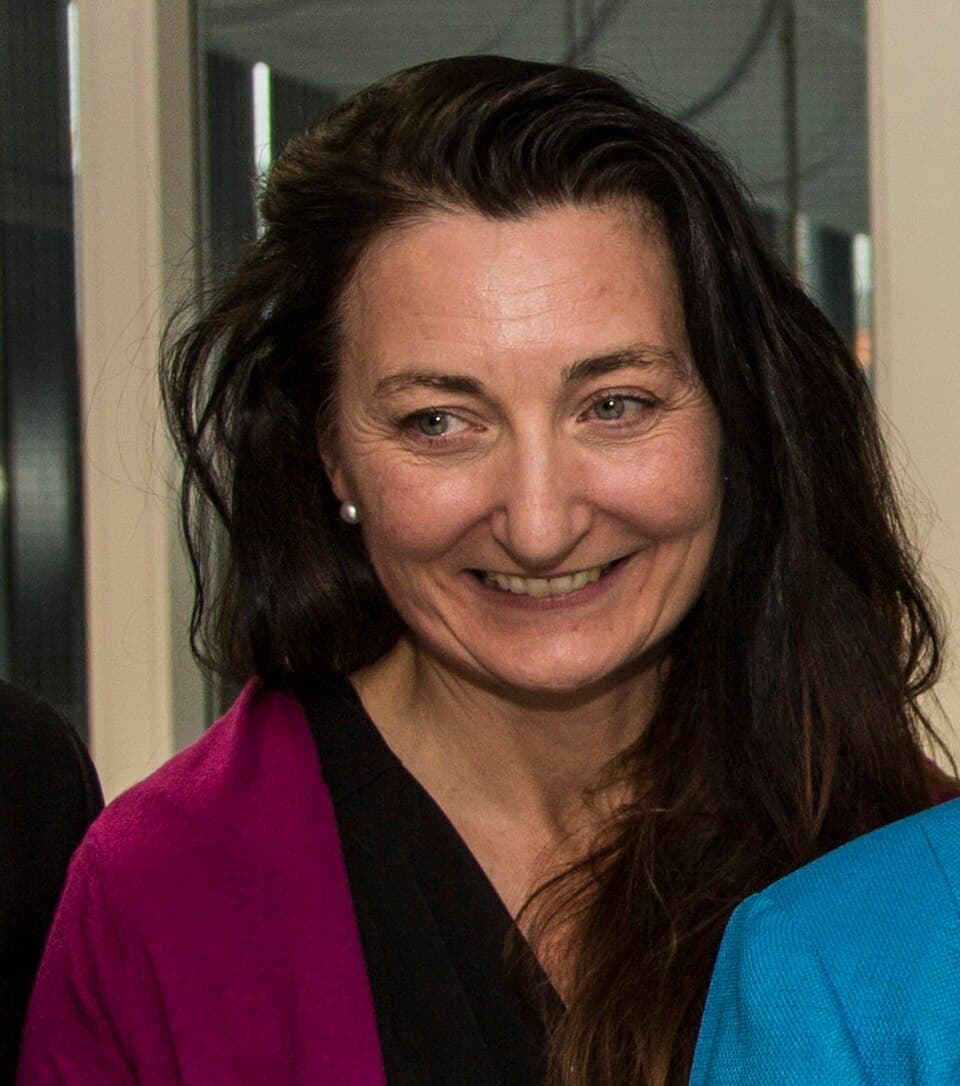
Norwegian · Science · Medicine
May-Britt Moser
January 4, 1963 – present
Early Life and Background
May-Britt Andreassen Moser was born on 4 January 1963 in Fosnavåg, a small fishing community on the island of Gurskøy on Norway’s west coast.[3][7][13] She grew up on a sheep farm in a rural environment, an upbringing that required practical problem-solving and navigation in challenging landscapes.[13] This background later resonated with her scientific interest in how the brain represents space and supports navigation.
Raised in a modest, working-class family, Moser did not initially have a clear path into academia. However, she showed strong abilities in school and developed a particular interest in mathematics and science. According to later profiles, she combined curiosity about the natural world with a desire to understand the mind, leading her toward psychology and neuroscience.[6][13] Her early experiences of rural life and movement through physical space provided an intuitive backdrop for a career devoted to decoding the brain’s internal maps.
Education and Formative Influences
Moser moved to Oslo to study at the University of Oslo, where she focused on psychology, while also taking courses in mathematics and neurobiology.[13][17] She completed a psychology degree around 1990,[17] and in the Norwegian system the Cand.mag. degree—roughly equivalent to a bachelor’s degree—was awarded to her in 1991.[2] At Oslo she met fellow student Edvard I. Moser, who would become both her long-term scientific collaborator and, later, her husband.[2][7]
During her studies, Moser became increasingly interested in how neural circuits give rise to cognition. She joined the laboratory of renowned neuroscientist Per Andersen at the University of Oslo, a leading figure in hippocampal physiology.[1][7][17] Under Andersen’s supervision she pursued research on the hippocampal formation, a brain region crucial for memory and spatial learning. In 1995, she earned her PhD in neurophysiology for work on hippocampal mechanisms of learning in rats.[1][7][13][17] This training grounded her in experimental electrophysiology and systems neuroscience.
After completing her doctorate, Moser conducted postdoctoral research abroad. In 1996 she worked in the laboratory of Richard Morris at the University of Edinburgh, an influential figure in learning and memory research.[2] Morris’s group was known for integrating behavioral experiments with neural mechanisms, particularly in the hippocampal system. This experience further strengthened Moser’s interest in linking cellular and circuit-level activity to complex behavior.
Career Beginnings and Development
In the late 1990s, May-Britt and Edvard Moser returned to Norway to build their own research program. In 1998 they moved to the Norwegian University of Science and Technology (NTNU) in Trondheim, where they began assembling a group focused on systems neuroscience, with an emphasis on spatial representation and memory.[1][2][18] Their work aimed to understand how networks of neurons in the hippocampal formation and associated cortical areas support cognitive functions.
At NTNU, Moser obtained a teaching and research position and quickly established herself as a leading investigator in hippocampal physiology and spatial learning.[13] Working closely with Edvard, she designed experiments in rodents to record neural activity during navigation tasks, combining behavioral paradigms with high-density electrophysiological recordings. Their early work built on the foundational discovery of hippocampal place cells by John O’Keefe, which had shown that specific neurons fire when an animal occupies particular locations.[2][7][13]
Recognizing the need for institutional support, Moser helped co-found the Centre for the Biology of Memory (CBM) at NTNU in 2002.[1][2][18] CBM was later designated a Research Council of Norway Centre of Excellence from 2003 to 2012.[18] The center’s mission was to investigate the neural basis of memory and navigation, and under the Mosers’ leadership it attracted international collaborators and trainees, turning Trondheim into a global hub for systems neuroscience.
As CBM evolved, Moser played a central role in shaping its scientific agenda and mentoring younger researchers. The success of the center led to the creation of the Kavli Institute for Systems Neuroscience at NTNU, where she served as Founding Director.[4][14][18] Her work thus combined experimental research with institution-building, creating an environment that could support large-scale, long-term investigations into brain circuitry.
Discovery of Grid Cells and Major Scientific Contributions
Moser’s most renowned contribution is the co-discovery of grid cells, a class of neurons that form a crucial component of the brain’s internal positioning system. In 2005, her group reported that neurons in the medial entorhinal cortex fired at multiple locations that formed a regular, hexagonal lattice across an environment.[1][2][7][13][17] These cells, later termed grid cells, provided a coordinate system that allows animals to calculate their position in space.
The discovery, published in 2005,[1][2] extended O’Keefe’s place-cell findings and offered an elegant mathematical structure underlying spatial representation. Grid cells differ from place cells in that each cell responds in multiple evenly spaced fields, rather than a single location, and the entire population forms overlapping grids that can encode location with high precision. Moser’s experiments demonstrated that this pattern is maintained across environments, suggesting a general mechanism for path integration and mapping.
Further research from the Moser laboratories, in which May-Britt played a leading role, identified additional space-coding cell types in the entorhinal–hippocampal circuit: head-direction cells that signal orientation and border cells that respond to environmental boundaries.[2][7][18] This work revealed a rich ensemble of neurons forming a comprehensive system for representing position, direction, and spatial context. Combined, these discoveries established the entorhinal–hippocampal system as a sophisticated neural GPS.
Moser’s research also explored how these circuits contribute to memory and cognition more broadly. By examining how spatial codes change with learning, context, and pathology, her group helped link spatial representations to episodic memory and to disorders such as Alzheimer’s disease, where spatial disorientation is a common early symptom.[3][6][13] Her work provided a crucial bridge between basic circuit mechanisms and clinical questions.
Awards, Honors, and Recognition
Moser’s scientific achievements have been recognized with numerous national and international awards. Early in her career, she received the Prize for Young Scientists from the Royal Norwegian Academy of Science and Letters in 1999, acknowledging her promise as an emerging neuroscientist.[2] This prize supported the growth of her laboratory at NTNU.
Throughout the 2000s, she and Edvard Moser were honored with several major research awards. In 2005 they received the W. Alden Spencer Award at Columbia University for outstanding research in neuroscience.[2] In 2006 they were presented with the Betty and David Koetser Award for Brain Research at the University of Zürich, recognizing their work on hippocampal and entorhinal mechanisms of spatial memory.[2] That same year, she received the Liliane Bettencourt Prize for the Life Sciences from the Fondation Bettencourt Schueller in Paris, highlighting her contributions to fundamental life-science research.[2]
In 2008, the Mosers were awarded Eric K. Fernström’s Great Nordic Prize at Lund University, one of the Nordic region’s major medical research honors, for their influential studies on the brain’s spatial navigation system.[2] In 2011, they received the prestigious Louis-Jeantet Prize for Medicine, which acknowledged the transformative potential of their research on grid cells and spatial representation.[2][12]
Nationally, Moser received the Fridtjof Nansen Award for Outstanding Research in Science and Medicine in 2013 from the Norwegian Academy of Science and Letters.[2] She has also been honored with leadership and public recognition awards, such as being named "Trønder of the Year" and "Name of the Year" in Norwegian media in 2014, reflecting widespread public admiration for her achievements.[2]
Internationally, Moser’s work has been celebrated by the broader neuroscience community. On 3 March 2013, she and Edvard received the Perl-UNC Neuroscience Prize at the University of North Carolina at Chapel Hill for their discovery of grid cells.[2] On 31 October 2013, she, Edvard, and John O’Keefe were formally awarded the Louisa Gross Horwitz Prize for Biology or Biochemistry at Columbia University, a prize that often precedes Nobel recognition.[2]
In 2014, a series of major honors underscored her global standing. On 25 April 2014, she and Edvard received the Karl Spencer Lashley Award from the American Philosophical Society, honoring their contributions to understanding neural mechanisms of spatial representation.[2] On 28 April 2014, both were elected Foreign Associates of the U.S. National Academy of Sciences, recognizing distinguished and continuing achievements in original research.[12] On 7 September 2014, they were presented the Körber European Science Prize in Hamburg for their pioneering work on grid cells.[2]
The pinnacle of Moser’s recognition came with the Nobel Prize in Physiology or Medicine 2014. On 6 October 2014, the Nobel Assembly at Karolinska Institutet announced that John O’Keefe, May-Britt Moser, and Edvard I. Moser would receive the prize "for their discoveries of cells that constitute a positioning system in the brain."[7] On 10 December 2014, she formally received the Nobel Prize at the award ceremony in Stockholm.[1][7] She shared half of the prize with Edvard Moser, while O’Keefe received the other half.[7]
Beyond prizes, Moser has been recognized through memberships and honors. She has been elected to the Norwegian Academy of Science and Letters and other learned societies.[2][12] In 2018 she was appointed to the Grand Cross of the Order of St. Olav, one of Norway’s highest civilian honors, for her contributions to science and national prestige.[2] She has also received distinctions such as the Erna Hamburger Prize and leadership awards from Norwegian organizations.[2]
Institutional Leadership and Later Career
Moser’s career has been marked not only by scientific discovery but also by significant institutional leadership. She co-founded the Centre for the Biology of Memory, which operated as a Centre of Excellence from 2003 to 2012.[18] As the center evolved, she became Founding Director of the Kavli Institute for Systems Neuroscience at NTNU, further consolidating Trondheim’s role in global neuroscience.[4][14][18]
NTNU’s official profile describes her as Founding Director of the Centre for Algorithms in the Cortex and Co-Director of the Kavli Institute for Systems Neuroscience.[18] Her research focuses on the neural basis of spatial location and spatial memory, and more broadly on cognition. She has led projects that integrate electrophysiology, optogenetics, computational modeling, and behavioral analysis to understand how cortical and hippocampal circuits encode information.
Moser has taken on the directorship of the Centre for Neural Computation, another NTNU center devoted to investigating how neural networks process information, which operated as a research center from 2013 to 2022.[18] Through these roles, she has shaped the institutional landscape of Norwegian neuroscience, mentored numerous students and postdoctoral fellows, and fostered international collaboration.
Her later work continues to explore the entorhinal–hippocampal network, including how grid cells interact with other spatial and memory signals, how these representations are affected in disease, and how principles derived from brain circuits can inspire artificial navigation and computation systems.[6][13][18] Public-facing profiles emphasize her interest in cognition more broadly and in the fundamental question of how the brain generates an internal model of the world.[6][13]
Personal Life
May-Britt Andréassen married Edvard I. Moser, whom she met during her studies at the University of Oslo.[2][7] The couple collaborated closely throughout their careers, co-leading laboratories and research centers at NTNU. Their partnership became one of the most prominent scientific collaborations in modern neuroscience, jointly producing a series of influential papers on spatial representation.
The Mosers have two daughters, and profiles often note that they balanced family life with demanding scientific careers.[2] In later years, May-Britt and Edvard Moser divorced, but they have continued to collaborate professionally and share leadership roles in NTNU’s neuroscience institutes.[2][10] This continued collaboration illustrates a sustained respect for each other’s scientific contributions despite personal changes, and it has allowed their joint research program to remain productive.
Legacy and Historical Impact
May-Britt Moser’s legacy rests primarily on her role in revealing the brain’s internal positioning system. The discovery of grid cells and related spatial cell types has transformed understanding of navigation, memory, and cognition. By demonstrating that complex mental functions can be traced to specific, repeatable firing patterns in identifiable circuits, her work has strengthened the conceptual bridge between neural activity and behavior.
The entorhinal–hippocampal spatial system described by the Mosers and O’Keefe has become a cornerstone of contemporary neuroscience. It is widely cited in research on spatial memory, path integration, and neurodegenerative disease.[3][6][13] Her discoveries have inspired computational models of navigation, influenced theories of cognitive maps, and provided experimental paradigms for studying how memories are formed and recalled.
In the broader context of women’s history, Moser is recognized as one of a small number of women Nobel laureates in the physiology or medicine category and as the first Norwegian woman to receive this prize.[2][7][15] Although official sources phrase this carefully, her recognition has become a symbol of breaking gender barriers in elite scientific awards. Her story is featured in initiatives such as "Women Who Changed Science" by the Nobel Prize organization, which highlight both her scientific contributions and her persistence in a male-dominated field.[6]
Moser’s leadership in building major research centers and mentoring young scientists has further extended her impact. She has helped establish Norway as a significant contributor to global neuroscience, demonstrating that world-leading research can flourish outside traditional scientific capitals.[18] Her success has encouraged investments in systems neuroscience and has provided a model for how institutional structures can support women’s advancement in science.
Public profiles and interviews emphasize her commitment to curiosity-driven research and her belief that understanding the brain at a cellular and circuit level is essential for tackling neurological and psychiatric disease.[6][13] She has become a sought-after speaker and advocate for science, explaining complex concepts to broad audiences and highlighting the importance of fundamental research.
Later Life and Continuing Work
As of the mid-2020s, May-Britt Moser remains an active researcher and professor at NTNU, continuing to direct and co-direct major neuroscience centers.[18] She is engaged in ongoing projects that delve deeper into the organization of cortical circuits, the dynamics of spatial and memory representations, and the translation of basic findings into understanding human cognition and disease.[6][13][18]
Her current roles include Founding Director of the Centre for Algorithms in the Cortex and Co-Director of the Kavli Institute for Systems Neuroscience.[18] She continues to publish, lecture, and participate in international scientific networks, maintaining her position as one of the leading figures in systems neuroscience. Living and working in Trondheim, she exemplifies a scientist whose influence extends from local institutions to global discourse on the brain.
Through her ongoing research, mentorship, and public engagement, Moser’s contributions continue to shape the trajectory of neuroscience. Her life and work form a significant chapter in the history of women in science, illustrating how persistent inquiry, collaborative leadership, and institutional vision can yield discoveries that fundamentally change how we understand the brain.
Dated achievements
15 indexed.
- Jan041963Science
Birth of May-Britt Moser
Birth of May-Britt Moser in Fosnavåg, Norway, who would become a Nobel Prize–winning neuroscientist studying the brain’s spatial navigation system.
View details May-Britt Moser – Facts - May031999Science
Royal Norwegian Academy Prize for Young Scientists 1999
Royal Norwegian Academy of Science and Letters awards May-Britt Moser the Prize for Young Scientists for her early achievements in neuroscience.