← All women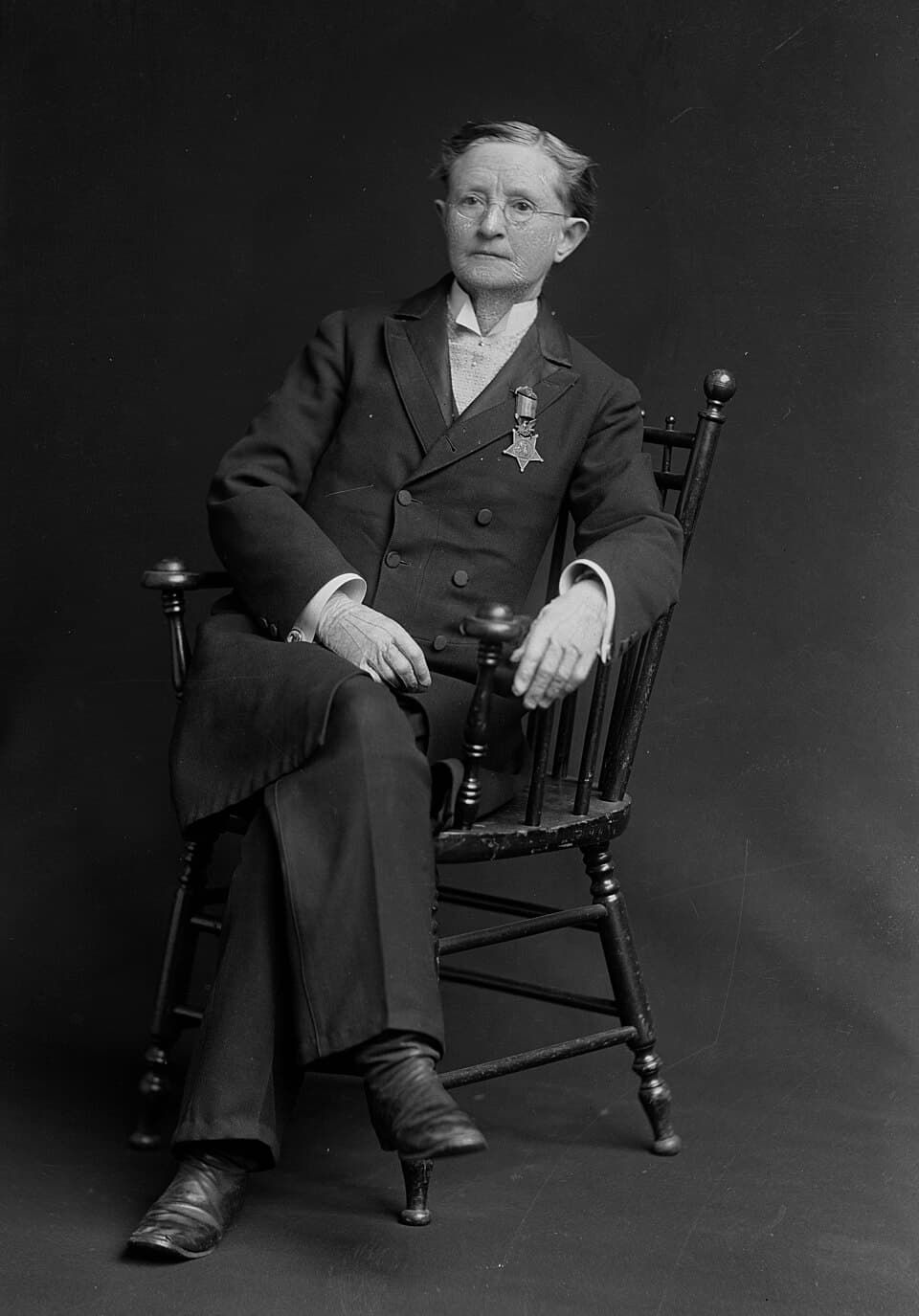
American · Medicine · Activism · Law
Mary Walker
November 26, 1832 – February 21, 1919
Early Life and Family Background
Mary Edwards Walker was born on November 26, 1832, in the Town of Oswego, New York, into a family noted for its progressive views and abolitionist activism. She was the fifth daughter of Alvah Walker, a farmer and self-taught student of medicine, and Vesta Whitcomb Walker. Her parents believed that their daughters deserved the same educational and professional opportunities as sons and organized household and farm labor so that work was shared equally among all children.
The Walker family’s farm environment was deeply shaped by reformist ideals. Multiple accounts describe the family as abolitionist, and they reportedly aided freedom seekers through involvement with the Underground Railroad. This exposure to anti-slavery work and social reform provided Mary with early models of resistance to unjust laws and systems. Her mother, Vesta, was a cousin of the agnostic lecturer Robert G. Ingersoll, placing Mary within a wider network of freethinking and reform-oriented relatives.
From a young age, Walker’s parents allowed her to wear practical clothing, including "bloomer" pants, instead of the restrictive corsets and long skirts expected of women in the mid-19th century. They believed such fashions harmed women’s health and mobility. This decision profoundly shaped Mary’s later views on dress reform; she came to see clothing as a political issue tied to women’s physical well-being and social freedom.
The Walkers emphasized education. All five daughters were encouraged to pursue learning beyond the basic level; several became teachers. Mary attended local schools in Oswego and developed a strong interest in science and medicine. Her father’s informal medical studies, and the family’s openness to questioning authority, reinforced her conviction that she could pursue a professional path traditionally reserved for men.
Education and Medical Training
After completing her early schooling, Walker became a teacher in Minetto, New York, to earn money for further education. Teaching was one of the few respectable professions open to women at the time, but Walker saw it primarily as a means to finance her true ambition: becoming a physician.
Walker eventually saved enough to enroll at Syracuse Medical College, an eclectic medical school that was unusual in admitting women. In 1855, she received her doctor of medicine degree, becoming one of the first women physicians in the United States and the second American woman known to graduate from a medical college, following Elizabeth Blackwell’s landmark 1849 degree from Geneva Medical College. Her graduation represented a significant breakthrough in an era when most medical institutions barred female students.
At Syracuse Medical College, Walker studied anatomy, physiology, therapeutics, and other subjects then considered essential to medical practice. Her presence in the classroom challenged prevailing assumptions about women’s intellectual capacity and social roles. The fact that she was admitted and successfully completed the course of study underscored the viability of women’s participation in professional medical training.
Early Medical Career and Marriage
After graduating, Walker returned to upstate New York and, in 1855, married Albert Miller, a fellow physician. The marriage was unconventional by contemporary standards. Walker retained her own surname professionally and insisted on a relationship grounded in equality. They established a joint medical practice in Rome, New York.
The practice struggled. Many potential patients distrusted the idea of a woman doctor and feared that her training was inferior to that of male physicians, despite identical coursework. Walker also faced criticism for her clothing and demeanor; she refused to adopt the fashionable dress expected of women and continued to wear practical garments.
These financial and social difficulties strained the marriage. The couple eventually separated, and Walker’s medical practice closed. The failure of this early practice was not due to her lack of competence but to widespread societal resistance to women in medicine.
During these years, Walker’s commitment to reform deepened. She saw firsthand how legal and cultural norms limited women’s ability to work, earn income, and exercise autonomy. These experiences informed her later activism in suffrage, dress reform, and legal equality.
Volunteer Medical Service at the Outbreak of the Civil War
When the American Civil War erupted in 1861, Walker saw an opportunity both to serve the Union cause and to practice medicine on a large scale. She traveled to Washington, D.C. and offered her services to the Union Army.
Military officials initially refused to commission her as a surgeon because she was a woman. They suggested she serve as a nurse, a role considered suitable for women, but Walker rejected this, insisting on recognition of her medical training. She nonetheless volunteered her services without pay in makeshift hospitals, including a facility set up in the U.S. Patent Office building.
While in Washington, Walker helped organize the Women’s Relief Organization, which assisted wives and mothers of wounded soldiers who traveled to the capital. She provided medical care, coordinated support networks, and advocated for better conditions for both patients and their families. Her unpaid work exposed her to battlefield wounds and infectious diseases, expanding her clinical experience.
Walker later served in field hospitals in Virginia and other areas, continuing to insist on the title and responsibilities of surgeon. Her refusal to accept the Nurse role was a deliberate challenge to gendered professional hierarchies.
First Female U.S. Army Surgeon
Walker’s persistence eventually yielded formal recognition. In September 1863, she was hired by Union forces as a Contract Acting Assistant Surgeon (civilian) with the Army of the Cumberland. She was later attached to the 52nd Ohio Infantry. This appointment made her the first female surgeon in the U.S. Army and the first woman physician officially employed by the U.S. military.
As a contract surgeon, Walker wore an officer’s uniform and worked in field hospitals and near the front lines. She treated wounded soldiers, performed surgeries, and managed medical cases under difficult conditions. Her presence was controversial; some male officers and surgeons resented her and questioned her competence, while others praised her dedication and skill.
Walker’s role challenged the rigid gender norms of the Army. At a time when women were largely confined to auxiliary positions, her status as a surgeon showed that women could handle the risks and responsibilities of military medicine. Her appointment created a precedent that would later be cited in arguments for commissioning women in the armed forces.
Capture and Prisoner of War Experience
Walker’s work often brought her close to combat zones and across front lines. On April 10, 1864, while traveling near Chattanooga, Tennessee, she crossed into Confederate-held territory to treat civilians. Confederate troops arrested her, suspecting that she was a Union spy due to her movements, her close association with Union forces, and her officer-style clothing.
She was taken to Richmond, Virginia, and imprisoned at facilities such as Castle Thunder. During her captivity, Walker endured poor conditions, including inadequate food and unsanitary quarters. Nevertheless, she continued to identify herself as a surgeon and officer, insisting on a status equal to that of male military prisoners.
After several months, Walker was exchanged for a Confederate surgeon, making her the first woman officer known to be exchanged as a prisoner of war for a man of equal rank. This exchange implicitly acknowledged her officer status and professional equivalence to male surgeons.
The experience of imprisonment reinforced her reputation for courage and resilience. It later formed an important part of the case for awarding her the Medal of Honor.
Later War Service and Retirement
Following her exchange, Walker returned to Union lines and resumed her work as a contract surgeon, again serving with the 52nd Ohio Infantry and other units. She continued to wear her officer’s uniform and to operate in field hospitals and near the front.
Her medical duties involved treating traumatic injuries, managing infectious diseases, and dealing with the physical and psychological effects of war. She often advocated for better sanitary conditions and for reforms in the treatment of wounded soldiers.
By June 1865, as the war ended and the Army demobilized, Walker’s contract service effectively concluded. She left military medical practice and returned to civilian life, carrying with her the experiences of wartime surgery, imprisonment, and struggle for professional recognition.
Medal of Honor: Award, Presentation, and Significance
Walker’s Civil War service drew national attention. On November 11, 1865, President Andrew Johnson approved a bill awarding her the Medal of Honor in recognition of her "patriotic zeal" and service to sick and wounded soldiers in the field and hospitals.
The Medal of Honor, established during the Civil War, was the country’s highest military decoration. Walker’s award was unusual in several respects: she was a woman; she had served as a civilian contract surgeon rather than a formally commissioned officer; and her acts of heroism were centered on medical service and enduring captivity rather than direct combat.
On January 25, 1866, Johnson formally presented the Medal of Honor to Walker in a ceremony. The award made her the first and only woman ever to receive the decoration. For decades thereafter, she wore the medal prominently on her coat, including during public lectures and appearances, treating it both as personal recognition and as a symbol of women’s capacity for courage and leadership.
Her citation was endorsed by senior officers, including Major Generals William Tecumseh Sherman and George H. Thomas, who recognized the value of her work. The medal cemented her place in U.S. military history and became the most famous aspect of her legacy.
Postwar Activism, Writing, and Dress Reform
After the Civil War, Walker gradually moved away from regular medical practice and devoted herself to public lecturing, writing, and activism. She toured widely, speaking about her experiences during the war and advocating for a range of causes, including women’s suffrage, legal equality, and dress reform.
Walker became one of the most outspoken proponents of reform dress. She argued that corsets and heavy, long skirts were unhealthy and physically disabling, preventing women from engaging in work and public life. She herself adopted a distinctive style: loose trousers, a knee-length skirt, and later a frock coat and top hat, which closely resembled men’s clothing.
Her clothing provoked frequent harassment and occasional arrest. In 1866, during the summer in New York City, she was arrested on Canal Street after leaving a milliner’s shop, charged under laws that policed women’s dress. Walker used such incidents to highlight how clothing regulations enforced gender inequality and to argue for women’s right to choose their attire.
Walker also wrote books and pamphlets. Her best-known work, Hit: Essays on Women’s Rights, published in 1870, collected her views on marriage, dress, suffrage, and social reform. She criticized laws that denied women property rights, political representation, and bodily autonomy. Her writing style was direct and confrontational, reflecting her willingness to challenge both legal structures and social norms.
Women’s Suffrage and Legal Equality
Walker’s activism placed her within the broader women’s suffrage movement, though she often took positions that differed from mainstream organizations. She advocated for universal suffrage that included women and men regardless of race, and she sometimes clashed with more conservative suffrage leaders over strategy and ideology.
She argued that the U.S. Constitution already guaranteed women the right to vote and that denial of this right was unconstitutional. She encouraged women to test voting laws and to assert their rights in court. Her legal arguments anticipated later strategies used by suffrage activists and civil rights lawyers.
Walker also campaigned for reforms in marriage and divorce law, criticizing legal frameworks that treated women as property or subordinates. She supported women’s ability to leave abusive or unequal marriages and to retain control over their earnings and property.
Her advocacy extended to professional equality. She maintained that women should have full access to education and employment in medicine, law, and other fields, and she used her own status as a physician and Medal of Honor recipient as evidence that women could succeed in these domains.
Personal Life and Public Persona
Walker’s personal life was deeply intertwined with her public activism. Her marriage to Albert Miller ended in separation, and she did not remarry. She had no children. Instead, she dedicated her energy to professional and political work, living a life that departed sharply from conventional expectations for women of her era.
She cultivated a distinctive public persona. Her short hair, tailored clothing, and Medal of Honor worn on the breast of her coat made her instantly recognizable. She often posed for photographs that emphasized her unconventional dress and her identity as "Dr. Mary Walker."
Contemporaries were divided in their reactions. Some admired her courage, intellect, and dedication to service. Others ridiculed her appearance and dismissed her ideas as eccentric or extreme. Walker accepted controversy as the price of challenging entrenched norms and continued to press her arguments for reform throughout her life.
Rescission of the Medal of Honor and Defiance
In 1917, the U.S. Army undertook a comprehensive review of Medal of Honor awards to enforce stricter criteria focused on combat valor and formal military status. As part of this process, a board recommended rescinding medals awarded to individuals who did not meet the revised standards, including civilians.
Walker’s medal was among those targeted. Officials determined that her service as a contract surgeon did not meet the new requirements, and her name was removed from the official Medal of Honor roll. She was notified that her decoration had been revoked and was asked to return it.
Walker refused. She continued to wear the Medal of Honor for the rest of her life, arguing that no bureaucratic decision could erase the reality of her wartime service and the original recognition she had received. Her defiance symbolized her broader stance against institutional injustice and gender discrimination.
The rescission fueled debate about the criteria for military honors and the recognition of non-combat service, especially by women and civilians. It also set the stage for later efforts to restore her medal.
Later Life and Death
In her later years, Walker remained active as a lecturer and writer, though age and illness gradually limited her travels. She continued to live according to her principles, wearing reform dress, advocating for women’s rights, and maintaining her identity as a doctor and Medal of Honor recipient.
Walker spent much of her later life near her hometown of Oswego. She stayed engaged with local and national debates over suffrage, dress reform, and social equality. Even as the mainstream suffrage movement shifted strategies, she maintained her own approach, rooted in constitutional argument and personal example.
On February 21, 1919, Walker died in Oswego at the age of 86, after an illness. She was buried in Rural Cemetery in Oswego, reportedly wearing a black suit rather than conventional women’s dress, consistent with her lifelong rejection of restrictive clothing. Her death occurred just months before the U.S. Congress passed the Nineteenth Amendment, granting women the right to vote nationally, a cause she had supported for decades.
Posthumous Recognition and Medal Restoration
In the decades following her death, Walker’s legacy slowly gained broader recognition. Historians and activists rediscovered her work as a physician, suffragist, and dress reformer. She was celebrated as a pioneer who had challenged multiple systems of discrimination.
In 1977, the Army Board for Correction of Military Records reexamined her case and recommended that her Medal of Honor be restored. On March 10, 1977, President Jimmy Carter approved the recommendation, returning her name to the official Medal of Honor roll and reaffirming her status as the only woman to hold the decoration.
This restoration was part of a broader movement in the 1970s to recognize women’s contributions to history and to correct past injustices in institutional records. It acknowledged that Walker’s service as a Civil War surgeon and prisoner of war deserved the highest honor, regardless of her civilian status or gender.
Since the restoration, Walker has been the subject of museum exhibits, scholarly works, and popular biographies. She has been inducted into institutions such as the National Women’s Hall of Fame, and commemorative stamps and educational materials have highlighted her story.
Legacy and Historical Impact
Mary Edwards Walker’s legacy spans multiple domains: medicine, military history, women’s rights, and dress reform. As one of the earliest women physicians in the United States, she demonstrated that women could meet and surpass professional standards in a field long closed to them.
Her service as the first female U.S. Army surgeon and as a prisoner of war established a precedent for women’s participation in military medicine and challenged assumptions about who could serve in high-risk roles. The Medal of Honor she received—and later had restored—stands as a powerful symbol of women’s capacity for bravery and sacrifice.
Walker’s activism in suffrage and legal equality contributed to broader movements that eventually secured voting rights and improved legal status for women. Her arguments about constitutional rights and her willingness to test legal boundaries influenced strategies used by later reformers.
Her advocacy of dress reform highlighted the connection between clothing, health, and social control. By publicly rejecting restrictive fashions and enduring arrest for her clothing choices, she made visible the ways in which seemingly mundane regulations reinforced gender inequality. Her example anticipated later feminist critiques of beauty standards and bodily regulation.
In contemporary discussions of gender and professional barriers, Walker is often cited as an early "new woman"—someone who claimed space in the public sphere, pursued a professional career, and defied expectations about femininity. Institutions such as the National Park Service, the National Women’s History Museum, and the Smithsonian have produced educational materials honoring her life.
Walker’s story continues to resonate as both inspiration and caution: it shows the possibilities of individual courage and persistence, but also the fragility of recognition when institutional criteria change. Her restored Medal of Honor stands as a reminder that societies must continually reevaluate how they value and record the contributions of those who do not fit conventional molds.
Dated achievements
11 indexed.
- Nov261832Medicine
Birth of Mary Edwards Walker
Mary Edwards Walker was born in Oswego, New York, later becoming a notable abolitionist and the only female Medal of Honor recipient.
View details National Park Service: Mary Walker - Jan011855Medicine
Graduation from Syracuse Medical College
Walker graduated from Syracuse Medical College, becoming one of the first women in the U.S. to earn a medical degree.