← All women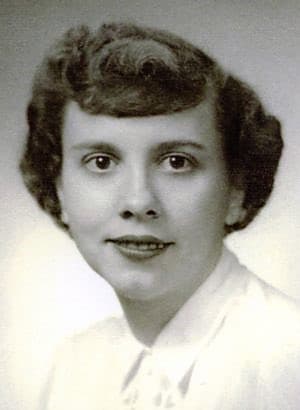
American · Science
Mary Tsingou
October 14, 1928 – present
Early life and education
Mary Tsingou, later known as Mary Tsingou Menzel, was born on 14 October 1928 in Milwaukee, Wisconsin, to parents of Greek origin whose family history included migration from Bulgaria to the United States. Sources describe her as Greek-American and note that she spent part of her childhood in the United States before her family lived for a period in Europe during the economic upheavals of the Great Depression. This transnational upbringing is part of the background of a woman who would later work at the center of one of the earliest revolutions in digital science.
Tsingou attended the University of Wisconsin, where she completed a bachelor’s degree in mathematics and education in 1951. She then continued her studies at the University of Michigan, earning a master’s degree in mathematics in 1955. Her education took place at a time when women who pursued advanced mathematics or physics often worked in the margins of the profession, and when career paths into computing were still forming. That background makes her later work at Los Alamos especially notable: she entered the field before computer programming had become an established profession.
Beginning at Los Alamos
In 1952, following advice from a professor, Tsingou applied to Los Alamos National Laboratory. She joined the laboratory during the Korean War era, when scientific and technical staff were being recruited for national-defense research and when women were increasingly being hired into technical roles even as they remained underrepresented and often less visible than their male colleagues. At Los Alamos, she first worked on manual calculations and then moved into the newly developing area of computer programming.
According to institutional and biographical sources, Tsingou became one of the first programmers on the MANIAC I computer, the Mathematical Analyzer, Numerical Integrator, and Computer. This placed her among the earliest generation of people to write code for a stored-program electronic computer in a research environment. The task required not only mathematical skill but also patience, precision, and the ability to translate theoretical models into machine instructions at a time when programming was still a pioneering craft.
The Fermi-Pasta-Ulam computation
In 1953, Tsingou performed the MANIAC calculations for the famous nonlinear vibration experiment associated with Enrico Fermi, John Pasta, and Stanislaw Ulam. The experiment investigated how energy moved through a string or lattice with weak nonlinear interactions, and the unexpected results became one of the most influential numerical findings in twentieth-century physics. Instead of behaving exactly as classical expectations suggested, the system revealed recurrence and complex behavior that later generations connected to the development of chaos theory and soliton theory.
Tsingou’s contribution was essential. The experiment was not merely a theoretical idea; it required precise coding and successful execution on a machine that was still new, specialized, and difficult to use. Her labor made the numerical experiment possible, yet for many years the published account and later retellings did not fully foreground her name. This omission reflected a broader pattern in mid-century science, in which women’s technical work often disappeared into collective or male-centered authorship conventions.
The experiment became so historically important that the designation Fermi-Pasta-Ulam-Tsingou is now widely used, a change that signals an effort to restore proper credit. The work is often described as one of the earliest and most consequential computer simulations in physics, demonstrating that electronic computing could do more than automate arithmetic: it could reveal unexpected structure in nature.
Career at Los Alamos and later work
Tsingou remained at Los Alamos for the rest of her career, working for roughly four decades as a mathematician and computer programmer. Institutional retrospectives describe her as a respected and well-known colleague whose work extended beyond the famous 1953 simulation. She contributed to other major computational efforts at the laboratory, including work connected to the development of the hydrogen bomb and later defense-related projects. Over time, her career illustrated the breadth of early programming work, which often combined mathematics, physical modeling, and direct interaction with specialized computing machinery.
One source notes that she was the first to implement a computer graphics program, an achievement that points to her role in shaping emerging forms of computational representation. While the details of that work are less widely known than the Fermi-Pasta-Ulam computation, it suggests that her expertise extended into areas that would become central to later computing practice.
She retired in 1991, ending a career that had begun before programming was a mainstream occupation and that spanned the transformation of computing from a laboratory novelty into a foundational scientific tool. Her professional life therefore bridges several eras: the age of manual calculation, the rise of early digital computers, and the expansion of computational science into a mature discipline.
Marriage and personal life
Tsingou married Joseph Menzel in 1958 and thereafter used the name Mary Tsingou Menzel. Available sources confirm the year of the marriage but do not provide a fully verified exact day. Her married name is used in later professional and institutional references, including the Los Alamos retrospective that revisited her role in the FPU story.
Biographical sources identify her parents as Thomas John Tsingou and Anastasia Koutsouyianni. Beyond these family details, public sources on her personal life are limited, which is common for women scientists of her generation whose archival record often emphasizes institutional roles over private biography. That scarcity itself is historically meaningful: women in technical fields were frequently documented less thoroughly than male peers, making later recovery of their stories an important part of historical correction.
Recognition and historical reassessment
For many years, Tsingou’s contribution to the famous numerical experiment remained under-recognized in the broader scientific literature. Beginning in the twenty-first century, scholars and institutions increasingly referred to the event as the Fermi-Pasta-Ulam-Tsingou problem, reflecting a wider effort to restore her name to the historical record. A 2020 Los Alamos retrospective explicitly highlighted her role and emphasized that her work had been known within the laboratory even when it was not widely credited elsewhere.
This reassessment is significant not simply as an act of naming, but as an example of how the history of science can change when archives, institutional memory, and public scholarship are revisited. Tsingou’s case illustrates how a technically essential contributor can remain obscure for decades, especially when the culture of the time did not give women equal visibility for computer programming and numerical research. Her story has therefore become important in women’s history, computing history, and the history of modern physics.
Legacy
Mary Tsingou’s legacy rests on more than a single famous computation. She was among the earliest programmers working on a major scientific computer, helped execute one of the first landmark numerical experiments in physics, and later built a long career at Los Alamos during a period when both computing and women’s participation in technical research were being transformed. Her work demonstrated that programming was not merely clerical support but a form of scientific authorship.
Her name is now associated with a problem that helped open new directions in nonlinear science. That recognition matters because it restores agency to the person who translated a theoretical proposal into a real computation. For historians of women in science, Tsingou represents both accomplishment and correction: accomplishment in the technical and intellectual sense, and correction in the eventual recovery of a contribution that had been too long obscured.
Although she is not as widely known as the physicists whose names originally appeared in the title of the experiment, Mary Tsingou occupies a central place in the history of scientific computing. Her career shows how foundational computational work often depended on skilled women whose names were not always preserved in the first telling, but whose impact became undeniable in the long view of history.
Dated achievements
3 indexed.
- Oct141928Science
Birth of Mary Tsingou
Mary Tsingou was born on October 14, 1928, in Milwaukee, Wisconsin.
View details We Thank Miss Mary Tsingou - May011955Science
Publication of FPU Report
Los Alamos published the FPU report on May 1, 1955, acknowledging Mary Tsingou.
View details