← All women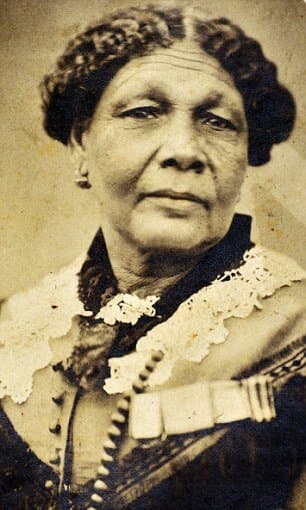
Jamaican, British · Medicine · Activism
Mary Seacole
November 23, 1805 – May 14, 1881
Early Life and Background
Mary Jane Seacole (née Grant) was born on 23 November 1805 in Kingston, Jamaica, then part of the British Empire.[3][4][5][13][14] She belonged to the community of free Black Jamaicans at a time when slavery still existed across much of the Caribbean.[7][13][14] Her mother was a Creole Jamaican woman who ran a boarding house and worked as a traditional healer or "doctress"; her father was a Scottish officer in the British Army.[3][4][5][9][12][14]
Growing up in her mother’s establishment—often associated with Blundell Hall—Mary was exposed early to a blend of hospitality and caregiving.[4][7][9] The boarding house catered to soldiers and travellers, and her mother used herbal remedies and local knowledge to treat illnesses and injuries. Seacole later recalled in her autobiography that she had practiced nursing and midwifery from a young age, learning traditional Creole medical techniques alongside rudimentary European approaches.[3][11]
Formal education opportunities for a mixed‑race girl in colonial Jamaica were limited, but Seacole learned to read and write and developed a strong sense of independence.[3][11][14] She also travelled briefly to England as a young woman, observing metropolitan life and shaping a long‑lasting sense of herself as both Jamaican and British.[3][13][14] Her upbringing in a slave society as a free woman of colour, with ties to the British military through her father and clientele, framed the complex racial, social and imperial dynamics she would navigate throughout her life.
Career Beginnings and Development
By the 1840s and early 1850s, Seacole had established herself in Jamaica as a respected "doctress" and hotel‑keeper, continuing her mother’s line of work.[3][4][9][11] She gained extensive experience treating tropical diseases, especially cholera and yellow fever, which devastated local populations and British military personnel stationed in the Caribbean.[5][7][9] Her practice relied on empirical observation and experimentation: she blended herbal remedies, attention to hydration and hygiene, and knowledge gleaned from British medical texts.[3][5][9]
In the early 1850s she expanded her activities to Central America. Around 1851 Seacole travelled to Cruces, Panama, a key transit point on the route between the Atlantic and Pacific during the California Gold Rush.[3][5][11][13] There she opened the New Granada Hotel, operating it as both a lodging house and a clinic for travellers and local residents.[3][5][11] When a severe cholera outbreak struck, she treated many patients, applying the experience she had developed in Jamaica and herself surviving a bout of the disease.[5][7][9]
Her work in Panama brought her into close contact with North American and British travellers, further strengthening her transatlantic ties. She gained a reputation for courage and effectiveness, caring for patients regardless of nationality or social class. The combination of business acumen and medical skill that defined her later work in Crimea was already evident: she ran hotels that doubled as treatment centres, using income from hospitality to support her caregiving.[3][5][9][11]
Journey to Britain and Attempts to Join Official Nursing Efforts
News of the Crimean War, which began in 1853 and drew British, French, and Ottoman forces into conflict with Russia, reached Seacole through newspapers and travelling soldiers.[3][4][8][9][13] In 1854 she decided to travel to London, motivated both by humanitarian concern and the opportunity to serve where her experience with tropical disease and battlefield conditions might be most needed.[3][4][8]
Once in Britain, Seacole applied to serve as a nurse with the official medical missions heading to Crimea. She approached the War Office, medical authorities, and the team being organised under Florence Nightingale but was repeatedly rebuffed.[3][4][8][9][11] The reasons for her rejection were never formally stated, but scholars have pointed to a combination of bureaucratic obstacles, racism, and class prejudice: as a middle‑aged, mixed‑race, self‑trained "doctress" from Jamaica, she did not fit the profile of women the authorities expected to recruit.[3][4][9][11]
Despite these refusals, Seacole remained determined to reach the front. Demonstrating considerable courage and entrepreneurial initiative, she decided to travel to the Crimea at her own expense, partnering with a business acquaintance, Thomas Day, to finance the venture.[3][4][8][9][11][13]
The British Hotel and Work in the Crimean War
In early 1855, Seacole arrived in the Crimea and established the British Hotel near Balaklava, behind the lines of the British camp.[3][4][8][9][13] She described the British Hotel as providing "a mess‑table and comfortable quarters for sick and convalescent officers," combining a provision store, canteen, and informal recuperation centre.[3][13] Seacole and her partner supplied food, drink, clothing and other necessities, while she also dispensed medicines and advice and offered hands‑on care to those who were ill or injured.
Her role quickly expanded beyond the hotel itself. Seacole became known for travelling onto the battlefield, carrying medical supplies and bandages to assist wounded soldiers under fire.[3][4][8][9][13] She treated cases of dysentery, diarrhoea, and other diseases common in army camps, drawing on her Caribbean and Panamanian experience with cholera and tropical illness.[5][7][9] Soldiers affectionately dubbed her "Mother Seacole" in recognition of her bravery, warmth and practical assistance.[4][8][9][15]
Seacole’s work intersected with but remained distinct from Florence Nightingale’s nursing enterprise, which centred on hospital administration and reforms to sanitation.[1][3][9][11] Operating independently and without official backing, Seacole relied on her own funds and the custom of the officers she served. When a harsh winter and logistical failures deepened suffering among troops, her presence at the British Hotel provided crucial relief: warm meals, compassionate care, and a degree of comfort rare so close to the front lines.
On 9 September 1855, after the long siege of Sevastopol ended with the city’s capture, Seacole obtained a pass and entered the city, fulfilling a wager that she would go in the same day it fell.[3] She is widely described as the first British woman to enter Sevastopol after its fall, a testament to her audacity in navigating active war zones and challenging conventional limits placed on women, especially women of colour.[3]
The British Hotel continued to operate until the war’s end. However, when peace was declared in 1856, army demand collapsed and Seacole found herself with unsold stock and significant debts.[3][4][8][9] She returned to Britain virtually penniless, her financial losses contrasting sharply with the gratitude of the soldiers she had served.
Return to Britain, Benefit Support, and Writing
Back in London in 1856, Seacole initially struggled to recover financially.[3][4][8][9] Her plight, however, became known to officers, journalists and members of the public who had admired her work. A series of benefit events and subscriptions were organised in her support, including a major fundraising gala at the Royal Surrey Gardens, attended by thousands.[3][4][9][11] Newspapers praised her courage and generosity, and testimonials from high‑ranking officers underlined the esteem in which she was held.
Amid this renewed attention, Seacole undertook to tell her own story. In 1857, she published Wonderful Adventures of Mrs. Seacole in Many Lands, a 200‑page autobiographical narrative issued by James Blackwood.[3][4][9][11] The book recounted her childhood in Jamaica, travels in Panama, and work in the Crimea, interwoven with descriptions of medical practice, travel, and cultural encounters. Modern scholarship regards it as the first autobiography written by a Black woman in Britain, giving Seacole a unique place in Black British literary history.[3][9][11]
The autobiography was commercially successful and received favourable reviews in the Victorian press.[3][4][9][11] It also served as a form of self‑advocacy: Seacole presented herself as both a loyal British subject and a proud Jamaican, defending her reputation and emphasising her practical experience when official bodies had failed to recognise it. The narrative, rich in detail and humour, remains an important primary source for historians of nursing, empire and race.
Awards, Honours, and Later Life
During and after the Crimea, Seacole received several tokens of recognition, though not the formal honours accorded to some contemporaries. Contemporary sources refer to medals awarded by allied governments, including a Turkish decoration acknowledging her bravery and service.[9][11] Photographs from the period show her wearing multiple medals on her dress, symbolising military appreciation for her work.
In the years following the war, Seacole maintained connections with military circles and participated in public events. She continued to travel intermittently between Jamaica and Britain, though on a reduced scale compared with her earlier ventures.[5][9][11] By the 1870s she was living in London, where she spent her final years in relative quiet, supported in part by the earlier benefits and by friends who remained grateful for her wartime care.[3][5][9]
Seacole died on 14 May 1881 in London, with sources noting her residence in Paddington and her burial at Kensal Green Catholic Cemetery.[1][3][6][10][11][14][15] She was in her mid‑70s, and obituaries praised her kindness and service. Nonetheless, within a generation, her name had largely slipped from mainstream historical accounts of the Crimean War and modern nursing.
Personal Life
Seacole’s personal life, though less documented than her public endeavors, included a marriage that reflected the mobility and diversity of the nineteenth‑century Atlantic world. In 1836, she married Edwin Seacole, whose background has been described as either an Englishman or possibly of Jamaican origin.[4][11] The couple’s life together remains sparsely recorded, but they appear to have lived in Jamaica and engaged in business activities.
Edwin Seacole died in 1844, leaving Mary a widow.[11] She did not remarry, instead devoting herself to her professional pursuits in Jamaica, Panama and later Europe. There is no strong evidence that she had children, and her surviving writings focus primarily on her work, travels and the social networks she navigated rather than domestic life.[3][11]
Her autobiography and contemporary reports depict her as sociable, witty and resilient, comfortable among officers and ordinary soldiers alike. She cultivated a persona that combined maternal care—expressed in the nickname "Mother Seacole"—with independent businesswoman and seasoned traveller, challenging Victorian expectations of both race and femininity.
Legacy and Historical Impact
Mary Seacole’s legacy rests on her pioneering role in nursing and battlefield care, her entrepreneurial efforts in war zones, and her status as a Black woman who claimed public voice in Victorian Britain. Her experience demonstrates that advanced nursing practice emerged in multiple, sometimes independent, contexts—not solely within the formal hospital reforms associated with Florence Nightingale.[1][3][9][11]
As a "doctress," Seacole exemplified the blending of traditional Caribbean healing with European medical knowledge, applied pragmatically to crises such as cholera epidemics and war injuries.[3][5][7][9] She operated in spaces where official structures were slow to respond, using her own resources to establish the British Hotel and to render care near the front lines. Soldiers’ letters and memoirs, along with her own autobiography, testify to the high regard in which she was held.[3][4][9][11][13]
For much of the twentieth century, however, her contributions were overshadowed in popular and academic histories. Standard narratives of the Crimean War and the origins of modern nursing highlighted Nightingale’s work on hospital sanitation and statistical reform, with little mention of Seacole.[1][9][11] Beginning in the 1970s, scholars of Black history, feminist historians and Caribbean communities initiated a concerted recovery of her story. They reissued her autobiography, located archival materials, and campaigned for public recognition.[3][4][9][12][14]
This revival resulted in several landmark developments. In 2004, Seacole topped a public poll as the "Greatest Black Briton", a symbolic affirmation of her significance to Black British history and identity.[4][14][15] Educational resources such as BBC Bitesize and children’s books began to feature her alongside Nightingale, introducing schoolchildren to a more diverse understanding of Victorian nursing and empire.[8][15] Nursing organisations and historians have increasingly cited her as an early example of what might now be called a nurse practitioner, though such terms are necessarily retrospective.[9][11][13]
Commemorative efforts also expanded. English Heritage placed a blue plaque at 14 Soho Square in London, marking the site where she began writing her autobiography and lived for many years.[12] Museums, including the Florence Nightingale Museum and the Museum of London, have developed exhibitions that situate Seacole within broader narratives of migration, medicine and imperial war.[4][6]
A major milestone came in 2016, when a statue of Seacole by Martin Jennings was unveiled in the grounds of St Thomas’ Hospital in London.[2][3][6][12][15] The memorial is widely described as the first statue in the UK dedicated to a named Black woman, marking a significant shift in who is honoured in British public space.[2][6][12] The statue has become a focal point for events during Black History Month and for nursing graduations, symbolising both Seacole’s individual achievements and the broader contributions of Black and Caribbean people to British healthcare.
Seacole’s story continues to generate scholarly debate, particularly regarding how best to compare and contextualise her work alongside that of Nightingale and other contemporaries.[1][3][6][9][11] Some historians caution against simplistic narratives that pit the two women against each other, instead emphasising their distinct roles and environments: Nightingale in hospital administration and systemic reform; Seacole in front‑line, context‑specific care and entrepreneurial provision in war zones.[1][3][9][11] Together, their lives illustrate the varied paths by which women shaped modern nursing.
In the twenty‑first century, Seacole stands as a symbol of intersectional resilience: a Black, mixed‑race, colonial woman who navigated racism, sexism and bureaucratic exclusion to provide vital care in one of the nineteenth century’s most notorious conflicts. Her autobiography, statues, plaques and inclusion in school curricula ensure that her name, once nearly forgotten, now serves as a touchstone for discussions of race, gender, empire and the history of medicine.
Later Assessments and Continuing Relevance
Recent scholarship and public history projects have deepened and complicated understandings of Seacole’s life. Historians have examined the ways her self‑presentation in Wonderful Adventures engages with Victorian literary conventions and imperial ideology, noting how she portrays herself as loyal to Britain while assertively foregrounding her Jamaican roots.[3][9][11] Others have highlighted her role as a transnational figure, moving between Jamaica, Central America and Europe and illustrating the mobility of Caribbean free people of colour in the nineteenth century.[3][5][13][14]
In nursing education, Seacole’s example is frequently used to discuss cultural competence, community‑based care and the importance of recognising knowledge developed outside formal institutions.[5][9][11] Her work with cholera and other infectious diseases prefigures later epidemiological insights about hydration, environment and supportive care. While she lacked formal training by contemporary standards, her practice was far from "primitive"; it was grounded in experience, observation and a willingness to adapt.
Mary Seacole’s life and legacy continue to resonate in debates about representation, monuments and the stories nations choose to tell. As Britain reckons with the histories of empire, migration and race, her presence in public space—as "Mother Seacole" on the battlefield and as a statue facing Parliament—invites reflection on who has historically been visible and who has been overlooked. For women’s history, Black history and the history of medicine alike, Seacole remains a central and compelling figure.
Dated achievements
6 indexed.
- Nov231805Medicine
Birth of Mary Jane Grant (Mary Seacole) in Kingston, Jamaica
Mary Jane Grant was born in Kingston, Jamaica, on 23 November 1805.
View details Mary Seacole - Wikipedia - Sep091855Medicine
First British woman to enter Sevastopol after its fall
Mary Seacole became the first British woman to enter Sevastopol on 9 September 1855.