← All women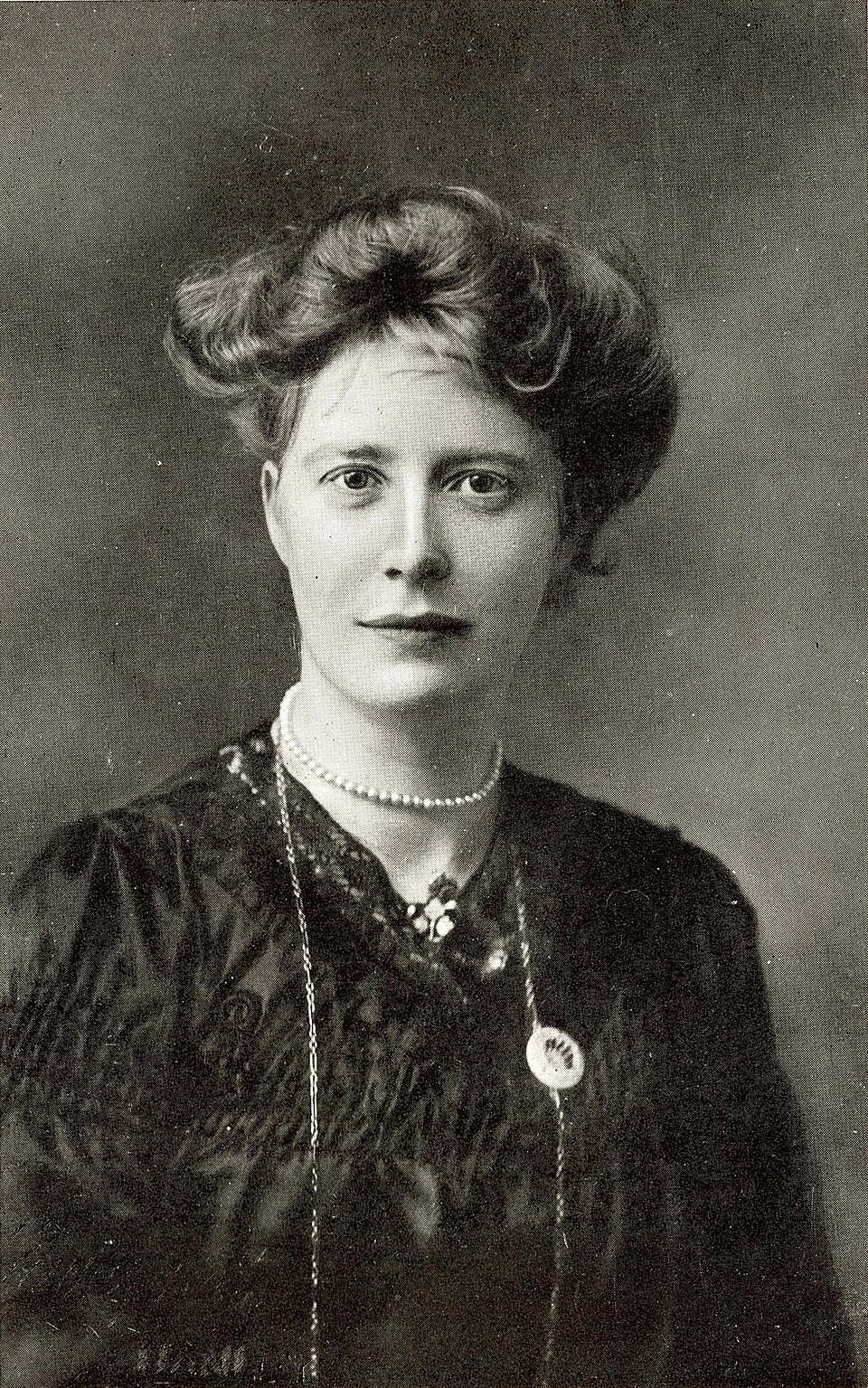
Scottish · Activism · Politics
Mary MacArthur
August 13, 1880 – January 1, 1921
Early Life and Background
Mary Reid Macarthur was born on 13 August 1880 in Glasgow, Scotland, the eldest surviving daughter of John and Agnes Macarthur, who ran a successful drapery business.[11][8][14] Growing up in a relatively comfortable middle‑class household, she was exposed early to the routines and pressures of retail trade, experience that later informed her understanding of shop work and commercial employment. Some accounts describe her as the oldest of three daughters, others as the oldest of six children, but all agree that she carried significant family responsibility.[11][14]
Macarthur attended Glasgow High School for Girls, receiving an education that was still not universally available to girls in late‑Victorian Scotland.[11] The curriculum and disciplined environment helped develop her intellectual confidence and public‑speaking ability. After the family relocated their business to Ayr, she left school and became a bookkeeper in the drapery firm, gaining first‑hand knowledge of commercial accounting and the working lives of shop assistants.[11][9]
A key formative moment came when her father suggested she attend a meeting of the Ayr branch of the National Amalgamated Union of Shop Assistants, Warehousemen and Clerks (often referred to as the Shop Assistants’ Union).[11][9] There she heard union organiser John Turner speak about the mistreatment of workers and the potential of collective organisation. According to later accounts, Turner’s speech impressed her deeply and she joined the union in 1901, marking the beginning of a life devoted to trade unionism and social reform.[11]
Career Beginnings and Development
Once a member of the Shop Assistants’ Union, Macarthur quickly emerged as an effective organiser and speaker. She threw herself into union activity, helping to recruit new members and articulate the grievances of shop workers, many of whom faced long hours, low pay, and strict discipline in department stores and drapery shops.[11][16] Her work coincided with broader debates about "sweated" labour—industries in which workers, often women, were paid below subsistence wages and employed under harsh conditions.
By 1902, Macarthur had risen to become president of the Scottish National District Council of the Shop Assistants’ Union.[11][16] This regional leadership position gave her direct responsibility for coordinating union branches across Scotland and allowed her to hone her organisational skills and public profile. It was unusual at the time for a young woman to hold such a post in a mixed‑gender union, underscoring both her talent and the respect she commanded.
In 1903, she achieved a major breakthrough when she became the first woman elected to the union’s national executive.[16][1] The national executive was the central decision‑making body of the organisation, and her election signalled that women could occupy top‑level leadership roles within the wider labour movement. It also gave her a platform to argue that women workers should be organised and represented on equal terms with men, rather than being treated as an adjunct.
Around 1906, Macarthur expanded her influence by becoming general secretary of the Women’s Trade Union League, an organisation that aimed to coordinate and encourage women’s trade unionism.[1][7] From this vantage point, she met women from a range of industries and saw how many were excluded from male‑dominated unions or worked in sectors—such as home‑based manufacturing and laundry work—that were poorly organised. These experiences convinced her that a dedicated women’s union was needed to reach those most vulnerable to exploitation.
Founding the National Federation of Women Workers
In 1906, Macarthur founded the National Federation of Women Workers (NFWW), widely described as Britain’s first all‑female general trade union.[10][1][11] Initially serving as its president and later as general secretary, she designed the federation to organise women across multiple low‑paid trades rather than focusing on a single craft. This general‑union model enabled the NFWW to support campaigns in diverse industries, including chainmaking, laundry work, food processing, and factories employing young women.
The NFWW operated on principles of inclusivity and militancy. It welcomed women who were part‑time, home‑based, or working in small workshops—groups often considered difficult to organise.[10][14] Macarthur travelled extensively, addressing meetings, establishing branches, and using leaflets and reports to expose conditions in "sweated" industries. She was also active in the National Anti‑Sweating League, a cross‑movement body that campaigned for state intervention against extremely low wages.[1][6]
Through the NFWW and the Anti‑Sweating League, Macarthur supported the creation of trade boards, which could set minimum wage rates in notoriously underpaid sectors. She personally investigated workplaces, sometimes at great risk to her health; English Heritage notes that she contracted diphtheria during one such inquiry into sweated labour.[16] Her investigative work produced detailed evidence that helped persuade legislators and the public of the need for wage regulation.
Under Macarthur’s leadership, the NFWW became a central vehicle for organising working women. It ran campaigns to secure union recognition, challenged unfair dismissals, and advocated for shorter hours and safer conditions. By linking local disputes to national debates on anti‑sweating legislation, Macarthur ensured that individual struggles contributed to wider structural change.
The Cradley Heath Women Chainmakers’ Strike
Macarthur’s most famous campaign was the Cradley Heath women chainmakers’ strike of 1910. Cradley Heath, in the Black Country in Staffordshire, was a centre of chainmaking, where many women forged small chains at home or in tiny workshops for meagre piece rates.[10][17] These women were classic examples of "sweated" labour: they worked long hours, often in poor conditions, for pay that left them and their families in poverty.
Following new trade‑board legislation that set minimum rates for chainmaking, employers attempted to evade the rules by dodging compliance or pressuring workers to sign away their rights. Macarthur and the NFWW intervened, organising the women to refuse work at the old rates and to insist on the trade‑board award.[10][1][9] She helped establish a strike fund, used powerful oratory at mass meetings, and engaged national newspapers and supporters to draw attention to the dispute.
The strike lasted around two months and is widely described as resulting in the country’s first legally enforced minimum wage for this group of workers.[10][9][1] Macarthur’s strategy combined industrial action with adept publicity and fundraising, enabling the women to sustain the strike. Eventually, the employers gave way and agreed to the new rates, demonstrating that minimum wage legislation could be enforced through collective action.
The Cradley Heath victory had far‑reaching consequences. It strengthened the reputation of the NFWW, showed that women in scattered, home‑based industries could successfully strike, and helped embed the concept of minimum wages in British industrial policy debates. The strike is still commemorated in local and women’s labour histories, with Macarthur remembered as the key architect of the campaign.[10][9]
Campaigns During the First World War
During the First World War, Macarthur’s focus expanded to include the many women entering traditionally male industries as men were conscripted. She fought for equal pay and decent conditions for women working in munitions factories, transport, and other sectors.[16] While the government and employers often treated women’s wartime work as temporary and undervalued, Macarthur argued that they should receive the same rates as men performing equivalent tasks.
She continued to use her positions in the Women’s Trade Union League and the NFWW to coordinate collective bargaining and to press for trade‑board coverage in new industries. Her advocacy contributed to wider recognition that pay differentials based solely on sex were unjust and inefficient, even if the full achievement of equal pay would take many more decades.
In 1918, women transport workers on London buses and trams took strike action for equal pay.[16][3] Macarthur described this episode as "a landmark for the women’s movement and for trade unionism," recognising it as a significant moment in the struggle for pay equality. The strike demonstrated that women could and would organise collectively over wage discrimination, and that such actions could capture public attention.
Around the same period, Macarthur stood as a Labour Party parliamentary candidate, though she was not elected.[16] Her candidacy reflected the growing presence of women in formal politics following the partial extension of the franchise to women over the age of 30 in 1918. Even without winning a seat, she helped familiarise voters with the idea of women trade unionists as potential legislators.
Major Works, Writings, and Organising Achievements
Although Macarthur is best known as an organiser rather than as a writer, she produced reports, pamphlets, and articles documenting conditions in sweated industries and explaining the rationale for trade‑board legislation and union organisation.[1][11] These texts were intended to be accessible to workers and persuasive to reform‑minded politicians and journalists, forming part of the broader anti‑sweating literature of the early 20th century.
Her major achievements can be grouped into several themes:
- Institutional innovation: Founding the NFWW as an all‑female general union created a durable organisational home for working women whose industries had previously been neglected.[10][11]
- Breaking leadership barriers: Becoming the first woman on the national executive of the Shop Assistants’ Union demonstrated that women could hold senior positions within mixed‑gender unions.[16][1]
- Industrial victories: Leading the Cradley Heath chainmakers’ strike established a practical precedent for enforcing minimum wage awards and showed that women could wage and win industrial disputes.[10][9]
- Legislative influence: Through the National Anti‑Sweating League and related campaigns, Macarthur helped secure trade‑board legislation that introduced wage regulation in low‑paid sectors.[1][6]
- Membership growth: English Heritage credits her with playing a major part in increasing women’s trade union membership from 142,000 in 1892 to 1,342,000 by 1920.[15]
Collectively, these achievements made her one of the most influential figures in the early‑20th‑century movement for women’s labour rights.
Awards, Honours, and Recognition
Macarthur did not receive major state honours such as titles or medals, reflecting both the class and gender biases of her era. Recognition came primarily from within the labour movement and, later, from historians and heritage bodies.
In the decades following her death, trade unionists and Labour activists commemorated her work through memorial funds and educational initiatives. In 1922, the Mary Macarthur Scholarship Fund was established to support young women without formal qualifications, enabling them to access further education and training.[9] This fund reflected the belief that her memory should be honoured through practical support for the next generation of working women.
More recently, organisations such as English Heritage have recognised her historical importance. English Heritage notes her central role in increasing women’s trade union membership and commemorates her home in Golders Green with a blue plaque, marking her as a significant figure in national history.[15][16] Labour historians and women’s history networks have also highlighted her as the "working woman’s champion," featuring her in films, articles, and online resources.[10][12][14]
Personal Life
Macarthur’s personal life was closely intertwined with the labour movement. She met William (Will) Anderson, a fellow socialist and trade unionist, through their shared activism. Anderson served as a Member of Parliament for Sheffield Attercliffe and was involved in left‑wing politics.[8][1] The couple married, and Macarthur often used the name Mary Reid Anderson in conjunction with her maiden name.[1]
The couple had a daughter, Anne Elizabeth
Tragedy struck the family when Will Anderson died on 25 February 1919, reportedly during the Spanish flu pandemic.[8] Macarthur’s own health later deteriorated, meaning that the final years of her life were marked by personal loss and illness as well as continued activism.
Later Life, Illness, and Death
In 1920, Macarthur developed cancer, often specified in sources as ovarian cancer.[2][8] She underwent two operations, but neither succeeded in halting the disease. Her illness curtailed her public activity, forcing her to reduce travel and speaking engagements, though she remained in contact with union colleagues and continued to support ongoing campaigns as much as her health allowed.
On 1 January 1921, she died at her home at 42 Woodstock Road, Golders Green, London, aged 40.[1][11][9] The early death of such a prominent activist shocked the labour movement. Obituaries and tributes emphasised her energy, charisma, and unwavering commitment to working women. She was remembered as a brilliant orator, an effective organiser, and a strategist who had achieved concrete improvements in wages and conditions.
Macarthur was cremated at Golders Green Crematorium on 4 January 1921.[8] Golders Green, one of Britain’s earliest crematoria, became the resting place for many notable figures, and her cremation there reflected both her local ties and the progressive milieu in which she moved. In the months and years that followed, colleagues in the trade union and Labour movements worked to ensure that her achievements would not be forgotten, establishing memorial funds and invoking her example in new campaigns.
Legacy and Historical Impact
Mary Macarthur’s legacy lies in her transformative impact on women’s trade unionism and labour politics in Britain. She demonstrated that women workers—shop assistants, factory hands, home‑based producers, and transport employees—could organise collectively, bargain effectively, and win substantial improvements in pay and conditions.
Her role in founding and leading the National Federation of Women Workers created a durable organisational model for women’s unions and helped bring thousands of previously unorganised women into the labour movement.[10][11] The NFWW’s campaigns, especially the Cradley Heath chainmakers’ strike, showed that industrial action led by women could attract public support and achieve legislative and economic change.
By serving as the first woman on the national executive of the Shop Assistants’ Union, Macarthur broke a key leadership barrier and helped normalise women’s participation in union policy‑making.[16][1] Her investigative work on sweated industries fed into the expansion of trade‑board legislation and the early development of minimum wage mechanisms, laying foundations for later labour protections.
English Heritage and labour historians credit her with playing a major role in increasing women’s trade union membership from 142,000 in 1892 to 1,342,000 by 1920, a ten‑fold rise that transformed the gender balance of organised labour in Britain.[15] This numerical growth reflects not just her organisational skill but her ability to articulate a compelling vision of justice for working women.
Her influence endures in multiple forms: commemorative plaques at her former home, educational materials produced by trade unions and history organisations, and continuing celebrations of the Cradley Heath strike in local heritage projects.[10][9][15] The Mary Macarthur Scholarship Fund, established in 1922, kept alive her commitment to enabling working‑class women to access education and opportunity.[9]
In contemporary women’s history and labour studies, Macarthur is frequently cited as a key figure who connected industrial organising, feminist demands for political representation, and campaigns for state regulation of wages. Her life illustrates how a single individual, starting from a draper’s family in Glasgow, could help reshape national debates on gender, work, and economic justice.
Dated achievements
7 indexed.
- Aug131880Activism
Birth of Mary Macarthur
Mary Reid Macarthur was born on August 13, 1880, in Glasgow, Scotland.
View details Wikipedia - Jan011902Activism
Elected president of Scottish National Council of Shop Assistants’ Union
In 1902, Mary became president of the Scottish National District Council of the Shop Assistants’ Union.