← All women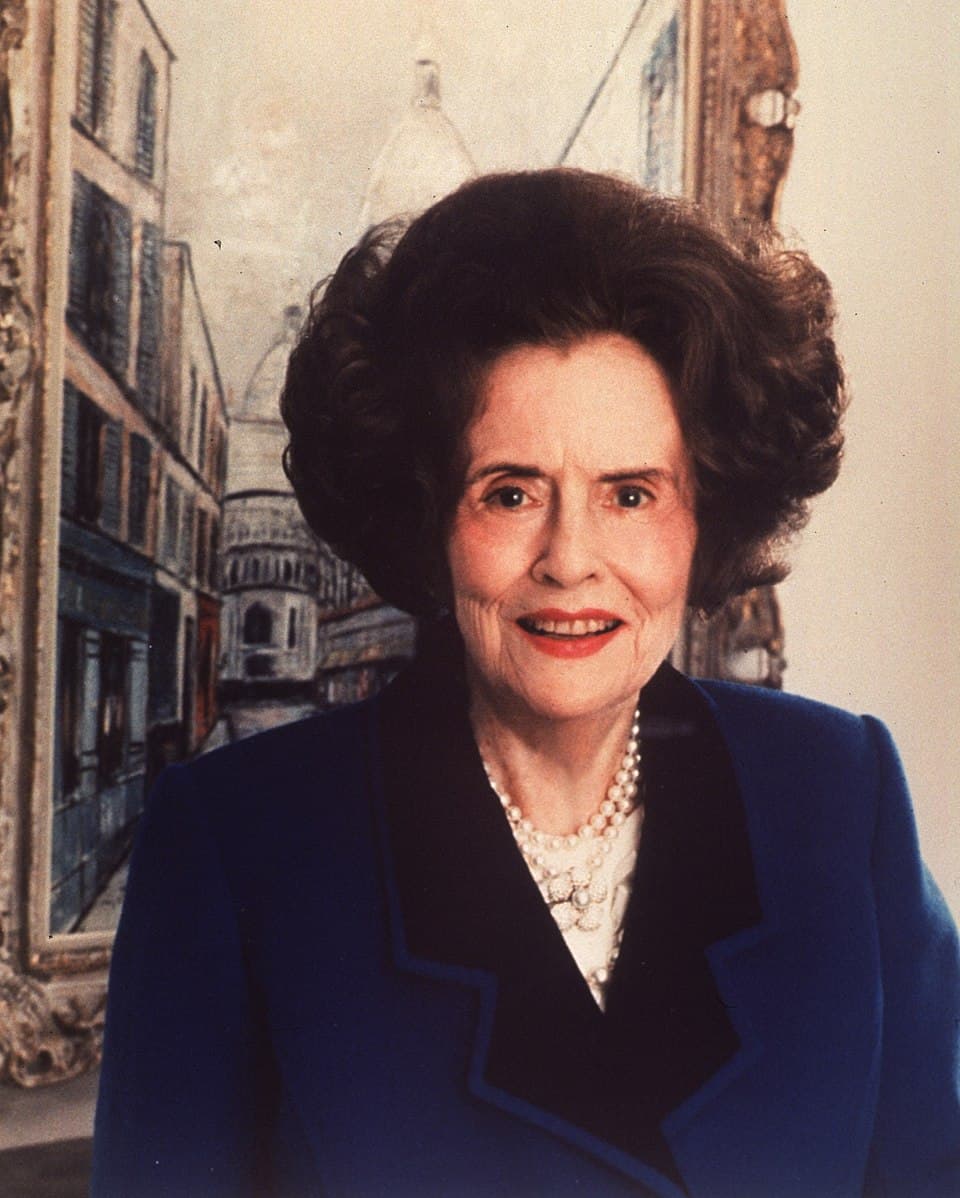
American · Activism · Medicine
Mary Lasker
November 30, 1900 – February 21, 1994
Early Life and Background
Mary Woodard Lasker (née Woodard) was born on 30 November 1900, in the small Midwestern town of Watertown, WisconsinFrank Elwin Woodard, a banker, and Sara Johnson Woodard, a homemaker.[1][3] Growing up in the early 20th century, Mary witnessed recurrent outbreaks of infectious diseases such as diphtheria and influenza, as well as the lack of effective medical treatments for many conditions. Biographical accounts from the National Library of Medicine emphasize that seeing neighbors and classmates fall seriously ill instilled in her a lifelong conviction that better medical knowledge and social investment could prevent needless suffering.[3]
The Woodard family valued education and civic responsibility. Mary attended local schools and showed early interest in art and history. She went on to study at the University of Wisconsin, where she was exposed to Progressive Era ideas about social reform.[2][3] Later she transferred to Radcliffe College, then the women’s coordinate institution to Harvard, and graduated cum laude, studying history and art appreciation.[2] This educational trajectory—from a small Wisconsin town to elite Eastern institutions—gave her both intellectual tools and social exposure that would prove crucial when she later navigated philanthropic circles and high‑level politics.
The era of Mary’s youth was marked by public health campaigns against tuberculosis, hookworm, and venereal disease, coupled with the emergence of new scientific medicine. Yet research remained chronically underfunded, and federal involvement in health was limited. These structural realities would become the backdrop against which she later chose to operate, eventually helping to build the very institutions that were largely absent in her childhood.
Early Career and Entry into Philanthropy
After college, Mary moved to New York and initially pursued a career in the art world. In 1926 she married Paul Reinhardt, an art dealer, and worked alongside him as an art consultant and dealer.[2][3] The marriage ended in divorce, but the experience gave her business skills, familiarity with wealthy collectors, and an understanding of how taste and prestige could be shaped through strategic patronage—skills she would later adapt to the realm of medical research.
During the 1930s, Mary became increasingly engaged with social and health issues. She became involved in the birth control movement at a time when reproductive rights work was legally and culturally contentious. By 1938, she was serving as president of the Birth Control Federation of America, a precursor to the Planned Parenthood Federation of America
A pivotal change in Mary’s life came when she met Albert Davis Lasker, a highly successful Chicago and New York advertising executive widely regarded as a pioneer of modern advertising. They married in 1940.[1][2] Albert had already amassed substantial wealth through his firm Lord & Thomas, but he was searching for a philanthropic focus. According to multiple biographical accounts, Mary persuaded him to direct his fortune and advertising expertise toward public health causes, particularly cancer and birth control.[2][4][11] Mary and Albert quickly became a formidable team. Drawing on Albert’s mastery of mass communication and Mary’s political instincts, they sought to bring the tools of modern advertising to the cause of medical research and public health education. In December 1942, they formally launched the Albert and Mary Lasker Foundation as a vehicle to support medical research and to honor outstanding contributions to science and public service.[1][4][14] The Foundation soon established the Lasker Awards, which would become among the most prestigious medical research prizes in the United States. Many later Nobel laureates first gained national recognition through these awards, underscoring the Foundation’s role in identifying and promoting cutting‑edge work.[1][4][14] At the same time, the Laskers turned their attention to the American Society for the Control of Cancer (ASCC), a relatively small and ineffective voluntary organization. Beginning in the early 1940s and culminating in 1943, Mary and Albert orchestrated a sweeping reorganization that transformed the ASCC into the modern American Cancer Society (ACS).[2][11] They recruited prominent board members, revamped fundraising methods, and introduced sophisticated advertising campaigns. Working with radio and print media, they helped normalize the very word "cancer," which had often been shunned in public discourse, and encouraged early detection and support for research.[2] Under their influence, the ACS shifted from a quiet professional society to a mass‑membership organization with nationwide fundraising drives and public education campaigns. Donations surged, enabling the Society to fund basic and clinical cancer research on a much larger scale. This transformation is widely cited by historians as a turning point in U.S. voluntary health organizations, demonstrating how modern marketing techniques could mobilize public support for biomedical research.[2][3][11] Following Albert Lasker’s death from colon cancer in 1952, Mary intensified her focus on systemic change.[2][3] Deeply affected by the loss, she concluded that philanthropy and voluntary organizations, while important, were insufficient to fund the scale of research needed to conquer major diseases. Instead, she set her sights on the federal government, particularly the National Institutes of Health (NIH). Over the next several decades, she emerged as an extraordinarily effective lobbyist and strategist for expanded federal biomedical funding. Profiles from the NIH’s Profiles in Science project describe her as a "matchmaker between science and society," who used personal charm, relentless energy, and skillful media campaigns to persuade donors, members of Congress, and presidents that medical research was a national imperative.[3][13] She cultivated close relationships with influential legislators, including Senator Lister Hill, Representative Sidney Yates, and others who sat on key appropriations committees. She supplied them with data, talking points, and draft language for legislation, helping to frame research as both a humanitarian duty and a sound economic investment.[3][13][16] In the 1950s and 1960s, Lasker played a central role in campaigns that increased NIH appropriations manyfold. She encouraged the formation of advisory panels and blue‑ribbon commissions to provide presidents and Congress with expert recommendations for conquering major diseases. Among these efforts, she helped promote the creation of a presidential advisory panel on heart disease, cancer, and stroke, which would issue recommendations that reshaped federal health policy.[3][8][16] The culmination of this phase of Lasker’s activism came with the “Report to the President: A National Program to Conquer Heart Disease, Cancer and Stroke”, formally submitted to President Lyndon B. Johnson on 9 December 1964.[3][8] The report, produced by a panel of consultants under the auspices of the Public Health Service and NIH, called for an ambitious program of regional medical centers, expanded research funding, and improved coordination in the care of patients with these leading killers.[3][8] Lasker had lobbied intensely for such a commission and remained in close contact with its members, pressing for recommendations that would justify large appropriations. The report laid the groundwork for the Regional Medical Programs, enacted later in the 1960s, which began to channel federal funds into regional networks linking academic medical centers with community hospitals to improve diagnosis, treatment, and research in heart disease, cancer, and stroke.[3] This initiative reflected Lasker’s broader strategy: leverage expert consensus to make substantial federal investment politically palatable, then mobilize public opinion to support appropriations. The report also broadened the focus of national health policy from infectious diseases to chronic, non‑communicable conditions, anticipating the central concerns of late‑20th‑century medicine. In the late 1960s and early 1970s, Mary Lasker concentrated her efforts on securing a dramatic expansion of the national cancer program. She supported and helped shape the work of the President’s Panel of Consultants on the Conquest of Cancer, chaired by industrialist Benno C. Schmidt, which recommended a major, highly visible attack on cancer.[7][16] Drawing on her connections in Congress and the White House, she promoted proposals for a semi‑autonomous cancer agency, increased funding, and an expanded network of cancer centers. A critical milestone occurred on 7 July 1971, when the U.S. Senate passed a comprehensive cancer bill by a vote of 79–1.[7][16] The legislation was closely aligned with the agenda advanced by Lasker and the Panel of Consultants. The bill called for substantially increased appropriations for the National Cancer Institute, strengthened its authority, and envisioned designated cancer centers and clinical trials networks.[7] Contemporary accounts in The Cancer Letter and later analyses by the Lasker Foundation emphasize that Lasker’s lobbying—often via private meetings, letters, and carefully staged hearings—was essential in overcoming scientific skepticism and political inertia.[7][16] Throughout these debates, Lasker insisted that cancer research should receive funding commensurate with the disease’s human and economic toll. She was adept at crafting memorable phrases that resonated with legislators and the public. Her oft‑quoted warning, "If you think research is expensive, try disease," succinctly captured her argument that investment in science was both compassionate and fiscally rational.[9][16] The legislative campaign culminated on 23 December 1971, when President Richard M. Nixon signed the National Cancer Act of 1971 in a White House ceremony attended by Mary Lasker and about 250 invited guests.[4][16] The Act authorized approximately $1.6 billion over five years for cancer research and control—an unprecedented commitment at the time—and significantly expanded the authority and autonomy of the National Cancer Institute.[4] The law created a network of NCI‑designated cancer centers, strengthened support for clinical trials and cooperative groups, and enhanced national cancer surveillance. It effectively launched the federal government’s "War on Cancer," elevating the disease to a central place in U.S. science and health policy. While the Act bore Nixon’s signature and had many legislative parents, historians and contemporaries frequently describe Lasker as the pivotal private citizen whose advocacy made the law politically inevitable.[7][9][16] Lasker’s presence at the signing ceremony symbolized the recognition of this role. Without holding elected office or a formal government position, she had helped direct enormous public resources toward biomedical research. The National Cancer Act also validated her broader strategy of mobilizing voluntary organizations, media, and elite networks to reframe disease as a solvable national priority rather than an unavoidable tragedy. Mary Lasker’s influence was not confined to cancer. In the 1960s, she helped to found and lead the National Health Education Committee, an organization designed to improve public understanding of disease prevention and to provide authoritative information to policymakers.[2][3] The Committee produced semiannual reports and educational materials that highlighted the burden of chronic disease and the potential of scientific research. After Albert’s death, she used this vehicle to maintain a steady drumbeat of advocacy on behalf of NIH funding and comprehensive health programs.[2][3] Lasker also continued to support reproductive health initiatives and family planning, building on her earlier work with the Birth Control Federation and Planned Parenthood. She saw control over fertility as closely linked to women’s health, economic security, and social progress. Her interest in urban beautification and support for museums and universities reflected a broader philanthropic vision that combined health, culture, and quality of life.[10] Over her long career, Mary Lasker received numerous honors from governments, universities, and professional organizations. She was awarded the Presidential Medal of Freedom, the highest civilian honor in the United States, in recognition of her contributions to medical research and public health.[2][14] She also received the Légion d’honneur from France, underscoring the international appreciation of her work.[2] The pinnacle of her public recognition came on 9 September 1983, when President Ronald Reagan presented her with the Congressional Gold Medal in a White House ceremony.[20] The official citation praised her "untiring efforts" to advance medical research and improve human health. Reagan’s remarks emphasized how her advocacy had helped to expand federal support for biomedical science and had given hope to millions affected by disease.[20] Beyond these marquee honors, Lasker received numerous honorary degrees and awards from medical and civic organizations. The Lasker Foundation itself, through the annual Lasker Awards, became an enduring testament to her belief in recognizing and publicizing scientific achievement. Often called "America’s Nobels," the awards highlight discoveries in basic and clinical medical research and in public service, reflecting Mary’s conviction that both scientific insight and policy leadership are essential to progress.[1][4][14] Mary Lasker’s personal life was closely intertwined with her public work. Her first marriage, to art dealer Paul Reinhardt, ended without children but left her firmly embedded in the New York art community and comfortable among wealthy patrons and collectors.[2] Her second marriage, to advertising executive Albert D. Lasker in 1940, created the partnership that would define her later life.[1][2] The couple divided their time between New York and other residences, cultivating a social circle that included politicians, business leaders, artists, and scientists. They had no children, which Mary later suggested allowed her to devote more time and resources to her public causes. Their shared interests in art collecting and philanthropy were reflected in their support for museums and universities, but Mary’s dominant focus remained health.[3][10] After Albert’s death, Mary never remarried. She continued to live in New York and later in Greenwich, Connecticut, maintaining an active social and professional schedule well into old age. Those who knew her described her as impeccably dressed—sometimes nicknamed "Angel in Mink"—and simultaneously charming and exacting. She was known for following up relentlessly on commitments and for expecting high standards from allies and staff alike.[12][15] In the 1970s and 1980s, Mary Lasker remained a visible and influential presence in Washington and in health policy circles. She continued to press for increased NIH funding not only for cancer but also for cardiovascular disease, stroke, mental illness, and other conditions.[2][3][10] Even as newer advocates and organizations emerged, she retained access to top decision‑makers and used her stature to support younger activists and scientists. Biographical works such as Judith L. Pearson’s Crusade to Heal America and the later biography Angel in Mink portray her in these years as both elder stateswoman and active strategist, still drafting letters to legislators, meeting with presidents, and helping shape testimony.[4][11][12] She remained deeply engaged with the Lasker Foundation, guiding its awards and public messaging, and continued to support urban beautification and cultural institutions. Her later years were also marked by a growing recognition of her historical importance. Journalists, historians, and scientists increasingly referred to her as the "fairy godmother of medical research" and, in the context of cancer, as a central figure in what some have called the "emperor of all maladies" narrative.[9][17] Documentaries and essays produced by the Lasker Foundation and the NIH highlighted her as a rare example of a private citizen whose sustained activism had reshaped the architecture of national science policy.[3][9][13] Mary Woodard Lasker died on 21 February 1994 at her home in Greenwich, Connecticut, at the age of 93.[1][5] Obituaries in major newspapers and tributes from scientific and advocacy organizations emphasized her unique role as a bridge between laboratory science and political power. They noted that during the half‑century of her activism, NIH appropriations had grown from a few million dollars to many billions, and that she had been instrumental in directing sustained attention and funding to cancer, heart disease, and stroke.[3][13] On 4 March 1994, The Cancer Letter published a detailed appreciation that traced her transformation of the American Cancer Society, her orchestration of lobbying campaigns for NIH, and her crucial part in securing the National Cancer Act of 1971.[2] The article, later archived by the Cancer History Project, helped consolidate a view of Lasker as a central architect of the modern American cancer research enterprise. Today, historians of medicine and policy analysts widely regard Mary Lasker as one of the most consequential health activists of the 20th century. The NIH’s Profiles in Science project describes her as a catalyst for the "rapid growth of the biomedical research enterprise in the United States after World War II," crediting her with helping to build the world’s largest and most successful biomedical research system.[3][13] Her legacy is embedded in institutions: the robust, multi‑billion‑dollar NIH, the national cancer program, and the enduring work of the Lasker Foundation. For women’s history in particular, Lasker stands out as an example of how a woman operating outside formal political office wielded substantial influence over federal policy. She leveraged philanthropy, media savvy, and social networks to open funding streams that continue to shape global medicine. Her earlier work in birth control and reproductive health also links her to broader struggles for women’s bodily autonomy and public health reform.[2][3] The annual Lasker Awards remain a visible part of her legacy. Often called "America’s Nobels," they honor breakthroughs in basic and clinical research and in public service and have highlighted discoveries ranging from the structure of DNA to life‑saving vaccines and therapies.[1][4][14] The awards’ prominence underscores her belief that recognizing and publicizing scientific achievement is essential to sustaining public and political support for research. In popular retellings of the history of cancer, such as essays by the Lasker Foundation and broader narratives about the "War on Cancer," Mary Lasker is frequently portrayed as a key protagonist—a "matchmaker between science and society" and an "empress" or "fairy godmother" of medical research.[3][9][17] These characterizations capture both her strategic brilliance and the unusual nature of her power: she was neither scientist nor officeholder, yet the trajectory of biomedical research in the United States would have looked very different without her sustained efforts. Through the combination of personal fortune, political acumen, and unwavering belief that scientific research could conquer disease, Mary Lasker helped redefine the relationship between government, science, and the public. Her life illustrates how determined civic engagement—especially when grounded in data, storytelling, and coalition‑building—can leave an enduring imprint on national priorities and, ultimately, on human health worldwide.Founding the Lasker Foundation and Transforming the American Cancer Society
Architect of Postwar Biomedical Expansion
National Program for Heart Disease, Cancer, and Stroke
The Road to the National Cancer Act
The National Cancer Act and the “War on Cancer”
Broader Health Advocacy and the National Health Education Committee
Awards, Honors, and Recognition
Personal Life
Later Life and Ongoing Influence
Death and Immediate Assessments
Legacy and Historical Impact
Dated achievements
8 indexed.
- Nov301900Activism
Birth of Mary Woodard Lasker
Mary Woodard Lasker was born in Watertown, Wisconsin, later becoming a leading American health activist and philanthropist.
View details Wikipedia: Mary Lasker - Dec011942Activism
Launch of the Albert and Mary Lasker Foundation
Mary and Albert Lasker launched a foundation to support medical research in the U.S.