← All women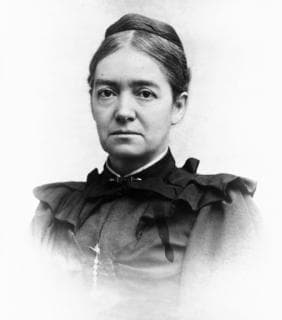
American · Medicine · Activism
Mary Corinna Putnam Jacobi
August 31, 1842 – June 10, 1906
Early Life and Background
Mary Corinna Putnam Jacobi (31 August 1842–10 June 1906) was a pioneering American physician, medical scientist, author, and suffragist whose career fundamentally challenged nineteenth‑century assumptions about women’s intellectual and physical capacities.[3][5][7][12] She was born in London, England, to American parents George Palmer Putnam, a prominent New York publisher, and Victorine Haven Putnam.[7][8] The family returned to the United States when Mary was a child, and she grew up in New York City as the eldest of eleven children in a household steeped in print culture and public affairs.[7][12]
Educated at home during her early years, Jacobi developed strong literary interests and initially aspired to a writing career.[7][8] At age fifteen she entered public school and in 1859 graduated from the Twelfth Street School in New York City, marking the completion of her formal secondary education.[8] Although her parents favored conventional feminine pursuits, she became increasingly drawn to science and medicine. The intellectual atmosphere of her father’s publishing enterprise exposed her to contemporary debates on education, reform, and women’s rights, laying the groundwork for her later feminist activism.
As a young woman Jacobi studied informally with physicians and attended lectures at New York institutions. She read widely in anatomy and physiology and sought opportunities in the few medical settings open to women. This combination of self‑directed scientific study and frustration with exclusion would later fuel her determination to obtain rigorous medical training and to open such training to other women.[7][11][12]
Education and Career Beginnings
By the early 1860s, Jacobi pursued formal professional education in defiance of prevailing gender norms. In 1863 she graduated from the New York College of Pharmacy, becoming the first woman in the United States to earn a pharmacy degree.[8][11][12] This credential gave her a scientific foundation in pharmacology and chemistry and demonstrated that women could excel in fields then considered exclusively male.
Seeking full medical training, Jacobi enrolled at the Female Medical College of Pennsylvania (later Woman’s Medical College of Pennsylvania), one of the earliest accredited medical schools for women in the United States.[1][7][11][12] She earned her M.D. in 1864, graduating into a still‑hostile professional environment that limited women’s hospital appointments and advanced study.[8][9][11] After medical school, she worked for a time at the New England Hospital for Women and Children, gaining clinical experience in a woman‑run institution that served as a crucial training site for female physicians.[11][12]
Jacobi also studied under Elizabeth Blackwell, the first woman to receive a medical degree in the United States, attending lectures at New York Medical College and pursuing anatomy and clinical work under Blackwell’s mentorship.[11][12] These experiences reinforced her belief that women’s medical education should match the rigor of men’s training and that access to laboratories and hospitals was essential for scientific medicine.
Frustrated by limited postgraduate opportunities in the United States, Jacobi turned to Europe. In the late 1860s she traveled to Paris, a leading center of clinical and laboratory medicine. There she sought admission to the École de Médecine of the University of Paris, facing significant institutional resistance due to her sex.[6][8][10][11]
Advanced Study in Paris
In 1868, after sustained advocacy, Mary Putnam Jacobi was admitted as the first female student to the École de Médecine in Paris, breaking a major gender barrier in European medical education.[6][8][10][11][12] Some later accounts suggest an earlier date, but major reference works and women’s history institutions consistently identify 1868 as the year of her admission.[6][8][12] Her acceptance marked a turning point: a leading French medical faculty officially acknowledged a woman’s right to study medicine alongside men.
At the École de Médecine, Jacobi immersed herself in the rigorous clinical and laboratory culture that characterized French medicine. She trained in hospital wards, attended lectures by leading physicians, and worked in laboratories where physiological experimentation and pathological anatomy were central.[6][7][10] This environment profoundly shaped her intellectual style, reinforcing her commitment to empirical evidence and experimental methods.
Jacobi completed her studies in Paris and in 1871 graduated from the École de Médecine, receiving a bronze medal for her thesis.[3][8][11] She was among the earliest women to attain such a distinction at the institution, and contemporaries noted both the quality of her work and the symbolic importance of a woman being publicly honored in one of Europe’s foremost medical schools.[6][8] She remained in Paris long enough to internalize the methodological standards of French scientific medicine, which she later brought back to the United States.
Return to New York and Medical Practice
After her Parisian training, Jacobi returned to New York City, where she opened a medical practice and joined the small but growing community of women physicians.[7][11][12] She taught at the Woman’s Medical College of the New York Infirmary, an institution founded by Elizabeth and Emily Blackwell to provide rigorous medical education for women and clinical care for female patients.[7][12] As a faculty member, Jacobi emphasized laboratory instruction, careful clinical observation, and the integration of scientific research into everyday practice.
Her clinical work focused on pediatrics, obstetrics, and gynecology, as well as broader internal medicine.[1] She cared for women and children in New York’s diverse urban population and advocated for preventive care, hygienic environments, and the application of physiological knowledge to public health. Her practice, located in a city still wary of women doctors, helped normalize the presence of female physicians in mainstream medicine.
Jacobi also wrote extensively for medical journals, general periodicals, and newspapers, quickly establishing herself as one of the most prolific and intellectually formidable women physicians of her generation. Between the 1860s and early 1900s, she published more than 120 medical and scientific articles, along with essays on social and political questions.[8] Her work covered topics such as neurology, hematology, pediatrics, gynecology, public health, and the education and rights of women.
Major Works, Research, and Scientific Contributions
Jacobi’s most famous work is the essay "The Question of Rest for Women during Menstruation", written in the mid‑1870s. In 1876, this essay won Harvard University’s Boylston Prize for Medical Writing, making Jacobi the first woman to receive the award.[1][6][7][8][11][12] Harvard’s recognition reflected not only the quality of her research but also the growing, if contested, acceptance of women’s scientific contributions.
In the expanded 232‑page version published in 1877, Jacobi assembled extensive physiological, clinical, and statistical data—pulse rates, muscular strength, temperature measurements, and case studies—to test claims that menstruation inherently debilitated women.[9][10][12] She concluded that while some women experienced symptoms requiring rest, menstruation itself did not justify broad restrictions on women’s activities or education. Her study directly challenged influential arguments by physicians and educators who claimed that women should avoid intellectual exertion during their menstrual periods.
Jacobi’s methodology in this work was notable: she rejected anecdotal evidence and cultural assumptions, insisting on measurable physiological data and controlled observation.[3][10][12] Historians have since identified the essay as a landmark in the scientific study of women’s health and an early example of what would become evidence‑based medicine applied to gendered claims.[10][12]
Beyond menstruation, Jacobi published on topics such as anemia, epilepsy, puerperal fever, pediatric diseases, and public health measures. She advocated for the integration of laboratory techniques—microscopy, physiological experiments, quantitative analysis—into American clinical practice.[7][10] Her writing often combined technical analysis with broader reflections on medical education, professional ethics, and the social responsibilities of physicians.
In her final years, Jacobi turned her clinical gaze inward, composing the remarkable autobiographical case history "Description of the Early Symptoms of the Meningeal Tumor Compressing the Cerebellum, from Which the Writer Died. Written by Herself", published in 1905.[4][11] In it she detailed the onset and progression of the brain tumor that would kill her, blending neurologic examination, symptom tracking, and personal reflection. The piece is now recognized as a classic of self‑documented illness narrative in medical literature.
Professional Leadership, Organizations, and Advocacy
Jacobi’s influence extended beyond her individual practice and publications into institutional reform. In 1872 she became the first woman member of the New York Academy of Medicine, one of the most prestigious medical societies in the United States.[1][6][8][11][12] Her election broke a longstanding gender barrier and signaled that at least some male leaders were prepared to recognize the scientific and clinical work of women physicians.
Two years later, in 1874, Jacobi helped organize the Association for the Advancement of the Medical Education of Women and served as its president.[1][11] She would remain its leader from approximately 1874 to 1903, guiding nearly three decades of advocacy for improved training, hospital access, and scientific rigor in women’s medical schools.[1][11] The association promoted curricula that matched men’s schools, lobbied for clinical facilities, and supported women’s admission to mainstream medical societies.
Throughout the 1860–1903 period, Jacobi’s more than 120 publications addressed not only technical medical issues but also the politics of the profession and the status of women.[8] She criticized the exclusion of women from medical institutions, argued for coeducation in medicine, and opposed sentimental or "separate sphere" arguments that depicted women as too fragile for scientific study.[1][12]
As a suffragist and feminist intellectual, Jacobi wrote and spoke publicly on women’s rights. She worked with reformers and suffrage activists, becoming one of the principal voices on women’s health in the Progressive Era United States.[3][10][12] Her medical expertise gave her particular authority in debates about whether higher education and political participation were physically suitable for women.
Awards, Honors, and Recognition
Jacobi’s achievements were widely recognized during her lifetime. Her bronze medal for her thesis at the École de Médecine signaled high academic regard in France.[3][8] The Boylston Prize from Harvard Medical School in 1876 represented a major American honor, awarded by a leading institution that rarely recognized women.[1][6][7][8][11]
Her peers often described her as among the foremost women physicians of the nineteenth century. A New England Journal of Medicine retrospective characterized her as the most accomplished woman physician of her era, emphasizing her Paris medical degree and scientific training that were "unusual at that date even among men."[6] Renowned physician Sir William Osler similarly noted the caliber of her education and research.[6]
Membership in the New York Academy of Medicine, faculty positions at the Woman’s Medical College of the New York Infirmary and other institutions, and leadership in professional associations all underscored her standing in the medical community.[1][7][11][12] Her colleagues in pediatrics, gynecology, and internal medicine frequently cited her work, and her students remembered her demanding standards and intellectual rigor.
Personal Life
On 22 July 1873, Mary Corinna Putnam married Dr. Abraham Jacobi, a German‑born pediatrician who would later be known as the "father of American pediatrics."[8][9] The marriage brought together two prominent physicians and humanitarians deeply committed to improving medical care and social conditions in the United States.[9] Both advocated for public health reforms, hospital modernization, and broader access to care.
The couple had at least two children: a son, Ernst (1875–1883), who died young, and a daughter, Marjorie Jacobi, born in 1878.[8] Balancing motherhood with demanding professional careers, Mary and Abraham Jacobi embodied a model of dual‑career marriage unusual for their time. Mary’s writings occasionally allude to the challenges of combining domestic responsibilities with scientific work, further informing her views on women’s rights and labor.
Mary Putnam Jacobi maintained close relationships with fellow women physicians and reformers, including Elizabeth Blackwell and other pioneers in women’s medical education.[6][11] Correspondence with contemporaries such as Sophia Jex‑Blake and Elizabeth Garrett Anderson connected her to broader transatlantic networks of feminist physicians.[6] Her personal and professional life were thus deeply intertwined, with friendships and collaborations reinforcing shared goals of gender equality in medicine and education.
Later Life, Illness, and Death
In her later years, Jacobi continued to practice medicine, teach, and write, even as her health declined. Around the turn of the twentieth century she began experiencing neurologic symptoms that she recognized as signs of intracranial disease. Applying the same clinical reasoning she had used for decades, she identified a meningeal tumor compressing the cerebellum as the likely cause.[4][11]
Her 1905 essay on her own illness systematically described the onset of headaches, vertigo, and motor impairment, along with the gradual loss of function. She assessed her symptoms using neurologic examination, reflex testing, and careful temporal documentation. This self‑case history has since been analyzed as a remarkable document in both medical and literary history, illustrating how a physician can clinically objectify her own suffering while acknowledging its personal dimension.[4][11]
Mary Putnam Jacobi died in New York City on 10 June 1906, at the age of sixty‑three, from the brain tumor she had diagnosed and documented.[7][8] Her death removed a central figure from American medicine and feminist science, but her writings and institutional reforms continued to shape the field.
Legacy and Historical Impact
Jacobi’s legacy operates on multiple levels: scientific, professional, feminist, and cultural. As a scientist, she helped introduce and normalize laboratory‑based, quantitative methods in American clinical practice, particularly in relation to women’s health. Her insistence on physiological data and controlled observation prefigured later developments in evidence‑based medicine.[7][10]
As a physician and educator, she trained generations of women doctors, advocated for rigorous curricula in women’s medical colleges, and fought for women’s admission to mainstream medical societies and hospitals. Her leadership of the Association for the Advancement of the Medical Education of Women sustained institutional pressure for reform over nearly three decades.[1][11][12]
As a feminist thinker, Jacobi directly confronted ideologies that portrayed women as naturally weak or intellectually limited. In works like "The Question of Rest for Women during Menstruation," she used medical science to dismantle claims that menstruation incapacitated women or justified excluding them from higher education and public life.[9][10][12] Her arguments influenced both the suffrage movement and broader debates about women’s roles in the late nineteenth and early twentieth centuries.
Historians of medicine regard her as among the most accomplished women physicians of her era and a crucial figure in the politics of medical professionalism.[6][13] Scholarly studies, including monographs on "Mary Putnam Jacobi and the Politics of Medicine in Nineteenth‑Century America," have explored how she navigated male‑dominated institutions, used scientific authority to support women’s rights, and contributed to shifting the boundaries of professional citizenship.[13]
Institutions such as the National Library of Medicine and the National Women’s History Museum now highlight Jacobi in exhibitions and educational materials celebrating women in medicine.[1][12] Biographical entries in major reference works, including Encyclopedia.com, Britannica, and specialized medical histories, consistently identify her as a trailblazer: the first woman to earn a U.S. pharmacy degree, the first woman admitted to Paris’s École de Médecine, the first woman member of the New York Academy of Medicine, and the first woman to win Harvard’s Boylston Prize.[1][5][7][8][12]
Her life illustrates how individual perseverance, combined with scientific excellence and political awareness, can reshape both a profession and prevailing social beliefs. In contemporary women’s‑history and medical‑history scholarship, Mary Putnam Jacobi stands as a key figure in the transition from exclusionary, anecdote‑driven medicine to an empirically grounded, more inclusive medical science.
Dated achievements
9 indexed.
- Aug311842Medicine
Birth of Mary Corinna Putnam Jacobi
Mary Corinna Putnam Jacobi was born in London, England.
View details EBSCO Research Starters: Mary Putnam Jacobi - Jun011863Medicine
First woman in the U.S. to earn a pharmacy degree
Mary Putnam graduated as the first woman to earn a pharmacy degree in the U.S.