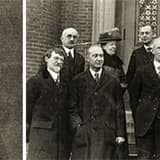
Mary Whiton Calkins died on February 26, 1930, in Newton, Massachusetts, at age 66.
Mary Whiton Calkins died on February 26, 1930, in Newton, Massachusetts, at the age of sixty-six, following a battle with cancer. She had continued teaching and writing at Wellesley College until shortly before her death, having devoted more than four decades of her career to the institution.
At the time of her death, Calkins was widely recognized as one of the most distinguished psychologists and philosophers of her generation, despite having been denied the Harvard Ph.D. she had rightfully earned. She left behind a substantial body of published work, including four books and more than one hundred scholarly articles and papers spanning experimental psychology, psychological theory, and philosophy.
Her passing was noted in academic circles as the loss of a pioneering scholar whose career had broken numerous barriers for women in American higher education and science, including her historic terms as the first woman president of both the American Psychological Association (1905) and the American Philosophical Association (1918). Colleagues and former students remembered her not only for her scholarly rigor but for her dedication as a teacher and mentor to generations of Wellesley students.
Calkins's legacy endured well beyond her death, as later historians of psychology increasingly recognized the depth and originality of her contributions to memory research, association studies, and self-psychology theory, cementing her place as one of the founding figures of American psychology despite the institutional discrimination she faced throughout her life.