← All women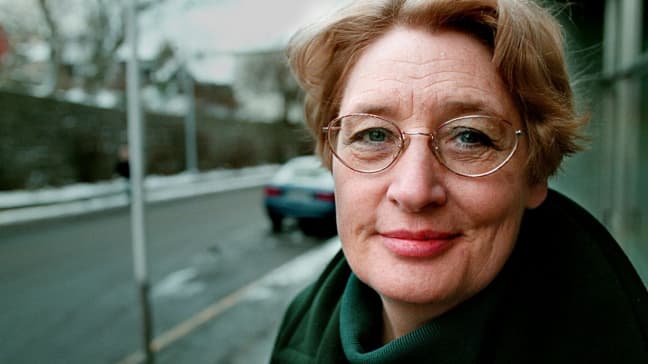
Faroese, Danish · Politics
Marita Petersen
October 21, 1940 – August 26, 2001
Early life and background
Marita Petersen was born Marita Johansen on 21 October 1940 in Vágur, on the island of Suðuroy in the Faroe Islands. She grew up in a small Faroese society whose public institutions were shaped by local traditions, close community ties, and the political relationship between the Faroe Islands and the Kingdom of Denmark. Later biographical records identify her father as Sámal Johansen. Her early life unfolded in a period when women’s participation in formal politics was still limited, making her later ascent into national office especially notable.
Petersen trained as a teacher, a profession that many sources emphasize as central to her identity before politics. Teaching gave her a public role rooted in civic service, communication, and social responsibility. Some records also describe her as having studied psychology, indicating an educational background that helped shape her later work in leadership and governance. Before entering frontline national politics, she also became active in organized labor and education, building a reputation as someone able to bridge professional, social, and political concerns.
Career beginnings
Before becoming a national political figure, Petersen served as chair of Føroya Lærarafelag, the Faroese Teachers’ Union, from 1980 to 1984. That role placed her in the center of professional advocacy and public debate over education. In the Faroe Islands, as in many small societies, teachers held a respected civic position, and union leadership offered a pathway to broader political influence. Petersen’s work there helped establish her as a serious public leader with experience in negotiation, representation, and institutional reform.
She entered the Løgting, the Faroese parliament, in 1988. The election marked her transition from educator and civic leader to national politician. Sources place her within Javnaðarflokkurin, the Social Democratic Party, where she became increasingly important during the early 1990s. By 15 January 1991, according to Danish Wikipedia, she was serving in government under Prime Minister Atli Dam with responsibility for school, culture, and justice. This ministerial role broadened her administrative experience and prepared her for the highest office.
Rise to national leadership
On 18 January 1993, Petersen became Prime Minister of the Faroe Islands. Other sources mark the formal government period from 24 April 1993 to 10 September 1994, reflecting the distinction between appointment and cabinet formation. Whichever date is used for the formal start of her administration, the historical fact is the same: Petersen became the first woman to lead the Faroese government. She also became the first female leader of Javnaðarflokkurin and the first female chair of the Løgting, consolidating a remarkable year of firsts in Faroese political history.
Her premiership was significant not only because it broke a gender barrier, but also because it occurred in a political system that had long been dominated by men and shaped by local traditions of authority. Petersen’s leadership demonstrated that women could occupy the most visible and consequential offices in Faroese governance. Contemporary and retrospective accounts also note that she was the first female prime minister in the broader Kingdom of Denmark, adding another layer to the importance of her breakthrough.
From 1993 to 1994, she served as head of government, and from 1993 to 1996 she remained party president of Javnaðarflokkurin. After her premiership, she also served as president/chair of the Løgting from 1994 to 1995. These overlapping roles show that her influence continued after leaving the premiership. She was not a short-lived symbolic officeholder; she remained a central figure in parliamentary leadership and party organization.
Political style and significance
Petersen’s career reflects a leadership path grounded in education, labor representation, and steady institutional advancement. Rather than entering politics as an outsider, she moved through recognized civic roles before reaching the top of government. This matters historically because it shows how women in mid-to-late 20th century Nordic politics often had to combine professional credibility with party discipline and public trust in order to access senior office. Petersen’s rise through those structures made her achievement especially durable and institutionally legitimate.
Her election to parliament in 1988, ministerial service in the early 1990s, and eventual premiership together illustrate the gradual opening of high office to women in the Faroe Islands. The significance of her leadership goes beyond the singular novelty of being “first.” She helped normalize the idea that a woman could chair parliament, lead a major party, and head government in Faroese political life. That representational shift is one of the most important elements of her historical legacy.
Personal life
Petersen was born Marita Johansen and later took the surname Petersen. Publicly available sources emphasize her professional and political life more than her private family relationships. The available record in this profile confirms her birth name and parentage, but does not provide consistently documented details about marriage or children. For that reason, only well-attested biographical facts are included here.
What is clear is that Petersen’s public identity became inseparable from Faroese statecraft. She worked first as a teacher, then as a union leader, then as a parliamentarian and minister, and finally as prime minister and parliamentary chair. Her personal biography therefore intersects closely with the modernization of women’s roles in Faroese public life.
Later life and death
After leaving the premiership and later stepping back from active party leadership, Petersen remained an important figure in the historical memory of the Faroe Islands. She did not seek reelection in the 1998 Løgting election, according to contemporaneous reporting. Her death on 26 August 2001 in Tórshavn followed a short illness. She was 60 years old.
Her death prompted tributes that highlighted her status as the first woman to lead the Faroese government and as one of the most prominent political figures in modern Faroese history. By the time of her death, her name had become a fixed part of the islands’ political history, especially in discussions of women’s representation and leadership.
Legacy
Marita Petersen’s legacy rests on several intertwined achievements. She was the first woman to serve as Prime Minister of the Faroe Islands, the first female leader of Javnaðarflokkurin, and the first female chair of the Løgting. These were not merely symbolic appointments. They showed that women could occupy the central institutions of Faroese democracy and helped broaden expectations for future generations of women in politics.
Her career is also important for understanding how leadership in small political systems can reshape national identity. In a society where public office is highly visible, Petersen’s ascent had an outsized impact. She demonstrated that educational expertise, union leadership, and parliamentary service could form a credible pathway to executive power for women. In the historical record of Faroese women’s history, she stands as a landmark figure whose breakthroughs continue to define the standard for political firsts in the islands.
Dated achievements
8 indexed.
- Oct211940Politics
Birth of Marita Petersen in Vágur
Born in Vágur, Faroe Islands, Marita Petersen would become the first female Prime Minister of the Faroe Islands and a landmark figure in Faroese politics.
View details Marita Petersen - Wikipedia - Jan181993Politics
Becomes Prime Minister of the Faroe Islands
Marita Petersen became Prime Minister of the Faroe Islands on 18 January 1993, beginning her historic tenure as the islands’ first female head of government.