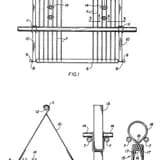
On November 13, 1951, Donovan received three more patents covering diaper cover and housing designs, completing her set of foundational diaper innovations.
On November 13, 1951, Marion Donovan was granted three additional patents in a single day: US 2,575,163, US 2,575,164 (referenced together with 2,575,165), covering refinements to her diaper cover, a diaper housing structure, and an alternative cover design. These patents, filed in the wake of her original Boater patent, rounded out a comprehensive intellectual property portfolio protecting the various engineering elements of her invention — from the waterproof shell to the internal structural housing that held the absorbent cloth diaper in place.
Together with the June 1951 patent, these four filings gave Donovan robust legal protection over essentially every functional aspect of her diaper cover system at a moment when the product was already a retail sensation following its 1949 debut at Saks Fifth Avenue. This thoroughness reflected Donovan's savvy: rather than relying on a single patent, she built a defensive thicket of intellectual property around her invention, a strategy uncommon for independent, self-taught inventors of the period, let alone women inventors, who frequently saw their ideas appropriated without credit or compensation.
Later in 1951, buoyed by the commercial and legal strength of her portfolio, Donovan sold her manufacturing company and the full rights to her diaper cover patents to the Keko Corporation for $1 million, a substantial sum that underscored how thoroughly she had proven both the utility and the market value of her invention.