← All women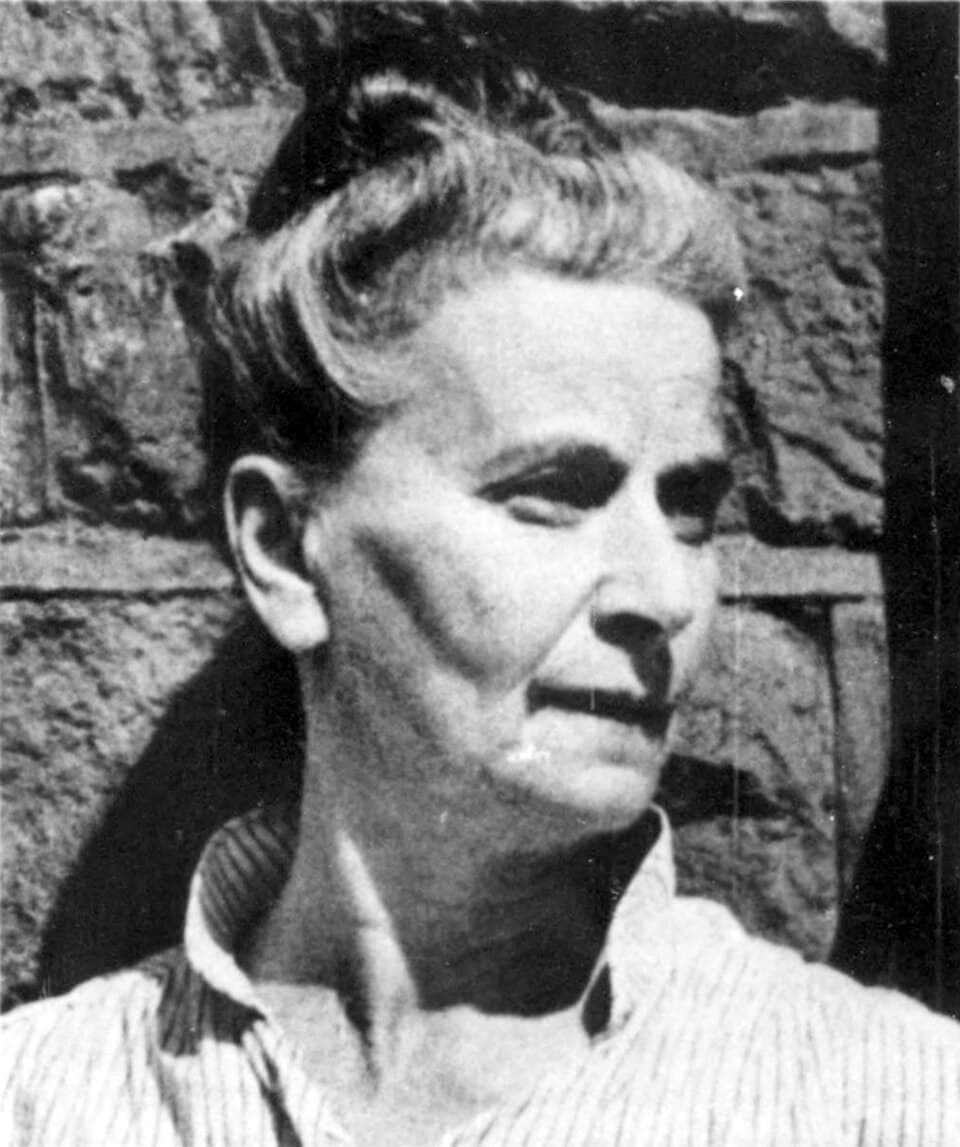
Polish, British · Arts
Marie Rambert
February 20, 1888 – June 12, 1982
"
Early Life and Background
Marie Rambert was born Cyvia Rambam on 20 February 1888 in Warsaw, then part of the Russian Empire, into a cultured Polish-Jewish family. Her father, Aszer Rambam, worked as a bookseller, and her mother came from a family with intellectual and cultural aspirations. Warsaw at the turn of the century was a city simmering with political tension, and as a teenager Rambert became caught up in the revolutionary fervor of 1905, participating in political demonstrations and even distributing illegal literature — activities that reflected both her independent spirit and the volatile environment of her youth.
Seeking broader horizons, and possibly to escape the political dangers she faced in Warsaw, Rambert left Poland for Paris, initially enrolling to study medicine at the Sorbonne. However, her passion increasingly turned toward movement and dance. She encountered the work of Swiss music educator Émile Jaques-Dalcroze, whose system of "eurhythmics" — translating musical rhythms into physical movement — captivated her. She traveled to Dalcroze's institute in Hellerau, Germany, to study his method intensively, an experience that would prove pivotal to her entire career.
Career Beginnings: The Ballets Russes and Nijinsky
Rambert's expertise in eurhythmics brought her to the attention of the great impresario Sergei Diaghilev, who in 1912–1913 engaged her to assist choreographer Vaslav Nijinsky with the Ballets Russes. Nijinsky was choreographing Igor Stravinsky's groundbreaking and rhythmically ferocious score for Le Sacre du Printemps (The Rite of Spring), and the dancers struggled to internalize its irregular meters. Rambert's task was to use Dalcroze's principles to help the company physically grasp the complex rhythmic structure.
This work placed her directly within the ferment of early modernist art, in close contact with Diaghilev, Nijinsky, Stravinsky, and other leading figures of the Ballets Russes. The 1913 premiere of the Rite of Spring in Paris became legendary for the near-riot it provoked among the audience, stunned by its dissonance and unconventional choreography. Rambert's experience there gave her an intimate understanding of the possibilities of modern dance and choreographic innovation that would deeply inform her later work.
Move to London and Founding of the Ballet Club
With the outbreak of World War I, Rambert relocated to London, where she began teaching dance and eventually opened her own school. In 1918, she married the English playwright Ashley Dukes, a union that provided both personal partnership and practical support for her artistic ambitions; Dukes would later purchase and convert a small theatre — the Mercury Theatre in Notting Hill Gate — which became central to Rambert's company.
In 1926, Rambert founded the Ballet Club, a modest but ambitious venture built around her school and the intimate Mercury Theatre space. This club would evolve into the company known as Ballet Rambert. Unlike the grand touring companies of the era, Rambert's operation was small, personal, and experimental — a laboratory for new choreographic ideas rather than a vehicle for spectacle. She had almost no capital to work with, and the company's survival for years depended on her ingenuity, personal sacrifice, and her husband's financial backing.
Major Accomplishments: Nurturing British Choreography
Rambert's most enduring legacy lies not merely in the company she built but in the extraordinary roster of talent she discovered, trained, and championed. She is widely credited with launching the careers of choreographer Frederick Ashton, who later became a founding figure of the Royal Ballet and one of the most important choreographers Britain ever produced, and Antony Tudor, whose psychologically nuanced "ballet of the interior" redefined narrative dance and who went on to have a major career in the United States with companies including American Ballet Theatre.
She also nurtured dancers such as Alicia Markova, Britain's first internationally celebrated prima ballerina, and Peggy van Praagh, who later became a founding figure of Australian ballet. Rambert had an almost uncanny eye for talent and a willingness to give young artists creative freedom and a stage, however small, on which to develop. Her company premiered numerous important new works throughout the 1930s, helping to establish a distinctly British choreographic voice that was less indebted to Russian imperial tradition and more experimental and modern in sensibility.
In 1935 the Ballet Club evolved formally into the Ballet Rambert touring company, and throughout the interwar period and beyond, it toured extensively, bringing ballet to wider British audiences outside London. During and after World War II, the company continued to operate, adapting to wartime austerity while still producing new work and touring to entertain troops and civilians alike.
Later Transformation: From Classical Ballet to Contemporary Dance
By the mid-1960s, recognizing shifting artistic currents, Rambert oversaw a radical transformation of her company. In 1966, Ballet Rambert transitioned from a classical ballet repertoire to a modern/contemporary dance company, embracing the techniques and aesthetics associated with American modern dance pioneers such as Martha Graham. This was a bold and risky decision for an institution so closely associated with classical tradition, but it reflected Rambert's lifelong commitment to artistic evolution over stagnation. The company thrives today, now known simply as Rambert, and is recognized as the oldest continuously operating dance company in the United Kingdom.
Awards and Honors
Rambert's contributions to British cultural life were formally recognized by the state. She was appointed Commander of the Order of the British Empire (CBE) in 1953 and subsequently elevated to Dame Commander of the Order of the British Empire (DBE) in 1962, one of the highest honors available to a British subject, cementing her status as "Dame Marie Rambert." She received numerous other honors and tributes from dance institutions across Britain and abroad throughout her lifetime, and universities and dance organizations continued to celebrate her contributions well into her final years.
Personal Life
Rambert married English playwright and theatre manager Ashley Dukes in 1918. The couple had two daughters. Dukes was instrumental in supporting Rambert's artistic ventures; his purchase and conversion of the Mercury Theatre in Notting Hill Gate gave her company a permanent home for decades and was central to the company's identity and survival through difficult financial periods. Rambert maintained her Jewish and Polish heritage as part of her identity throughout her life, even as she became one of the most quintessentially "British" cultural institutions of the twentieth century — a testament to the ways immigrant contributions shaped modern British arts and culture.
Legacy and Historical Impact
Marie Rambert is remembered as one of the founding architects of British ballet, alongside contemporaries such as Ninette de Valois (founder of what became the Royal Ballet). Where de Valois built a grand national institution, Rambert operated more as an intimate discoverer and incubator of raw talent, and her Ballet Club/Ballet Rambert served as a training ground whose alumni went on to lead major companies around the world. Her insistence on artistic experimentation, her eye for undiscovered genius, and her willingness to evolve her company's identity even late in her career (the 1966 shift to contemporary dance) reflect a rare combination of traditionalist rigor and forward-looking daring.
The company she founded, now known as Rambert, continues to operate today, celebrated as the oldest dance company in the United Kingdom, a living monument to her original vision. Dance historians and companies worldwide continue to study and honor her contributions, and her influence persists through the lineage of choreographers, dancers, and companies she touched directly or indirectly.
Death
Dame Marie Rambert died on 12 June 1982 in London at the age of 94. Her death was marked by tributes across the dance world, including in the international press, recognizing her as a towering figure whose personal journey — from a politically engaged Jewish teenager in Warsaw to a Dame of the British Empire and matriarch of British ballet — embodied a remarkable arc of twentieth-century cultural history.
"Dated achievements
2 indexed.
- Feb201888Arts
Marie Rambert's Birth
Marie Rambert was born on February 20, 1888, in Warsaw, then part of the Russian Empire.
View details Marie Rambert | Britannica - Jun121982