← All women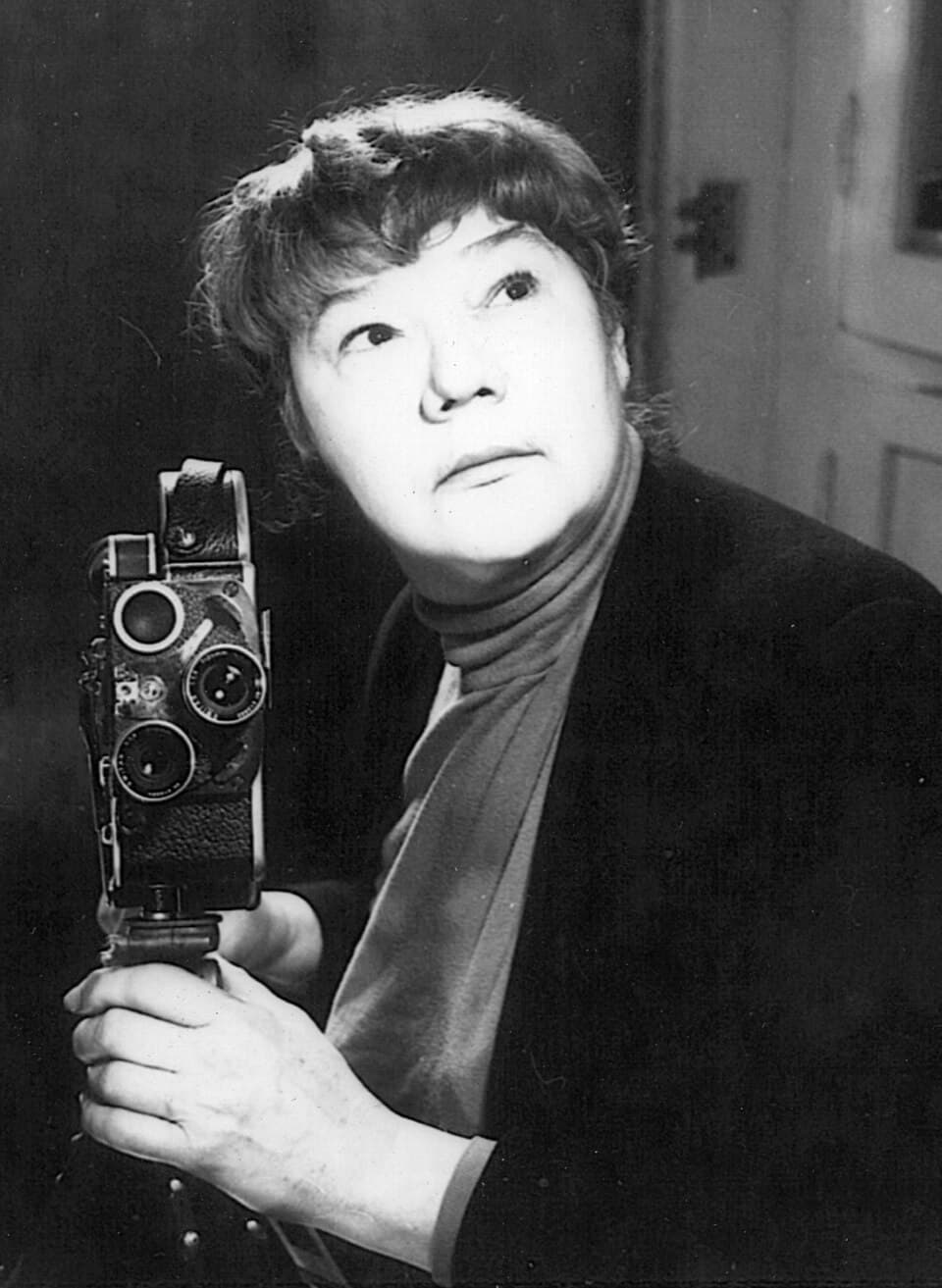
American · Arts
Marie Menken
May 25, 1909 – December 29, 1970
Early Life and Background
Marie Menken, born on May 25, 1909, in Brooklyn, New York, was a prominent figure in the American avant-garde film scene. Coming from a family of Lithuanian immigrants, Menken demonstrated an early inclination towards the arts, nurtured by her education at the New York State College for Teachers in Albany and later at the Art Students League of New York. Her artistic pursuits were further invigorated by her exposure to European avant-garde art movements.
Career Beginnings and Development
In the 1940s, Marie Menken began her film career with a deep interest in experimenting with the film medium. Her initial works were paintings, but she soon found film to be a more dynamic medium to express motion and rhythm, akin to poetry or painting in motion. Menken’s film career took off with films like "Visual Variations on Noguchi" in 1945, where she explored the abstract potential of film.
Major Works and Accomplishments
Marie Menken's major contributions to experimental cinema include films such as "The Potted Psalm" (with Willard Maas, 1946), "Glimpse of the Garden" (1957), and "Lights" (1964). Her innovative use of the hand-held camera and her ability to capture the poetry in everyday scenes influenced legendary filmmakers such as Stan Brakhage and Jonas Mekas. In the 1960s, her work gained more attention, and she became known as the "mother of the New York underground film movement."
Awards, Honors, and Recognition
While Menken did not receive formal awards during her lifetime, her influence is evident in the works of later filmmakers and her inclusion in numerous retrospective film festivals. She was admired by contemporaries such as Andy Warhol, who cast her in several of his projects, including "Chelsea Girls" (1966).
Personal Life
Marie Menken was married to Willard Maas, a fellow filmmaker and poet. Their personal and professional lives were intertwined, with Maas contributing significantly to some of her projects. The documentary "Notes on Marie Menken" illustrates their complex, often turbulent relationship.
Legacy and Historical Impact
Marie Menken’s legacy is best reflected in the continuing interest and scholarly exploration of her work within film studies. Her pioneering techniques with film form and her contribution to developing the New York experimental film scene have been influential. She is credited with helping shape the aesthetics and narrative structures of underground film culture in America in the mid-20th century.
Later Life and Death
Marie Menken continued to actively create short films until her untimely death on December 29, 1970. At the age of 61, her passing marked the end of an era yet her work laid the groundwork for future avant-garde directors. Her films continue to be studied and appreciated for their inventive techniques and poignant visual narratives.
Dated achievements
2 indexed.
- May251909Arts
Birth of Marie Menken in Brooklyn, New York
Marie Menken was born on May 25, 1909, in Brooklyn, New York, to Lithuanian immigrant parents.
View details Marie Menken - Wikipedia - Dec291970Arts
Death of Marie Menken in New York City
Marie Menken died on December 29, 1970, in New York City at age 61, mourned as a pioneering figure of American underground film.