← All women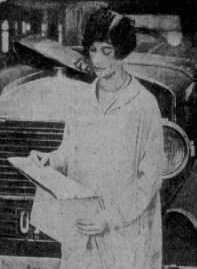
American · Science
Marie Luhring
May 24, 1892 – December 29, 1939
Early Life and Background
Marie Luhring was born on May 24, 1892, in New York City.[1] Contemporary accounts identify her as the daughter of William A. Luhring, a New York resident, and his wife, though detailed information about her parents’ occupations and ethnic background has not been preserved in widely accessible sources.[3] Growing up in New York at the turn of the twentieth century placed her at the heart of a rapidly industrializing urban environment where new technologies, including the automobile, were beginning to reshape daily life.
Luhring’s early education followed the path available to academically inclined girls in New York. The New York Times obituary records that she graduated from the New York Normal Training School, an institution preparing teachers and advanced students, and that she later pursued further study in engineering at the Cooper Union in New York.[3] Wikipedia’s account similarly notes that she studied at Hunter College, focusing on art and interior design, suggesting that her initial training combined artistic and technical disciplines.[1] MotorCities.org adds that she attended Hunter High School, where she studied interior decorating and discovered a strong interest in architectural drawing.[2] Taken together, these sources portray a young woman whose talents bridged art and mechanics, a combination that would prove essential in design engineering.
Before turning to engineering, Luhring built skills in drawing and visual storytelling. According to MotorCities, her first assignment after her studies was with the Sage Foundation Homes Company at Forest Hills, where she worked in architectural and interior design.[2] She later moved into the field of animation and cartoon illustration with the International Film Company"Cartoons in the Country" (1915).[2][4] These early roles indicate that she had mastered detailed drawing and visual planning, competencies that would translate directly into industrial drafting.
Luhring’s transition to formal technical education came after her artistic work drew the attention of mentors. MotorCities reports that Edward Hewitt, an instructor, advised her to enroll at the Cooper Union Drawing School, a prestigious institution known for rigorous training in mechanical and architectural drawing.[2] She did so and, according to MotorCities, graduated with very high honors in architecture and mechanical drawing.[2] The New York Times obituary adds that she completed a degree and later earned a master’s degree in engineering from Cooper Union, though it does not provide precise dates.[3] These overlapping accounts, while differing in detail, agree that Luhring received substantial technical education, equipping her for engineering work at a time when few women could access such training.
Career Beginnings in Engineering
Luhring’s entry into professional engineering occurred during World War I, a period when industrial firms faced acute labor shortages. In 1918, the International Motors Company—later known as the International‑Plainfield Motor Car Company, a subsidiary of Mack Trucks—responded to a shortage of male engineers by recruiting a cohort of women.[1][3] The New York Times obituary notes that the firm hired approximately twenty‑five women engineers, and that Marie Luhring was among them.[3] This initiative was unusual for the era: although women had worked in factories and offices, employing them explicitly as mechanical engineers was rare.
Sources agree on the year of Luhring’s hiring but do not specify the exact month and day; historians therefore treat 1918 as a year marker for her start at International Motors.[1][3] Once employed, she joined the company’s engineering and design staff, applying her advanced skills in mechanical drawing and architecture to the design of vehicles and components. She would remain with the company for twenty‑one years, until her death in 1939.[3]
Her early years at International Motors coincided with rapid expansion in the commercial vehicle sector. Trucks were increasingly used for freight transport, construction, and municipal services. Within this context, Luhring contributed to the design and refinement of truck bodies and mechanical systems. MotorCities and other later accounts emphasize that she quickly distinguished herself as an especially talented designer, with colleagues and supervisors recognizing both her creativity and work ethic.[2][7]
Major Works, Accomplishments, and "Firsts"
The most widely documented milestone in Luhring’s career is her admission, in 1920, as an associate member of the Society of Automotive Engineers (SAE).[1] SAE, founded in 1905, was the leading professional organization for automotive engineers in the United States, and membership provided access to technical papers, standards, and professional networks. In 1920, Luhring became the first female member of SAE.[1][2][5]
Her admission was based on her engineering qualifications and practical experience at International Motors, as well as her strong background in mechanical drawing from Cooper Union and earlier schools.[1][2][3] MotorCities reports that a Cooper Union instructor had encouraged her to seek membership in SAE and that she was the first woman offered such a recommendation.[2] Later summaries of American women’s "firsts" list her as the first woman in America to become an automotive engineer, a claim that reflects the recognition conferred by SAE membership.[1]
Luhring’s entry into SAE, however, was not universally welcomed. MotorCities notes that her joining "brought much opposition from men in the organization," indicating that some members objected to a woman crossing what had previously been an all‑male professional boundary.[5] Her successful admission, despite such resistance, marked a significant barrier‑breaking moment for women in engineering.
In addition to her professional society breakthrough, Luhring is credited with being among the first female truck designers in the United States. Both MotorCities and later articles describe her as the first female truck designer and one of the top designers in the country during the early 1920s.[2][5][7] At International Motors and in work affiliated with Mack Trucks, she contributed to the design of heavy vehicles, a field that demanded attention to structural strength, weight distribution, manufacturability, and performance.
While specific models or patents tied solely to her name have not been documented in available sources, her role in truck design is repeatedly affirmed. MotorCities notes that she was hired as a designer by Mack Truck operations and that her design work was highly regarded within the company.[2] Later accounts suggest that she may also have been associated with REO truck design operations, but details are limited and not independently corroborated by primary records.[5]
In the late 1920s, Luhring’s work extended beyond trucks to railway technology. Wikipedia reports that she was involved in the development of a gas‑electric locomotive during this period.[1] Gas‑electric locomotives combined internal combustion engines with electrical transmission, offering potential advantages in efficiency and control. Her role in such a project indicates that she was trusted to participate in complex, cutting‑edge engineering work, further underscoring her technical capabilities.
Throughout her career, colleagues and observers described Luhring in highly positive terms. Wikipedia cites contemporary remarks that she was considered "a marvelous person, a marvelous worker," reflecting both her professional competence and interpersonal qualities.[1] In a male‑dominated industry, such praise carried particular weight, signaling that she had earned respect through sustained contributions rather than being treated merely as a wartime novelty.
Awards, Honors, and Professional Recognition
Formal awards specifically presented to Luhring have not been extensively documented in surviving sources, but her SAE membership itself functioned as a form of professional recognition. Being accepted into SAE as the first female member in 1920 represented a validation of her qualifications and an acknowledgment by the engineering community that she met the organization’s standards.[1][2]
Within International‑Plainfield Motor Car Company, her long tenure and responsibilities suggest that she enjoyed internal recognition. The New York Times obituary notes that she had worked for the company for twenty‑one years, which indicates sustained trust in her abilities.[3] MotorCities and related accounts describe her as one of the best designers in the field, implying that she was informally honored through reputation and the esteem of peers.[2][5]
Beyond her lifetime, Luhring’s historical significance has increasingly been recognized by automotive historians and women’s history scholars. She is featured in lists of American women’s firsts as an early woman automotive engineer and the first female member of SAE.[1] MotorCities.org has highlighted her as a "Story of the Week," aiming to bring greater visibility to her contributions.[2][5] These retrospective recognitions help locate her career within the broader narrative of women’s entry into engineering professions.
Personal Life
Information about Luhring’s personal life outside of her education and career is limited. The New York Times obituary identifies her as Miss Marie E. Luhring and does not mention a husband or children, suggesting that she did not marry.[3] It notes that at the time of her death she resided in Plainfield, New Jersey
No surviving mainstream sources provide details about her hobbies, community involvement, or social networks beyond professional circles. The available biographical accounts focus primarily on her training and contributions to engineering. In the absence of reliable evidence, it is not possible to reconstruct a fuller picture of her private life without speculation. What can be said with confidence is that she dedicated a substantial portion of her adult years to industrial design and engineering work. Marie Luhring’s legacy lies in her role as a pioneer for women in automotive engineering and truck design. Her admission as the first female member of the Society of Automotive Engineers in 1920 marked a turning point in the professionalization of women engineers, demonstrating that women could meet the stringent technical standards of one of the country’s leading engineering societies.[1][2] Her work as one of the first female truck designers in the United States further expanded perceptions of what kinds of engineering work women could perform.[2][5][7] Heavy‑vehicle design demanded rigorous mechanical understanding and practical judgment, and her success in this area helped undermine stereotypes that confined women to domestic or "light" technical tasks. By contributing to the design of commercial trucks and a gas‑electric locomotive, she participated in the development of technologies that were central to transportation and industry in the interwar years.[1] Luhring’s career also illustrates how wartime labor shortages could create opportunities that persisted beyond the war itself. Although she entered engineering through a program designed to address the shortage of male engineers during World War I, she remained in the profession for two decades, long after the war ended.[3] Her trajectory shows that women hired initially as a temporary solution could prove their value and secure long‑term roles in highly technical fields. In retrospective accounts, Luhring serves as a symbol of both progress and the challenges women faced. MotorCities emphasizes the opposition she encountered when joining SAE, reminding readers that even highly qualified women met resistance when entering professional organizations.[5] At the same time, her achievements provide a historical precedent for later generations of women engineers and designers, including those recognized in the automotive industry in the later twentieth and twenty‑first centuries. Today, her name appears in encyclopedic entries, women’s history timelines, and specialized articles on automotive design, ensuring that her contributions are not forgotten.[1][2][5][7] While the documentary record is incomplete, what is known firmly establishes her as an important figure in the early history of women in engineering. Luhring continued to work for the International‑Plainfield Motor Car Company into the late 1930s. Her involvement in projects such as the development of a gas‑electric locomotive in the late 1920s indicates that she remained active in complex engineering tasks during the later stages of her career.[1] The New York Times obituary records that she dedicated twenty‑one years to the company, suggesting continuous employment from 1918 until her final illness in 1939.[3] In mid‑1939, Luhring fell ill; the New York Times reports that she suffered from an illness lasting about six months.[3] On December 29, 1939, she died at Muhlenberg Hospital in Plainfield, New Jersey.[1][3] She was 47 years old
Her passing did not immediately generate widespread public attention, but within automotive and engineering circles her contributions were remembered. Later historical work, including the Wikipedia entry on Marie Luhring and MotorCities’ features, has revived interest in her story and secured her place in the narrative of women’s history in technology.[1][2][5] Luhring’s life encapsulates a crucial phase in the integration of women into engineering professions. From her birth in New York City in 1892, through her education in art and mechanical drawing, to her pioneering status as a truck designer and SAE member, and finally to her death in 1939, her story provides insight into the opportunities and obstacles that faced women who sought to build careers in industrial technology during the early twentieth century.Legacy and Historical Impact
Later Life and Death
Dated achievements
5 indexed.
- May241892Science
Birth of Marie Luhring
Marie Luhring was born in New York City, later becoming an automotive engineer and one of the first female truck designers.
View details Wikipedia - Marie Luhring - Jan011918Science
Joins International Motors Company as Mechanical Engineer
Marie Luhring joined International Motors as a mechanical engineer during WWI, amidst labor shortages.