← All women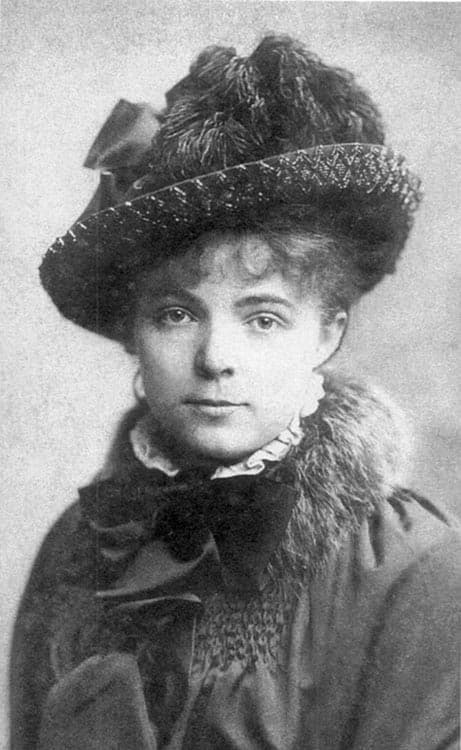
Ukrainian, French · Arts · Literature
Marie Bashkirtseff
November 24, 1858 – October 31, 1884
Early life and background
Marie Bashkirtseff was born into a wealthy noble family in Gavrontsi (Havrontsi) near Poltava, in the Russian Empire, on 24 November 1858. Her family background gave her access to education, travel, and artistic instruction that were unusual privileges for a woman of her era, even one of high social standing. Modern references place her origin in present-day Ukraine, and her life has since become central to debates over national and cultural identity as well as women’s history.
Her full birth name is usually given as Maria Konstantinovna Bashkirtseva. She grew up in a household marked by movement and social distinction, and she received a refined education from an early age. Sources describe lessons in drawing, music, and dance, along with private tutoring and extensive travel across Europe. This cosmopolitan upbringing helped form her artistic taste and multilingual abilities, and it also exposed her to the cultural centers that would later shape her career, especially Paris.
Her parents separated when she was young, and she traveled with her mother through several European cities. The family’s mobility was important to her development because it brought her into contact with a wider world of artistic and intellectual life than was typical for many women of her generation. These early experiences, coupled with a strong self-awareness, later became central themes in the diary for which she would become famous. The diary records not only artistic aspiration, but also a keen sense of confinement within the gender norms of the nineteenth century.
Education and artistic formation
Bashkirtseff first hoped to become a singer, but illness damaged her voice and redirected her ambitions toward visual art. That shift was decisive. She began to study drawing seriously and, after periods of travel and private instruction, entered the Académie Julian in Paris in 1877. The Académie Julian was one of the few serious art schools open to women at the time, and for women artists it represented a rare opportunity to receive formal training comparable to that available to men.
Her enrollment at the Académie Julian placed her within a community of ambitious women artists who were working against structural barriers in art education, exhibition access, and professional recognition. In the nineteenth century, women were frequently excluded from the official art school system and from many of the institutional networks that shaped artistic careers. Bashkirtseff’s decision to train in Paris therefore carried both practical and symbolic importance. It connected her to the center of European art and allowed her to develop a body of work grounded in academic technique and contemporary naturalist concerns.
Sources associated with the Clark Art Institute note that she studied there from 1877 to 1884. During those years she also studied with teachers such as Robert-Fleury and developed the disciplined working habits that underpinned her paintings and drawings. Her artistic identity was shaped by a tension between ambition and vulnerability: she was determined to become a major artist, yet she was also acutely aware of how easily women’s work could be dismissed or minimized.
Career beginnings and development
Bashkirtseff’s artistic career developed in Paris, where she worked in a naturalist style and produced portraits, genre scenes, and figure compositions. She is often described as a painter, sculptor, draughtswoman, and pastellist. Her work was informed by the academic training available to her, but her subject matter and self-presentation were distinctly modern. She was especially interested in depicting women and children with psychological presence and social specificity.
Although her reputation today is often tied to her diary, she was recognized during her lifetime as a serious artist. She exhibited works and attracted attention for her skill, her persistence, and her highly self-conscious artistic personality. Her writing under the pseudonym Pauline Orrell also shows that she was active as a public advocate for women’s participation in the arts. Those articles are important because they demonstrate that she did not simply seek personal success; she explicitly argued for broader access and recognition for women artists.
Her ambition and candor made her unusual even among the circle of women who studied at the Académie Julian. She understood herself as an artist in a competitive field and wrote constantly about work, standards, and progress. This self-scrutiny gave her diary a distinctive authority. It also explains why her legacy extends beyond surviving paintings: she documented the inner life of an artist fighting for legitimacy in a culture that often denied women the role of serious creator.
Major works and the diary
Bashkirtseff’s most famous work is Journal de Marie Bashkirtseff, the diary published posthumously in 1887. The journal became an immediate sensation after her death, largely because of the combination of youthful intensity, artistic ambition, and unsparing self-analysis found in its pages. Written in French, it offers a vivid record of her development as a painter, her thoughts about fame and mortality, and her reflections on the social conditions facing women.
The diary is historically significant on several levels. As literature, it belongs to the tradition of intimate self-writing, but it also serves as an unusually direct document of a woman artist’s working life in late nineteenth-century Europe. Readers encountered a writer who was not modest or deferential by convention, but openly ambitious and sometimes impatient with the limitations placed on her. This made the text startling to many contemporary readers and helped secure its long afterlife.
Her paintings and drawings, meanwhile, are part of the broader naturalist and realist currents of the period. They reveal close observation, interest in expressive detail, and a concern with the dignity of ordinary life. While the diary has often overshadowed the visual work, art historians have increasingly emphasized that Bashkirtseff should be understood as a serious artist first and not only as a diarist. Her artistic legacy therefore rests on both the surviving canvases and the literary testimony that made her famous.
Recognition, reception, and reputation
During her short lifetime, Bashkirtseff achieved a measure of recognition unusual for a young woman artist, though not enough to secure the institutional status available to many male contemporaries. Her talents were noticed, and her writings circulated in artistic and literary circles. Yet her full reputation emerged after her death, when the diary was published and rapidly read across Europe.
That posthumous success transformed her into a symbol of intellect, sensibility, and thwarted promise. For some readers she became a model of feminine candor and courage; for others, an unsettling example of excessive self-expression. Either way, she entered cultural memory. Later critics have also read her as a proto-feminist figure because of her insistence that women should participate fully in the arts and her refusal to present ambition as unfeminine or improper.
Her legacy has continued to expand through museum collections, scholarly editions, and renewed interest in women artists of the nineteenth century. Institutions such as AWARE, the Clark Art Institute, and the French Ministry of Culture have included her in curated histories of women’s art, helping restore her to the broader story of European modern culture. This reassessment has been especially important because earlier accounts often reduced her to the romantic image of a doomed genius, rather than treating her as an accomplished and self-aware creator.
Personal life
Bashkirtseff never married and had no children. Her diary and correspondence suggest intense emotional investment in friendship, admiration, rivalry, and the pursuit of artistic identity rather than in domestic life. She lived in a period when marriage was often expected to define women’s futures, yet she chose a path centered on work, self-fashioning, and public expression.
Her personal life is also notable for the way it was documented. Unlike many women of her era, she left behind an extensive record of her own feelings and judgments. That record has made her unusually visible to history, but it has also meant that her private life has sometimes overshadowed her work. Modern scholarship attempts to balance those dimensions by treating the diary as both literary artifact and historical evidence.
Her experience of illness also shaped her life profoundly. Tuberculosis eventually curtailed her career and contributed to the urgency that readers often detect in her writing. The awareness of fragility, coupled with a fierce desire for artistic permanence, gave her work a distinctive emotional charge.
Later life and death
By the early 1880s, Bashkirtseff was living and working in Paris, the center of her artistic ambitions. She continued to produce art and to write with intensity even as her health declined. She died on 31 October 1884 in Paris, still only 25 years old, after contracting tuberculosis. Her death ended a career that was brief in duration but unusually well documented in both visual and textual form.
The years after her death were crucial for her reputation. The publication of her diary in 1887 turned her into an international literary figure and ensured that her voice survived her body of work. The diary’s reception helped create the enduring image of Bashkirtseff as a brilliant, passionate young woman who confronted the limitations of her era with uncommon frankness.
Legacy and historical impact
Bashkirtseff occupies a distinctive place in women’s history because she represents several overlapping forms of significance: she was a serious artist, an early and forceful advocate for women in the arts, and one of the most memorable diarists of the nineteenth century. Her importance is not limited to any single medium. Instead, it lies in the way her art and writing together document the lived experience of a woman striving for professional recognition in a restrictive cultural system.
Her diary has had a particularly strong afterlife because it reveals the emotional and intellectual labor required of women artists in the nineteenth century. It exposes the double standard that allowed men to pursue fame while expecting women to remain modest, domestic, and secondary. By refusing that script, Bashkirtseff helped create a model of artistic self-assertion that later women writers and artists could recognize as their own.
Her paintings also matter because they anchor her reputation in visual practice rather than biography alone. Together, the works and the diary make her a major figure in the history of women’s cultural production. Today she is remembered not only for her early death, but for the sharpness of her voice, the seriousness of her ambition, and the way she turned personal experience into historical testimony.
Dated achievements
2 indexed.
- Nov241858Arts
Birth of Marie Bashkirtseff
Marie Bashkirtseff was born near Poltava, in what is now Ukraine, into an aristocratic Russian family.
View details Marie Bashkirtseff - Wikipedia - Oct311884Arts
Death of Marie Bashkirtseff in Paris
Marie Bashkirtseff died in Paris on October 31, 1884, of tuberculosis at the age of 25.