← All women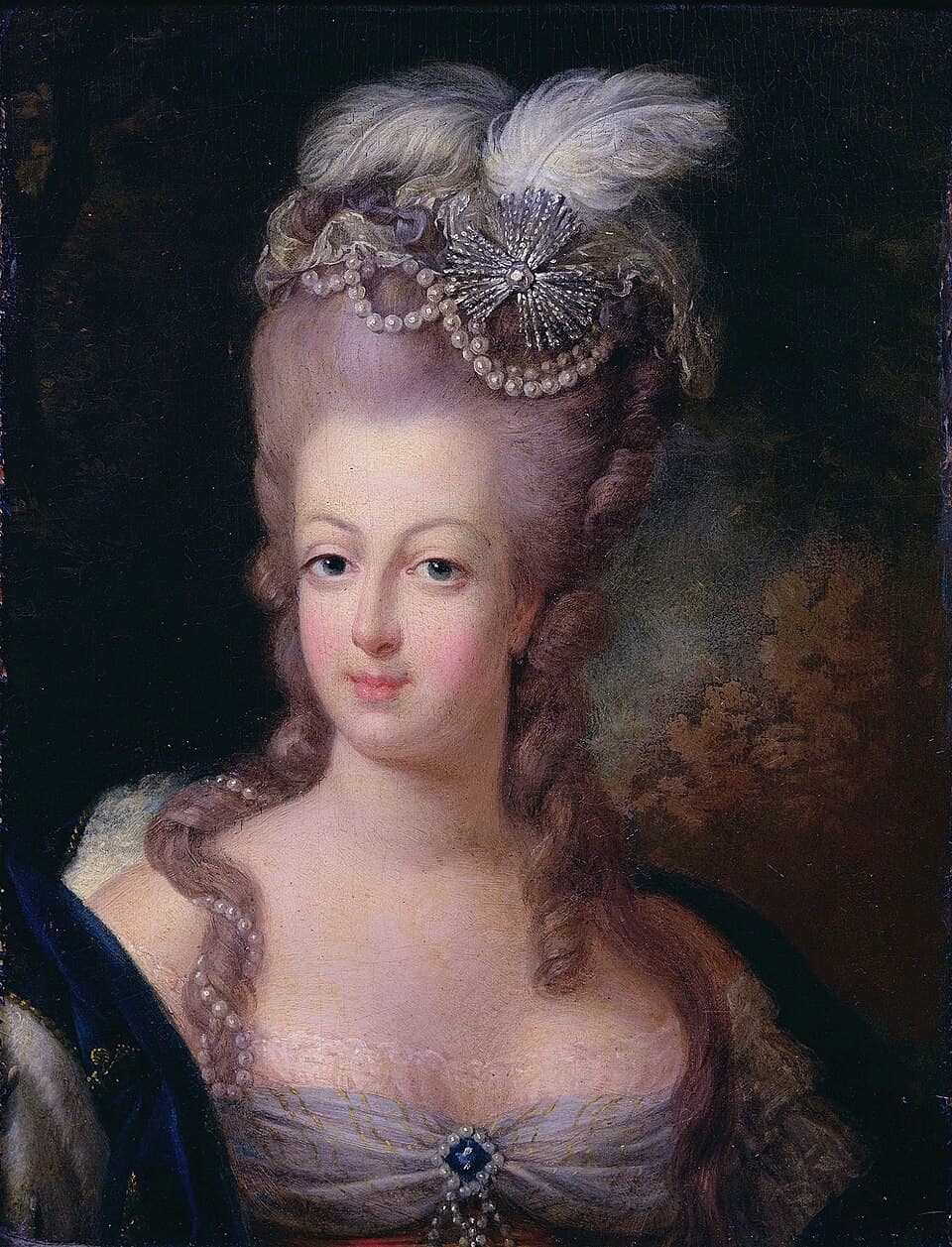
Austrian, French · Politics
Marie Antoinette
November 2, 1755 – October 16, 1793
Early Life and Background
Marie Antoinette (born Maria Antonia Josepha Johanna) entered the world on 2 November 1755 at the Hofburg Palace in Vienna, Austria.[2][6][11] She was the fifteenth child and youngest daughter of Empress Maria Theresa, ruler of the Habsburg lands, and Francis I, Holy Roman Emperor.[2][6] Raised in one of Europe’s most powerful dynasties, her childhood was shaped by the imperatives of dynastic politics rather than by expectations of personal autonomy.
Maria Theresa oversaw her children’s education closely, emphasizing religion, loyalty to the dynasty, and basic cultural accomplishments. However, sources suggest that Marie Antoinette’s formal education was uneven; she was less academically rigorous than some siblings and received more training in music, dancing, and courtly manners.[13][12] As a child, she reportedly played with Mozart when he visited Vienna and was celebrated for charm rather than intellectual gifts.[12]
The broader political context of her youth was turbulent. The War of the Austrian Succession and the Seven Years’ War had reshaped alliances in Europe. To secure her realm, Maria Theresa pursued the so‑called Diplomatic Revolution, forging an unprecedented alliance with France. From an early age, Marie Antoinette was prepared as a pawn in this strategy, destined for marriage into the Bourbon royal family to cement the new Franco‑Austrian partnership.[2][6][13]
Marriage and Arrival in France
In 1770, at the age of fourteen, Marie Antoinette was betrothed to Louis‑Auguste, grandson of Louis XV and heir to the French throne.[2][7] On 19 April 1770, she underwent a proxy marriage ceremony in the Augustine Church in Vienna, where her brother Ferdinand stood in for the groom.[2][1] Shortly afterward, she left Austria for France, crossing the Rhine and participating in elaborate rituals that symbolized the transfer of her identity from Habsburg archduchess to future French dauphine.[13]
On 16 May 1770 she married Louis‑Auguste in person in the royal chapel at the Palace of Versailles, in a ceremony attended by much of the French nobility and marked by public festivities and fireworks.[2] She thus became dauphine of France.[2][7] Initially, her youth and charm made her popular at court and among the public, who hoped the young couple would rejuvenate the monarchy.
The early years of the marriage were complicated by the couple’s inexperience and Louis‑Auguste’s perceived sexual hesitancy, which meant the union remained unconsummated for several years.[2][13] This prompted gossip and concern, particularly from Maria Theresa, who sent letters urging her daughter to take more interest in political matters and in her husband. The couple eventually overcame these difficulties, but the delay in producing an heir contributed to early criticism of the dauphine.
Accession and Court Life at Versailles
On 10 May 1774, Louis‑Auguste became King Louis XVI upon the death of his grandfather Louis XV.[2][6] Marie Antoinette, then nineteen, assumed the role of Queen of France and Navarre.[2][6] On 11 June 1774, she was formally presented at court in her new rank at Versailles, cementing her position as the monarchy’s chief female figure.[1][13]
Her queenship unfolded at a time of mounting fiscal crisis, as France struggled with war debts and a structurally imbalanced tax system.[6][14] Yet Marie Antoinette’s daily concerns revolved around court etiquette, fashion, entertainment, and informal influence rather than direct policy-making. She quickly became known for a taste for luxurious clothing, elaborate hairstyles, and gambling. Her household expenditures, while significant, were not the primary cause of France’s financial troubles, but they became powerful symbols of royal excess.[6][8][13]
Shortly after Louis XVI’s accession, he granted Marie Antoinette the small palace of the Petit Trianon at Versailles. On 14 June 1774, she took possession of it, becoming the first French queen consort to hold and redecorate a palace in her own name.[2] At Petit Trianon she cultivated a more informal, intimate lifestyle, commissioning redesigns and creating the rustic Hameau de la Reine as a retreat from the rigid ceremonial life of the main palace.[1][2] This space allowed her to exercise direct patronage over architects, gardeners, and artisans and became central to her image as both tastemaker and escapist.
Motherhood and Dynastic Politics
The production of heirs was crucial to her role as queen. After early delays, she gave birth to four children. On 6 August 1775 she delivered her first child, Marie Thérèse Charlotte (Madame Royale).[2] She is noted in some historical analyses as the first French queen known to nurse her own children, aligning with Enlightenment ideals of maternal virtue.[2] On 10 August 1778, she bore her first son, Louis Joseph Xavier François, the dauphin.[2][13] A second son, Louis Charles, was born on 27 March 1781, later regarded by royalists as Louis XVII despite never reigning.[2][13] Her youngest child, Sophie Hélène Béatrice, was born on 9 July 1785
These births temporarily strengthened the monarchy’s position by securing the succession. At the same time, her genuine affection for her children contributed to a more complex image of the queen. Accounts emphasize her devotion as a mother, though tragedy struck when both Louis Joseph and Sophie died young, deepening her personal grief.[13][8] Marie Antoinette played a notable role in late eighteenth‑century arts and culture. At Versailles and Petit Trianon, she commissioned works from major artists, encouraged new fashions, and supported musicians and designers who helped define the style of the era.[2][1] Her wardrobe and the interiors she favored were widely imitated, turning her into a kind of early modern fashion icon. Beyond luxury, she engaged in a measure of philanthropy. On 1 May 1788, she accepted the role of patron‑president of the Société de charité maternelle in Paris, a charity focused on aiding poor mothers and reducing infant mortality.[11] This involvement reflected Enlightenment‑inspired concerns with social welfare and maternal health. During the 1770s and 1780s she also made donations to hospitals and other charitable institutions in Paris, though many of these are recorded only by year rather than exact date.[11] Her patronage of science and innovation is less well documented but includes interest in early balloon experiments by Jean‑François Pilâtre de Rozier in the 1770s, illustrating curiosity about new technologies.[2] Nonetheless, such efforts could not counterbalance the powerful image of her as a spendthrift queen, crystallized in later myths such as the apocryphal "Let them eat cake" remark, for which historians find no contemporaneous evidence.[2][6][15] Marie Antoinette’s formal political powers were limited; under France’s monarchical system, queens consort did not hold constitutional authority. However, she exerted influence through private conversations with Louis XVI, support for certain ministers, and networks of patronage.[6][14] Her perceived involvement in political decisions made her a target for critics who dubbed her "L’Autrichienne"—a pun evoking both "Austrian" and "bitch"—to emphasize alleged foreign interference.[2][13] As financial crisis deepened in the 1780s, efforts at reform by ministers such as Turgot and Necker met resistance from entrenched interests. Marie Antoinette’s support or opposition to these figures remains debated among historians, but she is often associated with the conservative elements of the court that feared losing privileges.[6][14] Her spending and favoritism, though not the primary cause of the crisis, made her an ideal scapegoat for pamphleteers who portrayed her as frivolous, immoral, and indifferent to suffering.[8][13] The French Revolution erupted in 1789 amid economic hardship, demands for political representation, and conflicts over taxation.[14] On 5 October 1789, thousands of market women and supporters marched to Versailles demanding bread and reforms, stormed parts of the palace, and forced the royal family to move to Paris the next day.[2][6][11] This transfer to the Tuileries Palace effectively placed the king and queen under the surveillance of the Parisian populace and revolutionaries, dramatically curtailing their autonomy. In Paris, Marie Antoinette’s situation grew increasingly precarious. She corresponded with foreign relatives, notably her brother Emperor Leopold II and later Francis II, seeking support and advising Louis XVI on strategies to preserve royal authority.[2][6] Many revolutionaries came to view her as a central figure in counter‑revolutionary plots. On the night of 20–21 June 1791, the royal family attempted to escape Paris in the Flight to Varennes, intending to reach a loyalist stronghold near the frontier.[2][13] By 21 June they were recognized and arrested at Varennes‑en‑Argonne, then forced back to Paris under military escort.[2][13] The failed flight severely damaged the monarchy’s credibility, demonstrating that the king and queen did not fully accept the new constitutional order. It intensified calls for a republic and increased suspicion of Marie Antoinette as an agent of foreign powers. In the following months, as France moved from constitutional monarchy to radicalization, the queen’s private communications and alleged contacts with émigrés and foreign courts became central to the case against her. She is believed to have provided information and counsel to foreign allies, hoping to secure armed intervention that would restore royal authority.[2][6][14] By 1792, France was at war with Austria and Prussia, further heightening fears of treason within the royal family. On 10 August 1792, Parisian insurgents and National Guard units stormed the Tuileries Palace, massacred royal guards, and effectively toppled the monarchy.[2][11][14] The royal family took refuge with the Legislative Assembly but was soon arrested. Marie Antoinette, Louis XVI, and their surviving children were imprisoned in the Temple, a medieval fortress in Paris.[2][11] Her life there was strictly regulated, with limited contact even with her son and daughter. In January 1793, Louis XVI was tried and executed by guillotine, leaving her a widowed prisoner.
[2][15] On 1 August 1793, she was transferred from the Temple to the Conciergerie, the principal prison of the Revolutionary Tribunal.[2][13] The move indicated the revolutionary authorities’ intention to bring her to trial. She was confined in a damp, sparsely furnished cell and closely guarded, with only brief contact with her lawyer and occasional officials.[11] Marie Antoinette’s trial before the Revolutionary Tribunal began on 14 October 1793.[2][11][3] Prosecutors charged her with conspiring with foreign powers, depleting the treasury, aiding counter‑revolutionary plots, and engaging in immoral behavior. One particularly notorious accusation alleged incest with her son, a claim widely regarded as unfounded and shocking even to some revolutionaries.[11][3] Throughout the proceedings she maintained composure, answering questions and occasionally challenging the framing of accusations. Her dignified response to the incest charge—appealing to maternal feelings and the moral sense of the assembly—has often been cited as a moment that briefly stirred sympathy.[11][3] On 15 October, the Tribunal found her guilty of treason and related offenses. The next day, 16 October 1793, she was taken in an open cart through Paris to the Place de la Révolution, where she was executed by guillotine around 12:15 pm.[2][6][11][5] Witnesses reported that she wore a simple white dress and accidentally stepped on her executioner’s foot, apologizing with the words, "Pardon me, sir, I did not mean to do it"—a detail recorded in some accounts but not universally attested.[2] Marie Antoinette was thirty‑seven years old at the time of her death.[2][6][15] Her body was initially buried in a mass grave in the Madeleine cemetery. In 1815, during the Bourbon Restoration, her remains and those of Louis XVI were exhumed and reinterred in the royal necropolis at Saint‑Denis.[2][6] Marie Antoinette’s legacy is complex and contested. During and after the Revolution she became a powerful symbol of monarchical excess and foreign influence. Pamphlets and caricatures portrayed her as wasteful, sexually immoral, and indifferent to the suffering of common people. The legend that she said "Let them eat cake" when told the peasants had no bread—originally attributed in earlier sources to another royal figure—was retroactively attached to her despite the lack of evidence.[2][6][15] Modern historians emphasize that her individual spending played only a minor role in France’s financial collapse, which stemmed largely from war debts and structural fiscal problems.[6][14] They also note her sincere affection for her children and instances of charitable engagement, such as her patronage of the Maternity Society. Nevertheless, her political judgment has often been criticized as limited and reactive. Her resistance to certain reforms and encouragement of foreign intervention against the Revolution arguably contributed to the radicalization of events and to her own downfall.[14][13] In cultural history, Marie Antoinette is remembered as an icon of fashion and taste. Portraits by artists such as Élisabeth Vigée Le Brun helped codify her image in elaborate gowns and towering hairstyles.[2][1] Her retreat at Petit Trianon and the Hameau de la Reine influenced aesthetic sensibilities, blending aristocratic luxury with idealized rustic motifs that would reverberate in later artistic movements. Her life has inspired extensive biographical literature, including works by authors such as Stefan Zweig, as well as numerous films, operas, and television series.[12][2] Representations oscillate between viewing her as a shallow, indulgent aristocrat and as a tragic victim of circumstances beyond her control. As the last queen of France before the abolition of the monarchy in 1792, she embodies the transition from hereditary absolutism to revolutionary republicanism.[2][14] Today, institutions such as the Château de Versailles highlight Marie Antoinette as one of the site’s "great characters," presenting exhibitions and interpretive materials that situate her within the broader history of the palace and the Revolution.[1] Her story continues to serve as a focal point for debates about gender, power, propaganda, and the social meanings of luxury. Within the field of women’s history, Marie Antoinette holds a distinctive position as a woman whose life was both constrained and empowered by dynastic structures. She wielded soft power through patronage, court alliances, and personal counsel, yet lacked formal political authority. The intense scrutiny of her behavior—sexual, maternal, financial, and emotional—illustrates how female rulers and consorts were judged by different standards than their male counterparts. Her engagement with motherhood, including nursing her children, and with philanthropic initiatives such as the Maternity Society reflected emerging eighteenth‑century discourses about women’s roles in the family and society. At the same time, the gendered vilification she faced in revolutionary propaganda, often focusing on her alleged sexual excess and "unnatural" influence, has become a key case study in the intersection of misogyny and political rhetoric.[8][14] Marie Antoinette’s dramatic trajectory—from celebrated teenage bride to despised "Austrian" queen and finally to executed prisoner—captures the volatility of revolutionary change and the vulnerability of women at the apex of hierarchical systems. Her life and death continue to inform discussions about the symbolic use of female figures in political struggles and about the ways in which personal image can shape, and be shaped by, structural transformations.Patronage of the Arts and Charitable Work
Political Role and the Road to Revolution
Revolutionary Crisis and Flight to Varennes
Fall of the Monarchy and Imprisonment
Trial and Execution
Legacy and Historical Impact
Assessment in Women’s History
Dated achievements
17 indexed.
- Nov021755Politics
Birth in Vienna
Born as Archduchess Marie Antoinette in Vienna, daughter of Empress Maria Theresa and Emperor Francis I.
View details Wikipedia: Marie Antoinette - May161770Politics
Wedding to Louis-Auguste at Versailles
Official wedding ceremony to Louis-Auguste at Versailles, became dauphine of France.