← All women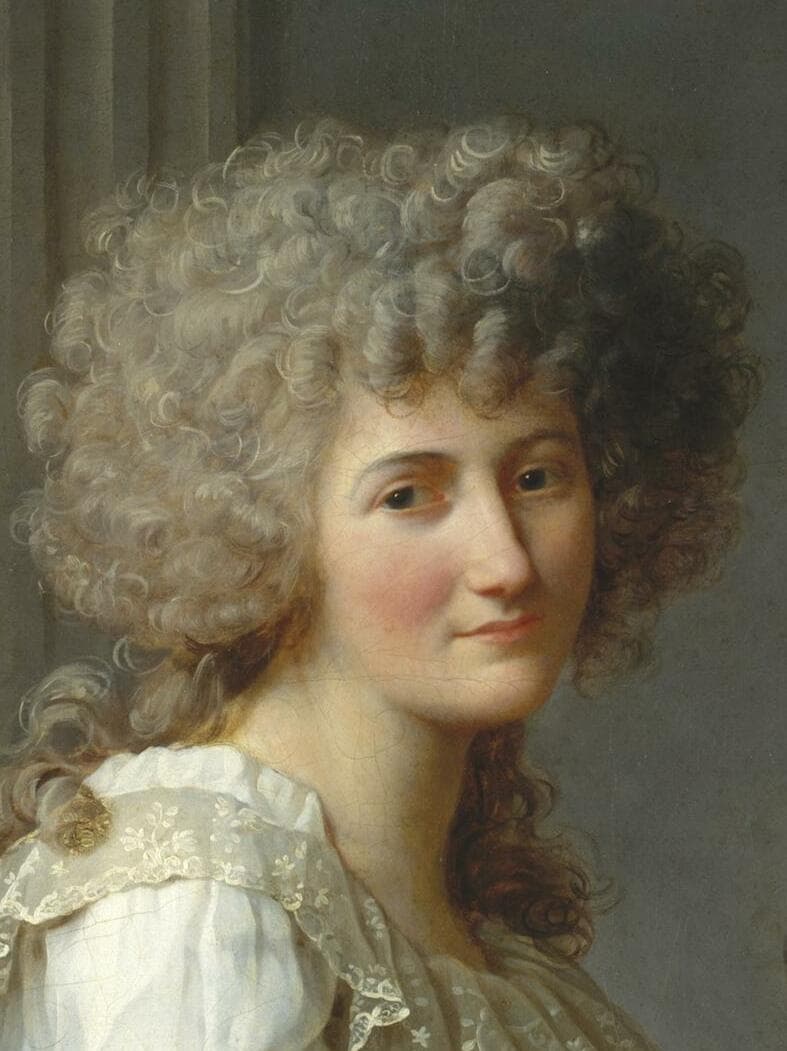
French · Science
Marie-Anne Paulze Lavoisier
January 20, 1758 – February 10, 1836
Early Life and Background
Marie-Anne Pierrette Paulze was born on 20 January 1758 in Montbrison, Loire, France, into a family closely associated with the financial administration of the French monarchy.[8][15] Her father, Jacques Paulze de Chastenolles, was a fermier général (tax farmer) and, later, director of the tobacco administration, while her mother, Claudine Thoynet de Rougeolles, died when Marie-Anne was around three years old.[8][6] Through her mother she was related to the influential abbé Joseph-Marie Terray, the Controller-General of Finances, who played a major role in royal fiscal policy.[15]
Following her mother’s death, Marie-Anne was placed in a convent, where she received a classical education that was exceptionally rigorous for a girl of her time.[6] She studied languages, including Latin, and was introduced to subjects such as mathematics and natural philosophy. The convent education also offered systematic training in drawing and the arts, skills that would later become central to her scientific work as an illustrator.[6][10] Growing up in a milieu that combined high social status with exposure to intellectual currents of the Enlightenment, she developed interests in science and art that set her apart from many contemporaries.
Her father’s position as fermier général placed the family at the intersection of finance, politics and emerging scientific institutions. Tax farmers were powerful but widely resented, and their wealth funded salons, patronage, and scientific endeavor. This environment introduced Marie-Anne to leading figures in Parisian society and helped to shape her later role as hostess of a scientific salon in the Arsenal, Lavoisier’s residence and workplace.[4][20]
Marriage to Lavoisier and Entry into Science
In 1771, when Marie-Anne was still in her early teens, an older colleague of her father sought her hand in marriage, a common practice among the aristocracy and financial elites.[6][15] To avert this unwanted union, Jacques Paulze arranged instead for his daughter to marry the promising young chemist and fellow fermier général Antoine-Laurent Lavoisier.[13][15] The marriage took place on 16 December 1771 in Paris, when she was nearly fourteen and he was twenty-eight.[13][14]
This marriage profoundly altered her trajectory. Lavoisier, already a member of the Académie des sciences, was assembling a well-equipped laboratory at the Arsenal, the headquarters of the gunpowder administration, where he conducted quantitative experiments on gases, combustion, and calcination.[4] Marie-Anne soon immersed herself in his scientific world. By 1772 she was actively participating in laboratory work, learning the principles of chemistry, assisting in experiments, and beginning to keep detailed records of procedures and results.[4][9]
As their collaboration deepened, she assumed a range of roles: laboratory assistant, recorder of experiments, translator of foreign scientific literature, and illustrator of apparatus and experimental setups. In the mid-1770s she accompanied Lavoisier in experiments on the calcination of metals in closed vessels, work that helped undermine the prevailing phlogiston theory and paved the way for the oxygen-based theory of combustion.[4][9] Although formal authorship and recognition were accorded to Lavoisier, Marie-Anne’s presence in the laboratory and her record-keeping were indispensable to the emerging Chemical Revolution.
Scientific Collaboration and Major Contributions
Marie-Anne’s contributions to science were multidimensional. Her most visible work came through translations and illustrations, but she also played an important part in the design and interpretation of experiments that redefined chemical theory.
Translation and Language Work. Recognizing the importance of international communication in science, Marie-Anne devoted herself to learning English, as well as refining her knowledge of Latin and Italian.[6][10] During the 1780s she systematically translated key works in pneumatic chemistry—including papers by Joseph Priestley and Henry Cavendish—into French, thereby providing Lavoisier and his colleagues with access to cutting-edge British research.[11][18] These translations helped Lavoisier to understand experimental results on "dephlogisticated air" (oxygen) and other gases, facilitating his reinterpretation of combustion and respiration.
Her most famous translation project was Richard Kirwan’s treatise on phlogiston. In Essai sur le phlogistique, published in French in 1788, she not only translated Kirwan’s arguments but also appended an extensive, anonymous refutation informed by the work of Lavoisier and his circle.[1][16] This critique challenged the phlogiston hypothesis by emphasizing quantitative measurements and conservation of mass, aligning with the emerging oxygen theory. Although her name did not appear on the publication, modern scholarship credits her with playing a pivotal role in the dissemination of anti-phlogiston ideas in France.[4][6]
Artistic Training and Scientific Illustration. In the mid-1780s, Marie-Anne studied drawing with the celebrated painter Jacques-Louis David
Her most influential visual work appears in Antoine-Laurent Lavoisier’s 1789 treatise, Traité élémentaire de chimie, often regarded as the first modern chemistry textbook.[4][9] The thirteen plates in the volume—depicting balances, gasometers, furnaces, and other apparatus—were drawn and prepared by Marie-Anne.[6][10] These images are distinguished by their clarity and precision, enabling readers to understand and replicate the experimental setups that underpinned Lavoisier’s quantitative approach. In signing and dating the plates, she asserted her presence as an artist and collaborator, even as the text itself bore only Lavoisier’s name. The Traité illustrates how her artistic skills served the broader project of the Chemical Revolution. By visually representing instruments that quantified mass and gas volumes, she helped communicate the shift from qualitative speculation to quantitative measurement. Her illustrations became pedagogical tools for chemists across Europe and contributed to the standardization of how chemical practice was represented in print.[4][18] Laboratory Work and Record Keeping. Inside the laboratory, Marie-Anne’s responsibilities extended beyond observation and drawing. She kept careful notebooks of experiments, recording conditions, measurements, and outcomes.[4][9] In an era when experimental reproducibility depended on detailed documentation, her notes were vital to the validation of results. Historians of science have identified her handwriting in many of the laboratory records preserved from the Arsenal, attesting to her central role in shaping the written archive of Lavoisier’s work.[6][18] Her participation in experiments on combustion, respiration, and gas analysis supported Lavoisier’s formulation of the law of conservation of mass and the oxygen theory. Although the intellectual credit for these breakthroughs was assigned to Lavoisier, he himself acknowledged in correspondence the importance of his wife’s assistance and vigilance in recording their work.[4] During the 1780s, the Lavoisier laboratory was at the forefront of a transformation that historians call the Chemical Revolution
Her work contributed to the standardization of the scientific method in chemistry.[4][12] By helping to codify experimental procedures, document apparatus, and disseminate results in clear language and images, she reinforced the values of transparency, reproducibility, and quantification. The Traité élémentaire de chimie in particular set a template for modern scientific textbooks, combining theoretical exposition with detailed descriptions of experiments and instruments. Marie-Anne’s plates formed a visual counterpart to this methodological shift. Beyond the laboratory, she also played a social role in the circulation of scientific ideas. At the Arsenal, she and Lavoisier hosted gatherings where scientists, economists, and political figures discussed research and policy.[4][20] Her presence as hostess and interlocutor helped integrate chemical discussions into broader Enlightenment debates about industry, agriculture, and public health. The outbreak of the French Revolution in 1789 radically altered the fortunes of the Paulze-Lavoisier family. As tax farmers, Lavoisier and Jacques Paulze became targets of popular anger and revolutionary justice. Despite Lavoisier’s scientific eminence, his financial role made him vulnerable to accusations of exploitation. Marie-Anne attempted to defend her husband by emphasizing his scientific contributions and arguing that his expertise was essential to the nation.[14][20] Her efforts, however, proved unsuccessful. On 8 May 1794, during the Reign of Terror, both Antoine-Laurent Lavoisier and Jacques Paulze were executed by guillotine in Paris.[4][14] In a single day, she lost her husband and father, as well as her primary sources of financial security and social protection. Following the executions, Marie-Anne herself was imprisoned, and much of the couple’s property, including laboratory instruments and manuscripts, was confiscated by the revolutionary authorities.[6][15] After the political climate shifted and she was released, she embarked on a sustained effort to recover what remained of Lavoisier’s scientific papers and equipment. This process required navigating complex legal and bureaucratic obstacles, as well as confronting lingering hostility toward former tax farmers. Her determination paid off. She succeeded in reclaiming a significant portion of the laboratory archive—experimental notebooks, manuscripts, and instruments—which she then organized and preserved.[6][18] In doing so, she created the basis for the historical record of Lavoisier’s work and ensured that the material evidence of the Chemical Revolution would survive the upheavals of the Revolution. In the early nineteenth century, Marie-Anne turned from preservation to publication. Drawing on the recovered manuscripts, she edited and compiled the multi-volume Mémoires de chimie, which appeared in 1805
Her editorial work involved selecting which documents to include, arranging them in a coherent sequence, and in some cases clarifying or standardizing the presentation.[6][18] As someone who had participated in the original laboratory experiments and kept many of the records, she was uniquely positioned to interpret the manuscripts. The Mémoires thus represent not only Lavoisier’s voice but also her understanding of what aspects of his research were most important to preserve and share. The publication of the Mémoires de chimie strengthened Lavoisier’s posthumous reputation and provided later chemists with access to his methods and data.[4][9] At a time when competing chemical systems were being debated, these volumes helped consolidate the position of the Lavoisierian framework. They also exemplify the crucial but often overlooked role that widows and family members played in shaping the scientific canon by deciding what to publish, how to organize it, and how to present it to the public. In 1804, Marie-Anne entered a second marriage with the American-born physicist and statesman Benjamin Thompson, better known as Count Rumford.[4][15] Rumford, celebrated for his work on heat and social reform, had been ennobled in Bavaria and later resided in Paris and London. The union brought together two figures deeply involved in science and public affairs. The marriage, however, quickly proved unhappy. Differences in temperament and expectations led to conflict, and the couple eventually separated without having children.[4][15] Despite the failure of the relationship, the marriage conferred on Marie-Anne the title Countess of Rumford, which she retained for the rest of her life and which appears on some later references to her. After the separation, she continued to live in Paris, where she maintained a household and remained active in intellectual and social circles. She hosted gatherings in which scientists, artists, and politicians mingled, and she continued to defend and promote the legacy of Lavoisier, often more than that of Rumford.[6][20] Her personal life thus intertwined with her enduring role as a custodian of scientific memory. As a woman in late eighteenth- and early nineteenth-century France, Marie-Anne Paulze Lavoisier did not receive formal scientific awards or academic positions. Institutions such as the Académie des sciences did not admit women, and authorship conventions often erased female collaborators from the public record.[4][6] Her contributions were largely subsumed under her husband’s name, and contemporaries referred to her primarily as "Madame Lavoisier" or later "Comtesse de Rumford." Nevertheless, she was widely respected in the circles that knew her. Visitors to the Arsenal laboratory noted her presence and skill, and some foreign chemists, including Priestley, interacted with her as a knowledgeable interlocutor during their stays in Paris.[18][20] Her role as hostess of scientific gatherings brought her into contact with figures such as Pierre-Simon Laplace and Jean-Baptiste Fourier, who recognized her familiarity with ongoing research. Formal recognition of her contributions came much later. Twentieth-century and twenty-first-century historians of chemistry have increasingly highlighted her role as translator, illustrator, and editor, describing her as a "pioneer" or even "mother of modern chemistry" in popular accounts.[7][11] Exhibitions and scholarly articles now feature her alongside Lavoisier as a central figure in the Chemical Revolution.[18][8] Marie-Anne Paulze Lavoisier’s legacy rests on her combined roles as collaborator, communicator, and guardian of scientific knowledge. In the laboratory, she helped conduct and record experiments that transformed chemistry from a qualitative art into a quantitative science. Through translation, she opened channels between British and French chemists, enabling the cross-fertilization of ideas that was essential to the Chemical Revolution. Her illustrations in the Traité élémentaire de chimie visually codified the new apparatus and methods, becoming part of the iconography of modern chemistry.[4][6][18] Her most enduring impact may lie in her work after Lavoisier’s death. By recovering and organizing his manuscripts and publishing the Mémoires de chimie, she ensured that his contributions were preserved and accessible to future generations.[11][18] Without her efforts, many of the documents that underpin our understanding of Lavoisier’s work might have been lost in the turmoil of the Revolution. In this sense, she functioned as an archivist and editor whose decisions shaped the historical record of science. For historians of women in science, Marie-Anne Paulze Lavoisier exemplifies the ways in which women have participated in research outside formal institutional structures. She operated through marriage, salon culture, translation, and illustration rather than through academic positions, yet her work was indispensable to one of the most important scientific transformations of the eighteenth century. Her story highlights issues of authorship, recognition, and collaboration, showing how scientific achievements often depend on the labor of individuals whose names do not appear on title pages.[4][7] Modern scholarship and museum exhibits, such as those of the Linda Hall Library, French heritage institutions, and university collections, increasingly present her as a central figure in the history of chemistry.[14][18][20] She has become a symbol of women’s intellectual contributions in the Enlightenment and a case study in the re-evaluation of historical narratives that once focused exclusively on male scientists. In her later years, Marie-Anne continued to live in Paris, maintaining connections with scientific and artistic communities. She managed her household, corresponded with friends and acquaintances, and remained attentive to developments in chemistry and physics.[6][20] Although no evidence suggests that she undertook major new research projects after the publication of the Mémoires de chimie, she continued to be recognized in her milieu as someone deeply knowledgeable about Lavoisier’s work. On 10 February 1836, she died in Paris at the age of seventy-eight.[4][7] She was buried in Père Lachaise Cemetery, 13th division, under a prominent column that marks the resting place of "Marie-Anne Pierrette Paulze Lavoisier, Comtesse de Rumford."[15][16] Her burial in one of Paris’s most renowned cemeteries reflects both her social status and the continuing respect accorded to her. After her death, interest in her life waned for a time, overshadowed by the growing myth of Lavoisier as the "father of modern chemistry." In the late nineteenth and early twentieth centuries, biographies and histories of chemistry often mentioned her only briefly.[8] However, later historians began to re-examine archival materials, including her translations, illustrations, and editorial work, restoring her to a more prominent position in accounts of the Chemical Revolution. Today, Marie-Anne Paulze Lavoisier is remembered not simply as Lavoisier’s wife but as an accomplished scientist, illustrator, translator, and editor whose work was fundamental to the development and communication of modern chemistry. Her life illustrates the complex interplay of gender, social status, and intellectual labor in the history of science and stands as a testament to the enduring impact of women’s often uncredited contributions.[4][6][18]Role in the Chemical Revolution and Scientific Method
French Revolution, Widowhood, and Preservation of Legacy
Editing and Publication of Mémoires de chimie
Personal Life: Countess of Rumford
Awards, Honors, and Contemporary Recognition
Legacy and Historical Impact
Later Life and Death
Dated achievements
7 indexed.
- Jan201758Science
Birth in Montbrison
Birth of Marie-Anne Pierrette Paulze in Montbrison, France.
View details Wikipedia: Marie-Anne Pierrette Paulze - Dec161771Science
Marriage to Antoine-Laurent Lavoisier
Marriage to Antoine-Laurent Lavoisier begins her scientific collaboration.