← All women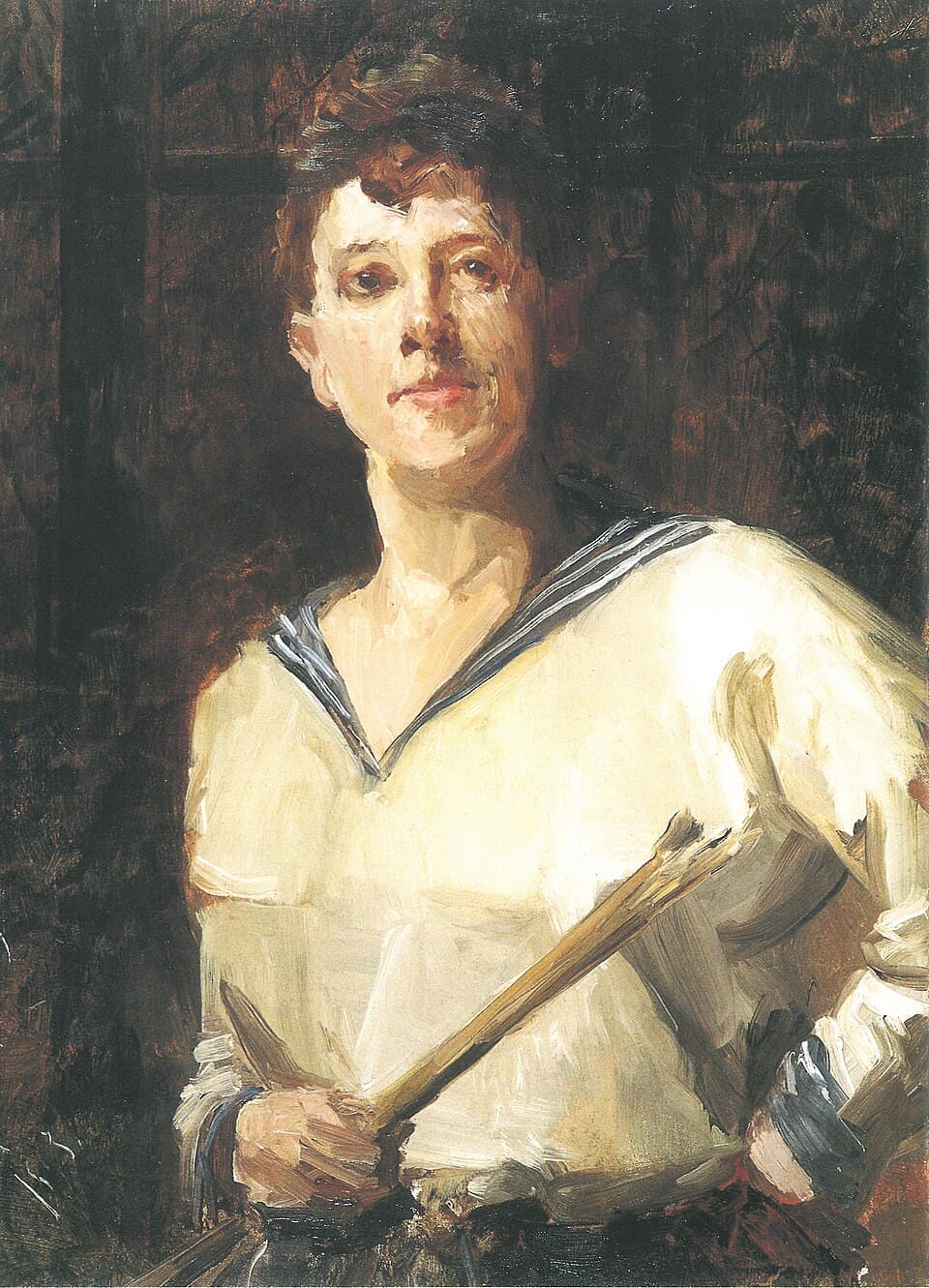
Russian, Swiss · Arts
Marianne Werefkin
September 10, 1860 – February 6, 1938
Early life and family background
Marianne von Werefkin was born on 10 September 1860 in Tula, in the Russian Empire, into an aristocratic family of military and cultural distinction. Contemporary and modern references describe her as the daughter of a high-ranking officer, and several sources emphasize the privileged circumstances of her upbringing as well as the strong intellectual environment in which she was raised. Her family’s status gave her access to education and artistic instruction at a level not typical for women of her generation.
She grew up in a world shaped by imperial Russia’s social hierarchy and by the mobility required by her father’s military career. Later biographical accounts note that she studied in several cities across the Russian Empire. This itinerant education exposed her to a range of cultural and artistic influences early in life and helped prepare her for the international career that would follow. Although born as Marianna Vladimirovna Veryovkina, she became widely known in German and Swiss circles as Marianne von Werefkin.
Sources describe her as a talented child who received private lessons in drawing. She studied with the celebrated realist painter Ilya Repin in St. Petersburg beginning in 1880, a crucial step in her artistic formation. Repin’s workshop gave her formal training and connected her to the most serious painting circles of the era, even though professional opportunities for women remained limited. Her early education combined aristocratic resources with rigorous artistic discipline, setting the stage for her later role as a pioneering modernist.
Training and the beginnings of an artistic career
Werefkin’s early career unfolded in a period when women artists were often denied the same institutional access as men. She nevertheless built a substantial artistic foundation through private study and personal ambition. Her lessons with Repin were especially important because they placed her within a serious realist tradition before she moved toward more experimental forms. Her early development was shaped by a tension common to many women artists of the nineteenth century: formal competence on the one hand, and restricted professional recognition on the other.
A major turning point came in 1888, when she injured her right arm in a hunting accident, interrupting her painting for a period. Biographical sources identify this injury as a significant break in her artistic education. Rather than ending her engagement with art, the interruption forced a reorientation and deepened her concentration on artistic theory, support for other artists, and later experimentation. The episode is often cited because it reveals how physical accident and social constraint could reshape a woman artist’s career path in unexpected ways.
In the following years, Werefkin became increasingly involved in artistic circles that would prove decisive for European modernism. She moved to Munich in the 1890s with the painter Alexej von Jawlensky, with whom she formed a long personal and artistic partnership. Munich at the time was an important center of experimentation, and her salon and intellectual leadership helped gather artists who were searching for new directions beyond academic painting. Although she often supported Jawlensky’s career and temporarily set aside her own work, she remained a powerful creative presence.
Munich, modernism, and the turn toward Expressionism
Werefkin’s reputation rests largely on the intense Munich years before the First World War, when she emerged as one of the most original figures in the city’s avant-garde. She is widely recognized as a key participant in the shift from late Symbolism to Expressionism. Her art became increasingly vivid, stylized, and emotionally charged, reflecting a distinctive modern sensibility that rejected naturalistic restraint in favor of psychological force and imaginative color.
She was among the founders of the Neue Künstlervereinigung München (New Artists’ Association of Munich), an important precursor to Der Blaue Reiter. Her participation in this circle is historically important because it placed a woman artist at the center of the institutional and intellectual formation of German modernism. Even when her own paintings were overshadowed by those of male peers, she was helping create the networks through which avant-garde art circulated and gained legitimacy.
Werefkin’s role in these circles has attracted increasing scholarly attention because she was not merely a painter but also an organizer, critic, and patroness. Her apartment and salon functioned as meeting places for artists, writers, and thinkers. This made her an important facilitator of modernist exchange at a time when women were often excluded from the formal structures of artistic authority. In that sense, her contribution was both aesthetic and infrastructural: she helped build the environment in which Expressionism could emerge.
Artistic style and major work
Werefkin developed a style that fused Symbolist intensity with Expressionist color and composition. Her works often feature landscapes, urban scenes, and visionary figures rendered with dramatic hues and flattened or heightened spatial relationships. Rather than aiming at optical accuracy, she sought to convey inner states, mood, and spiritual tension. This approach placed her among the most distinctive modernists of her generation.
Biographical sources and museum studies commonly describe her as one of the most significant artists associated with Expressionism. Her paintings from the Munich period are especially valued for their imaginative force and boldness. Later works produced after she settled in Switzerland continued to explore atmospheric and emotional landscapes, showing that her artistic vocabulary remained vital even after the upheavals of war and displacement.
Her position in art history is now understood more broadly than it was during her lifetime. For much of the twentieth century, women modernists were frequently treated as secondary to male innovators. Later research has emphasized that Werefkin was not a peripheral follower but one of the artists who helped define the movement’s intellectual direction. Her work stands as evidence that the history of modern art cannot be told accurately without women whose contributions operated through both art-making and cultural leadership.
Personal life and relationship with Alexej von Jawlensky
Werefkin’s personal life was closely intertwined with her art. Her long relationship with Alexej von Jawlensky has been central to many accounts of her biography. The two lived and worked together in Munich, and their partnership had major consequences for both artists’ careers. Multiple sources note that she was often the more advanced painter early on, but she at times subordinated her own practice to support his development. This dynamic has become a focal point in later feminist art history because it reveals the unequal structures within modernist culture.
The relationship was both creative and complicated. Werefkin provided intellectual energy, financial stability, and a stimulating artistic environment, while Jawlensky became a major figure in his own right. The pair eventually separated in 1921, after the disruptions of the First World War had already altered their lives. Their separation did not erase her influence on the artistic world that had grown around them, but it did mark the end of a long shared chapter.
Werefkin did not have a conventional public family life centered on marriage and children; instead, her biography is shaped by artistic partnership, transnational movement, and the social constraints experienced by women artists of her class. Her life choices reflected both privilege and limitation: she was able to move within elite circles, but the expectations placed on women meant that her creative identity was often framed in relation to others. Modern scholarship has worked to restore her independent significance.
Switzerland, exile, and later years
At the outbreak of the First World War, Werefkin and Jawlensky left Germany and moved to Switzerland. This transition proved permanent for Werefkin, who settled in Ascona in 1918 and remained there for the rest of her life. Ascona became an important refuge for artists and intellectuals, and Werefkin continued to paint there in a more introspective and imaginative mode. The Swiss setting also allowed her to maintain contact with broader European cultural currents while living outside the major urban centers of prewar modernism.
Her later years were marked by artistic persistence and a somewhat quieter public profile than in Munich, but she remained a respected figure in avant-garde circles. Accounts from the period emphasize her distinctive personality, energy, and commitment to art. In Switzerland, she developed landscapes and visionary compositions that extended her earlier Expressionist concerns into a more personal register. Her late work demonstrates continuity with her earlier experiments while also reflecting the experience of displacement and aging.
Werefkin died on 6 February 1938 in Ascona. She was buried in the Russian cemetery there, underscoring the cultural continuity she retained with her origins even after decades spent in Central Europe. Her death came at a moment when the political and artistic landscape of Europe was again under immense strain, just before the Second World War would transform the continent.
Awards, recognition, and posthumous reputation
During her lifetime, Werefkin did not receive the level of public recognition that later histories of modern art would assign to her. This lack of visibility reflects the barriers women faced in the professional art world, where reputation often depended on institutional access, exhibition networks, and critical attention disproportionately granted to men. She did, however, enjoy recognition within artist circles and later became the subject of growing scholarly and curatorial interest.
After her death, her standing improved steadily. Museums, archives, and researchers have increasingly emphasized her role in the formation of German Expressionism and the broader European avant-garde. The establishment of memorial institutions in Ascona and the continued study of her work have helped restore her to the history of modernism. Her legacy is now frequently discussed in relation to women’s contribution to modern art, artistic networks, and the intellectual foundations of Expressionism.
Her posthumous recognition also reflects broader changes in art history. As scholars have reexamined the roles of women in modernism, Werefkin has emerged as a central figure rather than a footnote. She is now widely described as a pioneering modernist, an influential theorist of painting, and one of the artists who helped shape the visual language of the twentieth century.
Legacy
Marianne von Werefkin’s legacy lies in three intertwined achievements. First, she created a body of Expressionist and Symbolist-influenced work that remains visually distinctive and historically important. Second, she helped build the artistic networks that enabled modern art to emerge in Munich and beyond. Third, she demonstrated that women could occupy central, not merely auxiliary, positions in the development of avant-garde culture.
Her life also illustrates the complexity of women’s artistic careers in the nineteenth and early twentieth centuries. She benefitted from elite birth and education, yet still confronted the gendered limits of recognition. She supported others, took part in foundational art groups, and produced an original body of work, but for much of history she was overshadowed by male contemporaries. Her recovery by modern scholarship has therefore had significance beyond biography: it has altered the map of Expressionism itself.
Today, Marianne Werefkin is remembered as a Russian-born, German-language modernist who became one of the most intellectually important women artists in European art history. Her career bridges aristocratic Russia, cosmopolitan Munich, and Swiss exile, and her paintings continue to be studied for their emotional intensity, formal daring, and historical importance.
Dated achievements
2 indexed.
- Sep101860Arts
Birth of Marianne Werefkin in Tula, Russia
Marianne Werefkin was born into an aristocratic Russian military family in Tula, Russia, on 10 September 1860 (Gregorian).
View details Marianne von Werefkin - Wikipedia - Feb061938Arts
Death of Marianne Werefkin in Ascona, Switzerland
Marianne Werefkin died on 6 February 1938 in Ascona, Switzerland, the town that had become her adopted artistic home for over two decades.