← All women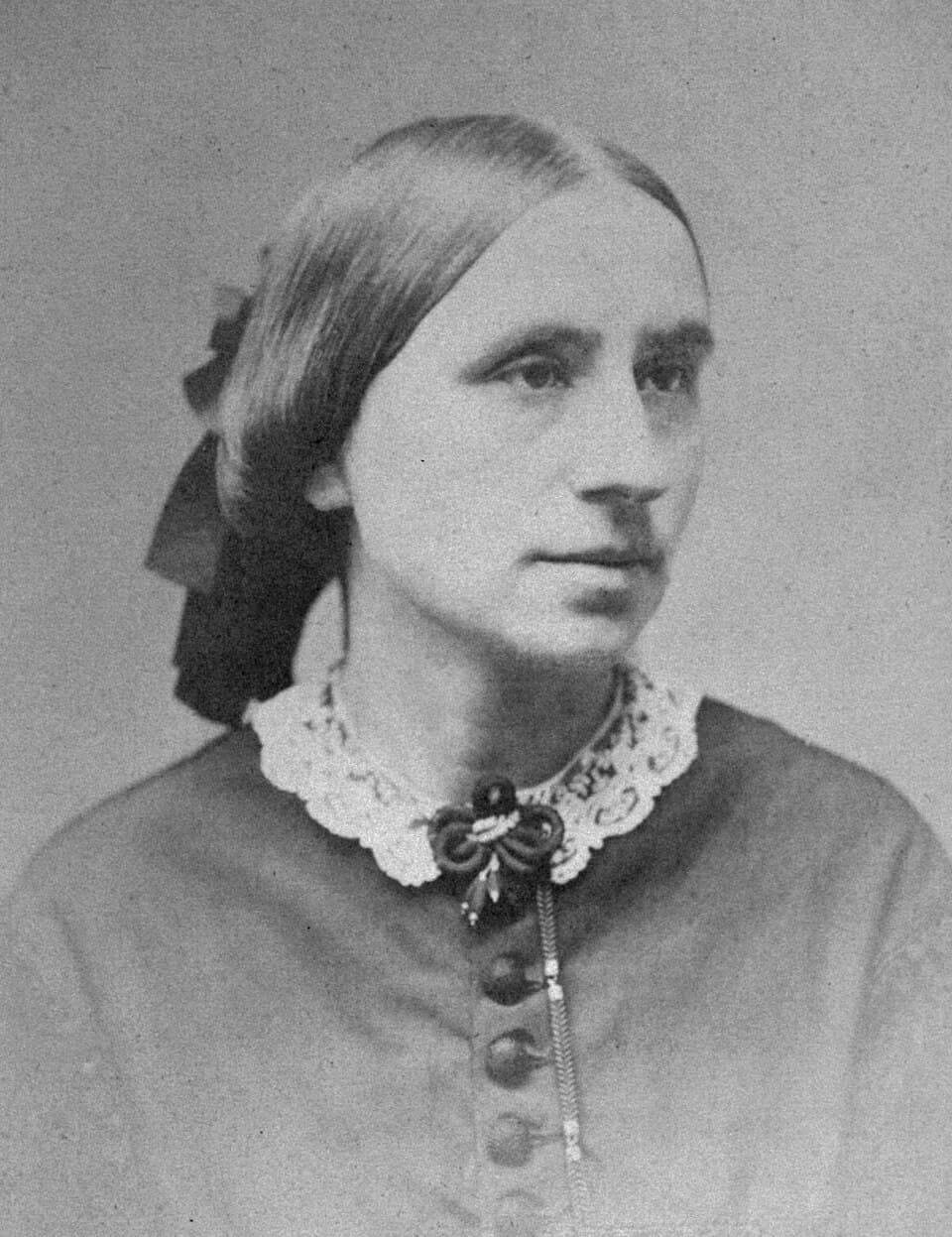
German, American, Polish · Medicine · Activism
Maria Zakrzewska
September 6, 1829 – May 12, 1902
Early life and background
Maria Elizabeth Zakrzewska (also known as Marie Elizabeth Zakrzewska) was born in Berlin on 6 September 1829, into a middle-class family whose circumstances and values helped shape her determination to enter medicine. Biographical accounts consistently describe her as a German-born woman of Polish descent who later became one of the most important physicians in nineteenth-century America. Her father is identified in institutional biographies as Ludwig Martin Zakrzewski, and her mother, Caroline Fredericke Wilhelmine Urban, was associated with midwifery work, an influence often cited as part of Zakrzewska’s early exposure to health care.
From an early age, Zakrzewska showed a strong interest in medicine, a field that was still almost entirely closed to women in Central Europe. She first trained at the Charité Hospital in Berlin as a midwife. That training was significant because midwifery was one of the few medical roles in which women could gain formal instruction in the nineteenth century. Even so, her ambitions extended beyond midwifery. She sought the education and authority of a physician, a goal that required leaving the restrictive professional environment of Prussia and eventually emigrating to the United States.
Zakrzewska’s early life was therefore marked by both opportunity and constraint. She received enough training to understand medical practice, but not enough access to enter medicine on equal terms with men. That tension shaped her later life: she would repeatedly respond to exclusion not by retreating from the profession, but by building institutions that created new routes into it for other women.
Medical education and move to the United States
In 1853, Zakrzewska emigrated to the United States, where the possibilities for women physicians, though still limited, were more open than in much of Europe. Later accounts note that Elizabeth Blackwell helped her master English and secure admission to the Medical Department of Western Reserve University in Cleveland, Ohio. She earned her medical degree there in 1856. This achievement was itself extraordinary. Women were still confronting skepticism from medical faculty, hospital systems, and the public, and every stage of training required persistence in the face of institutional resistance.
Her medical education in Cleveland was foundational for the rest of her career. It gave her not only a degree but also the credibility needed to practice and to found institutions. After graduation she moved to New York City, where she opened a practice and began working with Elizabeth Blackwell’s circle. The move placed her in the center of reform-minded networks that linked women physicians, abolitionists, and supporters of women’s rights. These circles mattered because they offered practical help and moral support in a profession where women often lacked both.
Founding the New York Infirmary
On 12 May 1857, Zakrzewska joined Elizabeth Blackwell and Emily Blackwell in founding the New York Infirmary for Women and Children. The institution is widely described as the first hospital in the United States staffed and run entirely by women. This was a landmark event in American medical history because it demonstrated that women could direct a hospital, treat patients, and manage clinical work without male supervision.
The infirmary was also a practical answer to an urgent problem. Women physicians were often excluded from hospitals, and without clinical posts they had little chance to build experience or professional standing. The New York Infirmary created a space in which women doctors could provide care and women patients could receive treatment in an environment staffed by women. Zakrzewska’s role in this founding moment helped establish her as a pioneer not only in individual practice but also in the architecture of women’s medicine.
Boston and the New England Hospital
Zakrzewska’s most enduring institutional achievement came on 22 June 1862, when she founded the New England Hospital for Women and Children in Boston. Contemporary and retrospective accounts describe it as the first hospital in Boston and the second in the United States to be run by women physicians and surgeons. The hospital later became a major center for women’s clinical training, care for women and children, and professional advancement in medicine.
The Boston hospital was especially important because it combined service with education. Women physicians needed not only a place to practice but also a place to learn from one another, and the hospital fulfilled both needs. Zakrzewska served in multiple capacities there over the course of decades, including resident physician, attending physician, and advisory physician. She also continued private practice while overseeing the institution’s growth. Her longevity in leadership helped stabilize the hospital and made it a durable example of women-run medical care.
In the years that followed, the hospital’s educational mission expanded. In 1872, it opened the first professional nursing school in the United States. By 1873, Linda Richards is identified in the source set as the first professionally trained female nurse associated with the institution. These developments show how Zakrzewska’s hospital became a broader training ground for women in health care, extending beyond physicians to nurses and helping define nursing as a profession.
In 1878, the New England Hospital Medical Society was formed and described as the first women’s medical society. This further widened the hospital’s influence, giving women physicians a formal community for exchange and professional development. In 1879, the hospital is also described as training Mary Eliza Mahoney, the first African American trained nurse associated with the institution. That association is historically important because it shows that the hospital opened opportunities for Black women at a time when racial segregation and discrimination severely limited access to medical education and practice.
Reform, women’s rights, and public significance
Zakrzewska’s life must be understood in the broader context of nineteenth-century reform movements. The sources characterize her as a feminist, an abolitionist, and a physician who moved in reform-minded circles. She is associated with figures such as William Lloyd Garrison and Wendell Phillips, indicating that her medical work was intertwined with the era’s larger campaigns for emancipation, civil rights, and women’s equality. Her hospitals were not isolated charitable ventures; they were concrete responses to the social exclusions of her day.
Her achievements were significant because they changed institutions rather than merely challenging ideas. In the nineteenth century, women were commonly told that they lacked the education, temperament, or authority for medicine. Zakrzewska answered that claim by building hospitals, training systems, and professional societies that functioned successfully under women’s leadership. Her career showed that the barriers were social and institutional, not inherent.
Personal life
Zakrzewska’s surviving biographies focus more on her public work than on a conventional domestic life. The historical record provided here does not document a marriage or children, and her identity is primarily preserved through her medical and reform activities. That relative absence is itself meaningful: unlike many nineteenth-century women whose public identities were constrained by marriage or family roles, Zakrzewska’s historical prominence rests on professional work, institutional creation, and civic reform.
She is consistently remembered under versions of her professional name, including Marie Elizabeth Zakrzewska and Maria Elizabeth Zakrzewska. In later life she was often called Dr. Zak, a nickname that suggests both affection and respect within the circles she served.
Later life and death
Zakrzewska remained connected to the New England Hospital for decades. Her leadership there extended well beyond its founding years, and she helped turn it into a durable institution rather than a temporary experiment. She died on 12 May 1902 in Jamaica Plain, Massachusetts, which is now part of Boston. By the time of her death, her career had already helped establish a model for women’s clinical leadership and women’s professional education in medicine.
Her death closed a life spent confronting exclusion with institution-building. She had entered medicine when women were largely denied access to it, and she responded by creating hospitals that enabled women to practice medicine, train nurses, and serve patients. Her work was not only pioneering in the narrow sense of being first; it was structurally transformative because it opened paths for others to follow.
Legacy
Zakrzewska’s legacy is especially strong in the history of women’s hospitals, nursing education, and the professionalization of women in medicine. The New York Infirmary and the New England Hospital both stood as proof that women could successfully lead complex medical institutions. Those hospitals also provided critical early opportunities for women physicians and nurses who might otherwise have been barred from formal clinical experience.
She is remembered today as one of the key figures who helped change the face of medicine. Her career connected women’s rights, abolitionist reform, and health care innovation. She demonstrated that women could not only participate in medicine but also reshape its institutions. That is why her name continues to appear in histories of women physicians, nursing education, and nineteenth-century reform. Her life remains a reminder that lasting change often comes from building new structures where exclusion once seemed fixed.
Dated achievements
8 indexed.
- Sep061829Medicine
Birth of Maria Elizabeth Zakrzewska
Born in Berlin on 6 September 1829, Maria Elizabeth Zakrzewska became a pioneering physician and women’s health leader who helped redefine women’s access to medical training and practice.
View details Britannica biography of Marie Elizabeth Zakrzewska - May121857