← All women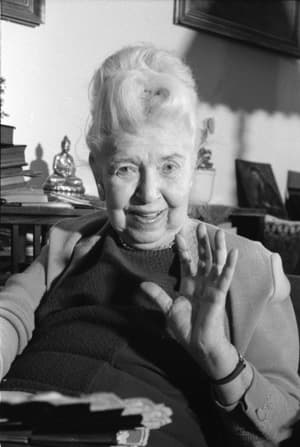
Hungarian · Literature · Arts
Mária Szepes
December 14, 1908 – September 3, 2007
Early life and family background
Mária Szepes was born Magdolna Scherbach on 14 December 1908 in Budapest, then in the Austro-Hungarian Empire. Her biographical records note that she came from a theatrical family, an environment that exposed her early to acting, performance, and the practical world of stage and film. In later accounts, she is also associated with the family name Papír, reflecting the naming variations that appear throughout her life and career.
Growing up in a family connected to the performing arts gave Szepes an unusual cultural education. The world of Budapest theater and early cinema shaped her imagination and made artistic work seem like a viable profession. In an era when women often faced narrow expectations, a household in which performance and storytelling were part of daily life offered an important advantage. Her later work as an actress, journalist, screenwriter, poet, and author can be traced to this formative setting.
Sources describe her as a Hungarian writer who would later work under the names Mária Papír and Mária Orsi. These pseudonyms were not unusual for women in the early twentieth century, when female writers often navigated publishing markets and professional identities through multiple names. Szepes's later literary career was therefore rooted both in family influence and in the broader cultural constraints of her era.
Education and early influences
Szepes studied in Berlin, where biographical references say she pursued literature, art history, biology, psychology, and philosophy in different accounts of her training. This combination of humanistic and scientific interests helps explain the unusual breadth of her later writing, which moved between fiction, children’s literature, and hermetic or spiritual themes. Berlin in the interwar period was a major cultural center, and study there would have exposed her to modernist ideas, international artistic trends, and intellectual currents that crossed conventional disciplinary boundaries.
Her education also placed her in a period of European instability and experimentation. Women entering higher education in the early twentieth century still had to overcome social skepticism, limited access, and the assumption that serious intellectual work belonged primarily to men. Szepes’s later independence as a writer suggests that she used her education not merely for credentials but as a foundation for a long, self-directed literary life.
Career beginnings in film and journalism
Szepes began her career in the world of film and journalism. Biographical sources identify her as an actress and screenwriter, and IMDb notes that she appeared in early films such as Szulamit (1916), Hivatalnok urak (1919), and Leánybecsület (1923). These credits place her within the formative era of Hungarian cinema, when the film industry was still developing its language, institutions, and star system.
Her early screen and acting work is significant because it reflects the opportunities available to women in the creative industries of the time, while also showing how those industries could serve as an entry point to broader authorship. Later biographical summaries describe her as a journalist and screenwriter as well as a writer. That range matters: Szepes was not confined to a single literary niche, but instead built a flexible career across print and performance media. For women of her generation, such adaptability was often essential to maintaining professional visibility.
Independent authorship and hermetic philosophy
From 1941 onward, biographical references describe Szepes as working as an independent writer, particularly in the field of hermetic philosophy. This shift marks an important turning point in her career. Rather than remaining solely within film or journalism, she moved into a more intellectually ambitious and spiritually oriented mode of writing. Her work later attracted readers interested in symbolism, immortality, alchemy, and esoteric thought.
This phase of her life must be understood in the context of mid-twentieth-century Hungary, where war, occupation, and subsequent political change shaped the possibilities of publication. For a woman writer to establish an independent voice in such conditions required persistence and a willingness to write outside dominant literary fashions. Szepes did exactly that. Her reputation eventually became tied not only to genre fiction but also to a broader spiritual-literary legacy.
The Red Lion and postwar reception
Szepes’s best-known work is A Vörös Oroszlán (The Red Lion), first published in 1946. The book was written during the difficult years of the Second World War and quickly became her most famous title. According to biographical summaries, it was banned by the communist authorities after publication in Budapest, a fate that made the work part of the larger history of censorship in postwar Hungary.
The novel’s later trajectory was extraordinary. It re-emerged in Germany in 1984, where it was reportedly selected as “Book of the Year,” and was republished in Hungary in 1985 before spreading to other European countries and the United States. This delayed success is historically important because it shows how a censored book can survive political suppression and gain a second life in a different cultural climate. Szepes became a symbol of literary endurance: a writer whose most famous work was nearly silenced but eventually reached an international audience.
The Red Lion also helped define her distinctive place in Hungarian letters. It connected esoteric philosophy with narrative fiction, attracting readers interested in spiritual transformation as well as literary experimentation. In a century marked by ideological pressure and shifting literary canons, that combination made Szepes unusually difficult to categorize and therefore durable.
Children’s literature and popular writing
Alongside her philosophical and esoteric writing, Szepes became known for children’s literature, especially the Pöttyös Panni series. Hungarian sources identify these books as among her best-known works. Their popularity demonstrates that her literary identity was not limited to obscure or specialized themes. She could also write for younger readers and for a broad family audience.
This dual reputation matters historically. Many women writers were pushed either toward “serious” literature or toward children’s writing, but Szepes managed to maintain a profile that connected both worlds. Her ability to move between imaginative children’s fiction and metaphysical prose helped her reach multiple generations of readers. It also strengthened her position in Hungarian literary culture as a writer of unusual range.
Personal life
Biographical sources state that Szepes married Béla Szepes. The marriage is consistently noted in multilingual reference entries and biographical databases. Beyond this, the surviving public biographical record is relatively sparse on intimate family detail, and it is best to avoid speculation where sources are limited.
What can be said with confidence is that her personal and professional identities were closely intertwined. She worked under several names, including Mária Papír and Mária Orsi, and her career moved across acting, screenwriting, journalism, and independent literary production. In the case of women writers of her generation, such changes of name and role were often linked to publishing circumstances, marriage, and the practical demands of artistic survival in a changing political environment.
Awards, recognition, and later reputation
Specific award records are not well documented in the sources supplied here, but Szepes clearly received lasting recognition through continued publication, translation, and retrospective attention. Her work is catalogued in international literary databases and referenced across multiple national-language Wikipedias, a sign of enduring scholarly and popular interest. The continued availability of her books through publishers and author databases indicates that she remained relevant well beyond her original period of fame.
Her later reputation was shaped in part by the rediscovery of The Red Lion and by the growth of interest in esotericism and spiritual literature. By the late twentieth and early twenty-first centuries, Szepes was often presented as a significant figure in Hungarian spiritual writing and as one of the major female voices in that tradition. Such recognition reflects not only the content of her work but also her perseverance in the face of censorship and changing literary taste.
Legacy and historical impact
Mária Szepes occupies a distinctive place in Hungarian cultural history. She was not only an author of popular and philosophical fiction, but also a woman who worked across film, journalism, poetry, and screenwriting at a time when female authors were still fighting for sustained professional authority. Her career therefore illustrates both the possibilities and the limits faced by women in twentieth-century Central Europe.
Her legacy rests on several achievements. First, she helped shape Hungarian genre writing through works that combined narrative with metaphysical inquiry. Second, she contributed to children’s literature through books that became widely loved. Third, she survived the censorship and political disruptions that erased or delayed many authors’ careers. Fourth, she demonstrated that a woman writer could build a public identity outside conventional literary categories and sustain that identity across decades.
Szepes’s life also offers a window into the cultural history of Budapest, the interwar film world, wartime publishing, and the postwar suppression of heterodox ideas. For historians of women’s writing, her career is valuable precisely because it resists simplification: she was an actress, screenwriter, journalist, poet, fantasy writer, and spiritual thinker, all in one. That breadth helped secure her lasting place in the literary memory of Hungary and beyond.
Death and posthumous memory
Szepes died in Budapest on 3 September 2007, ending a life that had spanned nearly a century of dramatic political and cultural change. Her death marked the passing of a writer whose best-known book had once been banned but later became a cult classic and whose name remained associated with both popular literature and esoteric thought.
Posthumously, she continued to be remembered through biographical essays, foundation pages, literary databases, and renewed interest in her books. That ongoing attention suggests that her importance lies not only in the works she produced, but also in the path she traveled: from theater family child to screen actress, from journalist to independent author, from censored novelist to enduring cultural figure. Her career remains a notable example of women’s creative persistence in twentieth-century Europe.
Dated achievements
2 indexed.
- Dec141908Literature
Birth of Mária Szepes in Budapest
Mária Szepes, born Magdolna Scherbak, was born in Budapest, Austria-Hungary, on 14 December 1908.
View details Szepes Mária – Hungarian Wikipedia - Sep032007Literature
Death of Mária Szepes in Budapest
Mária Szepes died in Budapest on 3 September 2007, at the age of 98, closing a literary career spanning most of the 20th century.