← All women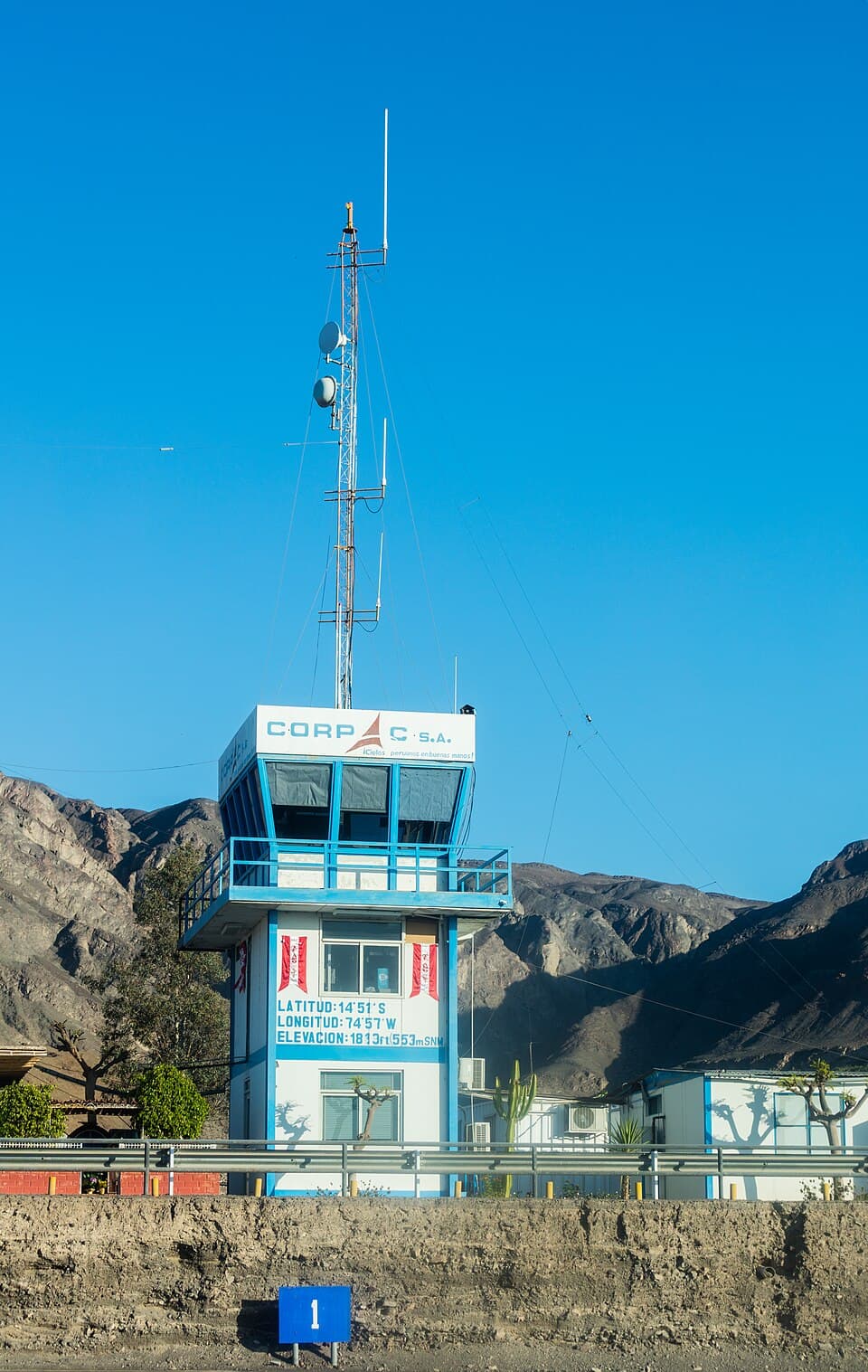
German, Peruvian · Science · Exploration
Maria Reiche
May 15, 1903 – June 8, 1998
Early life and education
Maria Reiche was born Viktoria Maria Reiche-Grosse on 15 May 1903 in Dresden, Germany. She later became one of the most important figures in the modern history of the Nazca Lines in Peru, a landscape of ancient geoglyphs that she studied, mapped, and defended for most of her life. Biographical sources describe her as German-born and later naturalized in Peru, reflecting a career that crossed national boundaries and disciplinary fields.
Reiche studied at the Technical University of Dresden and completed university studies in 1928, a period when women in higher education still faced significant cultural and professional obstacles. Her training in mathematics and related fields gave her a precise, analytical approach that would later prove central to her work in the Peruvian desert. She also developed a facility with languages and worked as a teacher and translator, skills that helped support her during the early stages of her career and during her eventual move abroad.
By the early 1930s, Reiche had left Germany and was living in Peru. Sources indicate that she arrived there by 1932, first working in an educational role. This move ultimately altered the course of her life. Peru became the country in which she would carry out her best-known work and eventually spend most of her remaining years.
First encounter with the Nazca Lines
Reiche first saw the Nazca Lines in 1941, together with American historian Paul Kosok. That encounter became the turning point of her life and career. The geoglyphs had been known locally, but they were not yet widely protected or systematically studied by international scholars. Reiche recognized that the lines were not random marks in the desert, but a massive and highly organized cultural creation deserving exact measurement and preservation.
Her mathematical background shaped her response to the site. Where others saw desert scratches or curiosities, Reiche saw a system that could be documented with careful surveying. She began by measuring lines and recording figures, a task made difficult by the scale of the terrain, the harshness of the desert environment, and the limited tools available at the time. Her work came at a moment when modern development threatened to damage the landscape, making documentation itself an act of preservation.
From that point forward, Reiche made the Nazca Lines the central project of her life. She would remain associated with them for more than four decades, becoming the scholar most closely identified with their public recognition and protection.
Work in Peru and study of the Nazca Lines
Reiche’s most important contribution was her sustained, systematic effort to document the Nazca Lines. She measured and mapped the geoglyphs, estimated their number, and helped demonstrate their scale and complexity. German-language biographical material credits her with discovering roughly 50 figures and measuring about 1,000 lines. These figures reflect not a single dramatic discovery, but a long process of field research, correction, and patient observation.
She was especially known for defending the lines from damage. In the decades before large-scale heritage protection, desert sites in Peru were vulnerable to road building, visitors, vehicles, and development. Reiche often campaigned personally to keep the area intact, at times acting as the lines’ most visible guardian. Her efforts helped persuade the Peruvian public and authorities that the geoglyphs were an invaluable part of the nation’s cultural patrimony.
Reiche also developed interpretations of the lines’ meaning. Like other scholars of her generation, she explored the possibility that the figures and straight lines had astronomical significance, and some sources describe her as proposing an archaeoastronomical or calendar-based explanation. Although scholars have continued to debate the purpose of the Nazca Lines, Reiche’s willingness to combine rigorous measurement with interpretive hypotheses helped make the site a major subject of international study.
Her fieldwork was demanding and often lonely. She worked outdoors in severe sun and wind, at a time when institutional support for women scholars was limited. The practical barriers she faced—remoteness, climate, lack of infrastructure, and the difficulty of convincing others of the site’s importance—make her achievement even more striking. By turning a remote desert into a focus of sustained scientific and cultural attention, she reshaped the world’s understanding of pre-Columbian Peru.
Public recognition and honors
Over time, Reiche’s work earned broad recognition in Peru and abroad. She became widely known as the “Lady of the Lines”, a title that reflected both her devotion and her public role as the most famous advocate for Nazca preservation. Biographical sources also note that the Nazca airport was later named in her honor, an indication of how deeply her name became linked to the region.
Her legacy was also reinforced by the increasing international status of the Nazca Lines themselves. By the end of her life, the geoglyphs had become a globally recognized archaeological landscape. That transformation cannot be separated from Reiche’s decades of work, which gave the site visibility at moments when it was still vulnerable to neglect and destruction. She helped move the Nazca Lines from local curiosity to world heritage concern.
Reiche’s honors were not based on a single award or title but on accumulated recognition: the respect of Peruvian institutions, the naming of places in her honor, and the steady growth of scholarly appreciation for the field methods and preservation ethic she brought to the site. Her career is a notable example of how persistent research, public advocacy, and cultural stewardship can together produce historical recognition.
Personal life
Reiche’s personal life was closely tied to mobility, work, and independence. Sources emphasize her professional identity more than marriage or children, and the available biographical record does not highlight a conventional family life. She worked in education and translation before devoting herself to Nazca research, and she lived for long periods in Peru, where she became culturally and professionally identified with the country.
Her life also reflected a pattern common to many women scholars of her generation: she built a career through adaptation, practical employment, and exceptional persistence rather than through a secure academic appointment. That independence allowed her to maintain her work on the Nazca Lines over many decades, even when it required sacrifice and a life shaped by the demands of field research.
Later life and death
Reiche spent the later part of her life in Peru, remaining closely connected to the site she had helped make famous. By then, the Nazca Lines had become one of the most iconic archaeological landscapes in the world, and her name had become inseparable from their preservation. She died in Lima on 8 June 1998 at the age of 95. Sources describe cancer as the cause of death.
Her death was widely understood not simply as the loss of a scholar, but as the end of an era in which one determined individual could still play a decisive role in protecting a major heritage site. By then, Reiche had already become part of the history of Nazca itself. Her life had helped transform the lines from an underappreciated desert mystery into an international symbol of pre-Columbian ingenuity.
Legacy
Maria Reiche’s legacy rests on three intertwined achievements: scholarship, preservation, and public advocacy. She provided crucial measurements and documentation of the Nazca Lines; she fought to protect them from destruction; and she helped persuade the world that they were among the most important cultural creations of ancient South America. Her work also demonstrates the importance of interdisciplinary thinking, since her mathematical training became a tool for archaeology and conservation.
As a woman working in the mid-20th century, Reiche operated in a field where authority was often male-dominated and where women’s contributions could be dismissed or overlooked. She overcame those barriers through endurance, technical skill, and a lifelong commitment to the site she studied. Her example remains important not only to archaeology and heritage protection, but also to women’s history, because it shows how intellectual authority can be built outside formal prestige.
Today, Maria Reiche is remembered as one of the central figures in the history of Nazca research and one of the most effective private guardians of a world-famous archaeological landscape. The continued prominence of the Nazca Lines owes much to her decades of patient labor, and her name remains attached to the site, to institutions connected with it, and to the broader history of cultural preservation in Peru.
Dated achievements
4 indexed.
- May151903Science
Birth of Maria Reiche in Dresden, Germany
Maria Reiche was born in Dresden, Germany, on May 15, 1903, the woman who would later become the foremost researcher of the Nazca Lines.
View details Maria Reiche – Wikipedia (German) - Jan011928Science
Graduated from university in Dresden
Maria Reiche completed her university studies in Dresden in 1928, earning qualifications in mathematics, geography, and foreign languages.