← All women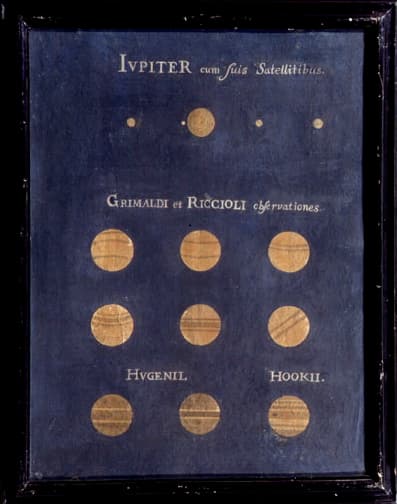
German · Science · Arts
Maria Clara Eimmart
May 27, 1676 – October 29, 1707
Early Life and Background
Maria Clara Eimmart (later Müller) was born on 27 May 1676 in Nuremberg, an important artistic and commercial center of the Holy Roman Empire.[1][5][7] She was the daughter of Georg Christoph Eimmart the Younger (1638–1705), a history painter, engraver and amateur astronomer who directed a painters’ academy in Nuremberg and founded a private observatory on the city walls.[9][10][13] This dual environment of art and astronomy shaped Maria Clara’s upbringing from an early age.
Unlike most women of her time, who were excluded from universities and formal scientific institutions, Eimmart received a broad, home‑based education under her father’s guidance. Contemporary and modern accounts note that she was taught Latin, French, mathematics, astronomy, drawing, engraving and etching, preparing her simultaneously as an artist and scientific assistant.[12][13] The observatory served as her laboratory, where she learned to use telescopes and other instruments, while the studio provided the tools and techniques for precise visual representation.
Nuremberg’s cultural status as a center of printmaking and scientific instrumentation offered further stimuli. Her father’s connections to local scholars and to broader European networks, including the Bolognese nobleman and scientist Luigi Ferdinando Marsili, exposed her to current developments in astronomy and natural philosophy.[10][14] In this environment, Eimmart grew into what modern historians describe as an independent observer and illustrator, not merely a passive assistant.
Career Beginnings and Development
By her late teens, Maria Clara Eimmart was working regularly in her father’s observatory, producing botanical, decorative, and historical drawings alongside increasingly sophisticated astronomical illustrations.[9][10] Some of her non‑astronomical works depicted flowers, fruits and antique figures, demonstrating versatility and aligning with the artistic expectations of Nuremberg’s workshop culture.[9]
Her scientific career is most clearly documented through her series of lunar-phase drawings. Between 1693 and 1698, Eimmart executed what modern scholars estimate as between 250 and 350 drawings of the Moon’s phases, based on telescopic observations from the Nuremberg observatory.[10][13][14] She typically worked on dark blue cardboard, using pastel and possibly gouache or tempera to capture the luminous appearance of the Moon against the night sky.[10] The exact start and end dates of this series are not known, but the sustained activity across several years indicates a deliberate, systematic observing program.
These drawings were later grouped under the title Micrographia stellarum phases lunae ultra 300, which suggests an intention to reach or exceed 300 depictions of lunar phases.[11][13][14] Although the work is associated with her father’s name in some catalogues, multiple sources now emphasize that Maria Clara was the principal observer and illustrator.[10][14] In addition to lunar studies, she produced illustrations of other celestial objects and phenomena, including comets and possibly planetary configurations, though these are less well documented.
The observatory’s position on the city walls gave Eimmart relatively stable viewing conditions for the Moon, but her work still required significant effort: repeated nightly observations, careful note of changing light and shadow, and translation of three‑dimensional luminous forms into two‑dimensional drawings that preserved scientific detail. These demanding routines, carried out while women were largely absent from formal scientific institutions, mark the beginning of her independent career in astronomy.
Major Works, Observations, and Accomplishments
Eimmart’s major accomplishment is her extensive corpus of lunar-phase drawings. Modern reconstructions, based on surviving sheets and archival references, indicate that between 1693 and 1698 she produced somewhere between 250 and 350 lunar drawings.[10][13][14] By around 1700, sources agree that the total number had exceeded 350.[10][12] These drawings are not merely artistic; they constitute one of the most exhaustive pre‑photographic visual studies of lunar phases from a single observer.
The drawings’ medium and format have attracted special attention. Eimmart used pastel, possibly mixed with gouache or tempera, on dark blue cardboard, a choice that allows the Moon’s disk to stand out in high contrast.[10] She carefully rendered the terminator—the dividing line between lunar night and day—along with crater shadows and albedo differences. Such precision provides valuable information about the perceived lunar surface at the time, and reveals her ability to translate telescopic observation into accurate visual form.
A significant subset of her work entered European scientific circulation. Twelve lunar drawings were given or sent to Luigi Ferdinando Marsili, an Italian nobleman and scientific collaborator of her father.[10] Ten of these blue‑paper drawings and three smaller studies on brown paper survive today in Bologna, forming the largest coherent group of Eimmart’s astronomical works.[10] Through Marsili’s collections, her images reached a wider scholarly audience, even if her name was not always foregrounded.
Modern historians identify her lunar series as a crucial contribution to early selenography—the mapping and description of the Moon—because it systematically documents the changing phases rather than isolated picturesque views.[14][16] The collection Micrographia stellarum phases lunae ultra 300 was used and cited within her father’s astronomical work, revealing that her drawings functioned as working scientific material in addition to being artworks.[11][14]
Beyond the Moon, Eimmart also took part in notable celestial observations. On 12 May 1706, she observed a solar eclipse from the Nuremberg observatory, recorded in later biographical notes as an example of her engagement with time‑critical astronomical events.[8][9] This eclipse observation confirms that her work included dynamic phenomena as well as periodic lunar phases.
In the broader context of women’s history in science, Eimmart’s accomplishments represent some of the earliest documented instances of a woman conducting a long‑term, systematic astronomical observing program and producing large quantities of scientifically useful imagery. Scholars emphasize that she predates Caroline Herschel, often cited as the first professional woman astronomer, by roughly a century.[4][14][16] Her work challenges linear narratives that place the beginning of women’s involvement in astronomy in the late eighteenth or early nineteenth century.
Awards, Honors, and Recognition
During her lifetime, Maria Clara Eimmart did not receive formal awards or memberships in scientific societies; such institutions were effectively closed to women in the late seventeenth and early eighteenth centuries. Recognition of her work remained largely local, within the circles of Nuremberg artists and astronomers and through her father’s publications.
Her images nonetheless circulated informally. The transmission of twelve lunar drawings to Luigi Ferdinando Marsili and their preservation in Bologna indicate that she was esteemed enough for her work to be included in a nobleman’s scientific collection.[10] Within Nuremberg, later historical surveys identified her as "the only woman astronomer of some importance" from the city in that era, underscoring the singularity of her role.[9][14]
Modern recognition has grown substantially. In the early twenty‑first century, scholarly studies in history of science and gender, such as a detailed article in the journal Sources, re‑evaluated her contributions and emphasized the fusion of art and science in her work.[14] Popular essays, including those on cultural and science‑communication platforms, have presented her lunar drawings as some of the most striking astronomical art since the invention of the telescope.[4][16]
A significant institutional honor came in 2023, when the minor planet 571938 (2008 AG2) was officially named "Mariaeimmart" in her memory.[9][11] The naming by the international astronomical community recognizes her as an important historical figure in astronomy and embeds her name in modern celestial catalogues.
Personal Life
Information about Eimmart’s personal life is relatively sparse, but key elements can be reconstructed. She grew up in her parents’ household in Nuremberg, where the workshop and observatory formed the center of family life.[9][10] Her closeness to her father is evident from the collaborative nature of their work: she acted as his assistant in the observatory and as an illustrator for his astronomical projects.[9][10][13]
In the early eighteenth century, before her death, she married Johann Heinrich Müller (1671–1731), a physicist and astronomer who had been a student of her father and later his successor at the Nuremberg observatory.[10][11][12] Sources differ slightly on the precise year of their marriage, but several indicate that it occurred around 1706.[11][12] Müller’s scientific interests overlapped with those of the Eimmart family, suggesting that Maria Clara’s marriage did not entail a complete break from her astronomical environment.
Most accounts agree that she died in childbirth, reportedly with a son, around the time of her death in October 1707.[10][12][13] This tragic end illustrates the precariousness of women’s lives in the period and the way in which reproductive expectations could curtail scientific careers. Beyond these details, few personal letters or diaries survive, and much of her inner life remains inaccessible to historians.
Later Life and Death
Maria Clara Eimmart’s later years continued to be devoted to astronomical observation and illustration, though documentary traces are thinner than for her formative lunar work. She remained in Nuremberg, working within the observatory environment as her father aged and then after his death in 1705, alongside or under the direction of Johann Heinrich Müller.[5][9][11]
On 29 October 1707, she died in Nuremberg at the age of 31.[1][3][5][7] There is some disagreement among sources about the exact date: a number of German, Catalan, Russian and Dutch references give 28 October 1707, whereas Polish, Spanish, French and several modern essays specify 29 October 1707
Her death in childbirth, noted in several biographical accounts, underscores the intersection of gendered expectations with scientific work.[10][12][13] It abruptly ended her capacity to continue observing and drawing at a moment when European astronomy was entering a period of rapid development, with improved telescopes and increasing institutionalization. The dispersal of her drawings after her death—some remaining in Nuremberg, others traveling to Bologna and elsewhere—contributed to the fragmentation of her legacy. Maria Clara Eimmart’s legacy has undergone significant re‑evaluation in recent decades. For much of the eighteenth and nineteenth centuries, her contributions were overshadowed by those of male astronomers and artists, including her father and her husband. Her lunar drawings were known but not always attributed to her, and her name rarely appeared in canonical histories of astronomy. Modern scholarship in the history of science, art history and gender studies has restored her visibility. Researchers now emphasize that Eimmart was one of the earliest documented women to carry out systematic telescopic observations and to produce an extensive scientific visual record of the Moon.[10][14][16] Her work is recognized as a crucial precedent for later women astronomers such as Caroline Herschel, highlighting that women’s participation in astronomy began well before the late eighteenth century.[4][14] Her lunar drawings are also appreciated as artworks. Essays on historical astronomical art describe them as among the most striking visual representations of the Moon created after the invention of the telescope.[4][16] Their combination of technical accuracy and aesthetic sensitivity illustrates the deep intertwining of art and science in early modern Europe. In institutional terms, the 2023 naming of asteroid 571938 "Mariaeimmart" marks a significant acknowledgment of her importance.[9][11] As astronomers encounter this name in databases and orbital calculations, they are reminded of the historical contributions of a woman who, from a small urban observatory, mapped the changing face of the Moon. For women’s-history researchers, Eimmart’s life illustrates several recurring themes: the role of family workshops in providing women with access to scientific practice; the necessity of visual and artisanal skills in early observational science; and the vulnerability of women’s scientific careers to social expectations and health risks. Her surviving works, though limited in number, continue to inspire discussions about how many other women observers and illustrators may have remained uncredited in early scientific enterprises. Today, Maria Clara Eimmart is increasingly included in encyclopedic entries, scholarly articles, and popular histories of astronomy. Her biography serves as a reminder that the history of science is richer and more diverse than older narratives suggest, and that careful archival work can recover the contributions of women whose telescopes and drawing tools helped humanity see the heavens more clearly.Legacy and Historical Impact
Dated achievements
7 indexed.
- May271676Science
Birth in Nuremberg
Birth of Maria Clara Eimmart in Nuremberg, Germany, daughter of artist and astronomer Georg Christoph Eimmart.
View details Astronomie Nürnberg - Maria Clara Eimmart - May271676Science
Among the earliest women astronomical illustrators
Maria Clara Eimmart is one of the earliest women to depict celestial phenomena, especially lunar phases, through observational drawing.