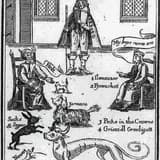
The Massachusetts Bay Colony General Court formally condemned Margaret Jones to hang for the crime of witchcraft, sealing her fate two days before her execution.
On June 13, 1648, the General Court of the Massachusetts Bay Colony formally condemned Margaret Jones to death after her conviction for witchcraft the previous month. The court, which functioned as both legislature and judiciary in the young Puritan colony, based its sentence on testimony describing supposed supernatural knowledge, sudden illnesses befalling those who crossed her, and physical 'witch's marks' allegedly found upon her body during an examination.
Jones, a midwife and healer in Charlestown, had drawn suspicion for her unorthodox herbal remedies and her reportedly sharp tongue toward patients who refused her treatments or recovered too quickly or too slowly for natural explanation in the minds of her neighbors. The formal condemnation by the General Court represents one of the earliest documented instances of a colonial governing body issuing a capital sentence specifically for witchcraft in New England, predating the more famous Salem trials by over four decades.
This court action illustrates the fragile boundary between medicine, religion, and law in seventeenth-century Puritan society, where unexplained deaths or illnesses were often attributed to malevolent supernatural forces rather than natural causes. The record of this condemnation, though sparse, remains a critical documented touchstone for historians studying the origins of witchcraft persecution in colonial America.