← All women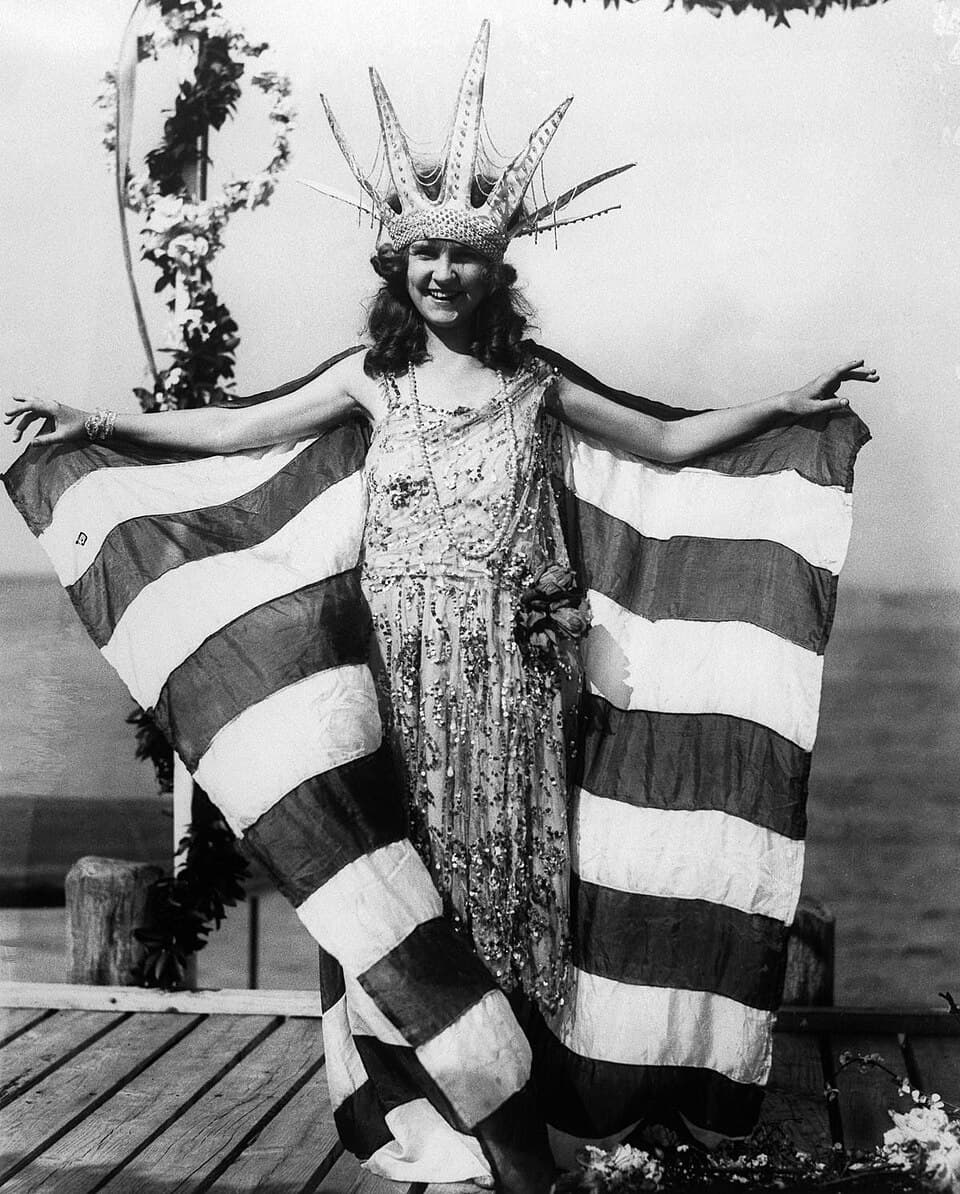
American · Arts
Margaret Gorman
August 18, 1905 – October 1, 1995
Early life and background
Margaret Gorman was born in Washington, D.C., on August 18, 1905. Historical accounts identify her family as rooted in Washington, with later recollections placing them in Georgetown and describing her father as a government clerk and her mother as originally from Ireland.[1][6][11] She attended Western High School in Washington, D.C., and grew up in a city that was both politically important and socially stratified in the years before women won the right to vote nationally.
Gorman’s early life is significant because it shows how a seemingly ordinary teenage girl from the nation’s capital became the first widely recognized Miss America. Sources describe her as athletic, outgoing, and already well suited to the pageant culture that was beginning to develop in the early 1920s.[1][2][13] Those qualities mattered at a moment when public contests for young women were being promoted as entertainment, tourist attractions, and newspaper features.
Selection as Miss District of Columbia
In 1921, the Washington Herald organized a local popularity and beauty contest that selected Gorman as Miss District of Columbia, sending her to Atlantic City as an honored guest of the pageant.[6][9] Contemporary and retrospective accounts explain that she was chosen for her athletic ability, past accomplishments, and outgoing personality.[1][2][13] The exact title structure was still fluid in this period, and her selection reflected the experimental nature of early beauty pageants.
This local victory was the immediate precursor to the larger national fame that followed. It also illustrates how early pageant culture intersected with newspaper promotion and civic boosterism. In the era after World War I, local events frequently used competition, spectacle, and youthful female entrants to attract attention and tourism, and Gorman became one of the most visible beneficiaries of that new media environment.[13]
Atlantic City and the first Miss America title
On September 8, 1921, sixteen-year-old Margaret Gorman was crowned the first Miss America at Atlantic City, New Jersey.[1][13][14] She won the Golden Mermaid trophy and became the inaugural holder of the title in what sources describe as the first Miss America pageant after being brought to Atlantic City as a guest from Washington, D.C.[1][13] Her youth and appearance were widely noted, and one source says she was compared with silent-film star Mary Pickford.[13]
Her victory carried historical weight because it established the beginning of the Miss America lineage. The pageant was still new, and the title itself was not yet fully standardized. That uncertainty makes Gorman’s case especially important: she stands at the origin of an institution that would become central to American popular culture.[1][9][13] Her win also reflects the changing role of women in public life during the 1920s, when mass media and consumer culture created new forms of visibility even as social expectations remained restrictive.
Additional pageant victories and the evolving title
Later accounts note that in 1921 Gorman also won pageant honors such as Inter-City Beauty, Amateur and The Most Beautiful Bathing Girl in America, along with the Watkins Trophy and the Golden Mermaid grand prize.[9] On September 14, 1921, she won the Inter-City Beauty Contest in Atlantic City, further solidifying her prominence in the pageant’s early history.[7] These titles are important because they reveal how the early pageant combined multiple categories and prizes before its structure became standardized.
The title Miss America was formally associated with Gorman again in 1922, when pageant officials crowned her at the end of her reign.[1][9][12] Sources consistently describe her as the only Miss America to receive her crown at the conclusion of her year rather than at the beginning.[1][9] Because the surviving sources do not preserve a reliable exact day for that 1922 crowning, it is best understood as a dated-year milestone rather than a specific calendar-date event. The episode shows how the pageant’s nomenclature and traditions were still being negotiated in its first years.
Gorman returned to Atlantic City in later years and competed again, including in 1922 and 1923, but did not repeat her earlier success.[2][8][9] One source notes that Mary Campbell won in 1922 and again in 1923, becoming the only two-time Miss America, while Gorman’s distinction remained the first and most foundational title in the pageant’s history.[9]
Personal life
Gorman later married Victor Cahill, and most accounts state that the marriage lasted until his death in 1957.[2][8][10] She lived much of her adult life in Washington, D.C., and retrospective profiles describe her as a socialite who enjoyed travel.[2][8] Unlike later Miss America winners whose careers often involved publicity and entertainment work, Gorman appears to have preferred a quieter private life after her early pageant fame.
Her long-retired public profile is also reflected in the quotation preserved by later writers, in which she dismissed the Miss America experience as something she wanted to forget.[2] That attitude is revealing: the woman who became a foundational pageant figure did not necessarily experience the title as a lifelong vocation or identity. This tension between public memory and private preference is part of what makes her historical profile especially notable.
Physical records and retrospective fame
Retrospective pageant histories identify Gorman as one of the smallest and slimmest Miss America winners on record, at 5 feet 1 inch and 108 pounds, with measurements often given as 30-25-32.[9] These figures have been repeated in historical discussions of the pageant’s early standards, and her record as the lightest winner was later surpassed in 1949 by Jacque Mercer.[9] Such statistics are not achievements in the athletic sense, but they have become part of the historical record because they illustrate the era’s beauty ideals.
Her continued visibility in pageant histories, newspapers, and retrospective features shows that the first Miss America title retained symbolic power long after the event itself. By the late twentieth and early twenty-first centuries, writers used her story to explain how the pageant began, how its language evolved, and how early-1920s American culture turned teenage femininity into a public spectacle.
Later life and death
Margaret Gorman died on October 1, 1995, in Bowie, Maryland.[1][2][4][10] She was ninety years old. Obituaries and later historical pieces remembered her as the first Miss America and as a woman whose name remained attached to the pageant’s origin story for the rest of her life.[4][5][10]
Her death closed the life of a figure who had become historically important less through a long public career than through a single pioneering role. That role mattered because it captured an early stage in the development of a cultural institution that would become nationally known. Gorman’s biography therefore belongs not only to pageant history but also to the broader history of women’s public visibility in twentieth-century America.
Legacy
Margaret Gorman’s legacy rests on being the first Miss America and on embodying the transition from local beauty contests to a nationally recognized pageant tradition.[1][13] Her story reveals the beginnings of an institution that was shaped by tourism, newspapers, and changing social ideas about beauty and modern womanhood. She became famous at sixteen, but the broader significance of her career lies in what her brief public moment helped launch.
For women’s history, Gorman’s importance is twofold. First, she is a documented barrier-breaking first in a major American cultural institution. Second, her story illustrates how young women in the early twentieth century could be elevated into national prominence through media systems that simultaneously celebrated and constrained them. The Miss America pageant would evolve substantially over the decades, but its origin story remains inseparable from Margaret Gorman’s 1921 victory and her unusual 1922 crowning.[1][5][9][13]
Dated achievements
5 indexed.
- Aug181905Arts
Birth of Margaret Gorman
Margaret Gorman was born in Washington, D.C., later becoming the first Miss America.
View details Wikipedia: Margaret Gorman - Sep081921Arts
First Miss America crowned
At 16, Margaret Gorman was crowned the first Miss America, marking a milestone in American beauty pageants.
View details