← All women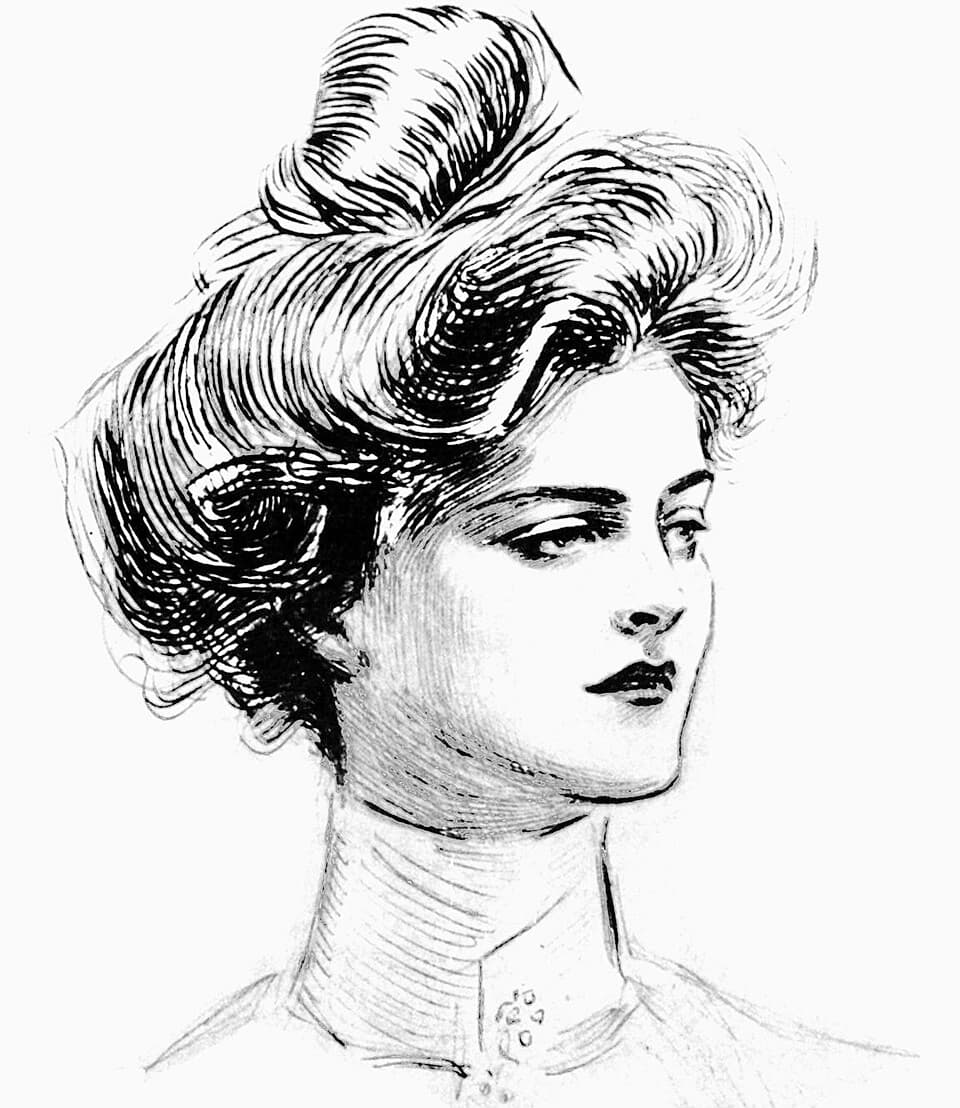
American · Sports
Margaret Abbott
June 15, 1878 – June 10, 1955
Early Life and Background
Margaret Ives Abbott was born on 15 June 1878 in Calcutta, then under British colonial rule.[16][7] Her parents were Americans living abroad, and most English‑language biographical references give 1878 as her birth year, though a minority of non‑English sources, such as the German Wikipedia, list 1876.[7][15] The predominance of 1878 in major English‑language reference works, including Encyclopedia.com and Olympic‑related biographies, has made it the standard date used by historians.[16]
Abbott’s mother, Mary Ives Abbott, was a writer and editor who would later play a significant role in shaping Margaret’s intellectual and social environment.[16] After her father’s death, Mary relocated the family to the United States and eventually to Chicago, a city undergoing rapid industrial and cultural growth in the late nineteenth century.[16] In Chicago, Margaret grew up within a milieu that combined literary circles, journalism, and the emerging culture of private sports clubs.
By the mid‑1890s, golf was beginning to spread from Britain to the United States, taking particular root among affluent communities. Chicago’s Chicago Golf Club, founded in 1892, became one of the earliest organized golf clubs in the country. It was within this context that Abbott took up golf, reportedly beginning to play at a private club around 1897.[16][10] Her access to the sport reflected both her social position and the slowly expanding—though still limited—opportunities for women to participate in organized athletics.
Introduction to Golf and Early Sporting Development
Abbott’s entry into golf coincided with a broader transformation in attitudes toward women’s physical activity. Late‑nineteenth‑century reformers were beginning to advocate exercise for women’s health, but competitive sport for women remained controversial and was often discouraged. Within this environment, elite private clubs, including those in Chicago, served as relatively safe spaces for women to experiment with sports such as golf, tennis, and croquet.
According to Encyclopedia.com, Abbott began playing golf at a private Chicago club in 1897 and quickly showed talent as an amateur.[16] She became associated with the Chicago Golf Club and other local golfing circles, developing a reputation as a graceful yet determined competitor—described in later accounts as a "fierce competitor" with a "classy backswing."[16][10] Golf, unlike more physically demanding or contact sports, was viewed by many contemporaries as acceptable for women, which likely eased Abbott’s path into competition.
Her mother Mary also took up golf, creating a rare instance of a mother and daughter both engaged in the same emerging sport.[3][14] This shared pursuit would eventually lead to a historically unique moment when both entered the same tournament in Paris in 1900.
Life in Paris and Artistic Studies
In 1900, Margaret Abbott travelled to Paris, where she studied art during the year of the Exposition Universelle, the world’s fair that served as the broader framework for that year’s Olympic Games.[16][10] Many cultural and sporting events were organized under the umbrella of the exposition, blurring lines between what was officially "Olympic" and what was merely part of the fair.
Abbott’s status as an art student in Paris placed her in a cosmopolitan environment that mixed artistic, intellectual, and sporting circles. Amid this atmosphere, she learned of a women’s golf competition to be held at the Compiègne Golf Club, roughly 75 kilometres north of Paris.[10] The event, known locally as the Prix de la ville de Compiègne, was advertised as a ladies’ tournament and attracted a small but international field of competitors.
Neither Abbott nor the organizers appear to have clearly understood the competition’s relationship to the Olympic Games, which were still in their early, loosely structured phase. As later histories emphasize, the 1900 Paris Olympics were interwoven with the exposition to such an extent that many athletes did not realize they were taking part in an Olympic event.[5][11]
The 1900 Paris Women’s Golf Tournament
On 3 October 1900, Abbott competed in the women’s nine‑hole golf tournament at Compiègne during the Paris Games.[9][10] Detailed reconstructions of the schedule show that this date corresponds to the ladies’ event, which was played over nine holes rather than the longer men’s programme.
The field included golfers from several countries, among them Polly (Pauline) Whittier of Switzerland (originally American) and Abbott’s own mother, Mary Ives Abbott.[3][14][16] Abbott shot 47 over nine holes, a score that placed her first, two strokes ahead of Whittier, who finished second with 49.[9][10][16] Her mother completed the course with a score of 65.[3] Historians have noted that this appears to be the only occasion in Olympic history when a mother and daughter competed in the same event at the same Games.[3][14]
Victors at the 1900 events did not receive standardized medals. Instead, Abbott was awarded a porcelain bowl as her prize for winning the ladies’ golf competition.[5][10] Contemporary newspapers reported her success as an achievement in an "exhibition" or city tournament, and neither Abbott nor the press treated it as an Olympic triumph.[14] The loose organization of the Games, combined with the social status of women’s sport, contributed to this misperception.
Recognition as an Olympic Champion and "Firsts"
Over time, the Compiègne golf tournament was formally recognized by Olympic historians as part of the official programme of the 1900 Paris Games.[10][2] Modern reference works, including Olympedia and the official Olympics.com athlete database, now list the event as an Olympic competition and credit Abbott with a gold‑medal victory in women’s golf.[2][10][7]
This recognition has several important dimensions:
- First American woman to win an Olympic event: Abbott’s victory predates all other confirmed U.S. women’s wins at the Olympics, making her the first American woman to win an Olympic event and the country’s first female Olympic champion.[2][5][16]
- First American woman to win an Olympic "gold" medal: Although she received a porcelain bowl rather than a medal, Olympic historiography retroactively applies the gold‑silver‑bronze framework to 1900, assigning Abbott gold‑medal status.[10][11][16]
- First female Olympic golf champion: The 1900 tournament marked golf’s only Olympic appearance until it returned at the 2016 Rio Games, and Abbott is recognized as the first female Olympic champion in golf.[10][15]
- Among the earliest women Olympic champions overall: French‑language sources note that she was the third woman to win an Olympic title and the second to do so in a women’s event, following tennis champion Charlotte Cooper.[15][16]
These "firsts" position Abbott at the very forefront of women’s participation in the modern Olympic movement. The 1900 Games were the first to allow female competitors; only eleven women are known to have participated in events that year.[3][5] Abbott’s title, therefore, is both a national and international landmark.
Awards, Honors, and Later Recognition
During Abbott’s lifetime, her principal tangible award from the 1900 tournament remained the porcelain bowl she received at Compiègne.[5][10] She appears to have treated it as a cherished but local prize rather than a symbol of Olympic victory. No evidence suggests that she was formally honoured during her life as an Olympian.
Recognition of Abbott’s status as an Olympic champion emerged decades after her death. In the late twentieth century, Paula Welch, a professor at the University of Florida and a representative to the United States Olympic Committee, discovered Abbott’s misspelled name on a plaque at USOC headquarters and undertook archival research to clarify her story.[3][11] Welch’s work, including consultation of newspaper archives and Olympic records, confirmed that Abbott was the first American woman to win the equivalent of Olympic gold.[3][8]
In 1984, Abbott’s son Philip Dunne published an article titled "My mother, the golf Olympian" in Golf Digest, drawing on Welch’s findings and helping to introduce Abbott’s story to a broader public.[8] Subsequent coverage by the University of Florida News Service, the U.S. Olympic & Paralympic Museum, and major media outlets such as History.com and the Chicago Tribune further cemented her reputation as America’s first female Olympic champion.[3][2][5][4]
By the time of the 1996 Atlanta Centennial Olympic Games, Abbott was featured in the official Olympic programme as a representative athlete from the 1900 Games.[3] Modern sport‑history sites, including Women’s Golf History and national women’s history organizations, now highlight her as a pioneering figure, and she has been the subject of documentary videos and educational materials.[1][10][9]
Personal Life: Marriage and Family
After returning from Paris, Abbott continued to move within Chicago’s literary and journalistic circles. In 1902, she married Finley Peter Dunne, a prominent Irish‑American humorist and journalist best known for his "Mr. Dooley" newspaper sketches, which satirized politics and social life.[16] Following her marriage, she was sometimes referred to as Margaret Abbott Dunne.[16]
The couple had four children: three sons and one daughter.[16] Among them was Philip Dunne, who became a noted Hollywood screenwriter and later played a crucial role in publicizing his mother’s Olympic achievement through his 1984 article.[8][16] Margaret stepped back from competitive golf after marriage, in line with social expectations that married women prioritize domestic and family responsibilities over sporting careers.
Although few detailed records survive about her daily life, sources suggest that Abbott remained engaged with Chicago’s cultural milieu and maintained ties to golfing communities as a social, rather than competitive, player.[16] Her life thus reflected broader patterns experienced by women athletes of her era, whose sporting pursuits were often curtailed or re‑defined by marriage and motherhood.
Later Life
Through the early and mid‑twentieth century, Abbott lived a comparatively private life. The death of her husband Finley Peter Dunne in 1936 left her a widow.[16] She eventually moved to Greenwich, Connecticut, an affluent suburb that was home to many families connected to New York’s publishing, business, and cultural sectors.[11][16]
During these decades, the Olympic movement grew dramatically, and female athletes began to achieve more visible success and recognition. Yet Abbott’s own role in Olympic history remained unknown to her and largely unknown to the public. Neither official Olympic publications nor mainstream histories of the Games acknowledged the Compiègne women’s golf tournament as an Olympic event, and many records of the 1900 Games were incomplete, inconsistent, or overlooked.[5][11]
The sport of golf itself disappeared from the Olympic programme after 1900, further reducing the likelihood that historians would identify and celebrate early golf champions. Abbott’s 1900 victory thus lay buried within newspaper clippings and partial records.
Death
Margaret Abbott died on 10 June 1955 in Greenwich, Connecticut.[11][16][7] At the time of her death, she had never been informed that the tournament she had won in 1900 was officially part of the Olympic Games, nor that she held the distinction of being the first American woman to win an Olympic event.[5][11] Her passing received no Olympic‑related attention, and she left this world unaware of the historic significance of her youthful accomplishment.
Biographical sources emphasize this irony: Abbott’s story is often introduced with the observation that she was America’s first female Olympic champion but "never knew she was an Olympian."[1][2][5] This disconnect between lived experience and historical status is a central theme in accounts of her life.
Legacy and Historical Impact
Abbott’s legacy is multifaceted, touching on the histories of women’s sport, golf, and the Olympic movement.
First, she stands as a pioneer of women’s participation in the Olympics. The 1900 Paris Games were the first to admit women, and only a small number competed. Abbott’s victory in the ladies’ golf event marked the earliest known Olympic title won by an American woman, prefiguring later successes by U.S. female athletes across a wide range of sports.[2][5][16]
Second, she is recognized as the first female Olympic golf champion and the only woman to hold that distinction until golf returned to the Games in 2016.[10][15] Her achievement underscores the long and uneven relationship between golf and the Olympics, and it serves as a historical reference point for contemporary female golfers competing at the Games.
Third, Abbott’s story offers insight into how women’s achievements can be overlooked or misclassified in official records. The confusion surrounding the 1900 Paris programme, compounded by gendered assumptions about which events mattered, meant that her victory was recorded merely as a fair or exhibition prize. Only through deliberate historical investigation—most notably by Paula Welch and later by journalists and scholars—was her status clarified.[3][11][8]
Fourth, her experience as a mother‑daughter competitor alongside Mary Ives Abbott in the same event provides a rare lens on family participation in early elite sport. Researchers note that they remain the first and, to date, only mother/daughter pair known to have competed in the same Olympic event at the same Games.[3][14] This detail adds a familial dimension to the narrative of women’s early Olympic involvement.
Finally, Abbott’s posthumous recognition has been embraced by institutions dedicated to women’s history and sports heritage. The National Women’s History Museum, Women’s Golf History, the U.S. Olympic & Paralympic Museum, and educational platforms highlight her as an emblem of the many women whose contributions were made invisible by the record‑keeping practices of their time.[1][2][10] Media features, including a detailed article on History.com and coverage in the Chicago Tribune, have introduced her story to new generations.[4][5]
In sum, Margaret Ives Abbott occupies a crucial place in women’s sport history. Her life illustrates both the possibilities that opened to women at the turn of the twentieth century and the limitations of contemporary recognition. The eventual restoration of her achievement to the historical record—decades after her death—demonstrates the importance of archival research and critical historiography in uncovering and honoring women’s contributions to global sporting culture.
Dated achievements
4 indexed.
- Jun151878Sports
Birth of Margaret Ives Abbott
Margaret Ives Abbott was born on June 15, 1878, in Calcutta, under British rule.
View details Wikipedia - Margaret Abbott - Oct031900Sports
Wins women's golf at 1900 Paris Olympics
Margaret Abbott won the women's golf tournament at the 1900 Paris Olympics, the first American woman to achieve this.