← All women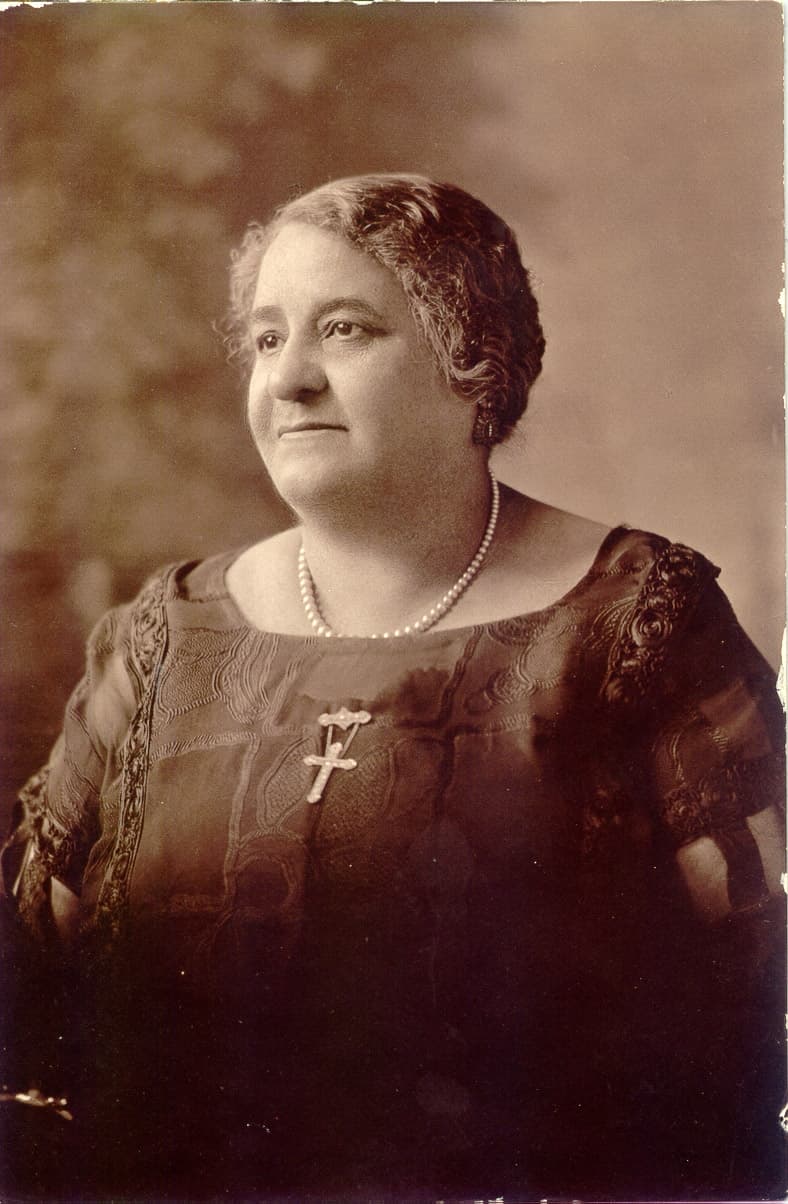
American · Politics · Activism · Law
Maggie L. Walker
July 15, 1864 – December 15, 1934
Early Life and Background
Maggie Lena Draper Mitchell, later known as Maggie L. Walker, was born on July 15, 1864, in Richmond, Virginia, during the final year of the American Civil War. She entered the world in a city that served as the capital of the Confederacy, at a time when slavery and war still dominated daily life. Her mother, Elizabeth Draper, had been enslaved and worked as a laundress, while her father, Eccles Cuthbert, was a Confederate soldier; their relationship was complex and shaped by the racial and social hierarchies of the era.[1][2][4][6][7]
Walker grew up in a household defined by poverty, hard work, and the precarious status of newly freed African Americans in the Reconstruction South. After her father’s death—under circumstances that involved his body being found in the James River—her mother relied on laundry work to support the family, and Maggie assisted by delivering clean clothes to white clients. This early exposure to labor, racial inequality, and the importance of economic self-reliance deeply influenced her later views on thrift, mutual aid, and community-based finance.[1][2][6][11]
Despite limited resources, Walker pursued education at the Richmond Colored Normal School, one of the principal institutions for training African American teachers in Virginia. There she received a rigorous education and was introduced to ideas about racial uplift, women’s moral authority, and the role of Black institutions—churches, schools, and fraternal organizations—in advancing community interests. These formative experiences helped to cultivate her leadership skills and her commitment to collective action.[1][4][6][7]
Career Beginnings and Development
After completing her training, Walker became a teacher in Richmond’s public schools, a respected position in the African American community.[1][3][7] Teaching offered her a measure of economic stability and allowed her to participate in the intellectual life of Black Richmond. Yet, like many married women of her era, she eventually had to leave the classroom when she married, reflecting the gender norms that limited women’s paid employment.[1][6]
In 1881, Walker joined the Independent Order of Saint Luke, an African American fraternal benefit society dedicated to providing sickness and burial benefits, mutual aid, and moral instruction to its members.[6][7][9][11] Through the Order, Walker found an institutional platform for her talents. She quickly rose through the ranks, developing expertise in bookkeeping, organizational management, and membership outreach. The Order’s financial struggles and declining membership in the late nineteenth century created both a crisis and an opportunity for her.
By the late 1890s, the Independent Order of Saint Luke was near bankruptcy, burdened by debt and mismanagement.[6][7] Around 1899, Walker was elected Right Worthy Grand Secretary-Treasurer, effectively placing her in charge of the organization’s finances and administration.[6][7] She implemented strict accounting procedures, encouraged regular dues payments, and promoted the benefits of membership to Black communities across Virginia and beyond. Under her leadership, the Order not only regained fiscal stability but also expanded dramatically in membership and influence, becoming one of the most important African American fraternal organizations in the United States.
Building Institutions: Newspaper, Emporium, and Bank
Walker believed that fraternal organizations should do more than provide burial benefits; they should foster economic independence and education. In 1901, addressing the Independent Order of Saint Luke’s annual convention, she famously declared her intention to establish three new institutions: a bank, a newspaper, and a department store for African Americans.[7][11] This vision reflected her conviction that Black communities needed their own financial, commercial, and media structures to counter white economic dominance and racist exclusion.
In 1902, Walker helped create and began editing the Order’s newspaper, the St. Luke Herald.[1][6][7][9] As editor and managing figure, she used the paper to promote thrift, mutual aid, and Black entrepreneurship. The Herald carried community news, commentary on racial and political issues, and practical advice on savings and investment. It also provided a platform for Walker’s advocacy of women’s leadership and voting rights, as she argued that Black women needed both economic and political power.
Around 1903, Walker and the Order expanded their economic reach by opening the St. Luke Emporium, a department store intended to serve African American customers and employ Black workers.[1][4][6][7][9] The Emporium offered goods at fair prices and encouraged members to "trade with your own," challenging the racial discrimination common in white-owned stores. Although the Emporium faced significant headwinds, including white business hostility and economic constraints, it embodied Walker’s broader strategy of building community-owned enterprises.
Founding and Leading the St. Luke Penny Savings Bank
Walker’s most celebrated achievement came with the founding of the St. Luke Penny Savings Bank in 1903. She pursued the charter under Virginia law, raised initial capital from members of the Independent Order of Saint Luke, and designed the bank to accept even the smallest deposits—"pennies"—from working-class Black families.[2][3][4][6][7][11]
On November 2, 1903, the bank opened for business in Richmond’s Jackson Ward neighborhood, with Walker as its president.[7] By establishing and presiding over the bank, she became the first African American woman in the United States to charter a bank and to serve as its president, and one of the earliest women of any race to do so.[2][3][4][5][6][10][11] The bank quickly became a trusted institution in the Black community, offering savings accounts, loans for homes and businesses, and financial education.
Walker’s leadership was hands-on. She hired and trained Black clerks—many of them women—creating professional opportunities largely unavailable in white-owned banks.[8][11] By 1920, the bank had financed more than six hundred home and business loans for Black families, contributing significantly to Black property ownership and entrepreneurial activity in Richmond.[8] The St. Luke Penny Savings Bank also functioned as a symbol of Black autonomy and resilience, showing that African American institutions could be both fiscally sound and socially transformative.
In later years, particularly during the Great Depression, Walker helped guide the bank through economic turmoil. She was instrumental in the consolidation of Black-owned banks in Richmond, a process that led to the creation of the Consolidated Bank and Trust Company, recognized as the oldest continuously African American–operated bank in the United States.[1][5][6] Walker served as chairman of the board of the consolidated institution, ensuring continuity of her vision of community-focused finance.
Civil Rights Activism and Public Leadership
Beyond business, Walker emerged as a significant civil rights activist. In 1904, she played a leading role in organizing a city-wide boycott of segregated streetcars in Richmond in response to the Virginia Passenger and Power Company’s policy mandating separate seating for Black riders.[6][7][8][14] The boycott used economic pressure to challenge Jim Crow transportation practices and exemplified early twentieth-century Black direct action strategies.
Walker also became involved in national civil rights organizations. Around 1905, she was instrumental in organizing what became the first Richmond branch of the NAACP, helping to align her economic activism with broader campaigns against lynching, disenfranchisement, and segregation.[8][14] Through her work with the NAACP, she advocated for federal anti-lynching legislation and equal protection under the law.
A committed supporter of women’s suffrage, Walker argued that women needed the vote to secure equal pay and fair treatment. She contended that women would "force Capital to hear them at the ballot box" once enfranchised.[7] After the ratification of the Nineteenth Amendment in 1920, she partnered with community activist Ora Brown Stokes to organize voter registration drives among Black women in Richmond, helping many to navigate barriers such as literacy tests and discriminatory registration practices.[7]
Walker also entered electoral politics directly. In 1921, she ran for statewide office as the candidate for superintendent of public instruction on the so-called "Lily Black" Republican ticket, becoming the first Black woman in Virginia to seek state office, although she did not win.[6][9][10] Her candidacy underscored the growing insistence of Black women on political representation and control over educational policy.
Her commitment to youth development continued into the 1930s. In 1932, she helped form Bird Troop No. 34, recognized as the first all-Black Girl Scout troop south of the Mason–Dixon line.[6] Through this work, Walker promoted leadership, discipline, and civic engagement among Black girls, extending her legacy to a new generation.
Personal Life
On September 14, 1886, Maggie Mitchell married Armstead Walker Jr., a brick contractor and businessman in Richmond.[7] The marriage provided both emotional support and a measure of financial stability. The couple had three children, though one son died young, a loss that profoundly affected the family.[1][6][7]
The Walkers eventually settled in a large home at 110½ East Leigh Street in Richmond’s Jackson Ward neighborhood, a thriving center of Black commerce and culture often referred to as "the Harlem of the South."[1][6][9] Their home became an "urban mansion" that hosted extended family members, community leaders, and national figures. It was filled with books, artwork, and furnishings that reflected both their prosperity and their commitment to education and culture.
Armstead Walker’s accidental death—he was killed in a hunting mishap—left Maggie a widow, but she continued to support her extended family, including grandchildren and other relatives who lived with or frequently visited her home.[1][6][9] She also navigated personal health challenges, including the onset of diabetes, which would later contribute to mobility limitations. In her later years, she used a wheelchair yet remained active in organizational leadership and community affairs.
Awards, Honors, and Recognition
During her lifetime, Walker’s achievements brought her national prominence as one of the foremost African American female business leaders in the United States.[4][8] She was frequently invited to speak at conventions, church gatherings, and civic meetings, where she addressed topics ranging from economic self-help to women’s rights and racial justice.
Her status as the first African American woman to charter and preside over a bank was recognized by contemporaries and later institutional histories.[2][3][4][5][6][10][11] Business and civil rights organizations highlighted her as a model of Black female entrepreneurship, and her bank was cited as evidence of the viability of Black-controlled financial institutions.
After her death, formal recognitions expanded. In 1937, the Maggie L. Walker High School opened in Richmond, named in her honor and serving Black students during the era of segregated education.[5] Later, her Leigh Street home was designated the Maggie L. Walker National Historic Site, operated by the National Park Service, preserving her residence and many of her personal belongings as a museum and educational resource.[1][2][6][9]
Twenty-first-century institutions have continued to honor Walker. The FDIC has highlighted her achievements in its minority depository institutions program, calling her "America’s national treasure in banking."[11] Museums, historical societies, and educational organizations—such as the National Women’s History Museum and the Library of Virginia—regularly feature her in exhibits, biographies, and curricular materials focused on women’s history, Black entrepreneurship, and civil rights.[4][6][7]
Legacy and Historical Impact
Maggie L. Walker’s legacy rests on her pioneering role in Black economic empowerment. By chartering and leading the St. Luke Penny Savings Bank, she demonstrated that Black communities could create and sustain their own financial institutions in the face of exclusion by white banks.[2][3][4][6][11] Her emphasis on small savings, collective investment, and community lending forged a model of grassroots finance that supported home ownership, business development, and educational advancement.
Walker’s work with the Independent Order of Saint Luke illustrates the power of fraternal organizations as engines of social change. Under her leadership, the Order transformed from a nearly bankrupt society into a thriving network with tens of thousands of members, providing insurance, loans, and moral guidance.[6][7][11] Her ability to blend spiritual, social, and economic functions placed her at the forefront of Black institutional leadership in the late nineteenth and early twentieth centuries.
As a women’s leader, Walker challenged both sexism and racism. She insisted that Black women must claim their rights in the economic sphere and at the ballot box. Her suffrage advocacy and post-1920 voter registration campaigns helped integrate Black women into formal politics, while her hiring and training of Black women in banking created new professional roles.[4][7][8][11] In this sense, she bridged the worlds of domestic labor, professional work, and civic activism.
Her civil rights activism—through the streetcar boycott, NAACP organizing, and public speeches—contributed to the evolving strategies of resistance to Jim Crow. Although predating the mid-twentieth-century civil rights movement, her actions foreshadowed later campaigns that used boycotts, legal challenges, and voter mobilization to confront segregation and disenfranchisement.[6][7][8][14]
Historians and educators now place Walker alongside figures such as Booker T. Washington and W.E.B. Du Bois in discussions of Black uplift, but with a particular emphasis on women’s leadership and community-based finance. Her story is frequently taught in classrooms, featured in documentaries, and used in leadership training to illustrate how structural barriers can be confronted through institution-building, strategic planning, and collective action.[2][4][6][8][9][11]
Later Life and Death
In her later years, Walker continued to oversee the Independent Order of Saint Luke and the St. Luke Penny Savings Bank, even as health problems limited her mobility. Diabetes led to complications that required the use of a wheelchair, but she remained active in board meetings, public speaking, and mentoring younger leaders.[1][6][9]
Despite the economic devastation of the Great Depression, she worked to protect Black depositors and maintain the stability of their financial institutions, participating in bank consolidations that preserved services for the community.[1][5][6] She also sustained her involvement with youth organizations, including the all-Black Girl Scout troop she helped form in 1932.[6]
On December 15, 1934, Maggie L. Walker died at her Richmond home from complications of diabetes and gangrene, at the age of seventy.[1][3][4][6][7][11] Her passing was widely mourned, and tributes emphasized her trailblazing role in banking, her visionary leadership of the Independent Order of Saint Luke, and her dedication to civil rights and women’s equality.
Following her death, her home remained in the family and continued to serve as a gathering place for relatives and community members. Eventually, recognition of her historical significance led to its preservation as a National Historic Site. Today, visitors to the site, and to institutions that honor her life, encounter a narrative that connects the struggles of Reconstruction, Jim Crow, and early civil rights activism to contemporary conversations about race, gender, and economic justice.[1][2][6][9][11]
Dated achievements
4 indexed.
- Jul151864Activism
Birth of Maggie Lena Walker
Maggie Lena Draper Mitchell (later Walker) was born in Richmond, Virginia, in the final years of the Civil War.
View details Maggie L. Walker - Wikipedia - Nov021903Activism
Opens Saint Luke Penny Savings Bank
Opened Saint Luke Penny Savings Bank and became first African American woman bank president.