← All women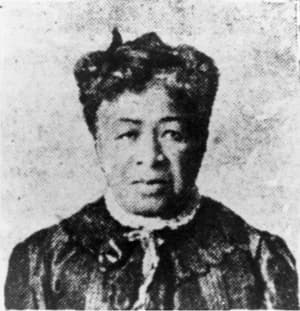
American · Activism · Literature · Politics
Lucy Stanton
October 16, 1831 – February 18, 1910
Early life and family background
Lucy Stanton Day Sessions (born Lucy Stanton) was born in Cleveland, Ohio, on October 16, 1831, to Margaret and Samuel Stanton. She was born free at a time when free Black families in northern cities still lived under intense racial discrimination, and her early life was shaped by both the promise and limits of Black freedom in antebellum Ohio. Her family’s antislavery commitments and her access to education were crucial formative influences.
Her father died when she was very young, and her mother later married John Brown, a Black businessman and abolitionist. The family environment exposed Stanton to reform politics, mutual aid, and the conviction that education was central to freedom. In the early nineteenth century, Black children in Ohio often faced exclusion from common schools or unequal treatment when they did gain access. Stanton’s eventual path into formal higher education therefore emerged from unusual determination, family support, and the relative openness of Oberlin College compared with most institutions of the day.
Education at Oberlin College
Stanton entered Oberlin College in the mid-1840s and studied in the Ladies’ Literary Course, one of the institution’s programs for women. Oberlin was exceptional for admitting women and Black students, but even there, Black women were few in number and had to navigate an academic culture that reflected broader nineteenth-century assumptions about race and gender. Stanton excelled in this environment and became a leading voice among her peers.
On August 27, 1850, she delivered a graduation address titled “A Plea for the Oppressed” at Oberlin’s commencement exercises. The speech reflected her antislavery commitments and demonstrated that she had already developed a public voice capable of linking education to justice. Later that year, on December 8, 1850, she received a Literary Degree from Oberlin after completing the four-year course.
That degree placed her in a historic position. She became the first African-American woman known to complete a four-year college course and earn a college degree. In an era when most colleges excluded women altogether and almost all excluded African Americans, especially Black women, her accomplishment was extraordinary. It also made Oberlin one of the central sites in the history of Black women’s higher education.
Abolitionist work and public writing
After leaving Oberlin, Stanton continued to work in antislavery and educational reform. Sources describe her participation in abolitionist networks and in efforts to assist fugitive slaves, including work connected to the Chatham Vigilance Committee in Canada West. Her life intersected with the transnational Black freedom struggle of the 1850s and 1860s, when many African Americans used education, migration, and organizing as tools against slavery and racial violence.
Stanton is also remembered for her writing. In the 1850s she authored an antislavery short story for The Alienated American, the newspaper associated with her husband, William Howard Day. She is widely described as the first Black American woman to publish a work of fiction, though the exact date of publication is not consistently documented in accessible sources. The work is significant because it shows her engaging not only in activism but also in literary production, using fiction to confront slavery and advance antislavery thought.
Her public writing belonged to a broader Black women’s print culture that linked intellectual life with reform. In the mid-nineteenth century, Black women writers had to overcome both limited publishing opportunities and racist expectations about literary authority. Stanton’s presence in that world helped expand the possibilities for Black women’s authorship.
Marriage and personal life
Stanton married William Howard Day, an abolitionist, clergyman, and activist. In many later references she appears as Lucy Stanton Day Sessions, reflecting both her married and later family names. Her marriage connected her to a larger network of Black reformers and public intellectuals active across the United States and Canada.
Biographical accounts emphasize her intellectual and political partnership with Day as part of her reform career, though detailed records of her private domestic life are comparatively limited. Like many nineteenth-century Black women activists, Stanton’s public significance was often documented more thoroughly than her personal life. Even so, the surviving record makes clear that she moved within a family and activist network committed to abolition, education, and racial uplift.
Later life and move to the West
Later in life, Stanton lived in Los Angeles, California, where she died on February 18, 1910. The move to Los Angeles reflects the broader post-Civil War and post-Reconstruction migrations of African Americans seeking opportunity, family connection, and stability in new regions of the country. Although the surviving sources are more detailed about her early career than about her final decades, her presence in California extended her life across a century of profound transformation in American racial politics.
Her later years are important because they remind us that the first major breakthrough in her life did not exhaust her story. Stanton did not disappear after her college achievement; she lived through emancipation, Reconstruction, and the rise of Jim Crow, carrying with her the memory of a time when Black women’s access to education was still almost unimaginable.
Historical significance and legacy
Lucy Stanton’s legacy rests on several connected achievements. She was a pioneering abolitionist, a writer, an educator, and, above all, a barrier-breaking student whose Oberlin degree challenged the exclusion of Black women from higher learning. Her 1850 graduation became one of the earliest celebrated milestones in the history of Black women’s education in the United States.
Her significance also lies in what her life reveals about nineteenth-century reform. Stanton’s education was not an isolated personal triumph; it was part of a larger struggle involving antislavery activism, interracial cooperation at Oberlin, and Black women’s efforts to claim authority in print and public speaking. The fact that she gave an abolitionist commencement address, earned a degree, and later wrote fiction shows the range of forms through which Black women asserted intellect and moral leadership.
Modern historical scholarship and public history projects continue to identify Stanton as a foundational figure in women’s history and African-American history. Her name is frequently invoked in discussions of first-generation Black women college graduates and in narratives about the long fight for educational access. In that sense, her legacy is not only that she was first, but that she helped make later firsts possible.
Dated achievements
5 indexed.
- Oct161831Activism
Birth of Lucy Stanton in Cleveland, Ohio
Lucy Stanton, future abolitionist and educator, was born free in Cleveland, Ohio to abolitionist parents.
View details Lucy Stanton (abolitionist) - Wikipedia - Aug271850Literature
Delivers graduation address "A Plea for the Oppressed" at Oberlin College
As president of Oberlin's Ladies' Literary Society, Stanton delivered a powerful abolitionist commencement address titled 'A Plea for the Oppressed.'