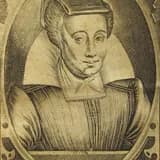
Bourgeois delivered Henrietta Maria of France, later Queen of England, Scotland and Ireland, on 25 November 1609, completing six royal births for Marie de Medici.
On 25 November 1609, Louise Bourgeois delivered Henrietta Maria of France, the sixth and final child of Henry IV and Marie de Medici. Henrietta Maria would go on to become Queen consort of England, Scotland, and Ireland through her marriage to King Charles I, making her one of the most historically significant of the royal children Bourgeois delivered.
This birth completed an extraordinary and unbroken run of six successful royal deliveries spanning from 1601 to 1609, an unparalleled record for any midwife of the era. The consistency and safety of these deliveries, at a time of high maternal and infant mortality even among royalty, made Bourgeois one of the most celebrated medical practitioners in France, regardless of gender.
The completion of this sequence of royal births directly preceded, and provided the empirical foundation for, Bourgeois's landmark 1609 publication of Observations diverses, the first printed obstetrics text authored by a woman. Her firsthand experience delivering the children who would become monarchs and consorts across Europe lent her published observations unique authority and historical weight.
Henrietta Maria's birth thus marks not only the culmination of Bourgeois's royal service but also the threshold moment from which her literary and professional legacy as a pioneering female medical author would emerge, forever changing the historical record of who could write authoritatively about childbirth.