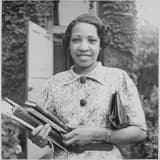
Jones's painting 'Indian Shops, Gay Head, Massachusetts' won the Robert Woods Bliss prize at the Corcoran Gallery's 10th Biennial, though she had to hide her race.
On May 7, 1941, Lois Mailou Jones's painting Indian Shops, Gay Head, Massachusetts was announced as the winner of the prestigious Robert Woods Bliss prize for landscape painting at the Corcoran Gallery of Art's 10th Biennial Exhibition in Washington, D.C.
This recognition came with a bitter irony: because the Corcoran Gallery enforced a strict segregation policy that barred Black artists from exhibiting or attending events in person, Jones was unable to submit the painting under her own identity or attend the ceremony to accept her award. Instead, she had a white friend, Celine Tabary, submit the work on her behalf, concealing the fact that the artist was a Black woman.
The win was significant not only for its artistic merit but for what it exposed about the deep racial exclusion embedded in America's premier art institutions during the Jim Crow era. Jones later recounted the painful contradiction of winning a top honor while being denied the basic dignity of attending her own award ceremony because of her race.
This episode became a pivotal, oft-cited example in the history of American art of the systemic barriers Black artists faced, and it fueled Jones's determination to eventually confront and dismantle these exclusionary practices, paving the way for her later landmark solo exhibitions at major American museums.