← All women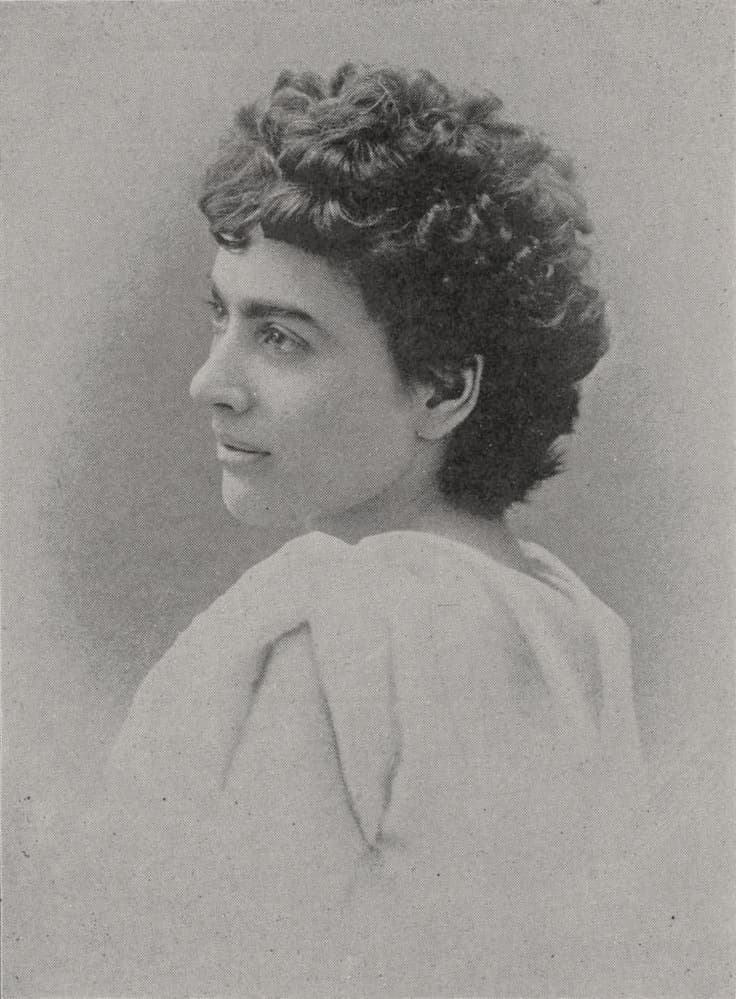
American · Arts · Activism
Lizzie Maggie
May 9, 1866 – March 2, 1948
Early Life and Family Background
Elizabeth J. Magie, commonly known as Lizzie Magie and later as Elizabeth J. Magie Phillips, was born on 9 May 1866 in Macomb, McDonough County, Illinois, USA.[1][3][9] She grew up in a family deeply involved in printing, politics, and reform. Her father, James K. Magie, was a newspaper publisher and editor, and is described in later accounts as an abolitionist who travelled with Abraham Lincoln during the 1850s.[1][9] Her mother was Mary Jane (Ritchie) Magie.[9] This environment immersed Lizzie from childhood in public debate, the power of the press, and radical ideas about justice and equality.
Details of her formal education are sparse in surviving records, but biographical sketches suggest she was well read and technically adept, qualities that later supported her work as a stenographer, typist, inventor, writer, and game designer.[1][11] Growing up in the post–Civil War and Gilded Age Midwest, she witnessed rapid industrialization, expanding corporate power, and stark inequalities in wealth—conditions that would later shape her interest in economic reform and her embrace of Henry George’s Georgist philosophy.
Move to Washington, D.C. and Career Beginnings
In the 1890s, Lizzie Magie moved with her family to Washington, D.C., where she worked as a stenographer and typist, including employment in the U.S. Post Office’s Dead Letter Office.[11][16] This office handled undeliverable mail, an environment that exposed her to the bureaucratic machinery of the federal government and to the everyday frustrations of communication in an era of expanding postal services.
Her work as a typist coincided with the rise of the typewriter as a key technology of office labor. Women increasingly filled clerical positions, but rarely appeared in patent records as inventors. Magie’s practical familiarity with typewriters and paper handling led her to design technical improvements, demonstrating an inventive engagement with the tools of her trade rather than passive use.
Inventor of a Typewriter Improvement
On 30 May 1893, Magie was granted U.S. Patent No. 498,129 for an “Improvement in Type-Writing Machines”, covering a mechanism that allowed paper to feed more smoothly through typewriter rollers.[1][4][9] The patent describes a refined paper-feed device intended to reduce jamming and make typing more efficient, addressing real problems faced by stenographers and typists.
Contemporary and later accounts emphasize that in the late nineteenth century, women held only a small fraction of U.S. patents—often cited as roughly one percent—reflecting significant barriers to women’s participation in formal invention.[4] Magie’s patent thus stands as a notable example of a woman successfully navigating the patent system and asserting ownership of a technical innovation. It also shows the breadth of her creativity, extending beyond board games into mechanical improvements that shaped everyday office work.
Engagement with Georgism and Economic Reform
During her years in Washington and thereafter, Magie became a committed advocate of Georgism, the economic philosophy advanced by journalist and economist Henry George. George’s influential book Progress and Poverty argued for a single tax on land values, contending that land monopolies caused inequality and social hardship.[11][16] Magie joined at least one single-tax club, serving as its secretary and treasurer, and became a lifelong proponent of George’s ideas.[11]
Georgist activists sought innovative ways to communicate complex economic concepts to a broad public. Magie’s distinctive contribution was to translate these ideas into the medium of a board game, allowing players to experience the dynamics of rent, land monopoly, and taxation in simplified, playful form.
The Creation of The Landlord’s Game
By 1903, Magie had developed and publicly played early versions of a board game she called The Landlord’s Game, designed explicitly to illustrate Georgist principles and the social consequences of land monopolies.[3][11][16] The game featured a square or circular track of properties, railroads, utilities, and other spaces, which players could buy and on which they could charge rent.
On 5 January 1904, she filed U.S. Patent Application No. 748,626 for The Landlord’s Game, and the application was officially recorded on the same date.[3][11] The patent describes a board with named properties and a path reminiscent of what later became Monopoly; players move tokens, draw cards, and engage in transactions involving rent and taxes. Crucially, the game’s purpose was didactic: it aimed to show how the concentration of land ownership and the extraction of rent impoverish tenants while enriching landlords.[1][3][11]
In one set of rules, the game allowed players to experience the harsh logic of monopoly, with one player potentially driving others into bankruptcy. In other variants, more cooperative or single-tax outcomes were possible. This dual-rules structure embodied Magie’s desire to let players compare systems and feel the difference between monopolistic and reform-oriented policies.[11][16]
Writing, Acting, and Feminist Views
Around 1910, Magie was active as a writer, actress, and feminist, publicly speaking and writing on issues of women’s labor and equality.[1][4][8] One widely cited episode involves a newspaper advertisement in which she offered herself for auction as a "young American slave" seeking a husband to "own" her, a provocative performance intended to expose the humiliating economic dependence of women within marriage.[2][4]
Her writings criticized the limitations placed on women’s work opportunities and the expectation that wives should be economically dependent on husbands. These views resonated with broader Progressive Era debates about women’s rights, labor protections, and suffrage. Magie’s combination of theatrical protest, journalism, and game design illustrates the multifaceted nature of her activism: she used both words and play to challenge structural inequalities.
Marriage to Albert Wallace Phillips
On 27 October 1910, Magie married Albert Wallace Phillips in Chicago, Cook County, Illinois.[8] Genealogical records and later accounts identify him as her husband, and burial records note that the couple were eventually interred side by side in Columbia Gardens Cemetery in Arlington, Virginia.[9]
Marriage did not end Magie’s creative or political pursuits. She continued to refine her games, engage in Georgist organizing, and publish her ideas about women’s economic independence. Her decision to marry while maintaining a public intellectual profile reflected shifting gender norms of the period, in which some women sought partnerships that supported rather than constrained their activism.
Revisions to The Landlord’s Game and Later Patents
Over the next two decades, The Landlord’s Game spread informally, especially among academics, single-tax advocates, and reform-minded communities. Players created homemade boards and local variants, sometimes renaming properties to reflect their own cities.[1][16] By the early 1920s, multiple versions of the game existed, some diverging from Magie’s original pedagogical intent.
On 23 September 1924, Magie filed U.S. Patent Application No. 1,509,312 for a revised version of The Landlord’s Game and several related games.[11] The patent specification describes multiple boards and rule sets, including games such as "Prosperity" alongside The Landlord’s Game. It explicitly contemplates alternative sets of rules: one promoting monopolistic play in which a single player accumulates wealth, and another reflecting single-tax principles that distribute benefits more equitably.[11][1]
The patent was granted on 15 February 1926, confirming Magie’s continued status as the legal originator of the system she had designed.[11] This later patent is a crucial documentary link between her early work and the commercial board game industry of the 1930s. It demonstrates that she was still actively refining game mechanics and advocating Georgist ideas in mid-life.
The Transition from The Landlord’s Game to Monopoly
Throughout the 1910s and 1920s, variants of Magie’s game circulated widely, particularly in academic circles and among progressive reformers. Some players modified the game to emphasize the enjoyment of acquiring property and bankrupting rivals, downplaying its critical stance toward monopolies.[1][16] In the early 1930s, a version of such a game came to the attention of Charles Darrow, who made his own adjustments and marketed it as Monopoly.
Parker Brothers, a major game publisher, eventually bought Darrow’s rights and began manufacturing Monopoly on a large scale. To secure the intellectual property, the company also approached Magie and purchased certain rights in The Landlord’s Game, reportedly paying her a modest sum—often cited as $500—without royalties.[1][16] While Parker Brothers acknowledged her earlier patent in legal terms, marketing materials and public narratives centered Darrow as the "inventor" of Monopoly.
As Monopoly became an international best-seller, Magie’s role faded from public view. The game’s mechanics, originally designed to critique monopoly capitalism, were repurposed as a celebration of competitive property acquisition. This inversion—an anti-monopoly teaching tool becoming a cultural emblem of monopoly success—is central to modern reassessments of Magie’s legacy.
Census Records and Self-Identification as a Game Maker
By 1940, U.S. Census records list Magie’s occupation as "maker of games", indicating that she herself regarded game design as her primary profession.[11][16] This description underscores that she did not see The Landlord’s Game as a minor hobby; rather, she understood her work in game creation as a central, defining aspect of her life.
Despite this self-identification, she did not enjoy the substantial wealth generated by Monopoly. Her story has therefore become emblematic of broader patterns in which women’s intellectual labor is undervalued or appropriated within commercial and cultural industries.
Later Life and Death
In her later years, Magie continued to live in the eastern United States, maintaining her interest in games and economic reform. However, detailed records of her everyday activities are limited. She appears in public memory chiefly through her patents, scattered writings, and the recollections of Georgist circles and family historians.
Magie died on 2 March 1948 in Virginia, with different sources citing Arlington County or Staunton as the place of death.[1][4][9] She was buried in Columbia Gardens Cemetery in Arlington, Virginia, beside her husband, Albert Wallace Phillips.[9] At the time of her death, she had not been widely acknowledged as the originator of the game concept that underpinned Monopoly.
Posthumous Recognition and Historical Reassessment
From the 2010s onward, historians, museums, and libraries have increasingly highlighted Magie’s contributions. The National Museum of American History, the Library of Congress, and the National Women’s History Museum have all published articles or exhibits recognizing her as the creator of The Landlord’s Game and a key figure in the history of Monopoly.[3][11][15][16]
Popular media, including a PBS documentary segment titled "More Than Monopoly: The Story of Lizzie Magie", online videos, and articles in major outlets, have helped bring her story to a broader audience.[15] These retellings emphasize both her inventive brilliance and the gendered erasure that allowed her role to be overshadowed by Charles Darrow and corporate marketing.
On 12 October 2019, her hometown of Macomb, Illinois, organized a celebration referred to as "Lizzie Magie Day", timed to coincide with her birthday weekend, honoring her as the originator of The Landlord’s Game and precursor to Monopoly.[8] This local commemoration illustrates how communities can reclaim the stories of overlooked women and integrate them into civic identity.
Feminist and Intellectual Legacy
Magie’s legacy spans several domains:
- As an inventor, she secured patents on both mechanical and intellectual creations at a time when few women appeared in the patent rolls.[1][4]
- As a game designer, she pioneered the use of board games as tools for teaching complex economic ideas, prefiguring modern educational and "serious" games.[3][11][16]
- As a feminist writer and performer, she critiqued marriage and women’s economic dependence, using satire and public spectacle to draw attention to structural inequality.[2][4][8]
- As a Georgist activist, she translated theory into interactive experience, enabling players to feel the consequences of monopoly and tax regimes.
Her story also functions as a cautionary tale about intellectual property and gender. The transformation of The Landlord’s Game into Monopoly, with her role largely erased and her financial compensation minimal, illustrates how women’s creative work has often been appropriated within commercial cultures.
Modern scholarship has begun to describe her as "America’s first lady of games," emphasizing that she was more than a footnote to Monopoly: she was a pioneering figure in the design of modern economic board games.[6][7] The renewed attention to her life and work contributes to a broader project in women’s history of recovering the contributions of women whose inventions and ideas shaped everyday culture but whose names were lost or obscured.
Historical Significance
Elizabeth J. Magie’s historical significance lies in the intersection of gender, invention, economic thought, and play. She stands as an early example of a woman using the formal mechanisms of patents to protect both mechanical and conceptual inventions, and as a creative thinker who understood that a game could be a powerful vehicle for political education.
Her board game design anticipated later developments in game studies and serious gaming, and her life story highlights the need to scrutinize popular origin myths that obscure the contributions of women and other marginalized groups. As institutions and scholars continue to reassess Monopoly’s history, Magie’s name has moved from obscurity toward the center of the narrative, reinforcing her place in any comprehensive almanac of women’s history.
Dated achievements
9 indexed.
- May091866Arts
Birth of Lizzie Magie
Lizzie Magie was born in Macomb, Illinois.
View details Wikipedia: Lizzie Magie - May301893Arts
Patent granted for typewriter improvement
U.S. Patent No. 498,129 granted to Lizzie Magie for typewriter enhancement.
View details