← All women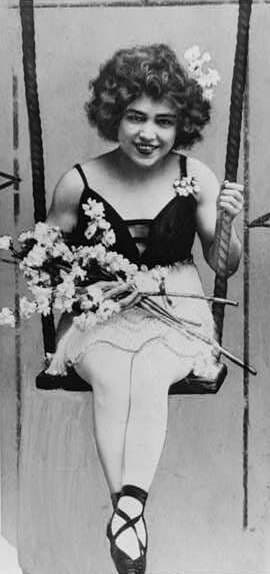
German · Arts · Activism
Lillian Leitzel
1891 – 1931
Early Life and Background
Lillian Leitzel, born Leopoldina Alitza Pelikan, came into the world in Breslau, then part of the German Empire (now Wrocław, Poland), to a family already immersed in the circus profession.[3][1][11] Her exact birth year is disputed: a detailed circus-biography site gives January 2, 1891, while many reference works, including various language editions of Wikipedia and standard encyclopedias, cite 1892 or occasionally 1893.[3][1][2][4][5][7][11] The uncertainty reflects the uneven documentation typical of itinerant performers of the era.
Leitzel’s mother, Nellie Pelikan, was an established aerialist and a leading member of the women’s acrobatic troupe known as the Leamy Ladies, which toured extensively in Europe and later North America.[3][8][9] Her father is generally described as a Hungarian or Central European performer or theatre artist, though sources vary on his name and role.[3][12] Raised largely within her mother’s side of the family, young Leopoldina grew up amid circus wagons, rehearsal spaces, and the constant travel that defined the lives of professional entertainers at the turn of the 20th century.
Despite this peripatetic upbringing, Leitzel received at least some formal schooling in Breslau.[11] Several accounts note that she exhibited marked intelligence and musical talent as a child, and that relatives initially envisioned a future for her as a concert pianist rather than an aerialist.[3][12] She studied piano seriously, and the discipline of musical training—timing, rhythm, and stage presence—later informed the precision of her aerial performances.
Her nickname, “Leitzel”, is said to have originated as a family endearment derived from her middle name, Alitza, before it evolved into the professional stage name that would appear on circus posters across the United States.[3] Growing up in a matriarchal performance environment where women controlled their own acts and touring schedules, she absorbed an early lesson in professional autonomy. This background would later underpin her reputation as a fiercely independent and demanding star in the American big top.
Career Beginnings and Development
By her early teens, Leitzel had joined her mother’s troupe, the Leamy Ladies, formally entering the world of professional aerial performance.[3][8][9] The troupe specialized in aerial gymnastics and acrobatics, featuring all-female acts that blended strength, grace, and carefully choreographed formations. They toured widely across Europe and then in North America, appearing with the Barnum & Bailey Circus during multiple seasons before that circus merged with Ringling Brothers.[8][9]
Sources indicate that Leitzel arrived in the United States around 1910 as part of the Leamy Ladies ensemble.[9][8] When the troupe eventually disbanded—one account places its dissolution around 1911—Leitzel chose to remain in North America rather than return to Europe with some of her colleagues.[8] She continued to refine her skills in smaller venues and on the vaudeville circuit, where she experimented with solo routines and began developing the aerial specialties that would later define her act.[3][8]
During these formative years, Leitzel gravitated toward the Roman rings, a discipline that demanded exceptional upper-body strength and control. She also worked on other aerial apparatuses, including ropes and bars, but found that the rings best showcased her combination of power, endurance, and theatrical flair.[1][7] Her size—she stood only about 4 feet 9 inches tall—became an advantage, allowing her to accelerate quickly through rotations and to manipulate her own body weight with remarkable ease.[8]
Her major career break came in the mid-1910s when a talent scout for the newly merged Ringling Brothers and Barnum & Bailey Circus noticed her during a performance in the American Midwest.[12] She was contracted for the 1915 season and debuted with the circus in the United States soon thereafter, rapidly ascending from a promising newcomer to a featured performer.[12][4] From that point until her death in 1931, she remained closely associated with Ringling Brothers and Barnum & Bailey, becoming one of its most heavily promoted stars.
Rise to Stardom with Ringling Brothers and Barnum & Bailey
Within a few seasons, Leitzel’s name was appearing prominently on circus posters and advertising copy. Contemporary accounts emphasize that she was not merely another aerialist but a marquee attraction, often billed above established male acts.[1][4][6] The American press and circus publicity machines dubbed her the “Queen of the Air” and sometimes “Queen of the Circus,” signaling both her technical prowess and her celebrity status.[1][4][5]
Leitzel’s signature apparatus was a rope or ring rigging suspended approximately 50 feet (about 15 meters) above the ground, and she famously performed without a safety net.[1][7] Her performances typically unfolded as a carefully structured sequence: she would ascend gracefully, execute a series of strength moves and poses on the Roman rings, and then build to a dramatic finale featuring her notorious one-arm “planges” or swing-overs. In this maneuver, a loop around her right wrist supported her entire body as she repeatedly flung herself over her shoulder, dislocating and relocating the joint with each swing.[1][7][8]
Audience participation became a hallmark of her act. Spectators were encouraged to count aloud every plange, and popular lore—repeated in later profiles and museum captions—claims that she could perform well over 100 in a single performance, with one legendary occasion allegedly reaching 249.[7][8] Whether or not that record number is strictly accurate, all sources agree that her endurance and tolerance for pain were extraordinary and that no other aerialist of the time matched this combination of repetition, height, and risk.[1][7][9]
Leitzel’s star persona extended beyond her physical feats. She cultivated an image of aristocratic temperament and exacting standards. Biographers and journalists describe her as demanding, mercurial, and charismatic, someone who expected—and secured—privileges unusual for a female performer in the early 20th century circus. She negotiated a salary reputed to be among the highest in the industry, insisted on a private rail car while on tour, and exerted influence over scheduling and publicity.[6][9] These behaviors, while sometimes presented as diva-like, also reflected a savvy understanding of her market value at a time when women rarely wielded such leverage.
Major Accomplishments and Artistic Significance
Leitzel’s most important accomplishments lay in her pioneering combination of athletic difficulty, theatrical style, and personal branding within the circus context. She helped transform the aerial act from a supporting spectacle into a central, star-driven attraction.
Technically, she pushed the boundaries of what was considered possible on the Roman rings. Her one-arm plange routine, performed high above the ring with no net, was not just a display of strength but a carefully crafted demonstration of endurance that stretched audience tension to the breaking point.[1][7] Contemporary observers and later historians agree that her act influenced the evolution of aerial technique, encouraging other performers to explore more extreme repetitions, dynamic transitions, and dramatic storytelling in the air.[7][10]
Leitzel also stands out as an early example of a woman performer who successfully negotiated star status within a large corporate entertainment entity. The Ringling Brothers and Barnum & Bailey Circus, a vast industrial operation with thousands of employees, typically reserved its highest billing and best pay for male clowns, animal trainers, or impresarios. By the 1920s, however, Leitzel had become one of the circus’s top-paid performers, and her name was a primary draw for spectators.[1][4][6] This not only altered internal gender dynamics but also signaled to the public that a petite female aerialist could be the main reason to attend a big-top show.
Her work was widely covered in newspapers and magazines, and she became a cultural figure whose fame extended beyond circus circles. The scale of public interest in Leitzel, as described by later commentators, approached that accorded to early Hollywood film stars, with fans tracking her romantic life, wardrobe, and offstage temperament.[4][6] In this sense, she helped bridge the worlds of traveling circus and emerging mass celebrity culture.
Though many anecdotes attribute “world records” to her—usually the number of planges performed in one session—these were not formally ratified by sporting bodies and remain part of circus legend rather than documented athletic records.[7][9] Still, the persistence of these stories underscores how her achievements were perceived at the time: as feats at the outer edge of human capability.
Awards, Honors, and Posthumous Recognition
During her lifetime, Leitzel’s primary recognition came in the form of billing, salary, and popular acclaim, rather than official medals or public honors. The circus world of the early 20th century did not yet have a standardized system of industry-wide awards. Instead, prestige was reflected in placement on the program, publicity materials, and the ability to command special treatment from management.
The most significant formal honor came decades after her death. In 1958, Leitzel was posthumously selected as the first inductee into what is now known as the International Circus Hall of Fame in Peru, Indiana.[5][12] A retrospective Hall of Fame video explicitly identifies her as the inaugural choice, positioning her at the head of a pantheon of great circus performers.[12] This posthumous recognition codified what many within the profession already believed: that her artistry and influence made her a foundational figure in modern circus history.
Beyond institutional honors, Leitzel has been the subject of numerous biographical works and media portrayals. American writer Dean Jensen published a detailed biography, Queen of the Air: A True Story of Love and Tragedy at the Circus, which brought renewed attention to her life and career in the 21st century.[6] Public radio segments, documentary series such as PBS’s “American Experience,” and online museum and archive features have all revisited her story, emphasizing both her professional achievements and the tragic circumstances of her death.[6][13]
Her image and name continue to appear in exhibitions, circus history collections, and photographic archives, including holdings on platforms like Wikimedia Commons, underscoring her ongoing status as a reference point in discussions of aerial performance.[1][13] Together, these forms of recognition highlight how her fame has outlasted the era of the traveling railroad circus that made her a star.
Personal Life and Relationships
Leitzel’s personal life was as closely watched as her public performances, and it intersected heavily with the circus world. She is known to have married at least twice, both times to men connected with major American circuses.
Her first documented marriage was to Clyde Ingalls, an executive with the Ringling Brothers and Barnum & Bailey Circus, in 1920.[11] This union placed her in a complex dual role as both a high-profile performer and the spouse of a circus official. Sources indicate that this marriage ended in divorce in 1924, though few details of their relationship have been preserved in public records.[11]
In 1928, Leitzel married celebrated trapeze flyer Alfredo Codona, one of the era’s most renowned aerialists.[7][11] Their marriage—often dated to July 1928, though exact day documentation is scarce—was widely covered in the press, and the pair were touted as a “royal couple” of the circus world.[11][9] Both were at the peak of their careers, and their union symbolized the convergence of two extraordinary aerial lineages. However, Jensen and other writers describe the relationship as turbulent, marked by Codona’s jealousy over Leitzel’s star power and the strains of separate touring schedules.[6][9]
Accounts of Leitzel’s personality depict her as strong-willed, quick-tempered, and intensely loyal to those she cared about.[6][9] She was known to admonish stagehands and colleagues sharply if they endangered safety or compromised the quality of her act, but she could also be generous and affectionate with friends and fans. Despite her fame and multiple marriages, sources agree that she had no children.[11]
Her romantic and professional entanglements with Codona have attracted lasting interest, especially given the later trajectory of his life, which included a serious injury, career decline, and a highly publicized murder–suicide years after Leitzel’s death.[7][9] While those later events did not involve Leitzel directly, they have colored retrospective narratives about the intensity and volatility of circus life in their era.
Later Life, Accident, and Death
By the late 1920s and early 1930s, Leitzel remained one of the top attractions with the Ringling Brothers and Barnum & Bailey Circus, performing both in the regular touring season and on special winter engagements in Europe and elsewhere.[1][3] Even as younger performers emerged, her name continued to command high billing, and she maintained her rigorous, risk-laden routines on the rings.
In early 1931, Leitzel was engaged for a series of performances in Copenhagen, Denmark. On Friday, February 13, 1931, she took to the air for what should have been a routine execution of her signature one-arm plange sequence.[3][11] During the act, a swivel connecting one of her ring ropes to the overhead rigging failed, causing her to fall an estimated 8–10 meters (accounts vary) to the ground.[3][11][1]
Initially, some onlookers believed she might survive, but her injuries—reported as severe trauma to the head and internal organs—were critical.[3][11] She was taken to a Copenhagen hospital, where her condition rapidly deteriorated. Two days later, on February 15, 1931, she died of her injuries.[3][1][5][11] Some sources mistakenly give February 13 as the date of death or note only the year and city, reflecting confusion between the date of the fall and the date she succumbed. However, detailed biographical accounts and modern circus history summaries consistently describe a fall on February 13 followed by death two days later.[3][12]
After her death, Leitzel’s body was transported back to the United States. A Hall of Fame video and subsequent commentary note that she was buried in Inglewood Park Cemetery in California, a reminder of how fully she had come to be identified with the American circus world despite her European birth.[12][9] She was not yet 40 years old.
Legacy and Historical Impact
Lillian Leitzel’s legacy rests on several intertwined contributions to the history of performance, gender, and popular culture.
First, she redefined the aerialist as star. Before her, aerial performers were admired but rarely treated as the central attraction of the circus. Through her technical daring, carefully staged acts, and commanding personality, Leitzel shifted the balance of program prestige, demonstrating that a single aerialist—especially a woman—could anchor an entire show’s marketing campaign.[1][4][6] Her success paved the way for later generations of circus artists whose individual names, rather than their troupes alone, became brands.
Second, she expanded expectations of female physicality in mainstream entertainment. Early 20th‑century norms often presented women as delicate, ornamental, or confined to “feminine” talents. Leitzel’s heavily muscled, highly trained body, showcased in strength-based routines performed at extreme heights, challenged these stereotypes. Coverage of her performances emphasized both her diminutive stature and her extraordinary power, which fascinated audiences precisely because it crossed conventional gender boundaries.[7][9]
Third, her life story illustrates the precarity of circus labor. The same risk that made her performances so compelling also led to her death when a single piece of hardware failed. Her accident highlighted systemic vulnerabilities in equipment maintenance and safety oversight at a time when formal regulatory standards were minimal. While it is difficult to link her death directly to specific later reforms, her case became a cautionary example in discussions about rigging safety and the ethics of net-free high-wire and aerial acts.[3][11]
Finally, the endurance of her legend—from biographical books to radio documentaries and Hall of Fame exhibits—underscores her importance as a cultural touchstone. She has come to symbolize both the glamour and the danger of the golden age of the railroad circus, as well as the possibilities and costs for women who sought autonomy and fame in that world.[6][13] Her story continues to be cited by contemporary aerialists and circus historians as a key chapter in the development of their art.
Disputed Dates and Historiographical Issues
Research on Leitzel’s life is complicated by inconsistencies in basic biographical data, particularly her birth and death dates. As noted earlier, some sources give January 2, 1891 as her birth date, while many encyclopedias and Wikipedia entries list January 2, 1892, and a few references suggest 1893.[3][1][2][4][5][7][11] The 1891 date relies on specialized circus-historical research and family or industry records; the 1892 date appears to have been propagated through more general reference works.
Similarly, while there is broad agreement that she died in February 1931 in Copenhagen, some entries list February 13 as her date of death, likely conflating the day of her accident with the day she succumbed.[11] More detailed narratives, including those from circus historians and a Hall of Fame retrospective, describe the fall occurring on February 13 and her death following two days later, aligning with a date of February 15, 1931.[3][1][5][12]
These discrepancies highlight the challenges of reconstructing the lives of performers whose documentation was scattered across international borders, traveling shows, and publicity materials that often prioritized marketable myth over precise record-keeping. For historians of women’s and labor history, Leitzel’s case serves as a reminder that even highly visible figures may leave behind an archival trail filled with contradictions, requiring careful source comparison and, in some cases, the acceptance of unresolved ambiguity.
Conclusion
From her beginnings in a Central European circus family to her ascent as the “Queen of the Air” in the world’s largest circus, Lillian Leitzel exemplified both the opportunities and the hazards that faced women in early 20th‑century popular entertainment. Her technically innovative and physically demanding aerial routines set new standards for the Roman rings; her insistence on top billing and high pay broke ground for female performers negotiating with powerful entertainment corporations; and her tragic death underscored the life-threatening risks at the heart of the circus spectacle.
Posthumously enshrined as the first inductee into the International Circus Hall of Fame and repeatedly rediscovered by biographers and documentarians, Leitzel remains a central figure in the cultural memory of the golden age of the circus. Her life continues to inspire and caution, standing as a testament to the complex interplay of gender, labor, artistry, and danger under the big top.
Dated achievements
4 indexed.
- Jan021891Arts
Birth of Lillian Leitzel
Leopoldina Alitza Pelikan, later known as Lillian Leitzel, was born on January 2, 1891.
View details A Brief Bare Bones Biography - Feb131931Arts
Leitzel's Performance Accident in Copenhagen
On February 13, 1931, a performance accident in Copenhagen resulted in severe injuries to Leitzel.