← All women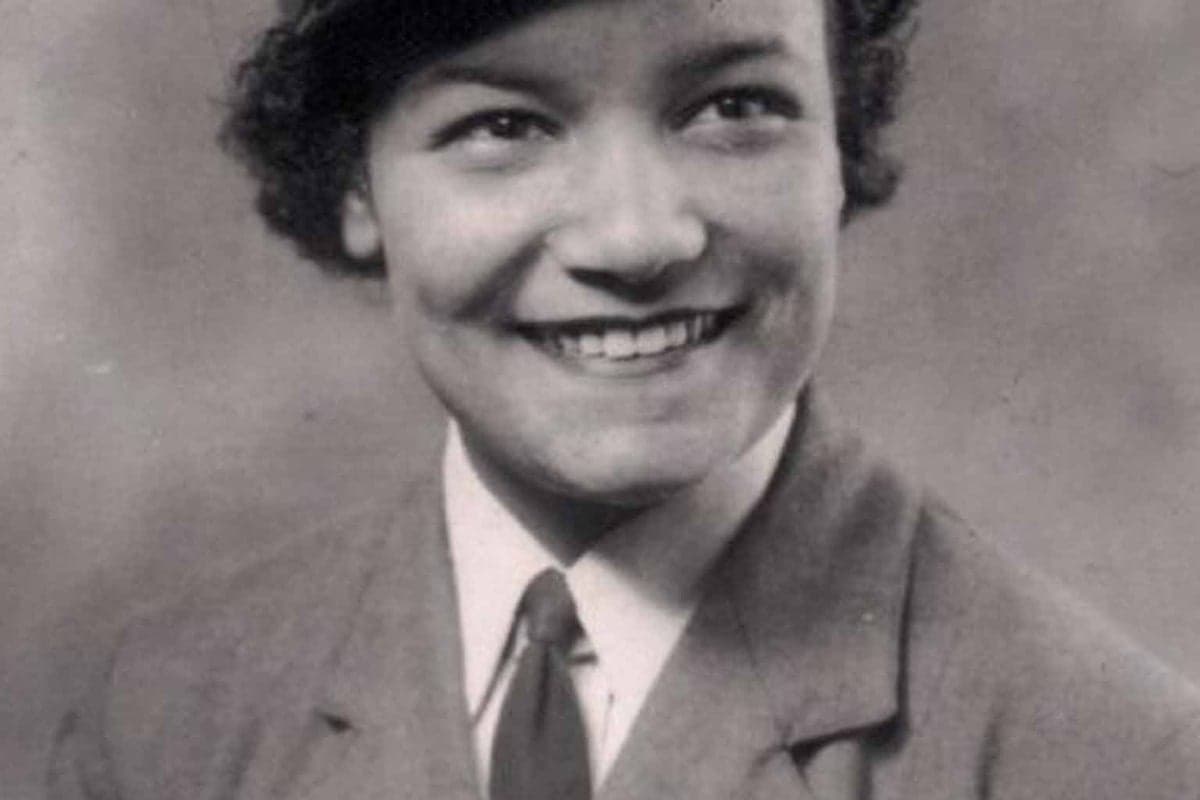
British · Aviation · Activism
Lilian Bader
February 18, 1918 – March 13, 2015
Early life and background
Lilian Bader (née Bailey) was born on 18 February 1918 in Liverpool, in the Toxteth district, to a Barbadian-born father and an Irish mother. Sources differ on some family details, but they agree that her father, Marcus Bailey, had Caribbean origins and had served in the First World War, and that her mother was British-born with Irish parentage. Bader grew up in a Britain where racialized ideas about belonging shaped housing, employment, and public life, and those conditions would later define the obstacles she faced as a young woman.
Accounts of her early years describe hardship. She was orphaned at a young age and raised in a convent. Later profiles note that she spent much of her childhood and adolescence in institutional care, which gave her a disciplined upbringing but also separated her from a conventional family life. Some sources say she moved with her father and brothers to Hull during childhood, though the broad outline remains the same: she grew up in a working-class environment, vulnerable to the social prejudice of interwar Britain.
Like many young women of her generation, Bader entered the workforce early. But unlike most of her peers, she faced a second layer of exclusion because of race. The combination of mixed heritage, orphanhood, and limited employment options shaped her determination to find useful work once the Second World War began. Her later service in the RAF cannot be understood apart from this background of resilience and exclusion.
War work and rejection from civilian employment
When the Second World War broke out in 1939, Bader wanted to contribute to the national effort. She found work in a Navy, Army and Air Force Institutes (NAAFI) canteen near Liverpool, a common wartime job for women seeking to support service personnel. That employment lasted only a few weeks. According to later accounts, she was dismissed after officials discovered that her father had been born in Barbados. The episode is important because it shows how wartime Britain, even in a period of desperate labor shortage, still enforced racial exclusion in ordinary workplaces.
This dismissal was not merely a personal setback. It reflected the wider barriers faced by Black Britons and people of Caribbean heritage in civilian life. Employment discrimination, housing discrimination, and social prejudice were deeply entrenched. Bader’s response was not withdrawal but persistence. She continued looking for ways to serve, and the outbreak of war eventually created an opening in the armed forces that would alter the course of her life.
Joining the WAAF
In March 1941, Bader joined the Women’s Auxiliary Air Force (WAAF). She later said she had learned that West Indian men were being accepted into the Royal Air Force, and this encouraged her to apply. On 28 March 1941, she volunteered and was accepted, becoming one of the first Black women to serve in Britain’s armed forces and the RAF. Her enlistment mattered because the armed services were among the most symbolically powerful institutions in Britain; for a Black woman to enter them during the war was a serious breach of social convention.
Her early postings placed her in a military environment that was still overwhelmingly white and male in its leadership, even as it increasingly depended on women’s labor. Bader has been remembered for being brave in uniform but also for the everyday reality of being visible in a sea of white faces. That visibility itself had historical meaning. It challenged assumptions about who could belong in military service and helped make Black women’s wartime labor more visible in retrospective histories.
Technical training and barrier-breaking achievement
Once in the WAAF, Bader trained as an instrument repairer, a newly created trade opened to women around 1940 as the RAF expanded technical roles beyond conventional clerical or support work. By December 1941, she had completed the course and passed First Class, becoming the first woman in the RAF to qualify in that trade. This was one of her most significant accomplishments and one of the clearest examples of a Black British woman breaking into a technical military role.
Instrument repair required precision and responsibility. It involved maintaining equipment essential to aircraft operations, at a time when the war was placing enormous strain on military logistics and technical support. Bader’s success therefore carried practical importance as well as symbolic power. She proved that women could master specialist military work, and she did so at a time when women were still fighting for recognition as capable technical workers rather than merely auxiliary labor.
The context of race made the achievement even more remarkable. Bader was not simply a woman entering a new trade; she was a Black woman doing so in wartime Britain, an environment in which prejudice could limit promotion, postings, and respect. Her first-class qualification demonstrated competence in a field from which both women and Black Britons had been largely excluded. In retrospect, it stands as a landmark in the history of women’s employment, Black British military service, and the wartime transformation of technical labor.
Advancement within the service
As the war continued, Bader advanced within the WAAF. Sources describe her as being promoted to Leading Aircraftwoman and later to Acting Corporal. The exact dates of these promotions are not consistently recorded in accessible sources, but they show that her superiors recognized her skill and reliability. In a military environment where status often reflected both technical competence and institutional trust, these promotions were meaningful signs of progress.
Her wartime service also coincided with personal upheaval. During this period she learned that her brother, Jim, had been killed at sea while serving in the Merchant Navy. That loss, coming in the midst of her own service, underscores the extent to which Bader’s life was shaped by the war’s human costs. She continued working despite grief and the pressures of a racially stratified military environment.
In 1943, she married Ramsay Bader, a fellow serviceman. Accounts describe the wedding as wartime and modest, reflecting the conditions of the period. The couple later had two sons. Her marriage did not end her public significance; rather, it added another dimension to her life as a woman balancing service, family, and later professional work.
Postwar education and teaching career
After the war, Bader left the RAF and turned to education. She studied at London University and earned a Bachelor of Arts degree, though accessible sources do not give a precise date for the award. She then became a teacher, including work teaching languages in Bournemouth. This career shift is significant because it shows that Bader’s life was not defined solely by wartime service. She used postwar opportunities to enter a respected profession and remained active in education for many years.
Her later work as a teacher extended her influence beyond military history. Teaching, especially in the decades after the war, gave her a platform to contribute to younger generations and to embody excellence in a profession that still reflected broader social inequalities. Several sources note that she taught well into her later years, illustrating both her commitment and the long duration of her career.
Bader’s postwar life also reflects the broader experience of many women who had served during the war and then rebuilt civilian lives while carrying with them new skills, new confidence, and a changed sense of social possibility. In that sense, her transition from RAF technician to educator mirrors a wider story of wartime women turning temporary service into long-term social contribution.
Honours and recognition
Accounts from Black history and RAF sources state that Bader received an MBE in 2003 for services to education and the community. The exact award date is not consistently documented in accessible sources, so the year is often cited without a precise day. Even without a full honours-list citation, the recognition is significant because it shows that the state eventually acknowledged a woman whose wartime service and later teaching career had long been under-known.
Bader has also been recognized by museums, Black history organizations, educational resources, and military heritage projects. These tributes have helped restore her to public memory as one of the first Black women in the RAF and as a pioneering technical airwoman. Her story is frequently used in educational settings to illustrate both the contributions of Black Britons during the Second World War and the persistence required to overcome racism in employment and military service.
Historical legacy
Lilian Bader’s legacy lies in the combination of military barrier-breaking, technical skill, and public memory work. She was not the only Black woman associated with wartime Britain, but she is one of the clearest documented examples of a woman of Caribbean heritage entering the RAF, qualifying in a technical trade, and advancing within the service. Her story is often framed cautiously by historians because the claim that she was the absolute first Black woman to join the British Armed Forces is difficult to prove definitively across all services; nonetheless, it is well established that she was among the first and that her technical achievement was a genuine first for women in the RAF trade of instrument repairer.
Her life also complicates stereotypes about Black British women in the mid-twentieth century. She was not only a servicewoman but also a mother, a wife, a university-educated teacher, and a community figure. In each of those roles she demonstrated persistence in the face of racial discrimination. Her biography therefore offers a valuable lens on the changing place of Black women in Britain: first excluded from employment, then admitted into military service under wartime pressure, and later recognized as part of the national story.
Today, Bader is remembered through museum exhibitions, educational resources, and Black history initiatives. That afterlife of remembrance is itself important. It shows a growing willingness in British public history to recover the experiences of women whose labor had been essential but whose names had often been omitted from mainstream wartime narratives. Lilian Bader’s life now stands as evidence that Black women were not peripheral to twentieth-century British history; they were participants in it, and sometimes pioneers within it.
Later life and death
Bader died on 13 March 2015 in Bournemouth, aged 97. By the time of her death, her life had become a touchstone for historians, educators, and heritage organizations interested in Black British history and women’s military service. Obituaries emphasized both her wartime service and her later work as a teacher, reflecting the breadth of her contribution.
Her death prompted renewed attention to the barriers she had overcome: racial exclusion from employment, the scarcity of Black women in the armed forces, and the slow pace of institutional recognition. The historical record preserved by museums, educational projects, and community organizations now ensures that her story remains accessible. In that sense, Bader’s legacy continues through the very narratives that have been built around her — narratives of resilience, competence, and firsts that changed what was thought possible for Black women in Britain.
Dated achievements
4 indexed.
- Feb181918Activism
Birth in Liverpool
Lilian Bailey (later Bader) was born in Liverpool, England, to a Barbadian-born Royal Navy veteran father and an Irish mother.
View details Lilian Bader - Wikipedia - Mar281941Aviation
Enlists in the WAAF, becoming one of the first Black women in the RAF
Lilian Bader enlisted in the Women's Auxiliary Air Force on 28 March 1941, becoming one of the first Black women to serve in the British Armed Forces.