← All women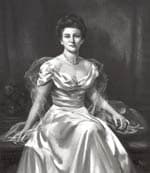
American · Politics · Activism
Lettie Pate Whitehead
February 21, 1872 – November 14, 1953
Early life and family background
Letitia “Lettie” Pate Whitehead Evans was born on February 21, 1872, in Thaxton, Bedford County, Virginia, the youngest child of Cornelius Pate and Elizabeth Stagg Pate. Sources describe her father as a farmer, dry goods merchant, and postmaster, placing the family in a respectable but not elite stratum of rural Virginia society. She grew up in the post–Civil War South, in a period when women’s formal access to higher education, business leadership, and public authority remained sharply limited. Those constraints make her later career especially notable.
Biographical profiles indicate that she was educated at private schools in Virginia, though she did not follow a conventional professional path. Like many women of her generation, her opportunities were shaped by family expectations and marriage, but her later accomplishments show that she developed strong practical judgment and business confidence. Her life unfolded at a time when women were rarely allowed to participate in corporate decision-making, and she would eventually challenge that pattern in a highly visible way.
Marriage, family, and the Coca-Cola bottling enterprise
In 1894, she married Joseph Brown Whitehead, an attorney from Mississippi. The couple made their home in Tennessee and later moved to Atlanta, where Joseph Whitehead and an associate secured the now-famous bottling contract that helped turn Coca-Cola into a national brand. That business decision became central to the family fortune and to Evans’s later influence.
The Whiteheads had two sons, Joseph B. Whitehead, Jr. and Conkey Pate Whitehead. Family life was marked by both business success and deep loss: Joseph Brown Whitehead died in 1906, leaving Evans to manage the family’s affairs. According to institutional biographies, she immediately took control of the bottling business and real-estate interests, organizing the Whitehead Holding Company and the Whitehead Realty Company and steering both toward success. This transition was significant because women of her time were rarely expected to administer major business assets, yet she proved capable of doing so with considerable effectiveness.
In 1913, she married Arthur Kelly Evans, a retired Canadian army officer. That marriage connected her to a new personal chapter, but her public identity remained strongly tied to her first husband’s business legacy and to her own growing reputation as a businesswoman and benefactor. Some later sources refer to her as Lettie Pate Whitehead Evans, reflecting the combination of family names that became synonymous with her philanthropy.
Business leadership and corporate breakthrough
Evans’s most famous business milestone came in 1934, when she was appointed to the board of directors of The Coca-Cola Company. She became one of the first women to serve on the board of a major American corporation, and some sources describe her as the first woman ever to sit on Coca-Cola’s board. Either way, the appointment was a clear barrier-breaking achievement in an era when women were largely excluded from top corporate governance. She remained in that role for nearly twenty years.
Her board service should be understood in the context of her practical experience. She had already managed the family’s business interests after Joseph Whitehead’s death and had helped maintain the financial strength of the bottling operation. Her success was not symbolic alone; it was grounded in actual stewardship of assets, operations, and real estate. That combination of competence and visibility made her an important figure in the history of women’s participation in American business.
Historical markers and foundation histories also note that she played a major role in the early distribution of bottled Coca-Cola. The Whitehead family’s exclusive bottling arrangement helped spread the product across much of the United States, and the wealth generated by that enterprise provided the means for her later philanthropy. Her career thus links the history of branding and distribution with the history of women’s corporate leadership.
Philanthropy and institutional giving
Evans’s reputation rests as much on philanthropy as on business. Institutional sources state that during her lifetime she gave more than $150 million to over 130 organizations, while other later tributes cite even larger figures depending on how posthumous foundation giving is counted. Regardless of the exact total, her generosity was substantial and sustained.
Her giving concentrated on education, religion, health care, and culture, especially in Georgia and Virginia. She served as a trustee of Emory University, Agnes Scott College, and the Virginia Museum of Fine Arts. These roles reflected not only financial support but also a broader vision of civic improvement through institutions that educated students, supported women, and enriched public life.
During the Second World War, her philanthropy extended beyond the United States. Sources report that she supported the Queen’s Canadian Fund for air raid victims, furnished ambulances for the French, served on the board of the American Hospital in Paris, and donated a fighter plane named Virginia to Wings for Britain. These wartime gifts illustrate the international reach of her beneficence and the flexibility of her giving in response to global crisis.
The Lettie Pate Evans Foundation
In 1945, Evans created the Lettie Pate Evans Foundation. Although sources differ on the exact structure and later chartering of related entities, they agree that she established a foundation to continue her charitable work and to ensure that her philanthropy would outlive her. The foundation became especially associated with educational support for women, including scholarships and aid to institutions across the Southeast.
After her death, related foundation activity continued under family direction and later institutional stewardship. Contemporary profiles describe the foundation as supporting tens of thousands of students and funding educational and cultural organizations. Its long-term impact has been especially visible in Georgia, where many schools and universities still cite her name in scholarship programs and campus support initiatives.
The foundation’s enduring presence is a major part of Evans’s historical legacy. It transformed private wealth into recurring public benefit and became a mechanism through which women’s education, in particular, could be supported across generations. This is one of the clearest examples of how a twentieth-century business fortune was converted into structural philanthropic influence.
Honors, memorialization, and later recognition
Evans has been remembered through institutional honors, campus programs, and memorial naming. A Georgia Tech building was renamed in her honor in 1998, reflecting her long association with support for the university and her reputation as one of its greatest benefactors. She has also been commemorated by historical markers and by scholarship programs that continue to bear her name.
Her legacy has been especially visible at universities and colleges across the South. Organizations such as Mercer, Chowan, Gardner-Webb, Samford, and the University of Mary Washington continue to reference the Lettie Pate Whitehead name in connection with scholarships and student support. That ongoing institutional memory demonstrates the durability of her philanthropy long after the business fortune that made it possible.
Some modern tributes, including institutional histories and anniversary features, have described her as “Tech’s Greatest Benefactor.” While that label is honorific, it captures the scale of her giving and the depth of her impact on higher education. Her gifts helped expand access for students—especially women—during an era when financial barriers often blocked educational advancement.
Death and historical significance
Evans died on November 14, 1953, in Hot Springs, Virginia. By then she had already become an established figure in the history of American business and philanthropy. Her life bridged the nineteenth-century South and the modern corporate era: she was born before Reconstruction ended, came of age in an age of limited women’s rights, and ultimately served on the board of one of the nation’s most recognizable corporations.
Her significance lies in the combination of business leadership and institution-building philanthropy. She turned inheritance and business success into lasting educational opportunity, and she did so in a society that gave women few formal avenues to corporate power. Her appointment to Coca-Cola’s board was a genuine first in corporate history, and her charitable foundation helped ensure that her name remained associated with women’s advancement long after her death.
Evans’s story is therefore more than a personal success narrative. It is a case study in how women in the early twentieth century could leverage family enterprise, wealth management, and philanthropy to reshape public life. Her legacy endures in scholarships, institutional buildings, and the continued visibility of women’s leadership in business and education.
Dated achievements
5 indexed.
- Feb211872Science
Birth of Lettie Pate Whitehead in Thaxton, Virginia
Letitia 'Lettie' Pate was born on February 21, 1872, in Thaxton, Bedford County, Virginia.
View details Georgia Women of Achievement: Lettie Pate Evans - Jan011934Science
Appointed to the Board of Directors of The Coca-Cola Company
Lettie Pate Whitehead Evans joined the Coca-Cola Company board in 1934, becoming one of the first women to serve on a major U.S. corporate board.